
Loading, please wait...


LOT 1180
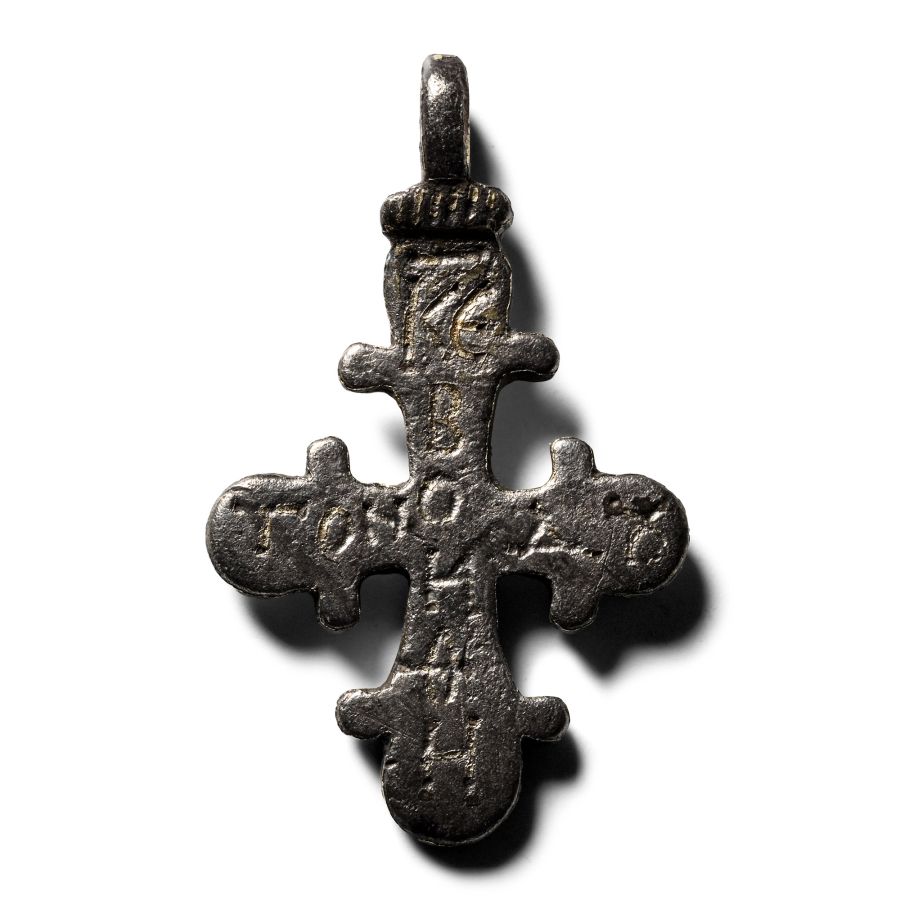
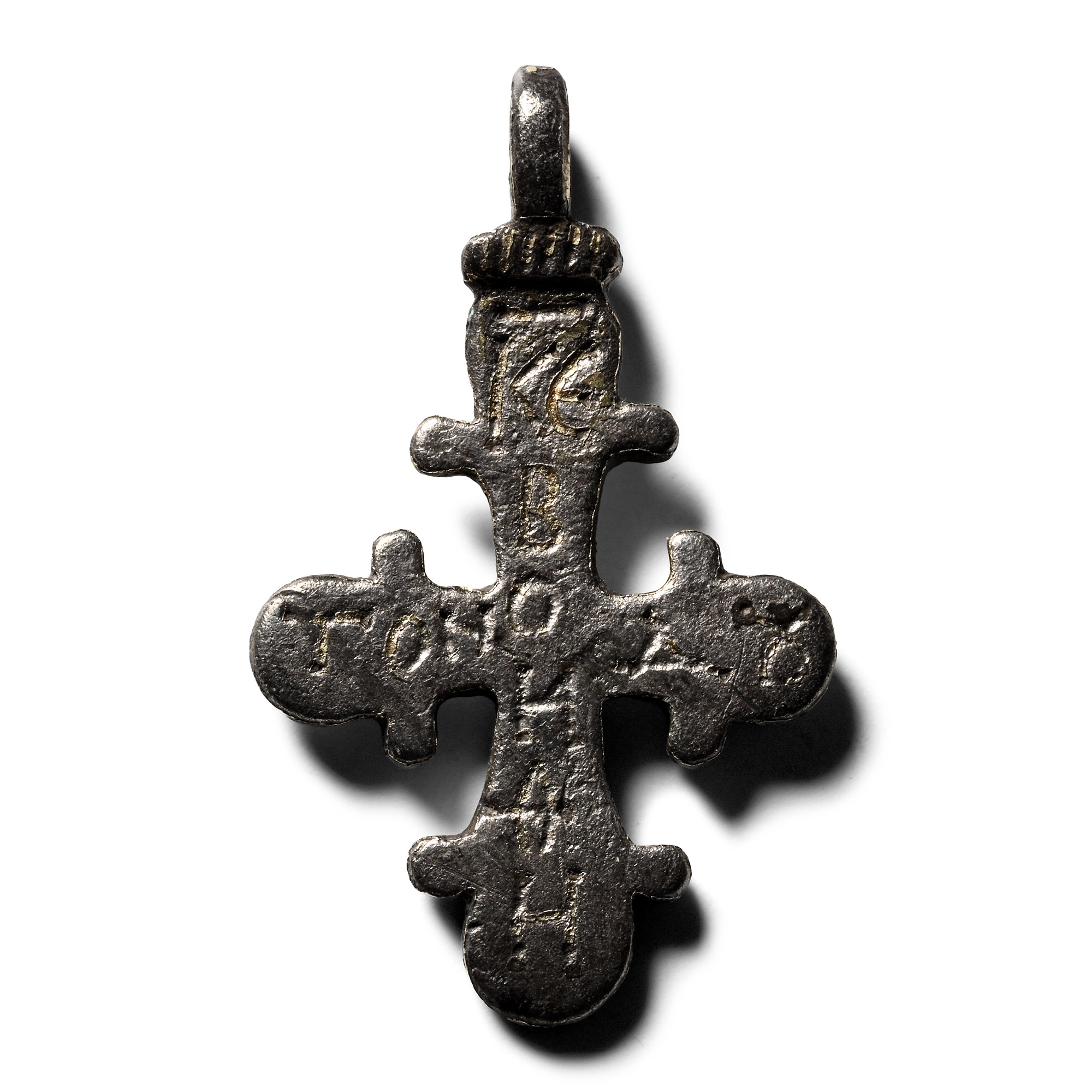
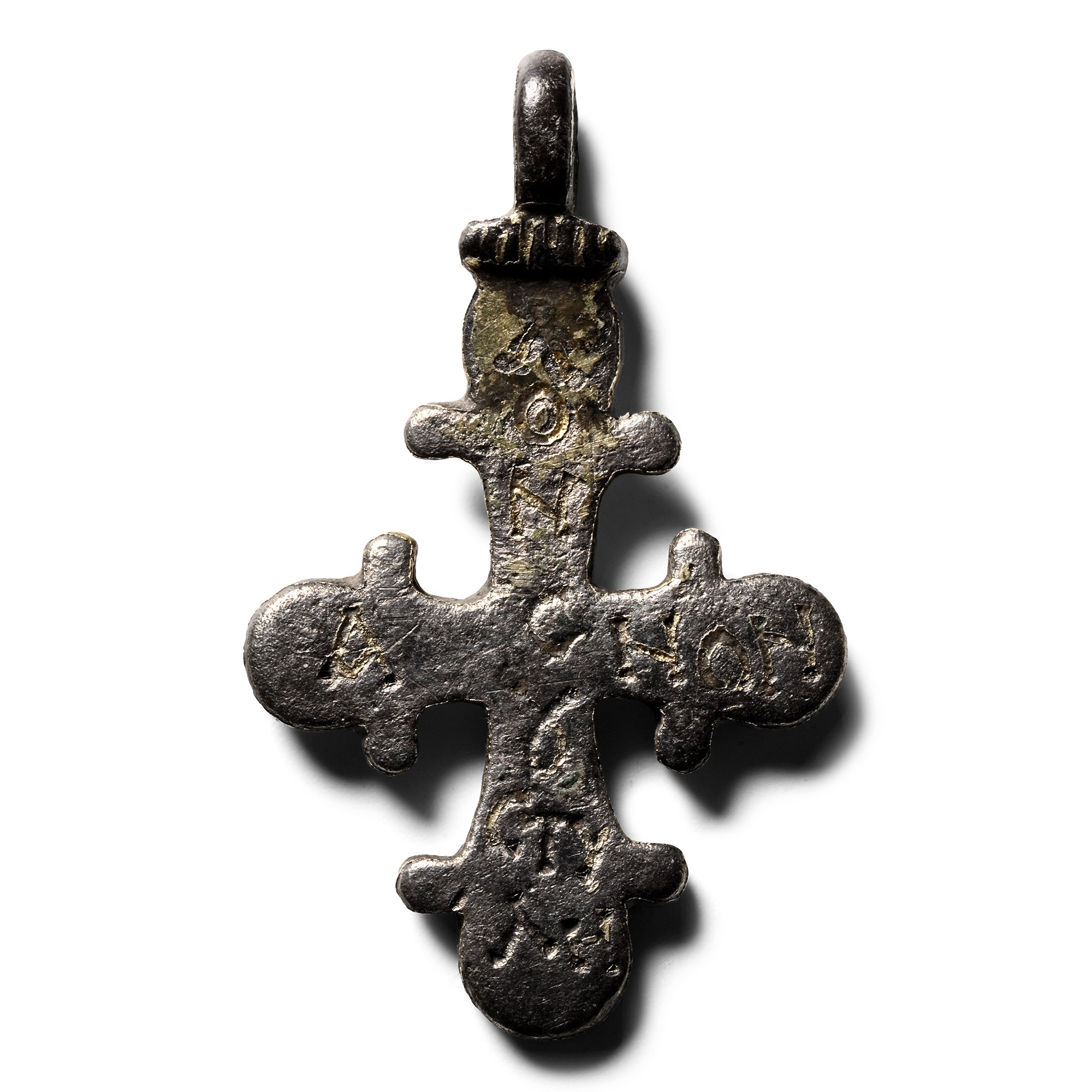
Byzantine Silver-Gilt Cross Pendant
CIRCA 9TH-12TH CENTURY A.D.
1 3/8 in. (4.52 grams, 34 mm).
Bifacial cross with lobed finials, gilt Greek inscription on both sides, one side with 'KE BOHΘΗ' placed vertically and 'TON ΔOY[...]' horizontally; the other side with 'ΛON COY CTYΛY' placed vertically, and 'ANON' horizontally; the whole inscription reading: 'KγριΕ BOHΘH TON ΔOYΛON COY CTYΛYANON' = Lord helps your servant Stylianos.
ProvenanceEx German art market, 2000s.
Acquired from an EU collector living in London.
From the collection of a Surrey, UK, gentleman.
Cf. Wamser, L., Die Welt von Byzanz - Europas Östliches Erbe, München, 2004, items 534-542, for type.
CONDITIONTimeLine Auctions follows a vetting process to ensure the authenticity and legality of all items, reinforcing our commitment to integrity and responsible trading. Each antiquity, antique, and coin lot undergoes thorough examination by a vetting committee of at least ten external specialists, professional trade association members, scientists, and archaeologists: Our Vetting Process
AUCTIONS:
TimeLine is a leading auction house specialising in antiquities, ancient art, collectables, natural history, coins, medals, and books. Our auctions offer museums, collectors, historians, and enthusiasts the opportunity to acquire unique and historically significant pieces.
-
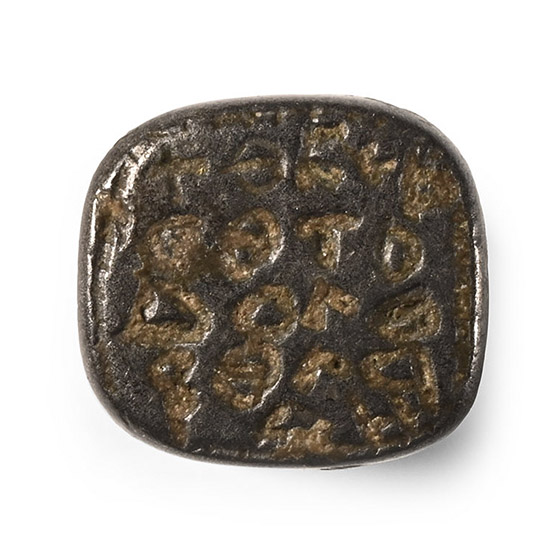
Byzantine Seal Matrix with Inscription
Circa 11th-12th century A.D.Estimate: £80 - 100 (+bp*)
Opening Bid: £44
With inscription '+ΘKEB / OΘTO / ΔΟΛΟ / ΤΘΛΑ' for 'ΘΕΟΤΟΚΕ ΒΟΗΘΕI ΤΩ ΔΟΥΛΩ ΤΟΥ ΘΕΟΥ ΛΑΔΕ' (Mother of God, help Lades, the servant of God). 13.1 grams, 18 mm
From an important collection formed before 1988, London and Geneva.
The stamp seals that have survived in large numbers from Byzantium are objects a few centimetres high and conical in shape, featuring a sealing surface at the lower end and a pendant at the upper end. They served the same function as signet rings and were used to seal everyday objects, primarily for personal purposes, using wax and other soft materials. -
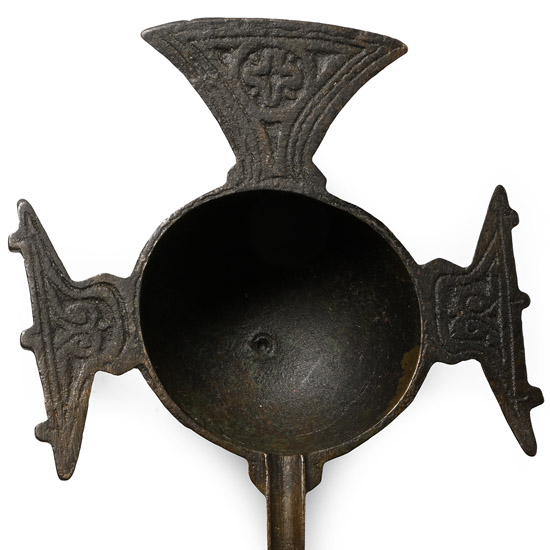
Byzantine Bronze Oil Lamp
Circa 7th-10th century A.D.Sold for (Inc. bp): £247
Formed as a stylised bird with a hemispherical body, U-shaped nozzle forming the head, two projecting wings with incised decoration, and a large flaring tail forming the handle with a central cross motif, three stub legs on the underside. 65.9 grams, 12 cm
From an important collection of lamps, Germany, 1970s. -
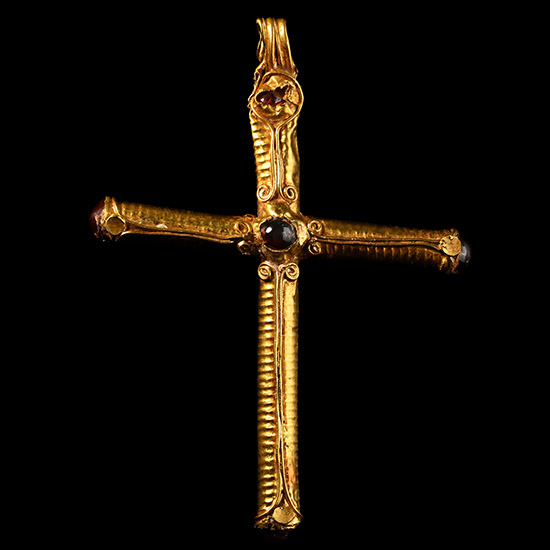
Large Byzantine Gold Cross Pendant
Circa 8th-10th century A.D. and laterSold for (Inc. bp): £1,690
Tubular in construction with ribbed arms and applied filigree trails to both faces; inset possibly later cabochon garnet to the end of three arms and another in the central cell, and an integral suspension loop; some restoration. 15.16 grams, 81 mm
Ex London, UK, collection. Ex David Miller, Hemel Hempstead, London, UK. From the private collection of a West London, UK, gentleman, formed since the early 2000s. Accompanied by a typed dealer's ticket.
