
Loading, please wait...
LOT 1159
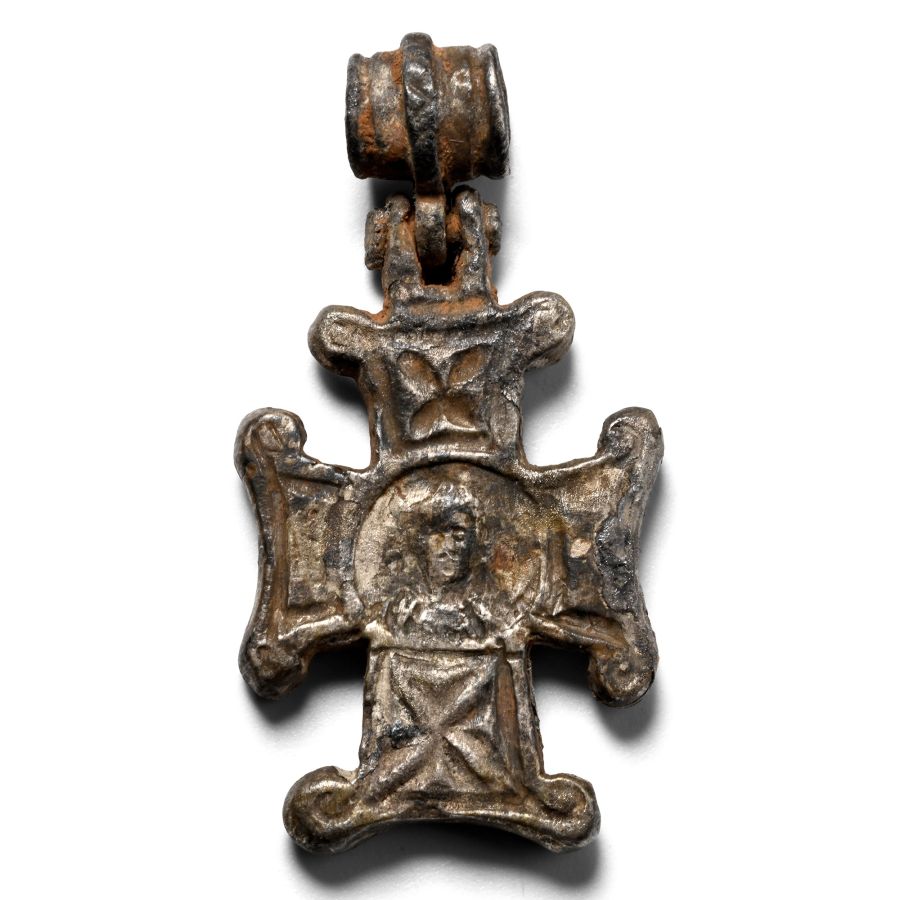
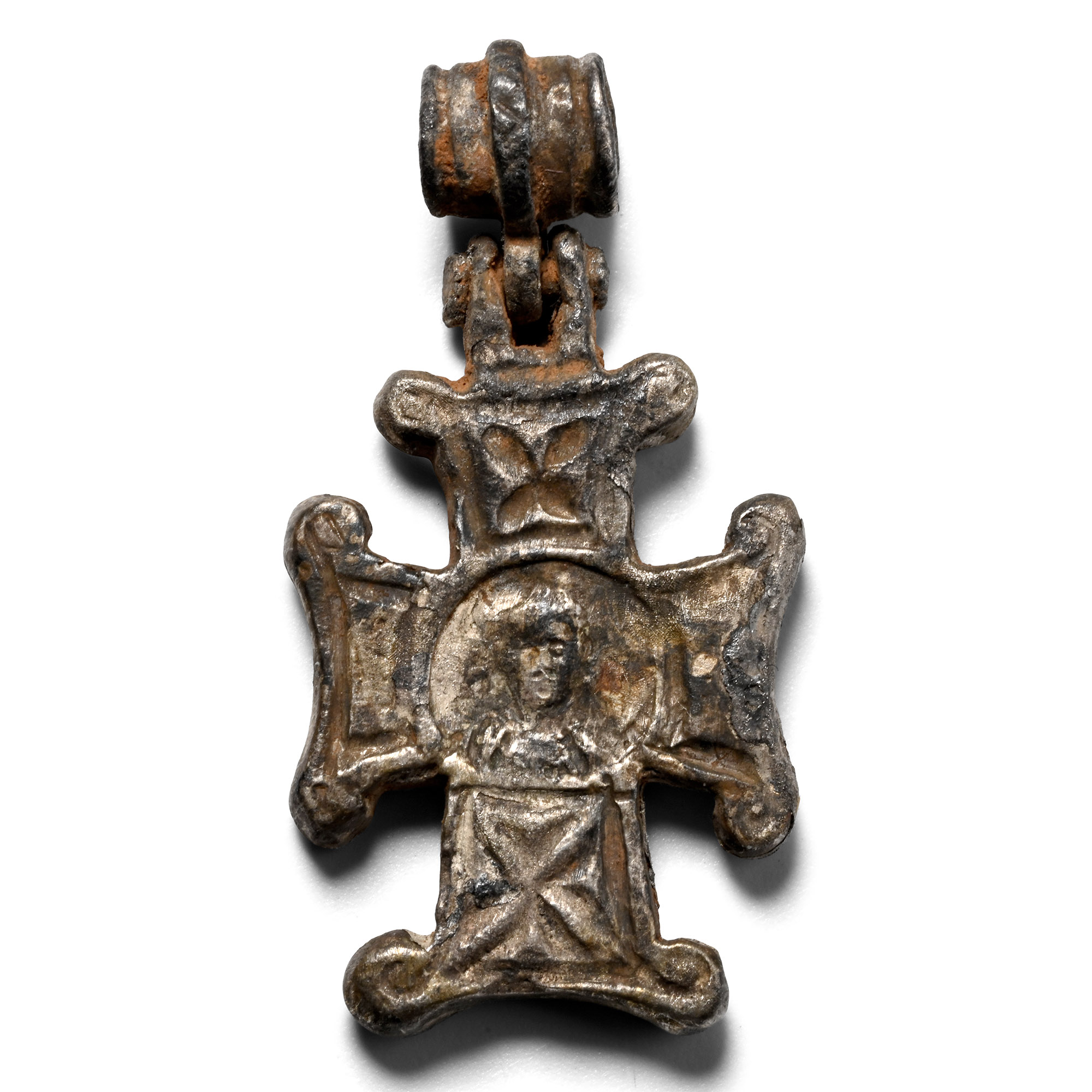
Byzantine Silver-Gilt Cross Pendant
CIRCA 10TH-12TH CENTURY A.D.
1 1/4 in. (5.93 grams, 30 mm).
The cross with an articulated loop and an X-motif above and below a central panel with a facing bust.
ProvenanceEx German art market, 2000s.
Acquired from an EU collector living in London.
From the collection of a Surrey, UK, gentleman.
TimeLine Auctions follows a vetting process to ensure the authenticity and legality of all items, reinforcing our commitment to integrity and responsible trading. Each antiquity, antique, and coin lot undergoes thorough examination by a vetting committee of at least ten external specialists, professional trade association members, scientists, and archaeologists: Our Vetting Process
AUCTIONS:
TimeLine is a leading auction house specialising in antiquities, ancient art, collectables, natural history, coins, medals, and books. Our auctions offer museums, collectors, historians, and enthusiasts the opportunity to acquire unique and historically significant pieces.
LOT 1159
Byzantine Silver-Gilt Cross Pendant
Estimate £200 - 300€230 - 350 (for guidance only)$270 - 410 (for guidance only)
-
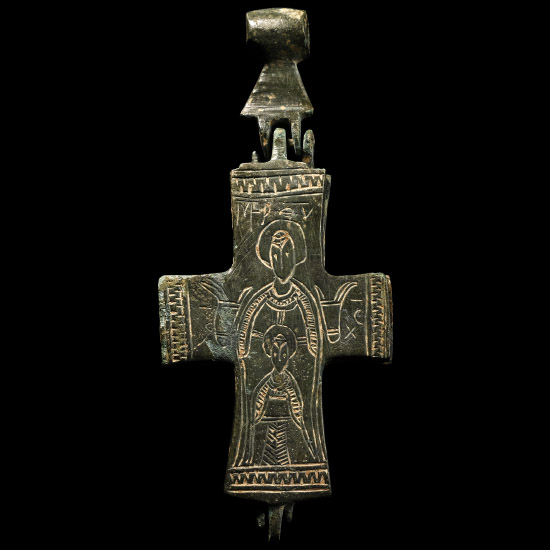
Large Byzantine Bronze Reliquary Cross Pendant with Saint George and Mary
Circa 10th-12th century A.D.Sold for (Inc. bp): £780
With separate hinge and suspension loop; obverse with nimbate robed figure in a tondo with legend 'ΓΕΟΡΓ[Η]' (St George); reverse with robed and nimbate figure in orans pose with 'ICX' beneath each wrist, smaller nimbate figure before, legend 'MHP ΘV' (Mother of God). 82 grams, 10.8 cm
From the private collection of a West London, UK, gentleman, formed since the mid 1980s. -
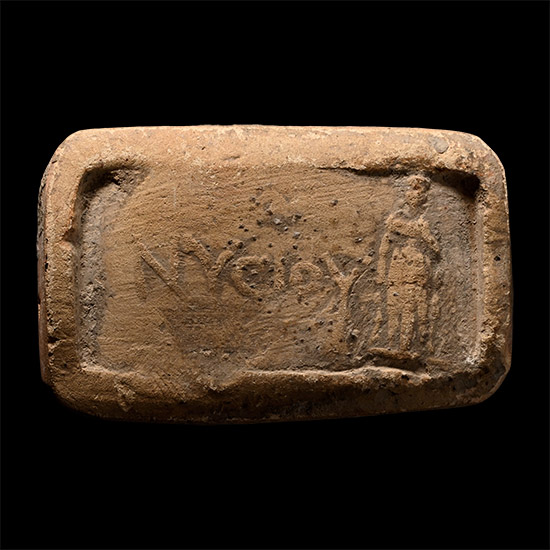
Byzantine Terracotta Tile with NYCIOY
6th-8th century A.D.Sold for (Inc. bp): £33
Rectangular in plan with raised lip enclosing scene with standing female figure in ankle-length robe, legend 'ΝΥCΙΟΥ' (for νησιού 'belonging to Nisios'). 28.3 grams, 45 mm
From the private collection of Mr Brian Edwards, New Malden, Surrey, UK, formed from the late 1970s-early 1980s; thence by descent. -
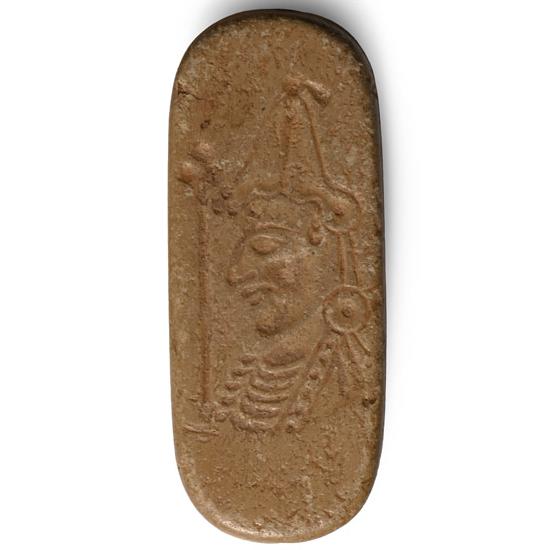
Byzantine Inscribed Bone Plaque
Circa 6th-10th century AD.Sold for (Inc. bp): £117
Obverse with low-relief bust wearing conical headgear, with trefoil sceptre and hatched robe; reverse with legend 'ΚΕΒΟΗΙΤΟ' ('T' inverted). 3.12 grams, 38 mm
Ex Essex gentleman's collection, 2000s.
