
Loading, please wait...
_900x900.jpg "Byzantine Silver Bearded 'Hidden Face' Belt Mount")
_200x200.jpg "Byzantine Silver Bearded 'Hidden Face' Belt Mount")
.jpg "Byzantine Silver Bearded 'Hidden Face' Belt Mount")
LOT 1324
Byzantine Silver Bearded 'Hidden Face' Belt Mount
6TH-7TH CENTURY A.D.
1 5/8 in. (38.15 grams, 42 mm).
Hollow-formed plaque with lobed outer edge, scooped sides and notched band at the inner edge; openwork circle and crescent motifs; with the remains of the original leather strap. [No Reserve]
ProvenanceAcquired on the UK art market before 2000.
Property of an Essex, UK, gentleman.
TimeLine Auctions follows a vetting process to ensure the authenticity and legality of all items, reinforcing our commitment to integrity and responsible trading. Each antiquity, antique, and coin lot undergoes thorough examination by a vetting committee of at least ten external specialists, professional trade association members, scientists, and archaeologists: Our Vetting Process
AUCTIONS:
TimeLine is a leading auction house specialising in antiquities, ancient art, collectables, natural history, coins, medals, and books. Our auctions offer museums, collectors, historians, and enthusiasts the opportunity to acquire unique and historically significant pieces.
-
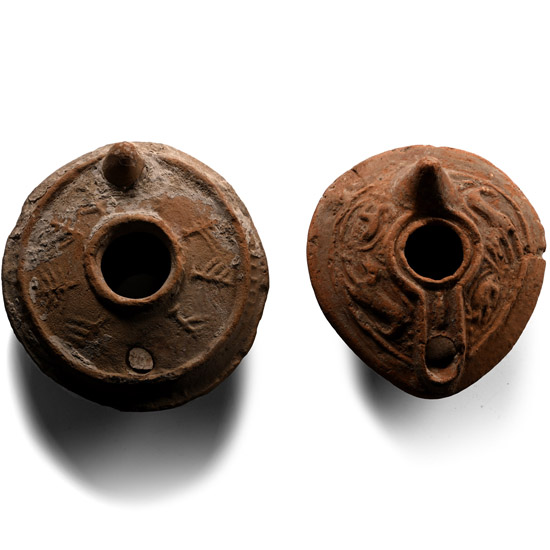
Byzantine Ceramic Oil Lamp Collection
6th-8th century A.D.Sold for (Inc. bp): £111
Comprising: a discoid lamp with low-relief branch motif surrounding the filler hole; a piriform lamp with a channel connecting the filler hole and nozzle, a low relief scene of a hound chasing a hare on both side of the filler hole, the base with a spoked wheel motif. 180 grams total, 84-88 mm
with Galerie Rhéa, Zurich, Switzerland. -
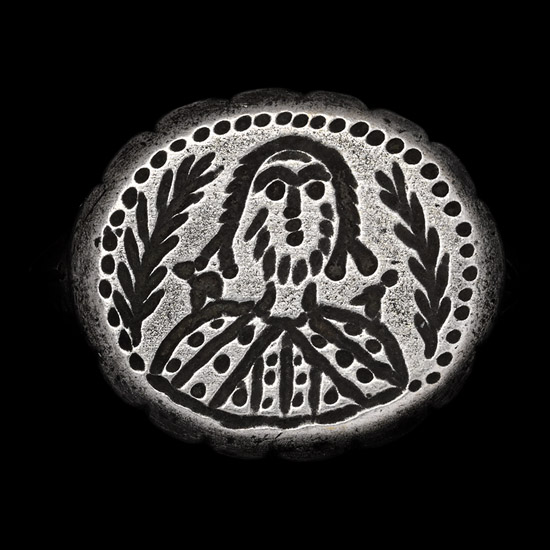
Byzantine Silver Ring with Bust
12th-15th century A.D.Sold for (Inc. bp): £234
Featuring a D-section hoop with a palm frond on both shoulders, oval bezel with a piecrust edge and pelletted border, central profile bust of a robed and bearded man flanked by palm fronds. 7.45 grams, 22.59 mm overall, 18.57 mm internal diameter (approximate size British Q, USA 8, Europe 17.49, Japan 16)
From the collection of a gentleman, acquired on the London art market in the 1990s. -
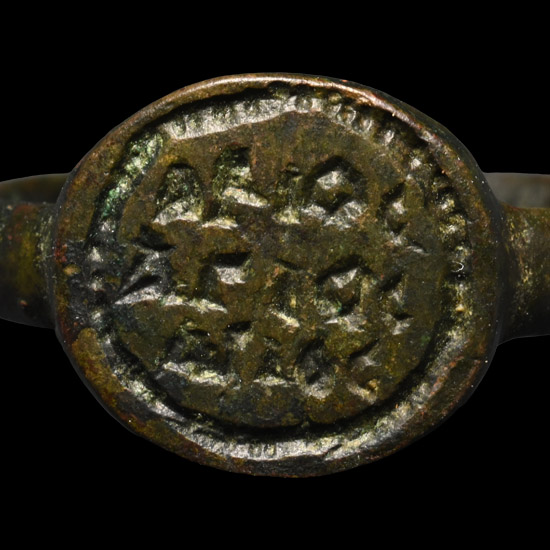
Large Byzantine Bronze Glove Ring with 'AGIOS AGIOS AGIOS'
Circa 10th-14th century A.D.Sold for (Inc. bp): £98
Comprising a large round hoop and an oval bezel bearing a three-line inscription 'AGIOS AGIOS AGIOS', 'aghios' meaning 'saint' or 'holy'. 7.70 grams, 27.06 mm overall, 22.08 mm internal diameter (approximate size British V 1/2, 10 3/4, Europe 24.40, Japan 23)
Acquired on the UK art market from the 1990s. From the private collection of a Lincolnshire, UK, gentleman.
'Holy, holy, holy' probably evokes one of the Biblical quotes from either: Isaiah 6:3, 'Holy, holy, holy is the Lord of hosts' or Revelation 4:8, 'Holy, holy, holy is the Lord God Almighty', and/or a reference to the Trisagion 'Thrice Holy' Byzantine/Orthodox hymn.
