
Loading, please wait...
LOT 0795
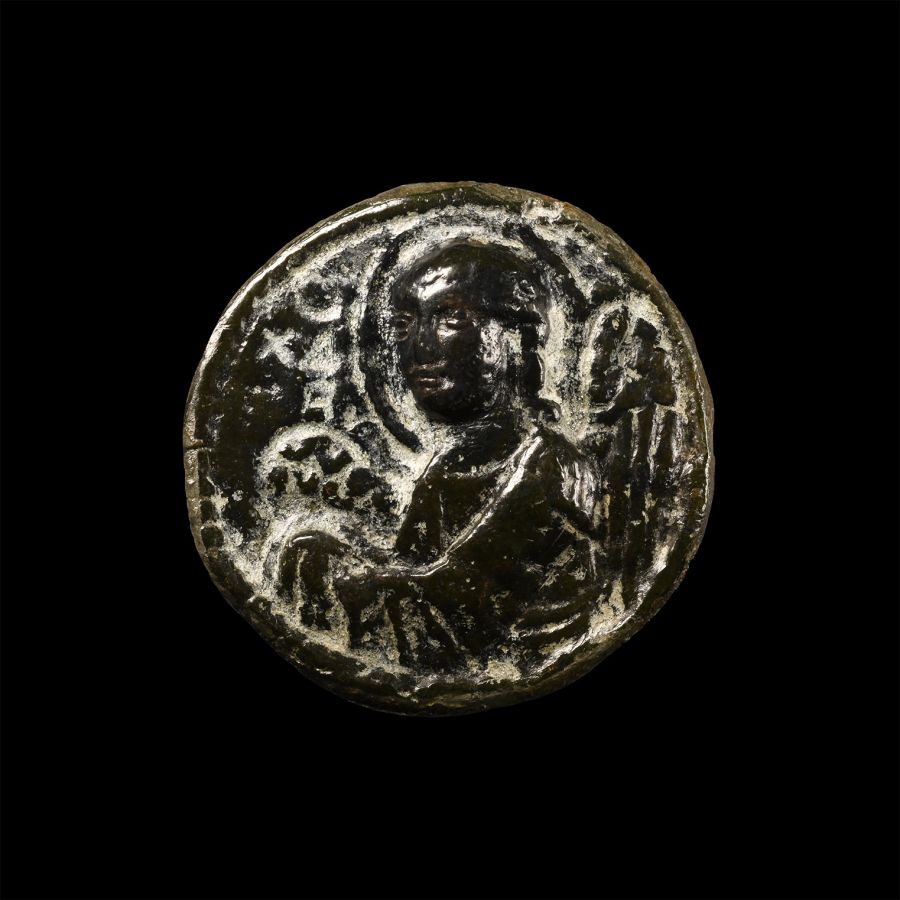
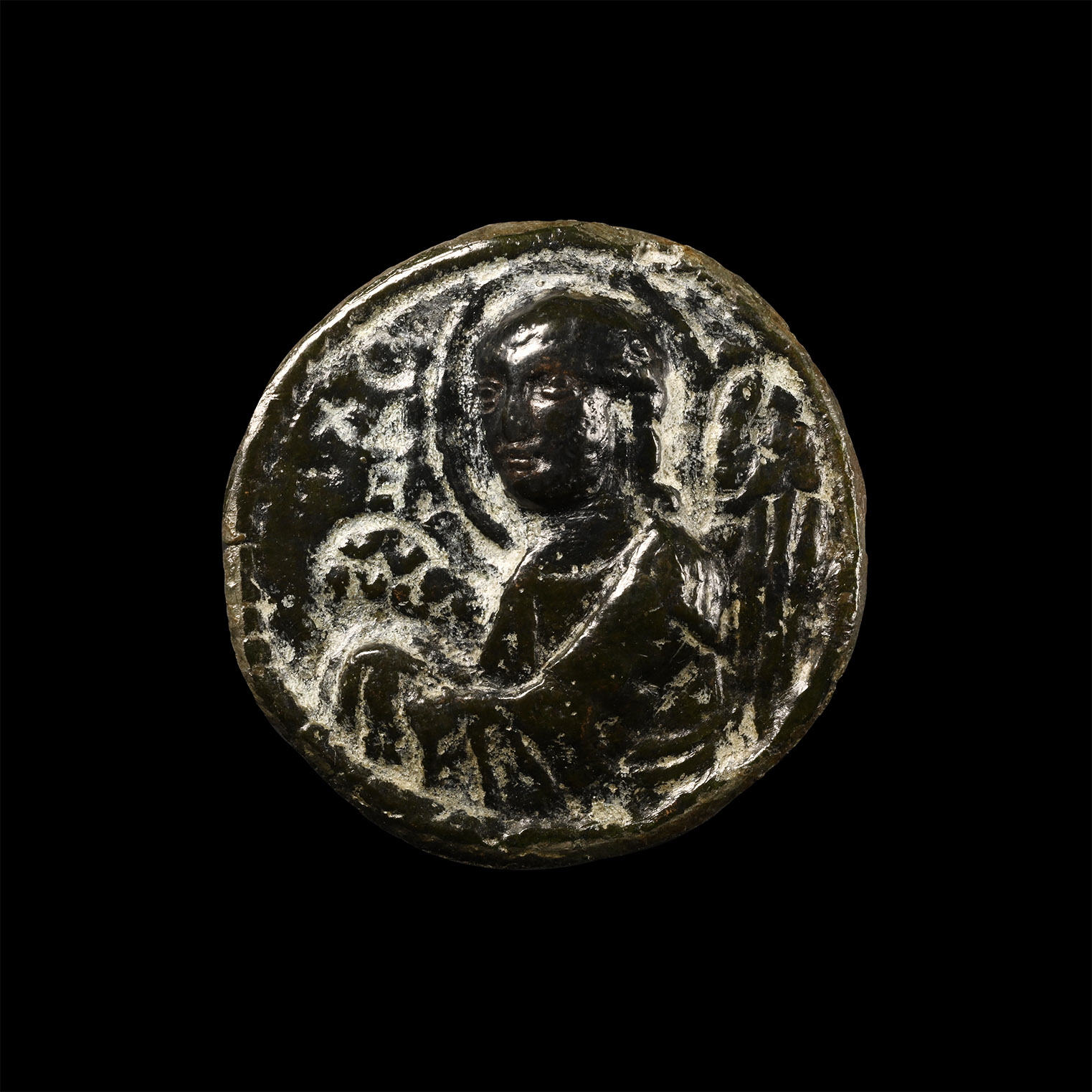
Byzantine Roundel with Saint
CIRCA 12TH CENTURY A.D.
1 3/4 in. (29.2 grams, 44 mm).
A roundel bearing an angel in high-relief to one face, looking left, the hands in offering gesture covered by his garment, Greek letters 'APX' (for Archangel) on the left side of his face.
ProvenanceGerman art market, 1990s.
Mr A.H., a North American collector living in the UK.
Cf. Wamser, L., Die Welt von Byzanz - Europas Östliches Erbe, München, 2004, items 223-227, for this type of embossed icon.
CONDITIONTimeLine Auctions follows a vetting process to ensure the authenticity and legality of all items, reinforcing our commitment to integrity and responsible trading. Each antiquity, antique, and coin lot undergoes thorough examination by a vetting committee of at least ten external specialists, professional trade association members, scientists, and archaeologists: Our Vetting Process
AUCTIONS:
TimeLine is a leading auction house specialising in antiquities, ancient art, collectables, natural history, coins, medals, and books. Our auctions offer museums, collectors, historians, and enthusiasts the opportunity to acquire unique and historically significant pieces.
-
.jpg)
Byzantine Horse Lock Plate
7th-8th century A.D.Sold for (Inc. bp): £124
A lock plate formed as a stylised horse standing right, with geometric detailing to the head, body and legs. 29.5 grams, 53 mm
Fine condition.
Acquired 1970-2010. Collection of a late Japanese gentleman. -
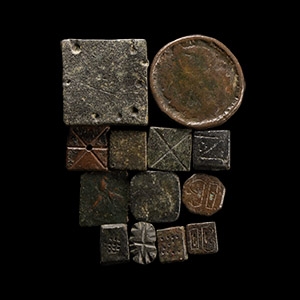
Byzantine Trade Weight Collection
Circa 10th-14th century A.D.Sold for (Inc. bp): £33
A mixed group of bronze trade weights of various shapes and sizes, including examples bearing letters or cruciform designs. 92 grams total, 10-31 mm
German art market, 1990s. Mr A.H., a North American collector living in the UK. -
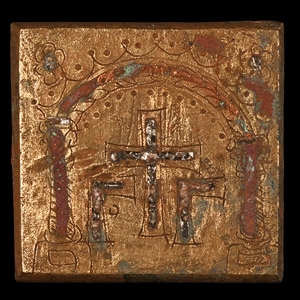
Byzantine Silver Inlaid Weight
4th-6th century A.D.Sold for (Inc. bp): £234
A bronze square tabular weight with silver inlay; inscribed arch with rosettes above the corners, spiral columns and pointillé detailing; silver-inlaid cross flaked by 'Γ Γ' for a quadrans (3 oz). 80 grams, 37 mm
Acquired 1969-1999. London collection of the late S.M., thence by descent.
