
Loading, please wait...
LOT 0805
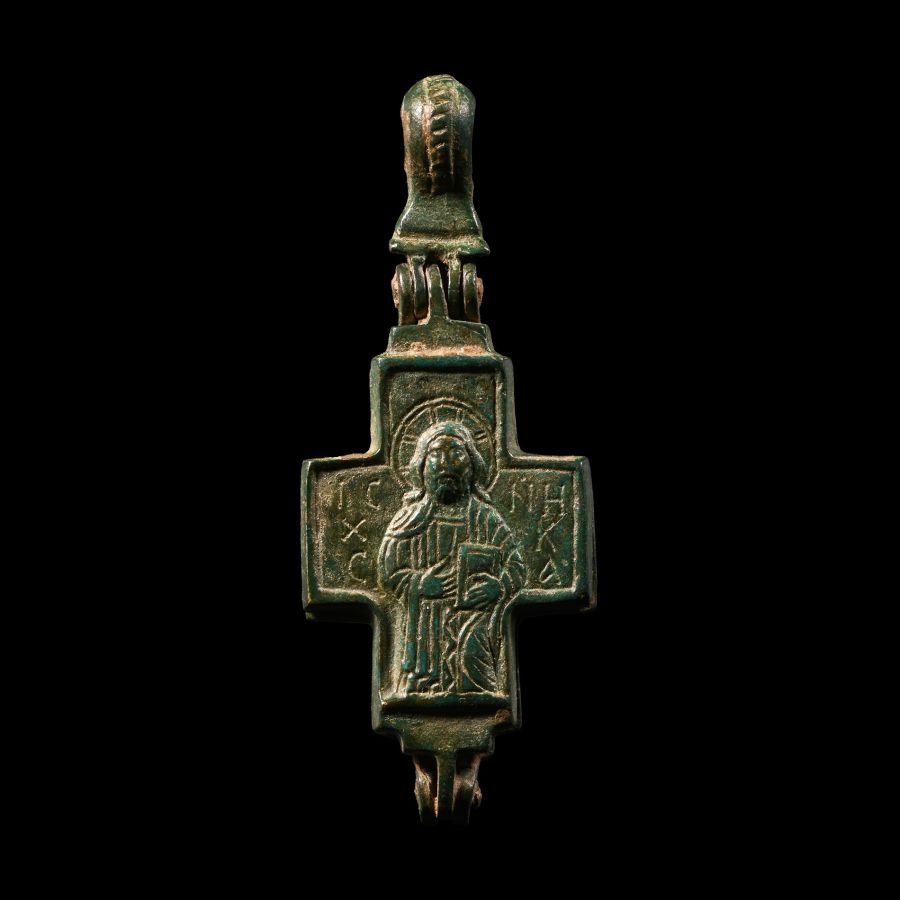
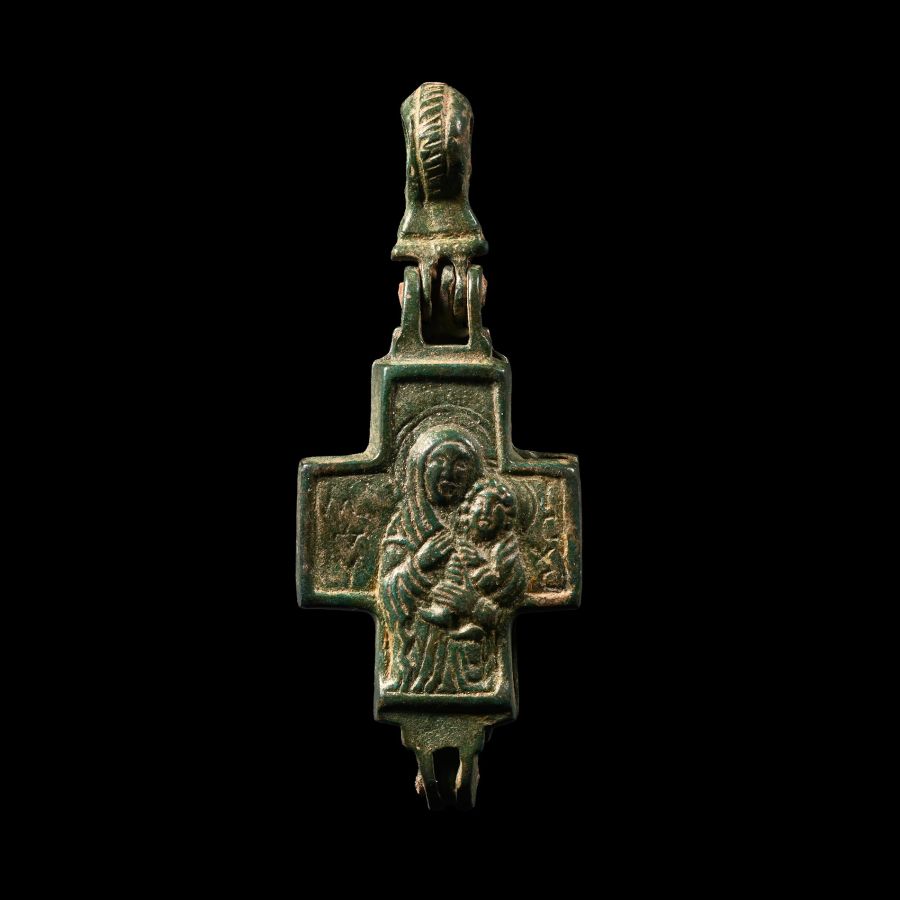
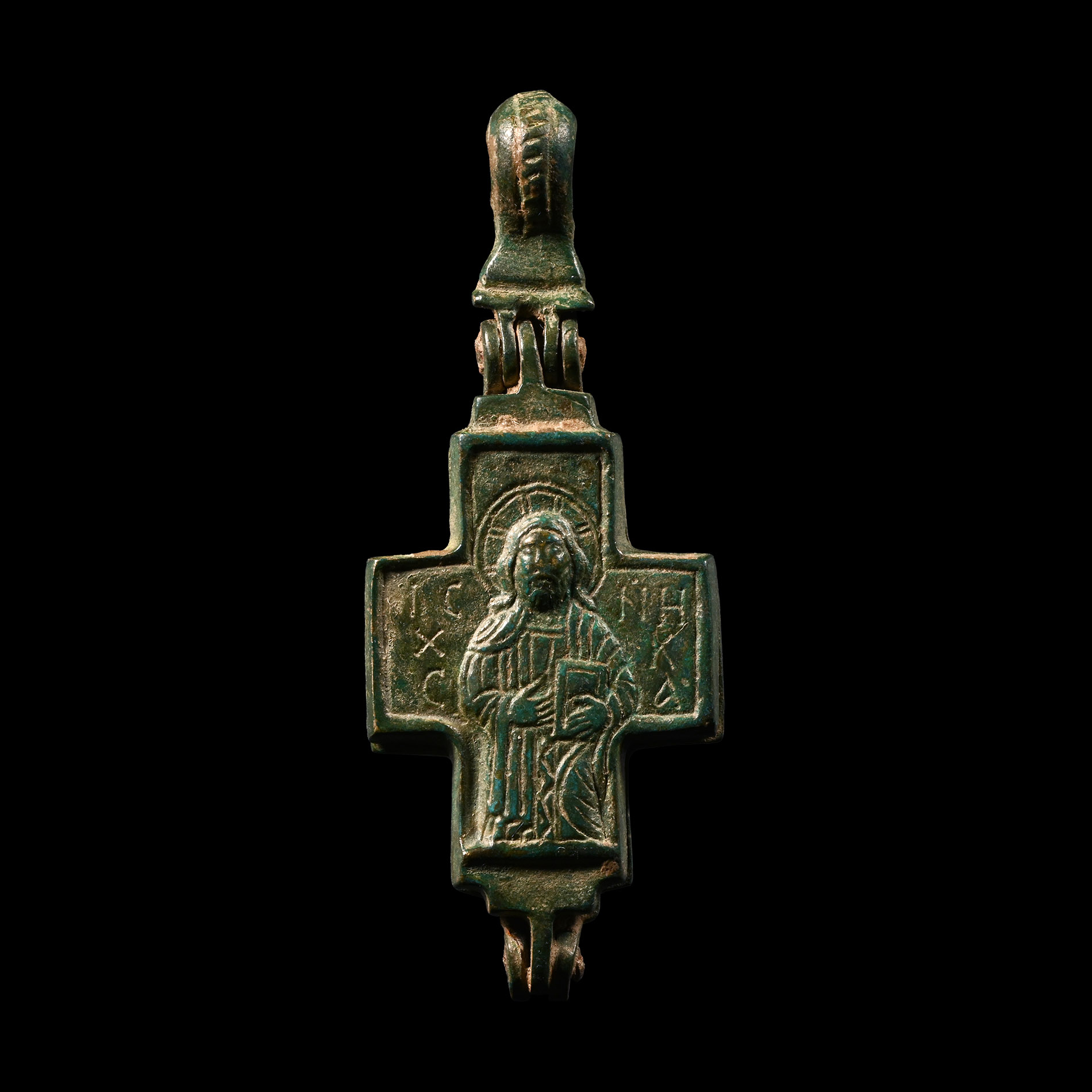
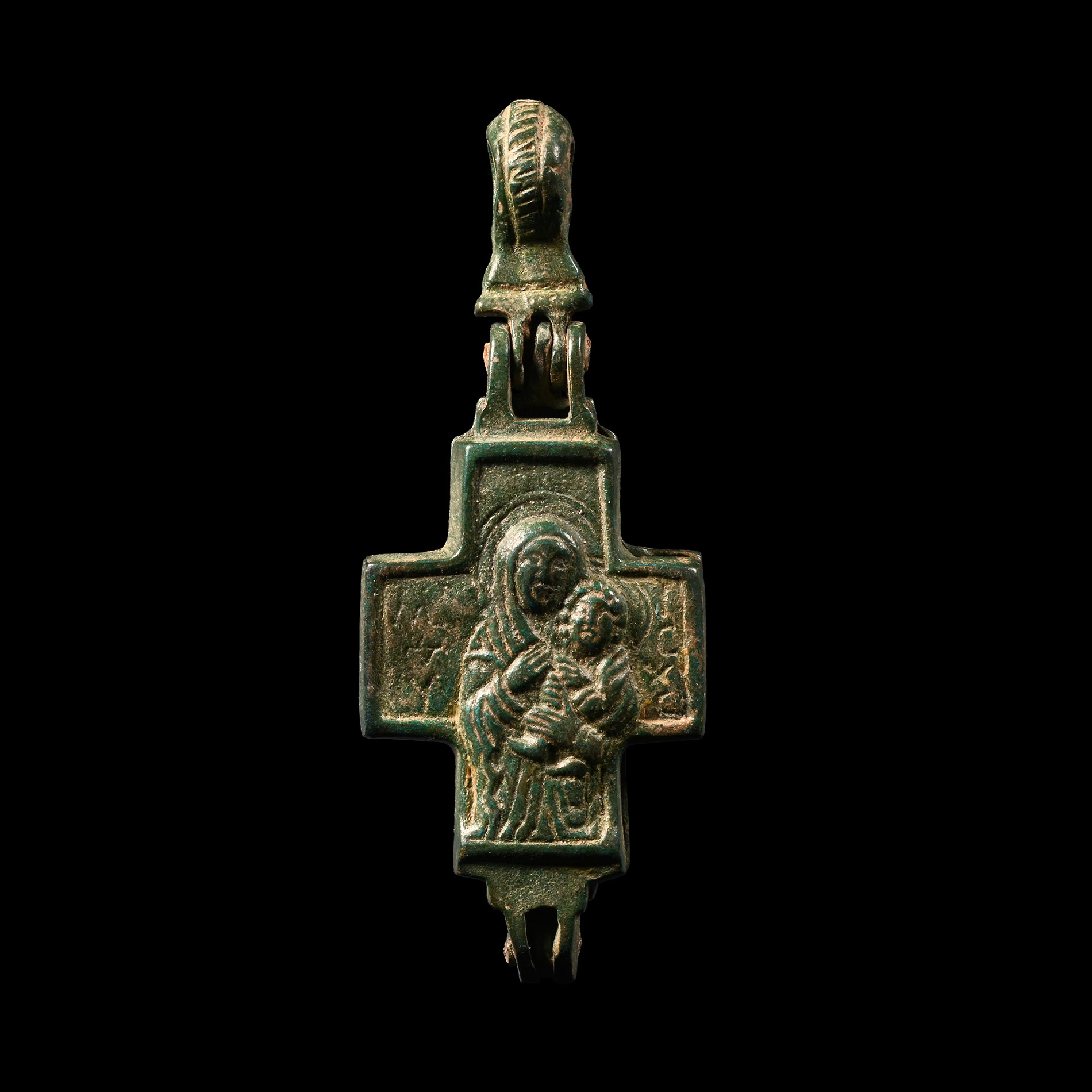
Byzantine Reliquary Cross Pendant
10TH-12TH CENTURY A.D.
3 1/8 in. (34.4 grams, 79 mm).
A bronze enkolpion reliquary pendant with hinged body; suspension loop with ropework median panel, hollow body with obverse: nimbate Christ holding a book and legend 'ICXC / NHKA'; reverse: Mary Theotokos and infant Jesus and legend 'MΘΥ / ICXC'.
ProvenanceAcquired in the late 1990s-2000.
Property of an East London gentleman.
Cf. Pitarakis, B., Les Croix-Reliquaires Pectorales Byzantines en Bronze, Bibliothèques des Cahiers Archéologiques - XVI, editions A. et J. Picard, Paris, 2006, items 155, 578, for type.
CONDITIONTimeLine Auctions follows a vetting process to ensure the authenticity and legality of all items, reinforcing our commitment to integrity and responsible trading. Each antiquity, antique, and coin lot undergoes thorough examination by a vetting committee of at least ten external specialists, professional trade association members, scientists, and archaeologists: Our Vetting Process
AUCTIONS:
TimeLine is a leading auction house specialising in antiquities, ancient art, collectables, natural history, coins, medals, and books. Our auctions offer museums, collectors, historians, and enthusiasts the opportunity to acquire unique and historically significant pieces.
-
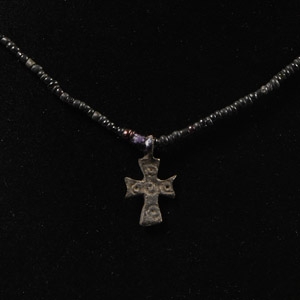
Byzantine Black Glass Necklace with Cross
6th-8th century A.D.Sold for (Inc. bp): £85
A restrung necklace composed of small black glass and stone beads of a variety of types, together with a central cross pendant with ring and dot motifs representing the Five Wounds of Christ. 7.68 grams, 46 cm long
Acquired 1980-2015. Ex Abelita family collection. -
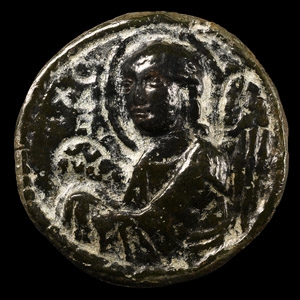
Byzantine Roundel with Saint
Circa 12th century A.D.Sold for (Inc. bp): £143
A roundel bearing an angel in high-relief to one face, looking left, the hands in offering gesture covered by his garment, Greek letters 'APX' (for Archangel) on the left side of his face. 29.2 grams, 44 mm
German art market, 1990s. Mr A.H., a North American collector living in the UK. -
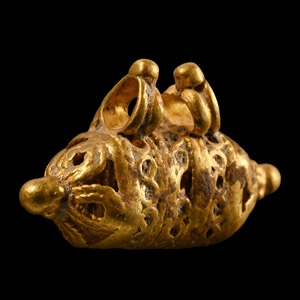
Byzantine Gold Openwork Pendant
Circa 12th-14th century A.D.Sold for (Inc. bp): £364
A capsule-shaped openwork gold pendant decorated with vertical columns of filigree figures of eight between beaded tracks, domed cap to each terminal formed as four-petalled flowers with central pellet; two ribbed suspension loops with apex granules. 2.25 grams, 18 mm
Acquired 1969-1999. London collection of the late Mr S.M., thence by descent.
