
Loading, please wait...

LOT 0947
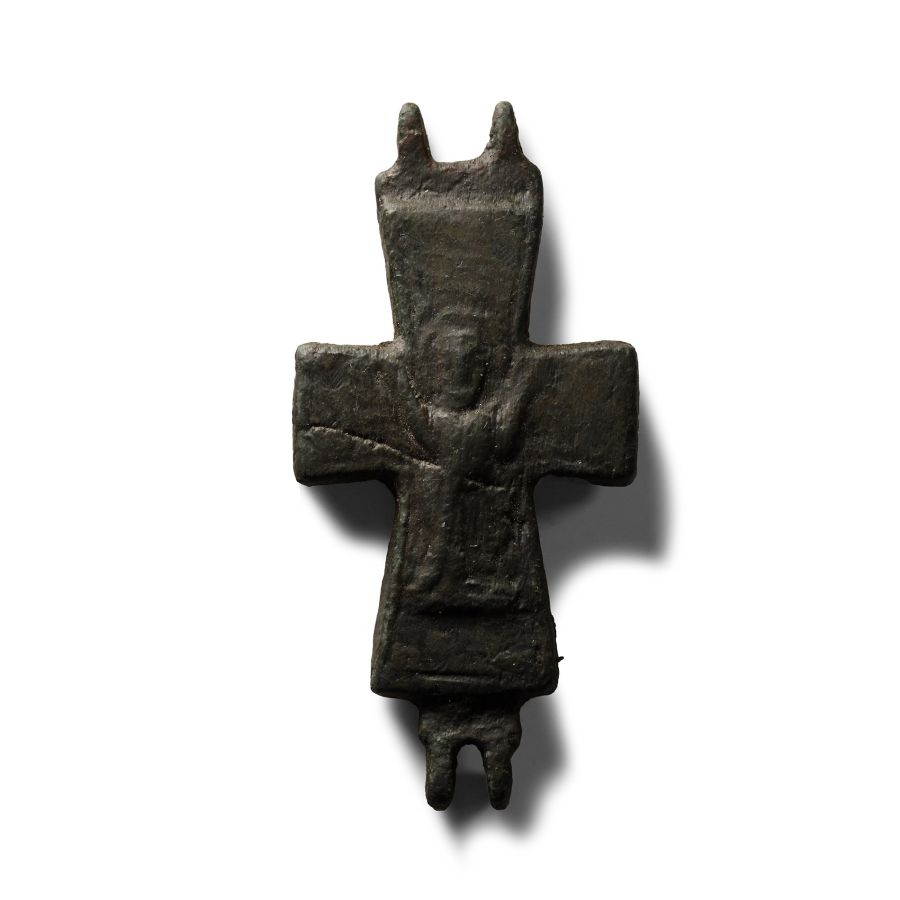
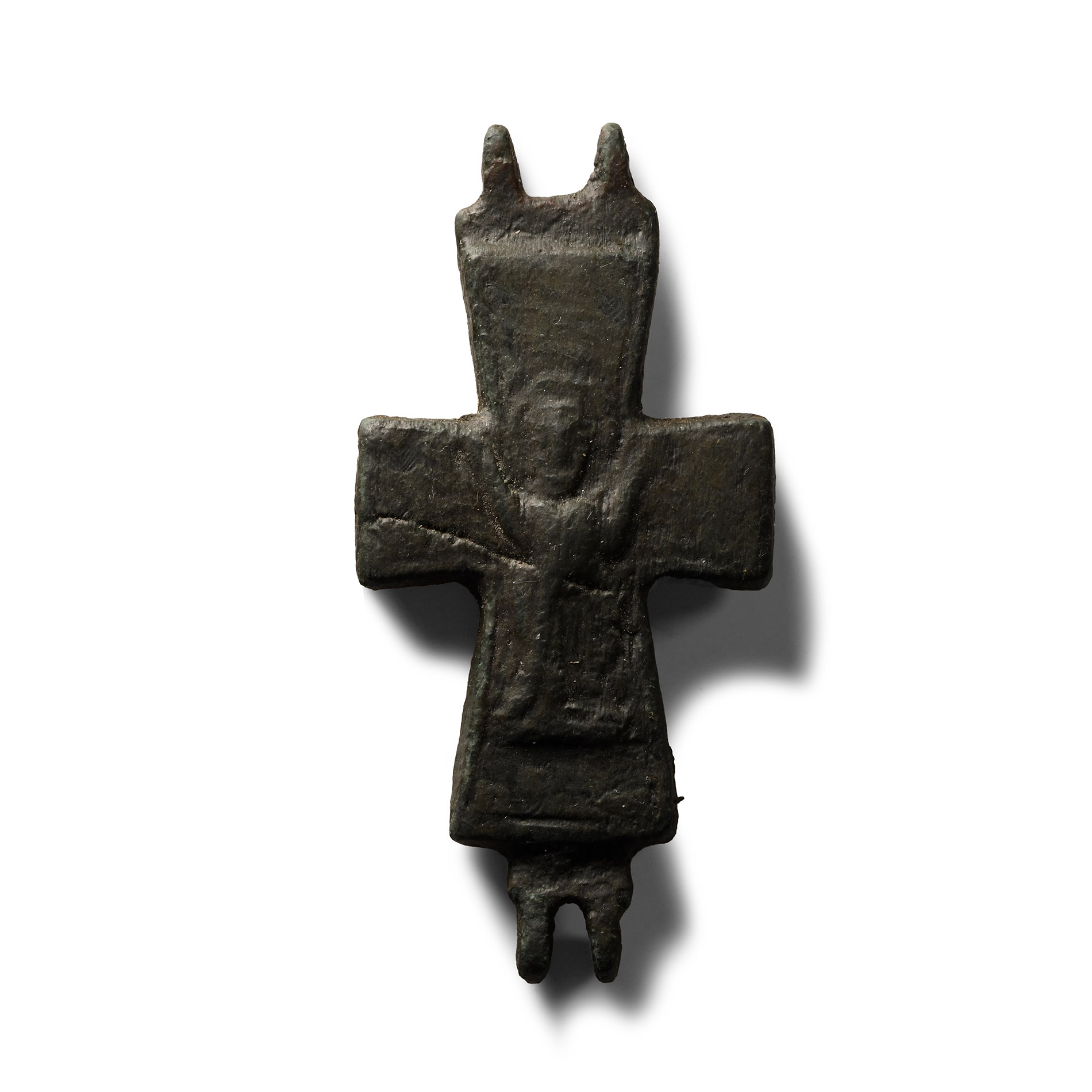
Byzantine Reliquary Cross Pendant Plate
10TH-12TH CENTURY A.D.
2 1/8 in. (13 grams, 54 mm).
Obverse plate from an enkolpion with low-relief nimbate figure in orans posture. [No Reserve]
ProvenanceEx property of a North London, UK, gentleman, 1990s.
LiteratureSee Pitarakis, B., Les Croix-Reliquaires Pectorales Byzantines en Bronze, Paris, 2006, for discussion.
CONDITIONTimeLine Auctions follows a vetting process to ensure the authenticity and legality of all items, reinforcing our commitment to integrity and responsible trading. Each antiquity, antique, and coin lot undergoes thorough examination by a vetting committee of at least ten external specialists, professional trade association members, scientists, and archaeologists: Our Vetting Process
AUCTIONS:
TimeLine is a leading auction house specialising in antiquities, ancient art, collectables, natural history, coins, medals, and books. Our auctions offer museums, collectors, historians, and enthusiasts the opportunity to acquire unique and historically significant pieces.
-
Byzantine Bronze Pendant with Saints
Circa 10th-12th century A.D.Sold for (Inc. bp): £390
Cruciform with segmented obverse, each cell with the bust of a saint and legend above. 25 grams, 63 mm
Private collection formed in Europe in the 1980s. Westminster collection, central London, UK. -
Byzantine Gold Cross Pendant
5th-6th century A.D.Sold for (Inc. bp): £3,315
Hollow-formed sheet gold cruciform pendant with filigree ropework to the end of each expanding tubular arm, band of beading to the upper face of each arm and central pellet; bale to the upper end. 3.67 grams, 40 mm
Acquired in the mid 1980s-1990s. From the family collection of Mr S.A., Switzerland, thence by descent. Private collection since the late 1990s. This lot has been checked against the Interpol Database of stolen works of art and is accompanied by a search certificate number no.12114-218167. -
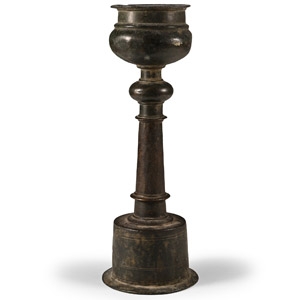
Byzantine Bronze Oil Lamp Stand
12th-13th century A.D.Sold for (Inc. bp): £715
Comprising a hollow drum-shaped base with flange rim, tapering stem with raised collars, broad bowl with raised neck and gusseted rim. 659 grams, 25 cm
Ex London, UK, gallery, 1971-early 2000s. London, UK, collection.
