
Loading, please wait...
LOT 1134
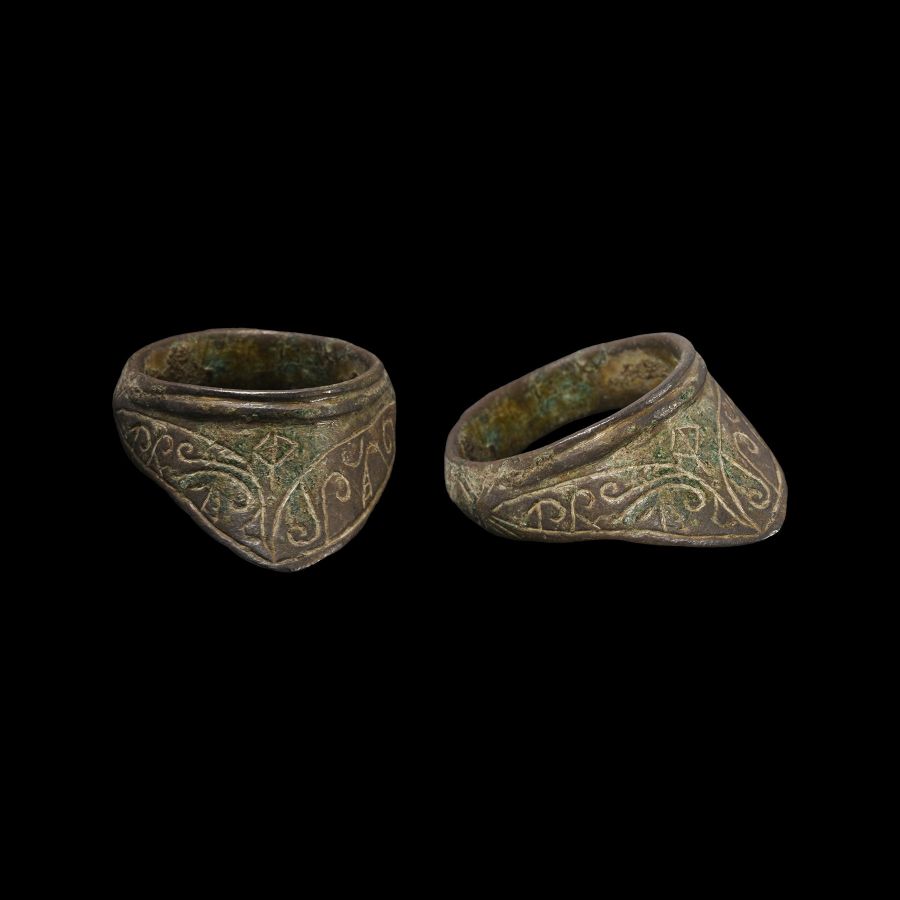
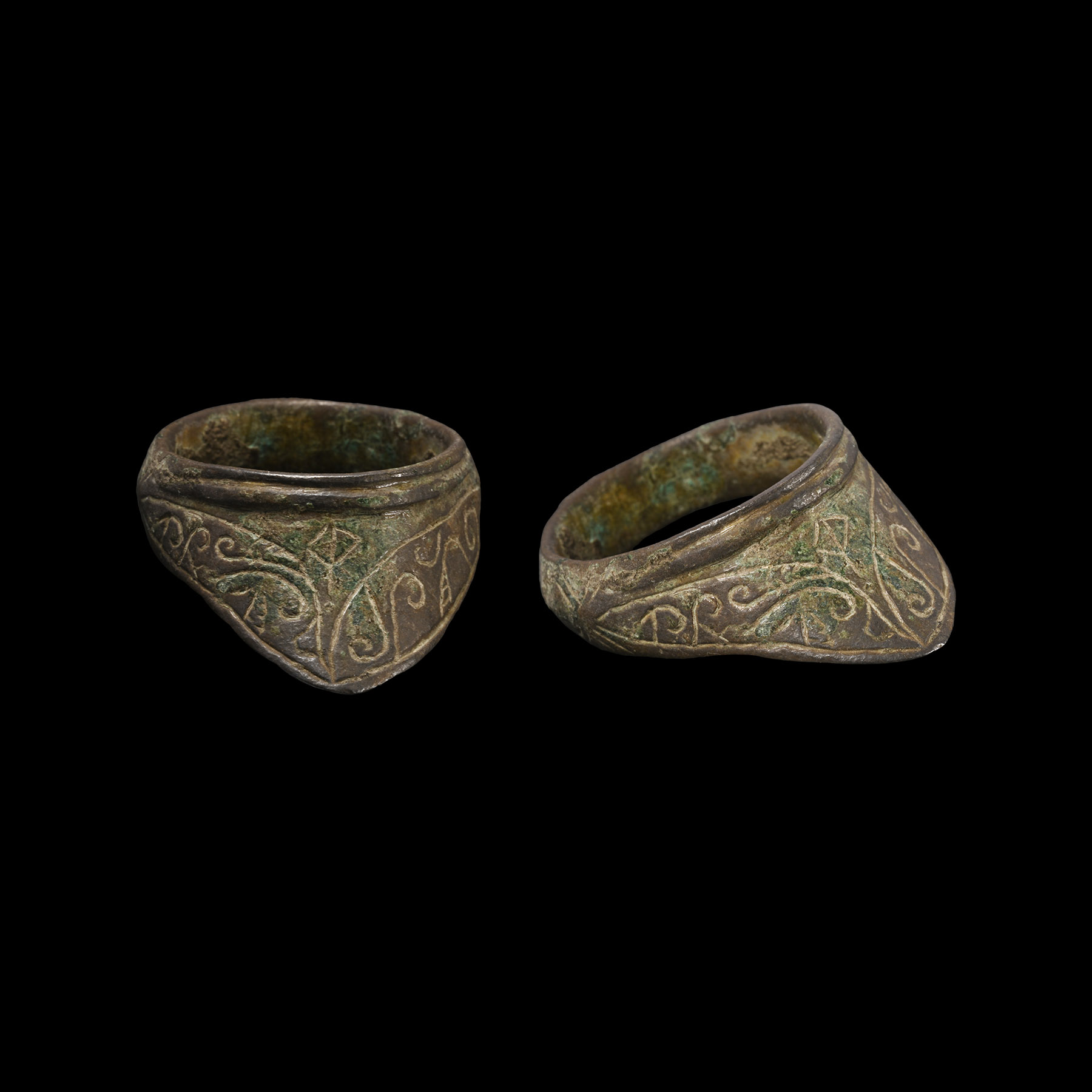
Byzantine Period Bronze Decorated Archer's Ring
12TH-15TH CENTURY A.D.
1 3/8 in. (9.14 grams, 34.97 mm overall, 21.22 mm internal diameter (approximate size British X 1/2, USA 11 3/4, Europe 26.92, Japan 25)).
Comprising a hoop with scrolled ornament on the carinated edge and triangular plaque with foliage motifs. [No Reserve]
ProvenanceAcquired 1980-2015.
Ex Abelita family collection.
Cf. Bikic, V., Beyond the Jewellery: Archer’s Rings in the Medieval Balkans (14th-15th centuries) in Bosselmann-Ruickbie, A. (ed.), New Research on Late Byzantine Goldsmiths’ Works (13th-15th Centuries), Mainz, 2019, figs.5, 6, 7.
CONDITIONTimeLine Auctions follows a vetting process to ensure the authenticity and legality of all items, reinforcing our commitment to integrity and responsible trading. Each antiquity, antique, and coin lot undergoes thorough examination by a vetting committee of at least ten external specialists, professional trade association members, scientists, and archaeologists: Our Vetting Process
AUCTIONS:
TimeLine is a leading auction house specialising in antiquities, ancient art, collectables, natural history, coins, medals, and books. Our auctions offer museums, collectors, historians, and enthusiasts the opportunity to acquire unique and historically significant pieces.
-
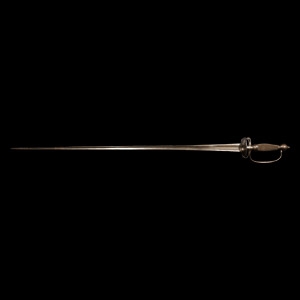
Georgian Steel Rapier Sword
Late 18th-early 19th century A.D.Sold for (Inc. bp): £208
With long triangular-section blade and narrow acute tip, shell-guard hilt with two rings to the reverse and knuckle-guard, wire-bound grip, poppyhead pommel with knop finial. 497 grams, 102.5 cm
Acquired UK market. Property of a Kent collector. -
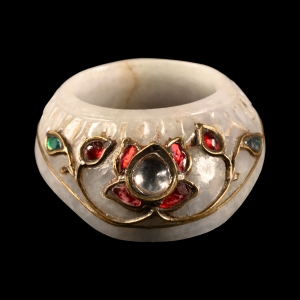
Mughal Jade Archer's Ring with Diamond, Rubies and Emeralds
18th-19th century A.D.Sold for (Inc. bp): £390
Carved in mottled pale grey jade with radiating lotus leaves around the central hole, applied gold wire hoop and tendril detailing with two emeralds and six cabochon rubies inset, the central flower with inset teardrop facetted diamond; with a thin crack to the back of the hoop. 15.5 grams, 44.55 mm overall, 21.86 mm internal diameter (approximate size British Z, USA 12 1/2, Europe 28.77, Japan 27).
Formerly in the family collection of a Hampstead gentleman, from the 1980s. Acquired in TimeLine Auctions sale 119, lot 2518. Property of a Kent collector. -
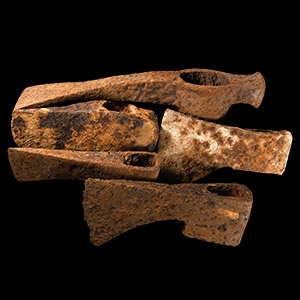
Medieval Iron Artefact Collection
14th-18th century A.D.Sold for (Inc. bp): £130
Comprising axeheads of different types, together with a pickaxe with a small hammer-style butt. 5.48 kg total, 16-30 cm
Acquired 1990s-early 2000s. East Anglian private collection.
Various axes of similar types have been recovered from the colonies of the New World. One of our specimen seems to be a French hatchet marked with a cross and circle, like the one found in the estate of Tom Wnuck.
