
Loading, please wait...
LOT 0781
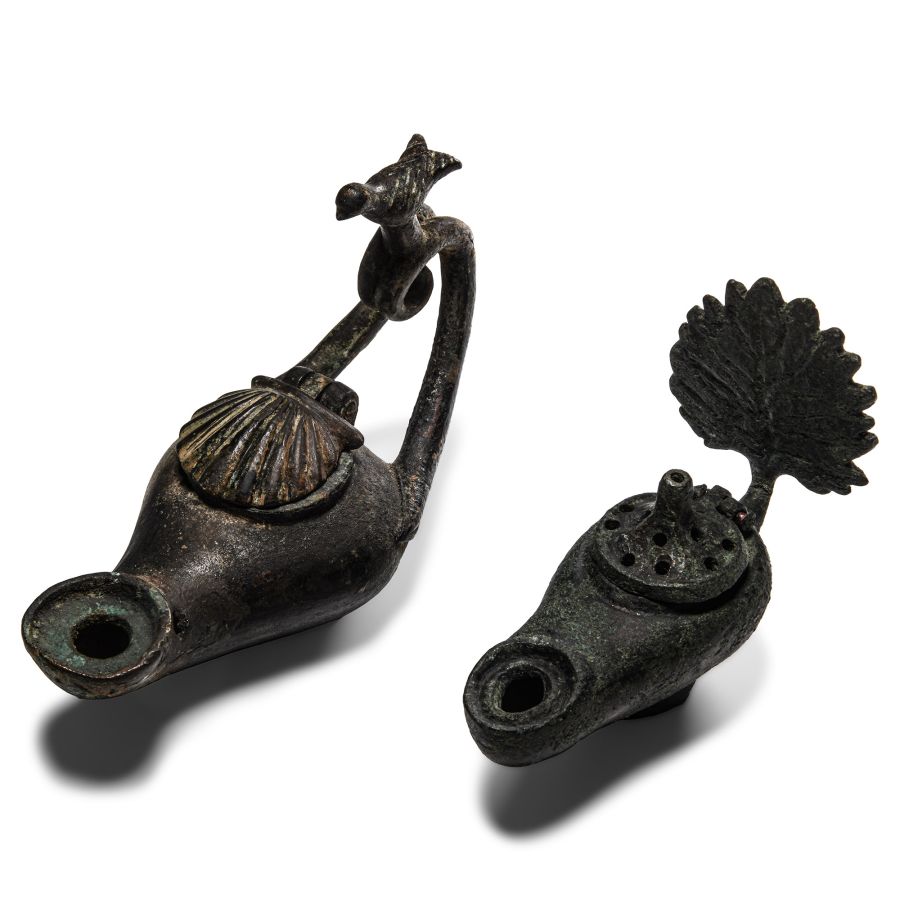
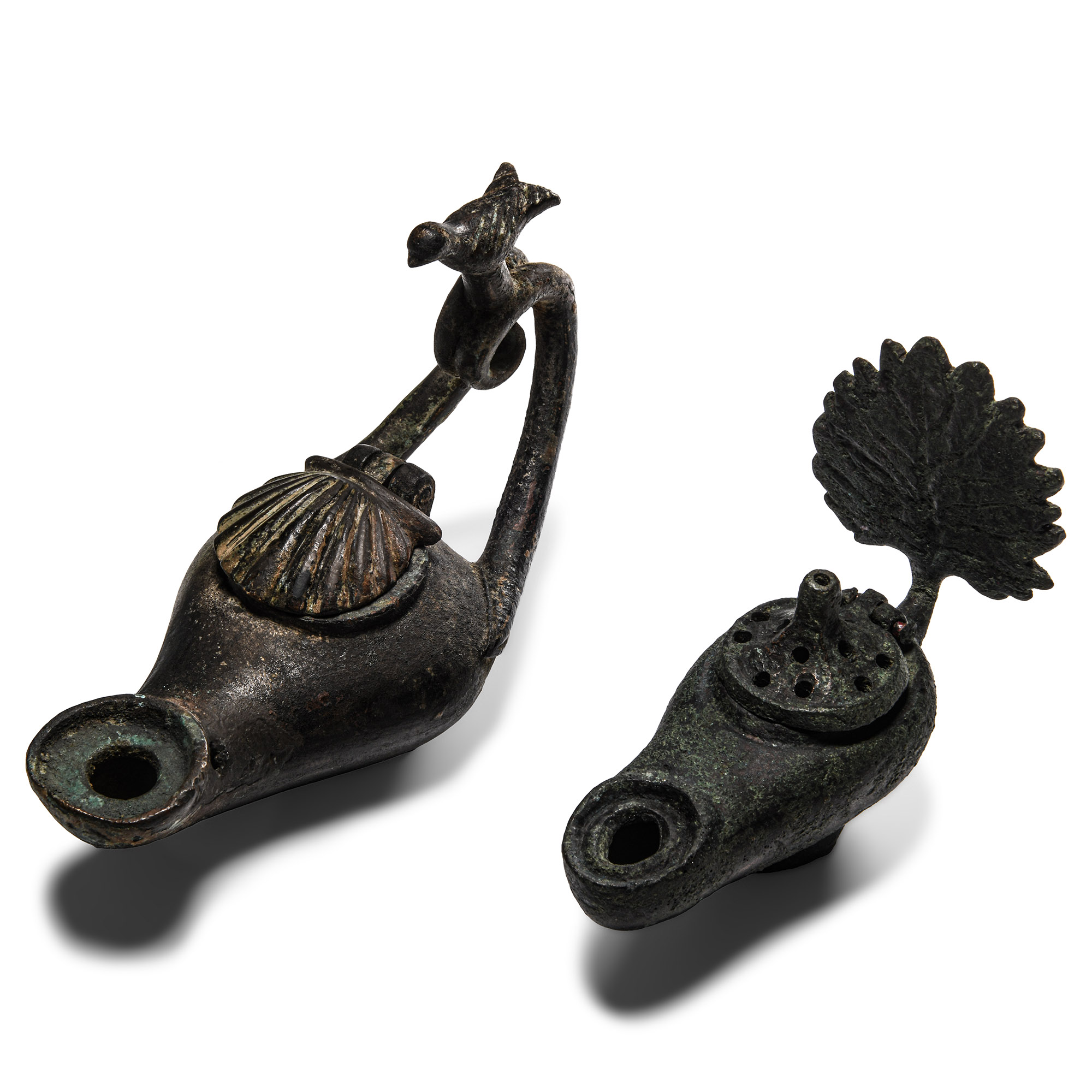
Byzantine Oil Lamp Group
5TH-7TH CENTURY A.D.
4 - 5 3/4 in. (748 grams total, 10-14.5 cm).
Group of two bronze lamps comprising: one with heart-shaped body, squat nozzle with recessed disc finial, hinged lid shaped as a scallop, basal disc with square hole to accept a stand, two curled arms at the rear forming the handle with thumb-pad formed as a perching bird; one slipper-shaped with ovoid nozzle, scooped conical lid with regular piercings, piriform basal ring, curved arm to the rear developing to a leaf-shaped reflector. [2]
ProvenanceCollected from the 1950s-1980s by a distinguished university professor who served as Department Head, Dean and Vice President for a major university.
Ex Emeritus collection, North America.
Accompanied by a copy of a Spanish export licence.
TimeLine Auctions follows a vetting process to ensure the authenticity and legality of all items, reinforcing our commitment to integrity and responsible trading. Each antiquity, antique, and coin lot undergoes thorough examination by a vetting committee of at least ten external specialists, professional trade association members, scientists, and archaeologists: Our Vetting Process
AUCTIONS:
TimeLine is a leading auction house specialising in antiquities, ancient art, collectables, natural history, coins, medals, and books. Our auctions offer museums, collectors, historians, and enthusiasts the opportunity to acquire unique and historically significant pieces.
-
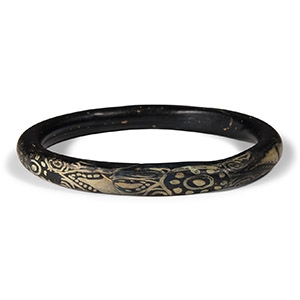
Byzantine Decorated Glass Bracelet
Circa 6th-8th century A.D.Estimate: £250 - 350 (+bp*)
Opening Bid: £125
In black glass with intricate decorative design in contrasting colour comprising eye motifs, palmettes and pellet designs. 33.3 grams, 84 mm wide
Collected from 1969-1999. From the collection of the late Mr S.M., London, UK. -
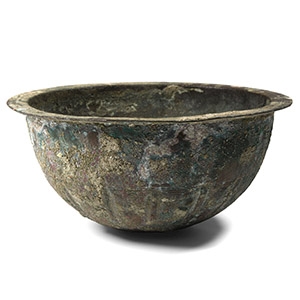
Byzantine Ribbed Bronze Bowl
Circa 12th-14th century A.D.Sold for (Inc. bp): £221
Of hemispherical form with broad everted rim, shallow fluting to the lower body. 603 grams, 15 cm wide
Acquired 1990s-early 2000s. East Anglian private collection. -
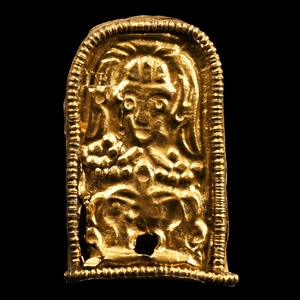
Byzantine Gold Strap End with Facing Figure
Circa 9th-10th century A.D.Estimate: £600 - 800 (+bp*)
Opening Bid: £320
The hollow-formed, tongue-shaped body adorned with a filigree border, repoussé figure with pellets on the torso and serpents framing the head. 7.40 grams, 39 mm
Acquired 1990s-early 2000s. East Anglian private collection.
