
Loading, please wait...
LOT 0225
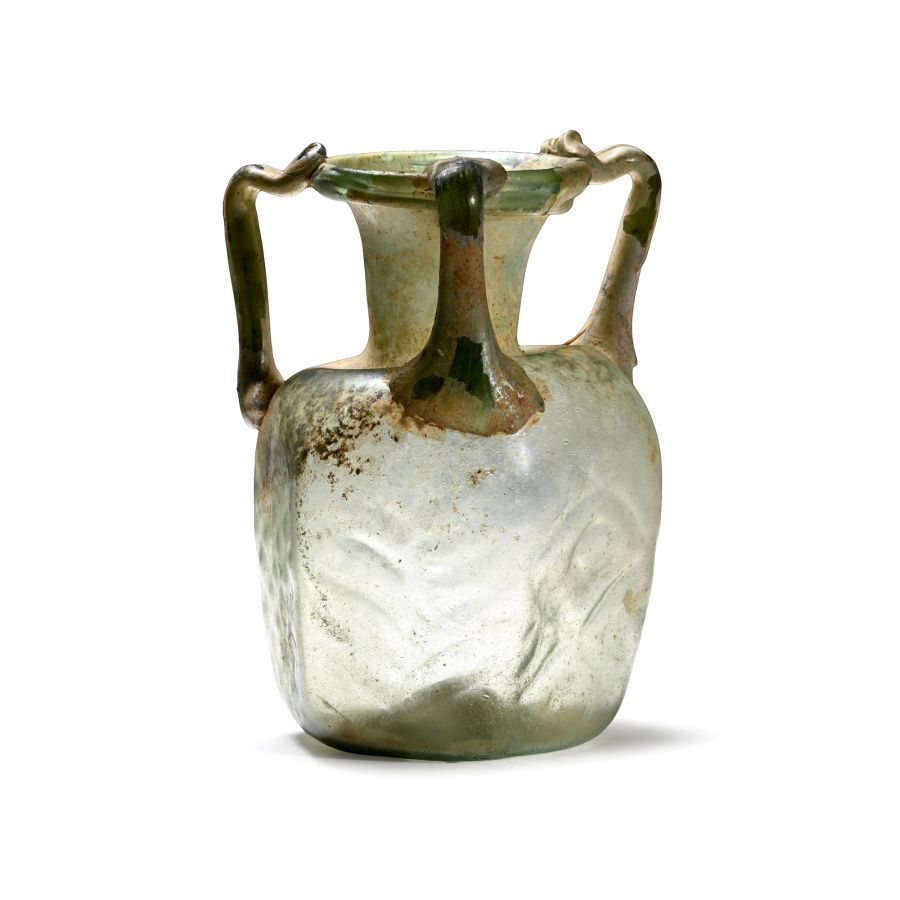
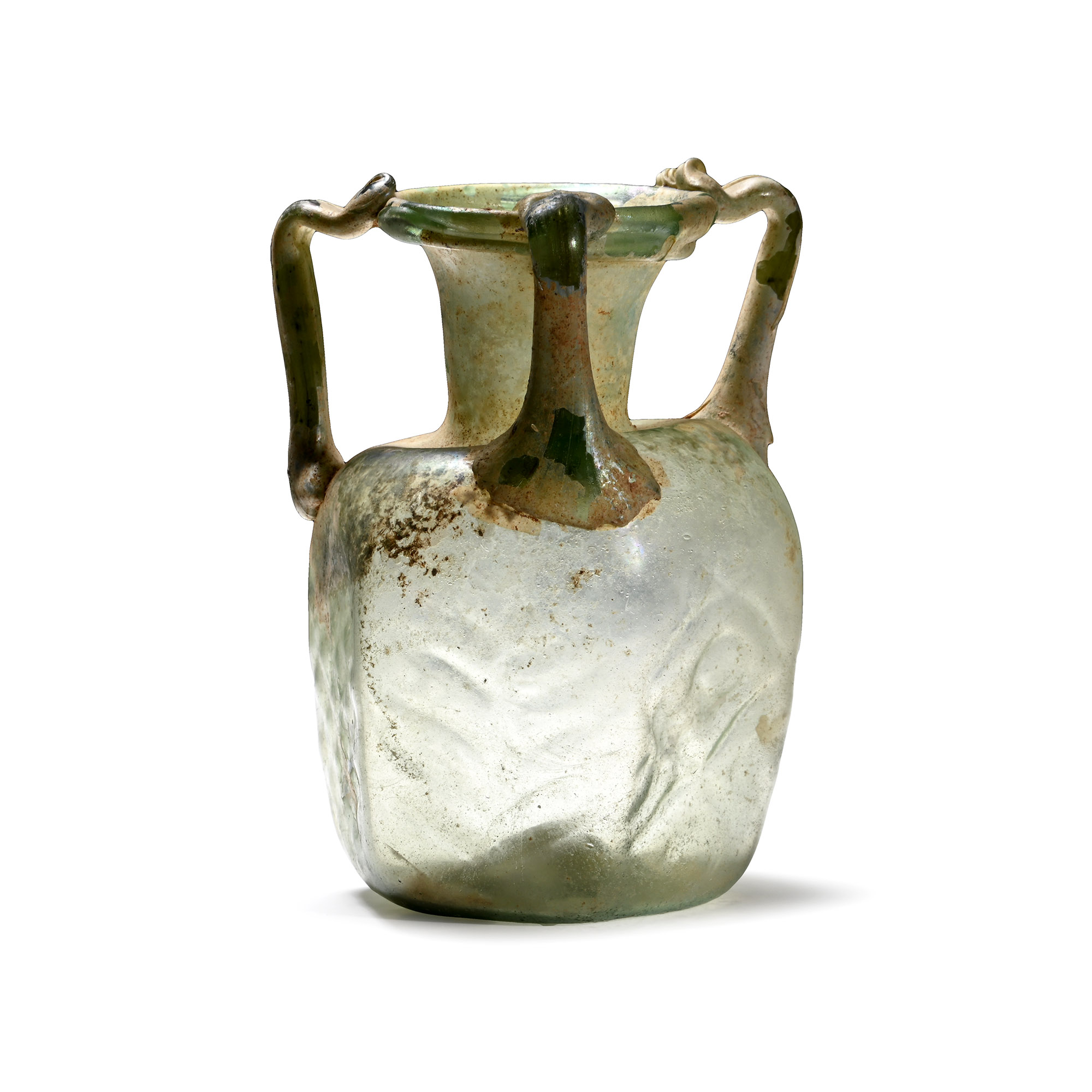
Byzantine Mould-Blown Translucent Pale Green Glass Three-Handled Jug
5TH-8TH CENTURY A.D.
3 3/4 in. (58 grams, 93 mm high).
Hexagonal body with a short cylindrical neck and a flaring rim, three applied handles extending from the rim to the shoulders, geometric decoration on the panels.
ProvenanceRoman glass from an important London collection, acquired from the early 1980s.
From an important London glass collection, 1990s.
Accompanied by a typed previous catalogue information page with provenance.
Cf. Harden, D.B., Glass of the Caesars, Milan, 1987, no.98, for a similar octagonal jug without handles.
FootnotesThese octagonal or hexagonal jugs or jars were possibly made as tokens for pilgrims visiting the holy sites in Jerusalem or for use in burial rites. In the late 6th and early 7th century A.D., they were mass-produced in moulds for the pilgrim trade in the Holy Land, in the vicinity of the holy city, but they were found all around the Mediterranean, especially in islands like Cyprus, an important place on the sea route that brought pilgrims to Jerusalem. Such vessels were probably filled with oil from holy sites and sold to pilgrims.
CONDITIONTimeLine Auctions follows a vetting process to ensure the authenticity and legality of all items, reinforcing our commitment to integrity and responsible trading. Each antiquity, antique, and coin lot undergoes thorough examination by a vetting committee of at least ten external specialists, professional trade association members, scientists, and archaeologists: Our Vetting Process
AUCTIONS:
TimeLine is a leading auction house specialising in antiquities, ancient art, collectables, natural history, coins, medals, and books. Our auctions offer museums, collectors, historians, and enthusiasts the opportunity to acquire unique and historically significant pieces.
LOT 0225
Byzantine Mould-Blown Translucent Pale Green Glass Three-Handled Jug
Estimate £1,000 - 1,400€1,160 - 1,620 (for guidance only)$1,350 - 1,890 (for guidance only)
Opening Bid
£550 (EUR 638; USD 743) +BP*
-
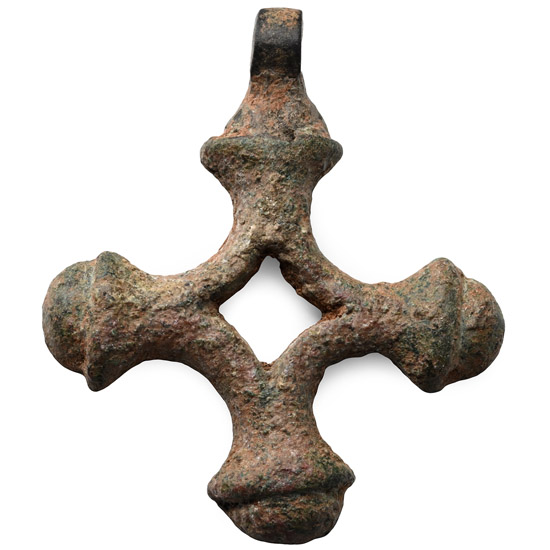
Byzantine Bronze Cross Pendant
Circa 10th-12th century A.D.Estimate: £40 - 60 (+bp*)
Opening Bid: £5
With central lozenge void, short arms terminating in buds, pierced lug above. 15.7 grams, 45.7 mm
Private collection, 1980s. Acquired on the UK art market. Private collection, London, UK. -
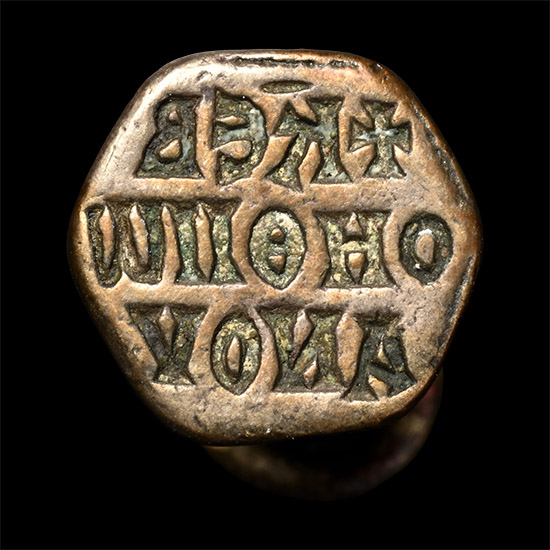
Byzantine Bronze Seal Matrix with Inscription
Circa 14th century A.D.Estimate: £80 - 100 (‡+bp*)
Opening Bid: £5
Hexagonal in plan with tapering sides, collar, loop and suspension ring; incuse legend '+KEB / [.]HOΠω/ANOU'; supplied with a museum-quality impression. 7.4 grams, 24 mm
Private collection of Kal Noselson, New York, acquired between 1976 and the late 1990s; thence by descent. -
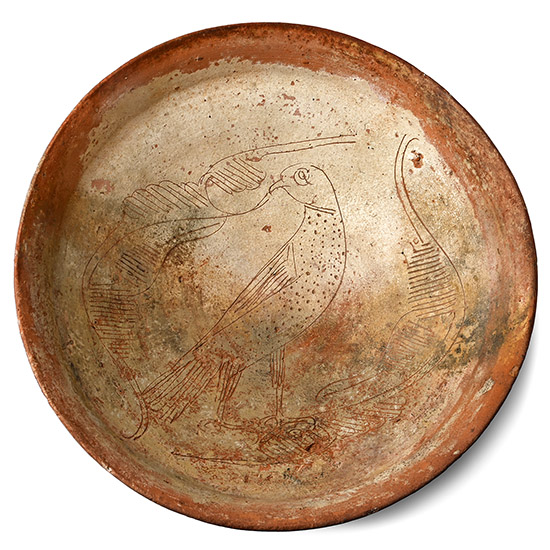
Byzantine Terracotta Sgrafitto Dish with a Falcon Among Leafy Branches
Perhaps Corinth, mid-12th century A.D.Estimate: £500 - 700 (+bp*)
Opening Bid: £5
Broad and squat with carination to the exterior face, and a broad foot ring; cream glaze with sgraffito design of a delineated falcon in profile, surrounded by leafy branches and holding one of the branches in its hooked beak. 1.04 kg, 26.3 cm
Private collection (L.v.L.), Rhineland-Pfalz, Germany, acquired between 1960s-1980s.
In the Byzantine Empire, and even more so in the Islamic world, hunting falcons were a symbol of wealth and high status. The spectrum of designs in which they are to be found on 12th-century Byzantine pottery, in particular, offers a forceful testament both to the cultural reach of such vessels during the period and to the skill of the potters who were able to produce large numbers of beautifully worked slipware vessels destined for marine trade. The present example is likely to have been discovered in the late 1960's, when it is thought a 12th-century shipwreck laden with slipware vessels was excavated off the coast of Izmir.
