
Loading, please wait...
LOT 0158
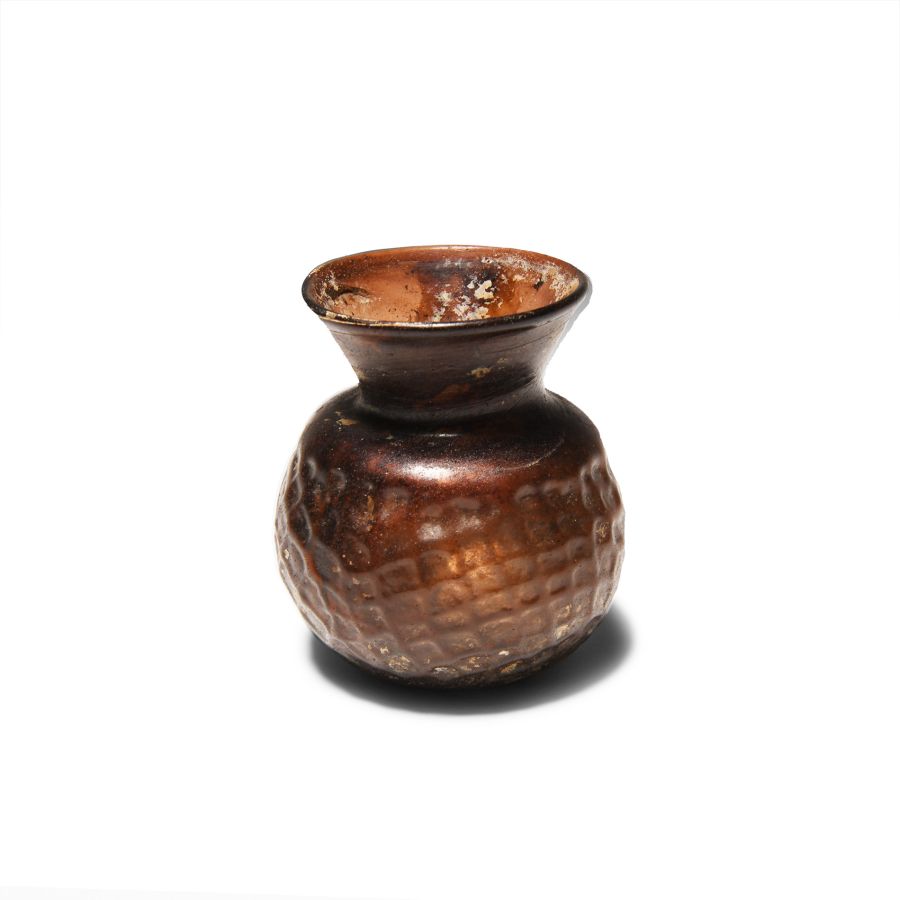
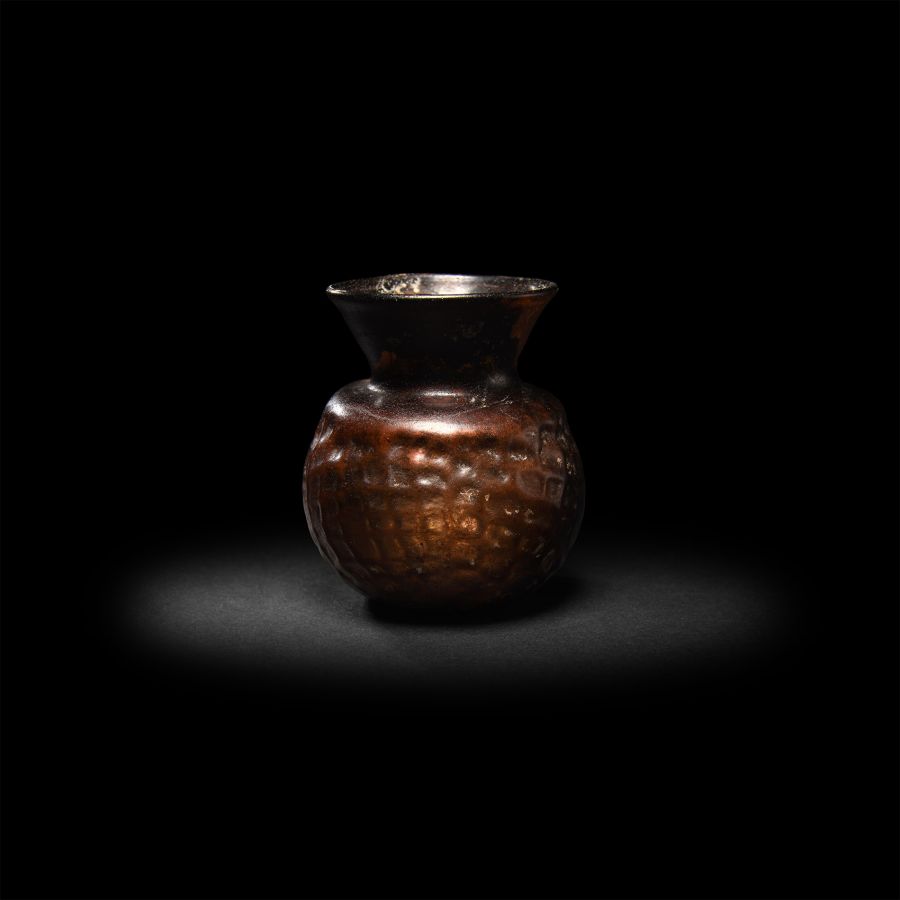
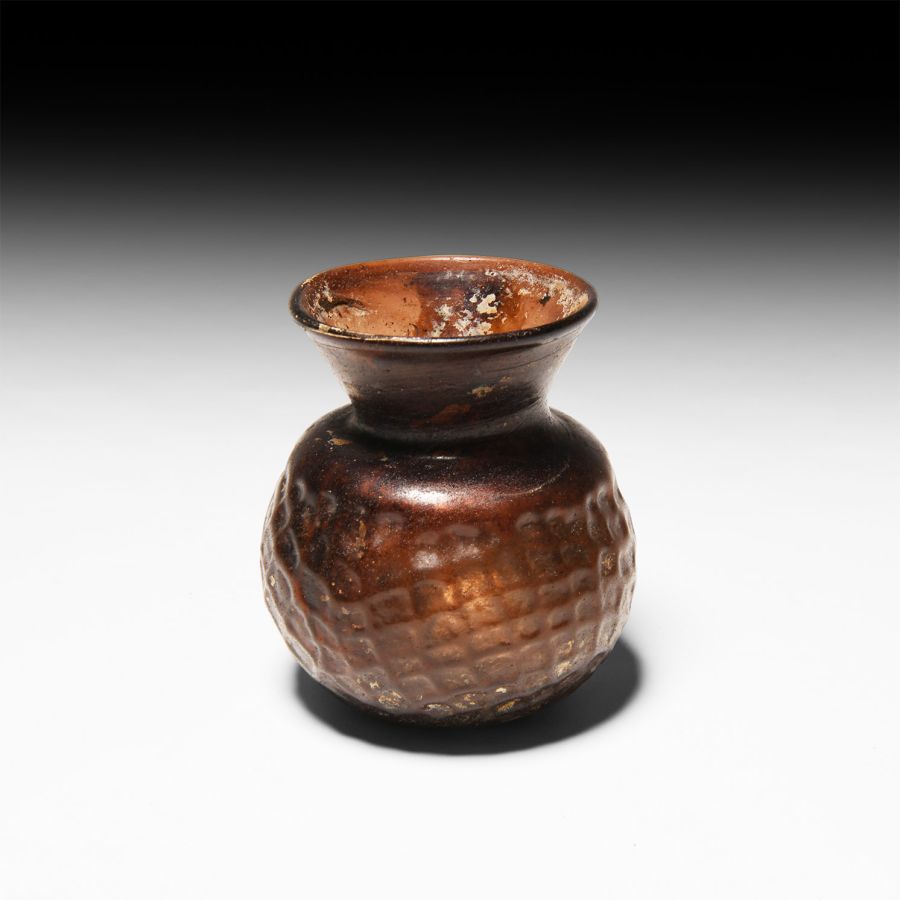
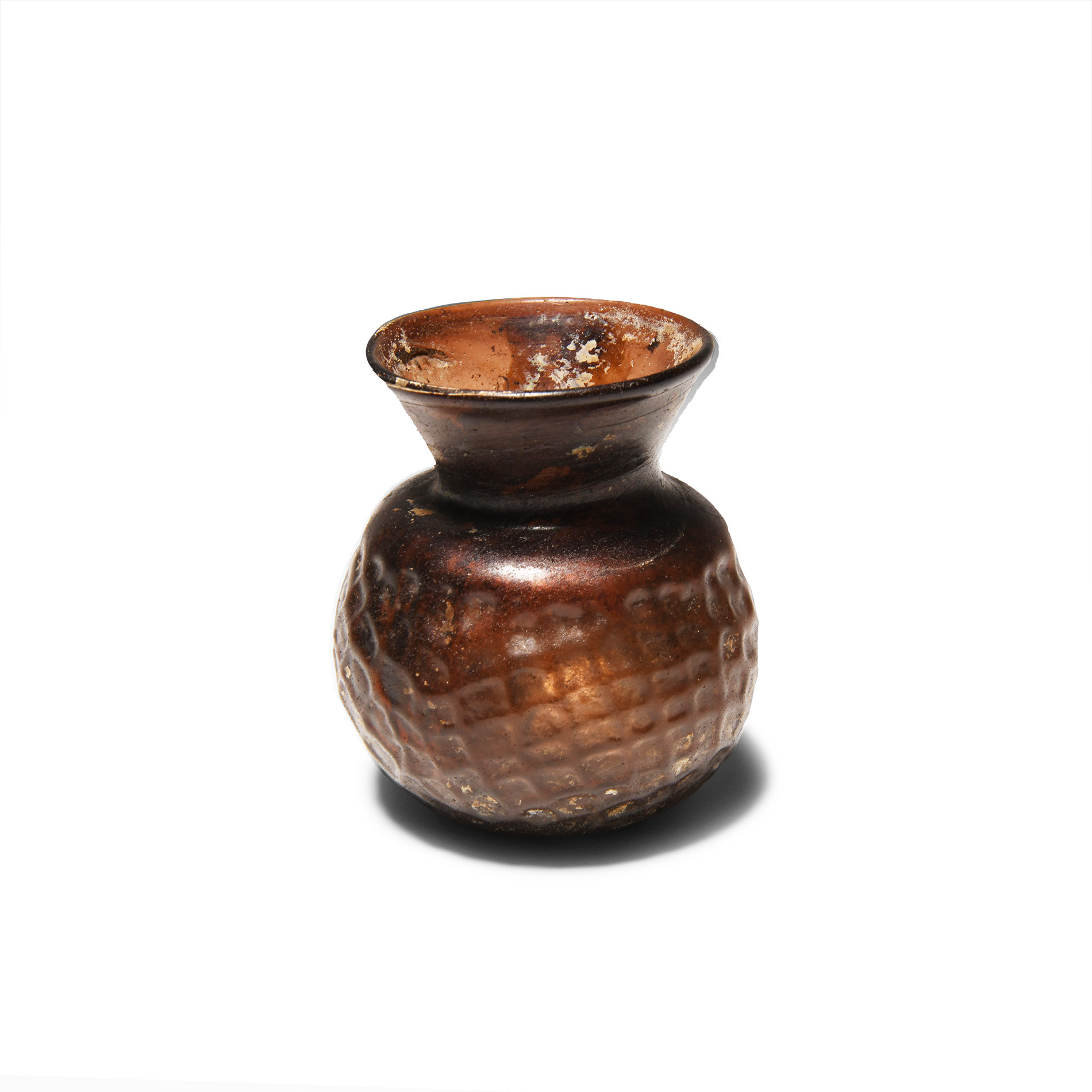
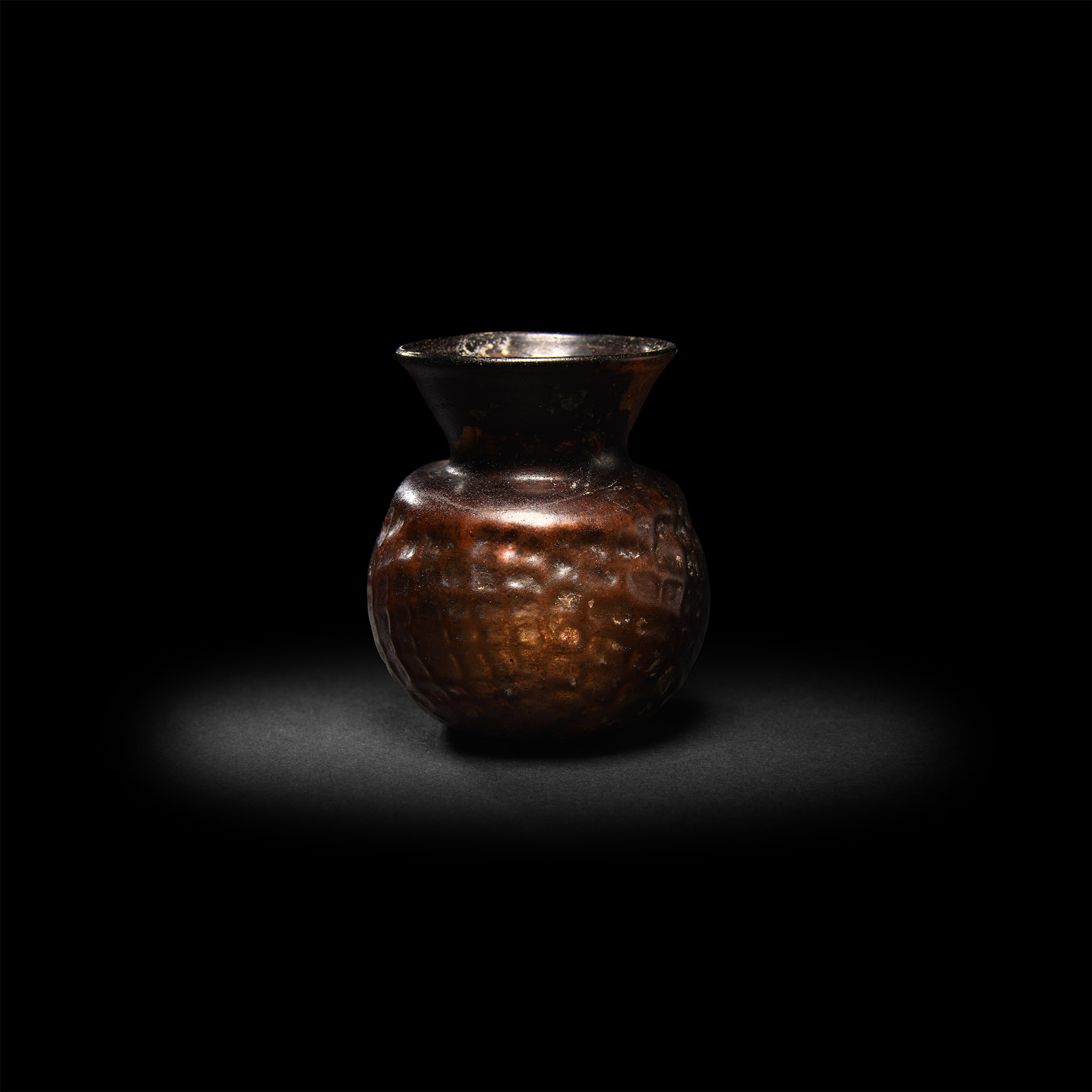
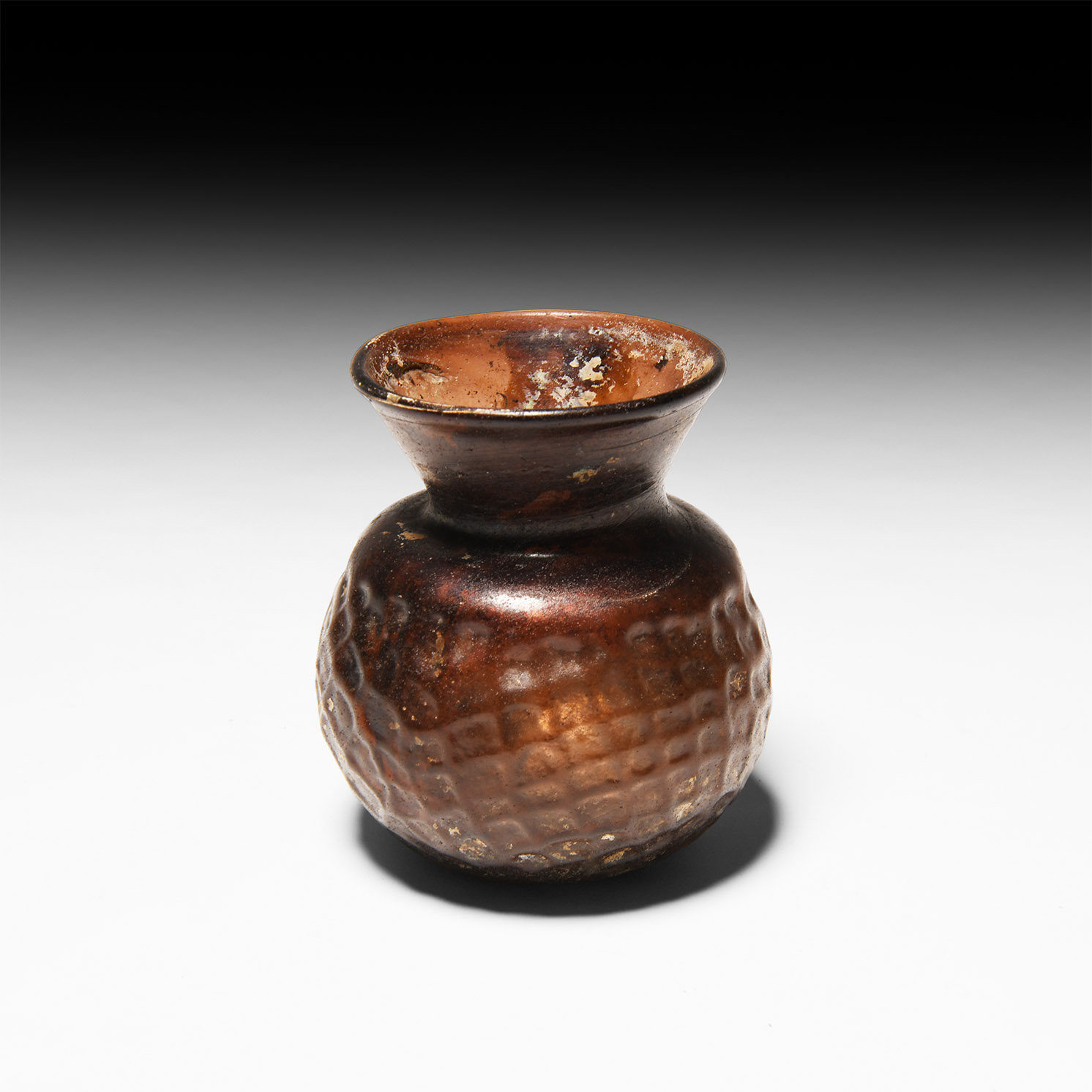
Byzantine Mould-Blown Aubergine Glass Jar
5TH-8TH CENTURY A.D.
2 3/4 in. (58 grams, 69 mm high).
A mould-blown aubergine glass jar or flask with bulbous body featuring a 'net' design and trumpet-style neck and rim; shallow kick-up to base; iridescent surfaces.
ProvenanceAcquired 1969-1999.
London collection of the late Mr S.M., thence by descent.
TimeLine Auctions follows a vetting process to ensure the authenticity and legality of all items, reinforcing our commitment to integrity and responsible trading. Each antiquity, antique, and coin lot undergoes thorough examination by a vetting committee of at least ten external specialists, professional trade association members, scientists, and archaeologists: Our Vetting Process
AUCTIONS:
TimeLine is a leading auction house specialising in antiquities, ancient art, collectables, natural history, coins, medals, and books. Our auctions offer museums, collectors, historians, and enthusiasts the opportunity to acquire unique and historically significant pieces.
LOT 0158
Byzantine Mould-Blown Aubergine Glass Jar
Estimate £700 - 900€810 - 1,040 (for guidance only)$950 - 1,220 (for guidance only)
-
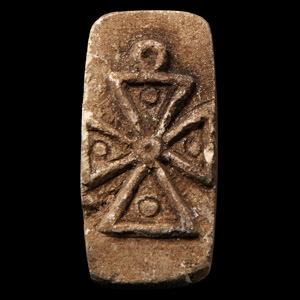
Byzantine Bread Seal with Cross
6th-10th century A.D.Sold for (Inc. bp): £169
A stone or ceramic bread seal with rectangular base and two sub-triangular sidewalls, base with expanding-arm cross in relief to centre, annulet at centre and to each arm, likely representing the Five Wounds of Christ; pierced through apex for suspension. 83 grams, 59 mm
Acquired early 1990s. Ex private American collection; thence by descent. Private collection since 1998. -
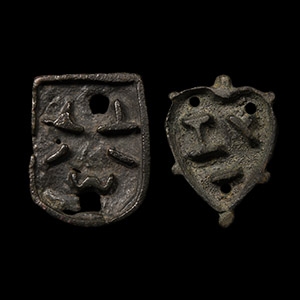
Byzantine Bread Stamp Group
6th-7th century A.D.Estimate: £150 - 200 (+bp*)
Opening Bid: £75
A group of two bread stamps: one sub-rectangular in form with Greek capital letters (Mi, Iota, Iota, Tau and Tau, Iota, Eta) in raised relief, suspension lug to reverse; a leaf-shaped stamp with lugs to the perimeter and three raised letters to the centre, suspension lug to reverse. 40.8 grams total, 38 mm each
Acquired before 2000. From the collection of a European gentleman living in the UK.
The larger bronze stamps are generally known in the relevant literature as bread stamps. These were used on the bread consecrated during the Holy Liturgy and then given to the believers as the Body of Christ during the Holy Communion, as well as to the bread which was given as a present at the end of the Liturgy, as 'Blessed bread' or Antidoron. Similar seals are still used today in the Orthodox Church. -
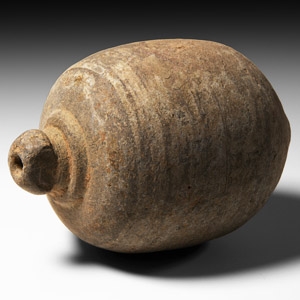
Byzantine 'Greek Fire' Fire Bomb or Hand Grenade
9th-11th century A.D.Sold for (Inc. bp): £182
A ceramic vessel with a piriform body and domed mouth on a stepped neck; intended to be filled with explosive liquid and wick, used as a hand grenade. 642 grams, 12.7 cm
Acquired 1980-2015. Ex Abelita family collection. Accompanied by an academic paper by military specialist Dr Raffaele D'Amato, dated 15 July 2019 and titled 'Eastern Roman Empire - Greek Fire Bomb or Hand Grenade (μεσαίον kακάβιον) 9th-11th century AD'.
Apart from the use of siphons or manual flame-throwers called cheirosiphona, special corps of Roman soldiers employed terracotta grenades, in the form of small jars, abundantly evidenced in archaeological excavations. Such were the γανωτα, vessels (sometimes also of bronze) used for Greek fire. They were called μεσαία kακαβιά or κυτροκακάβια where the former had a bulbous shape and the latter a more cylindrical form.
