
Loading, please wait...
LOT 1479
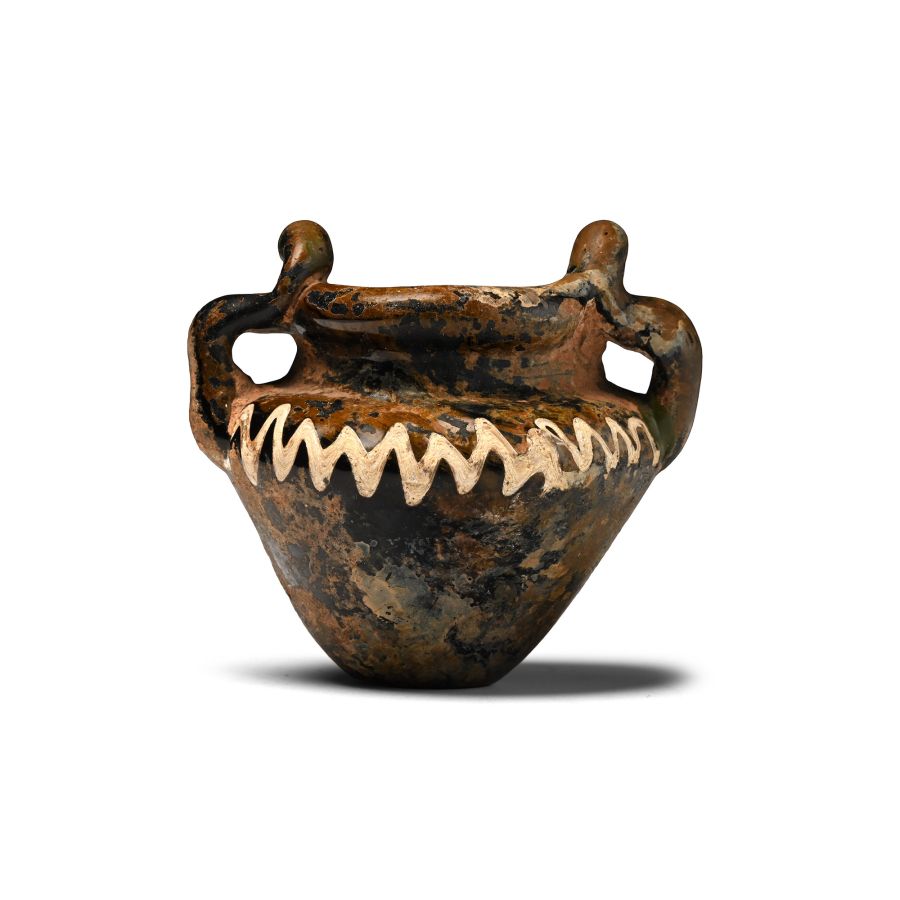
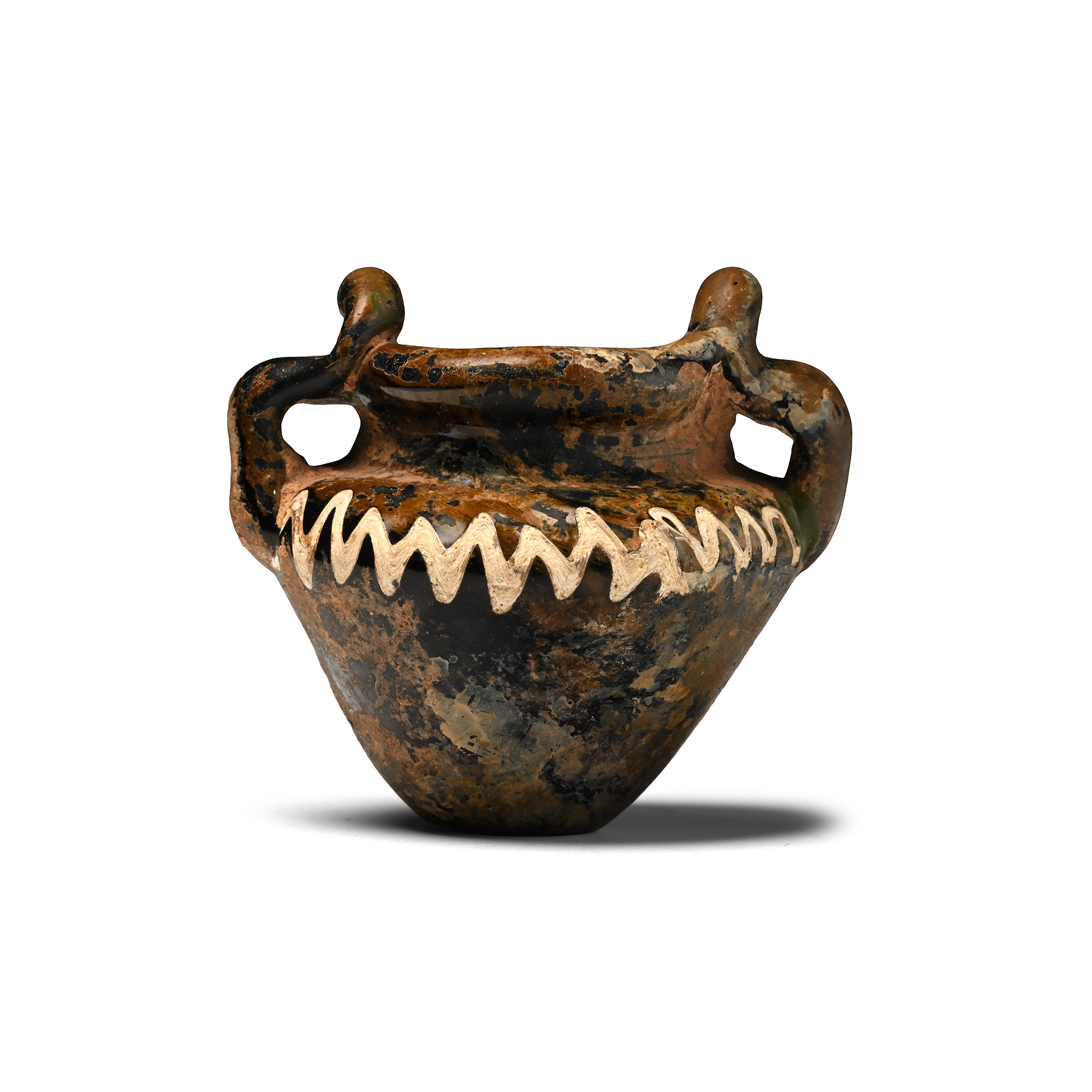
Byzantine Miniature Glass Jar
5TH-7TH CENTURY A.D.
1 3/4 in. (51.34 grams, 47 mm wide).
With broad shoulder and conical body, everted rim, two loop handles and applied undulating band to the shoulder.
ProvenanceAcquired 1970s-1996.
Property of a North American collector.
London collection, 2016.
Cf. Whitehouse, D., Roman Glass in the Corning Museum of Glass, vol.1, New York, 1997, item 297, for similar.
FootnotesThis jar is a Syro-Palestinian type. Similar jars were found in the graves of Beit Fajjar, Palestine, and usually dated at the 4th-5th centuries A.D. Their colour is usually yellow-green or light green, but purple is also used.
CONDITIONTimeLine Auctions follows a vetting process to ensure the authenticity and legality of all items, reinforcing our commitment to integrity and responsible trading. Each antiquity, antique, and coin lot undergoes thorough examination by a vetting committee of at least ten external specialists, professional trade association members, scientists, and archaeologists: Our Vetting Process
AUCTIONS:
TimeLine is a leading auction house specialising in antiquities, ancient art, collectables, natural history, coins, medals, and books. Our auctions offer museums, collectors, historians, and enthusiasts the opportunity to acquire unique and historically significant pieces.
LOT 1479
Byzantine Miniature Glass Jar
Estimate £180 - 240€210 - 280 (for guidance only)$240 - 320 (for guidance only)
Opening Bid
£90 (EUR 104; USD 122) +BP*
-
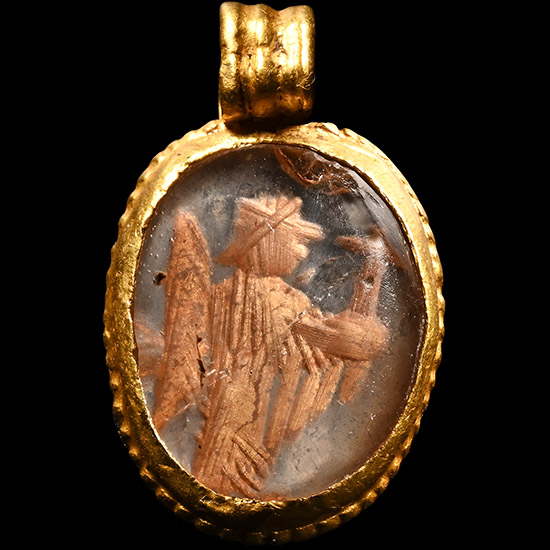
Byzantine Gold Pendant with Gold Figure of Archangel Gabriel in Rock Crystal
Circa 9th-11th century A.D.Estimate: £2,000 - 3,000 (‡+bp*)
Opening Bid: £1,000
Biconvex in section with gold frame and beaded edge, ribbed loop above; reserved winged figure with processional cross. 4.66 grams, 25 mm
Private collection of Kal Noselson, New York, acquired between 1976 and the late 1990s; thence by descent. This lot has been checked against the Interpol Database of stolen works of art and is accompanied by search certificate no.13425-259853.
The angel was probably taken from an original seal showing the Archangel Gabriel visiting Mary and then transformed into a pendant. The motifs on the stamp seals are predominantly religious in nature and include images of Christ and the saints, which could suggest that they were used for clerical purposes—perhaps in monasteries. -
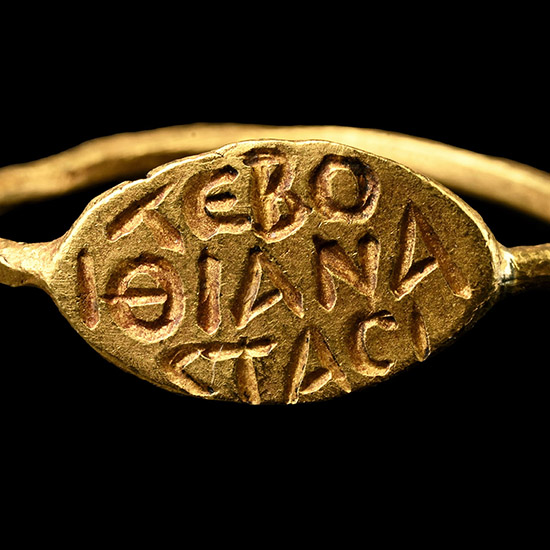
Byzantine Gold Ring with Inscription
Circa 7th-8th century A.D.Estimate: £1,500 - 2,000 (‡+bp*)
Opening Bid: £750
Slender hoop and integral scaphoid plaque, three-line Greek legend 'KEBO IΘI ANACTACI'. 2.08 grams, 20.81 mm overall, 18.42 x 15.48 mm internal diameter (approximate size British L 1/2, USA 6, Europe 11.87, Japan 11)
Private collection of Kal Noselson, New York, acquired between 1976 and the late 1990s; thence by descent.
The ring belongs to the category of Romano-Eastern rings with an applied bezel, a type particularly common between the 6th and 8th centuries AD. The inscription recites 'KE BOIΘI ANACTACI'. i.e. ‘Κύριε Boήθει Aναστασi’ (Lord help Anastasius). -
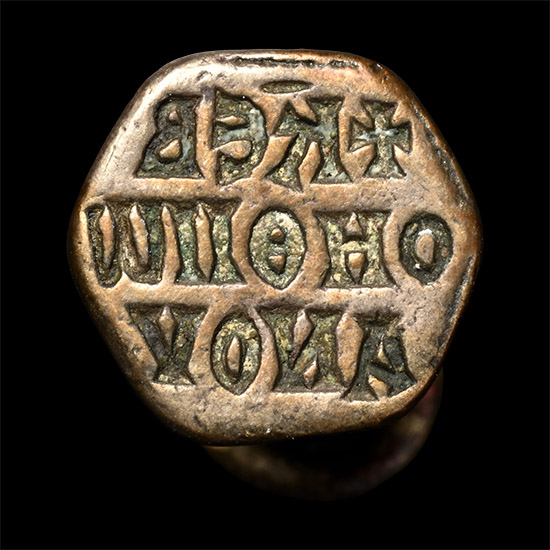
Byzantine Bronze Seal Matrix with Inscription
Circa 14th century A.D.Estimate: £80 - 100 (‡+bp*)
Opening Bid: £5
Hexagonal in plan with tapering sides, collar, loop and suspension ring; incuse legend '+KEB / [.]HOΠω/ANOU'; supplied with a museum-quality impression. 7.4 grams, 24 mm
Private collection of Kal Noselson, New York, acquired between 1976 and the late 1990s; thence by descent.
