
Loading, please wait...
LOT 0794
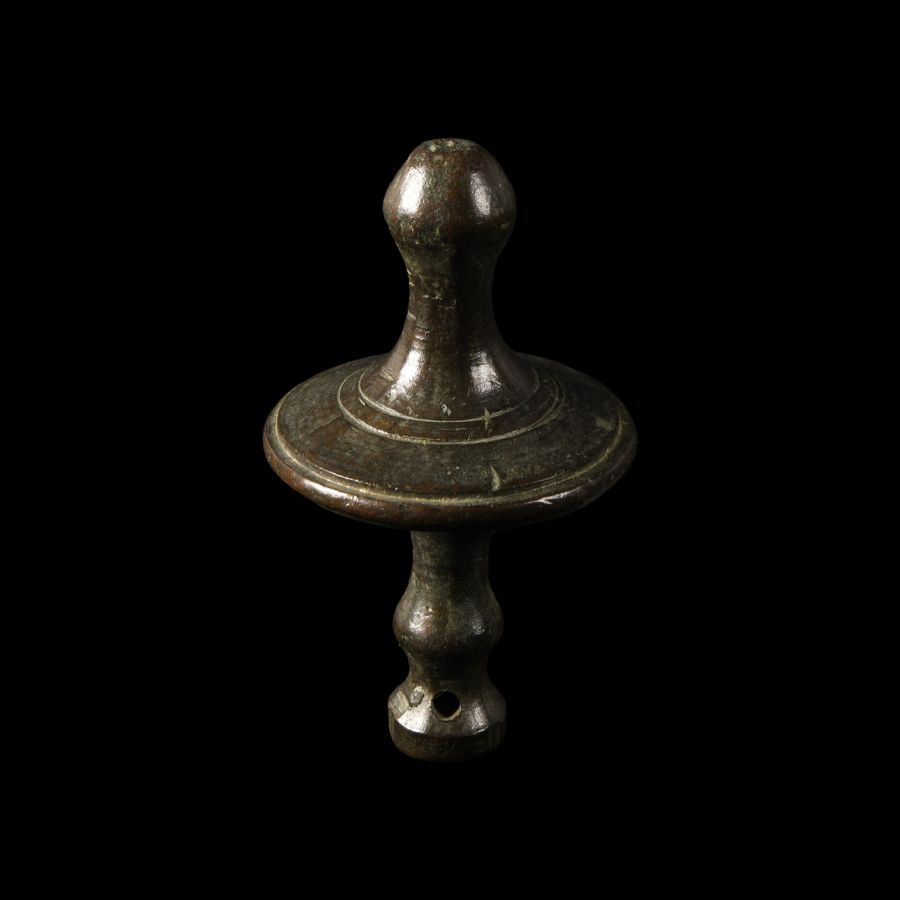
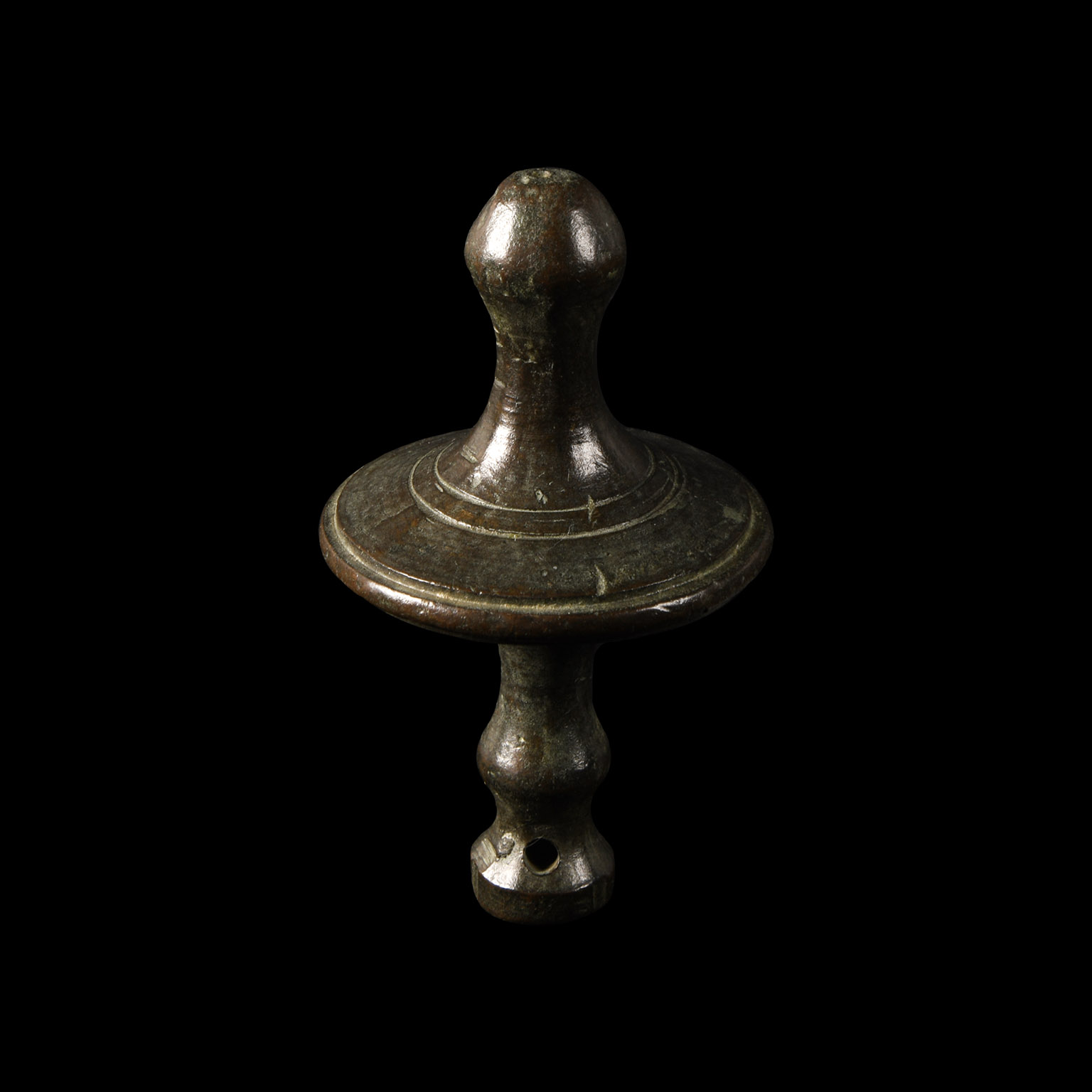
Byzantine Mason's Plumb Bob Weight
6TH-8TH CENTURY A.D.
2 7/8 in. (142 grams, 73 mm).
A bronze spinning-top shaped mason's plumb bob with lentoid-section body, carinated upper finial and waisted lower stem, perforated for suspension.
ProvenanceAcquired before 2000.
From the collection of a European gentleman living in the UK.
TimeLine Auctions follows a vetting process to ensure the authenticity and legality of all items, reinforcing our commitment to integrity and responsible trading. Each antiquity, antique, and coin lot undergoes thorough examination by a vetting committee of at least ten external specialists, professional trade association members, scientists, and archaeologists: Our Vetting Process
AUCTIONS:
TimeLine is a leading auction house specialising in antiquities, ancient art, collectables, natural history, coins, medals, and books. Our auctions offer museums, collectors, historians, and enthusiasts the opportunity to acquire unique and historically significant pieces.
-
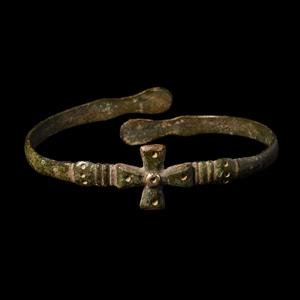
Byzantine Bracelet with Cross
9th-12th century A.D.Sold for (Inc. bp): £203
A slender bracelet with D-section hoop and overlapping terminals, central cross with the five wounds of Christ represented as a shallow dimple to each arm and central silver circular boss, vertical ribs and dimples to the shoulders, waisted terminals decorated with vertical grooves and dot-in-ring motifs. 15.07 grams, 66 mm
Fine condition.
Acquired Munich, Germany, late 1990s. Property of an East London gentleman. -
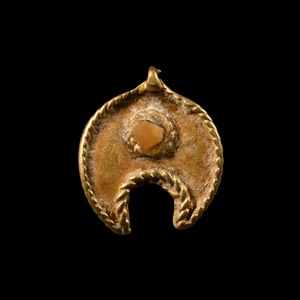
Byzantine Gold Lunar Pendant
4th-6th century A.D.Sold for (Inc. bp): £247
A sheet-gold crescent moon pendant with applied twisted filigree to the border, cell with inset carnelian cloison, suspension loop. 0.52 grams, 12 mm
Acquired 1970-2010. Collection of a late Japanese gentleman. -
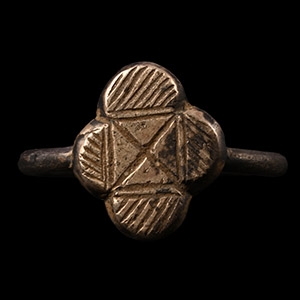
Byzantine Silver Ring with Saltire Cross
Circa 15th century A.D.Sold for (Inc. bp): £104
A silver ring composed of a slender round-section hoop supporting a quatrefoil plaque with saltire cross engraved within a square at centre, diagonal hatching to each of the four lobes. 3.82 grams, 22.44 mm overall, 18.50 mm internal diameter (approximate size British P, USA 7 1/2, Europe 16.23, Japan 15)
Acquired in the late 1990s-2000. Property of an East London gentleman.
