
Loading, please wait...
LOT 0784
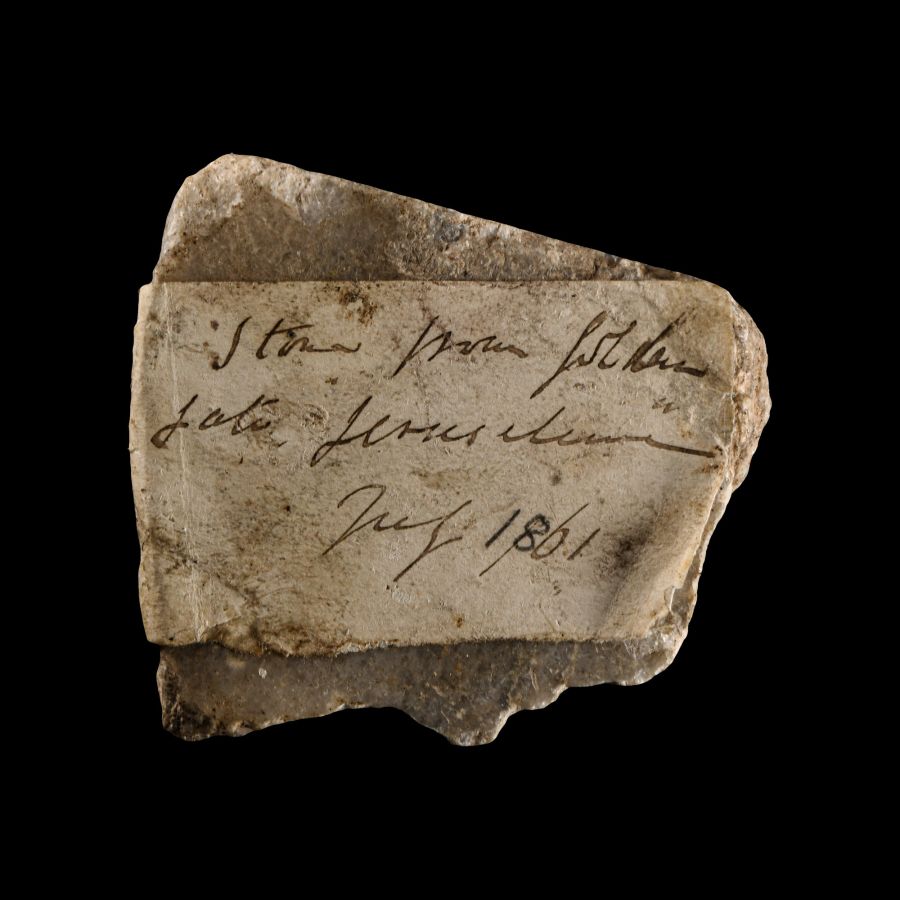
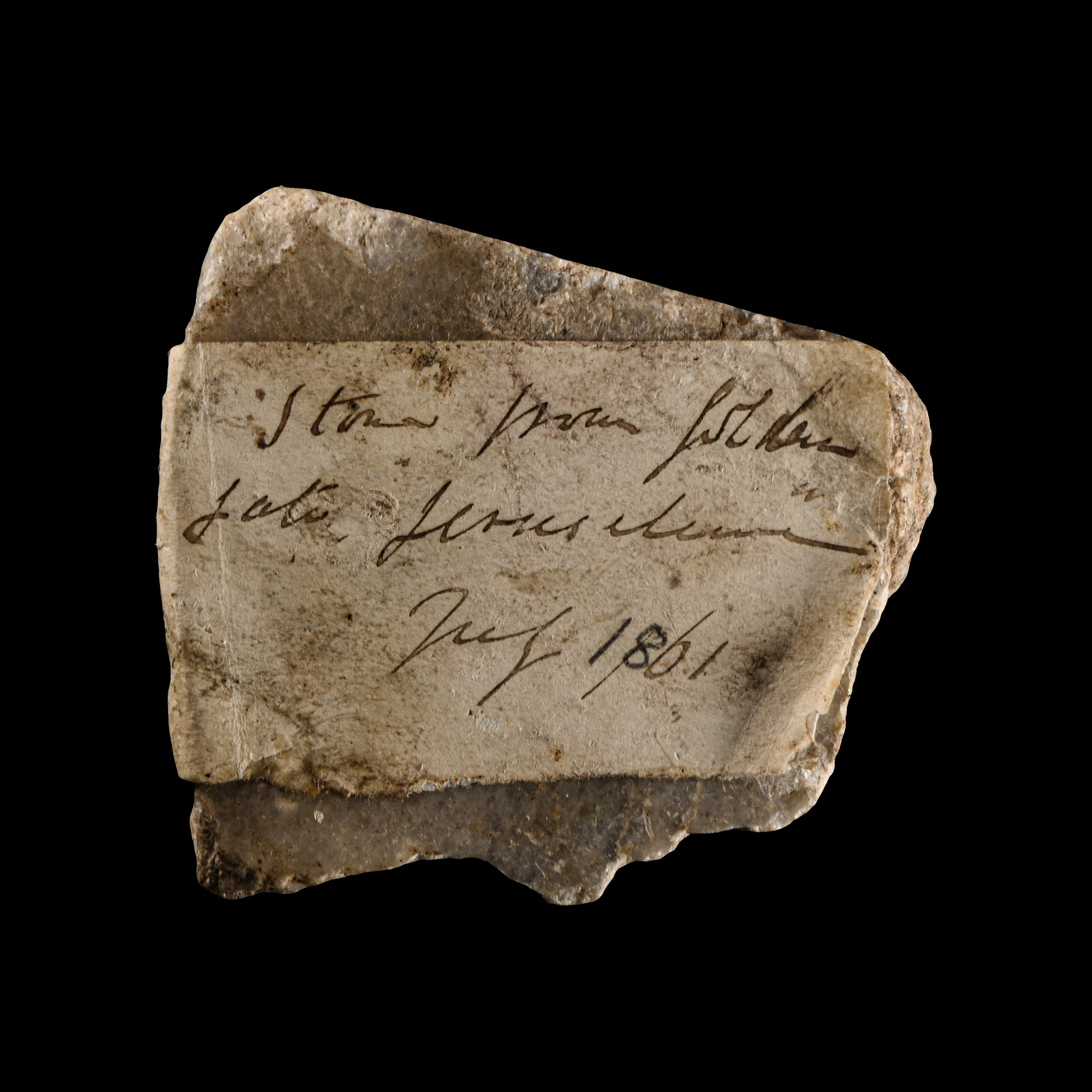
Byzantine Marble Fragment from the Golden Gate in Jerusalem
CIRCA 520 A.D.
2 5/8 in. (165 grams, 66 mm).
Sub-rectangular in form with three polished faces; old handwritten label to one side reading 'Stone from Golden Gate Jerusalem July 1861'. [No Reserve]
ProvenanceFound Jerusalem in July 1861.
UK private collection.
Property of a Nottinghamshire gentleman.
With a late 19th century handwritten identification label attached.
Cf. Doron, C., 'On the Golden Gate in Jerusalem and the Baptistery at Emmaus-Nicopolis' in: Zeitschrift des Deutschen Palästina-Vereins 97, 2/1981, pp.171–177.
FootnotesThe Golden Gate, so called in Christian literature, or She'ar Harahamim ('Gate of Mercy') is the oldest of the city gates of the Old City of Jerusalem. It is located on the eastern side of the ancient city walls and it is believed that the meeting at the Golden Gate of Saint Joachim and Saint Anne took place there, an episode depicted in various pictorial cycles dedicated to the life of Saint Anne (including the one by Giotto in the Scrovegni chapel in Padua). The current gate was probably built on the ruins of the older one, in the 6th century A.D., as part of Justinian's building program. According to another theory, the construction took place at the end of the 7th century, by Roman craftsmen hired by the Umayyad caliphs.
CONDITIONTimeLine Auctions follows a vetting process to ensure the authenticity and legality of all items, reinforcing our commitment to integrity and responsible trading. Each antiquity, antique, and coin lot undergoes thorough examination by a vetting committee of at least ten external specialists, professional trade association members, scientists, and archaeologists: Our Vetting Process
AUCTIONS:
TimeLine is a leading auction house specialising in antiquities, ancient art, collectables, natural history, coins, medals, and books. Our auctions offer museums, collectors, historians, and enthusiasts the opportunity to acquire unique and historically significant pieces.
LOT 0784
Byzantine Marble Fragment from the Golden Gate in Jerusalem
Sold for (Inc. bp): £572
-
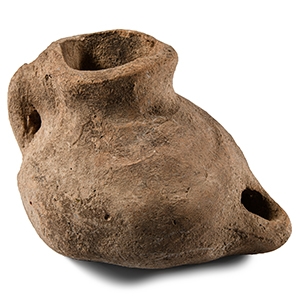
Byzantine Terracotta Oil Lamp Filler
5th-8th century A.D.Sold for (Inc. bp): £52
Of boot-type with rounded body and short cylindrical neck; lug handle to the rear. 200 grams, 10.2 cm
Acquired before 1990s/early 2000s. From the family collection of Jack Lyttle (1944-2023), Kilmacolm, Scotland; thence by descent to his granddaughter. Property of an East Sussex, UK, gentleman. -
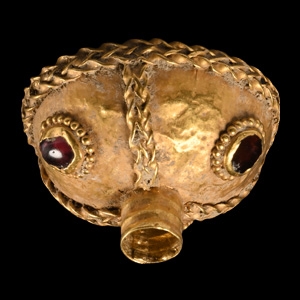
Byzantine Gold Dagger Pommel Cap with Garnets
Circa 8th century A.D.Sold for (Inc. bp): £312
Sheet gold dome with braided filigree band to the rim, three vertical bands and three cells each set with a garnet cabochon, collar to the apex. 2.13 grams, 22 mm
From a continental collection prior to 2000. Acquired on the UK art market in 2010. Property of a UK gentleman. -
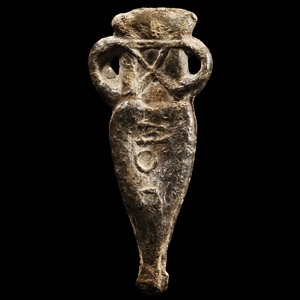
Byzantine Lead Pilgrim's Holy Water Ampulla
Circa 8th-13th century A.D.Sold for (Inc. bp): £39
Flat, piriform type with low-relief saltire to the neck and two loop handles. 16.4 grams, 51 mm
Acquired on the UK art market in the 1990s. Property of a Stowmarket, UK, gentleman.
