
Loading, please wait...
LOT 1348
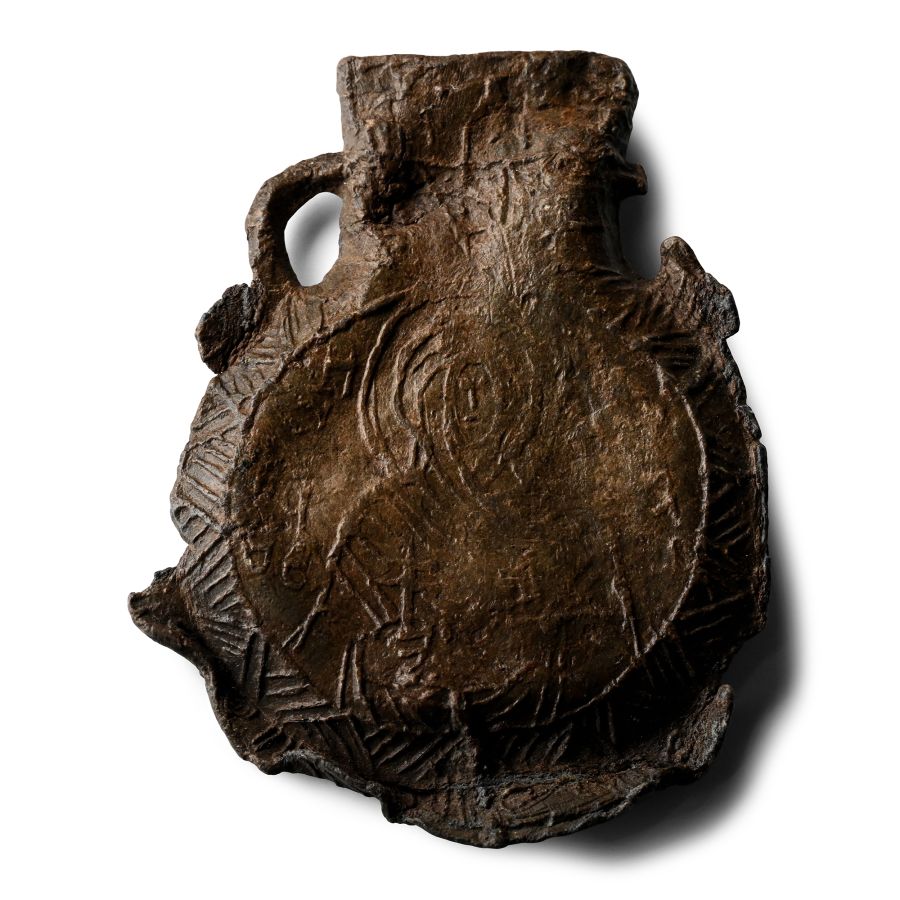
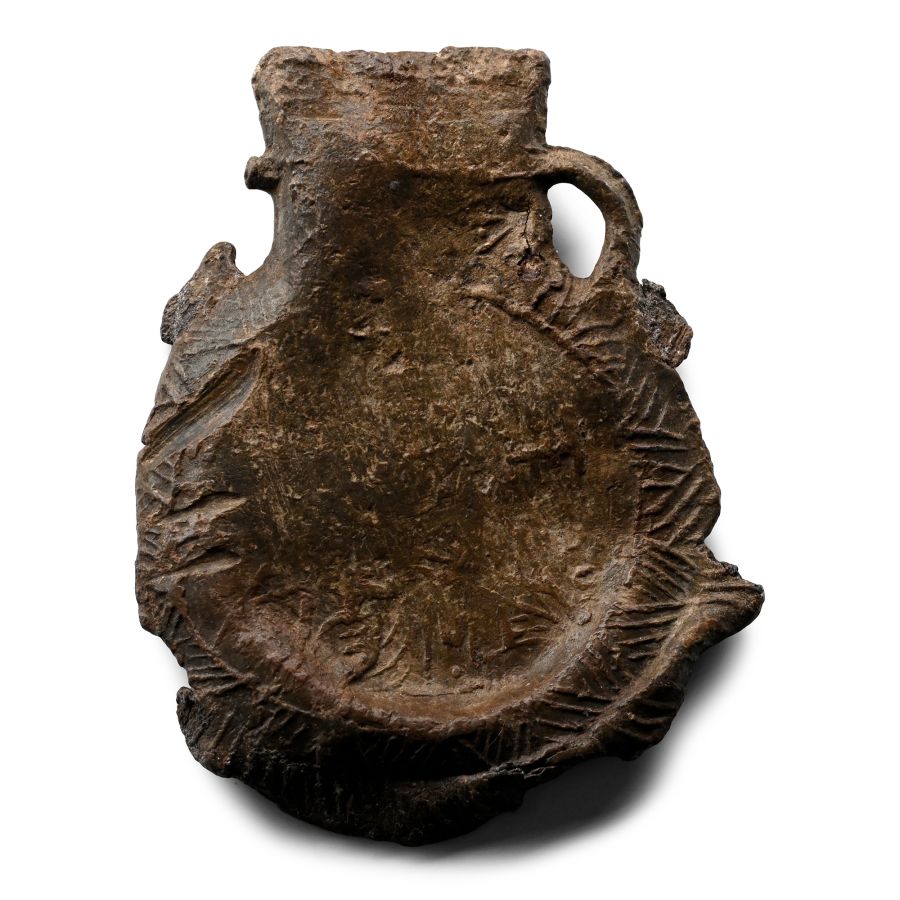
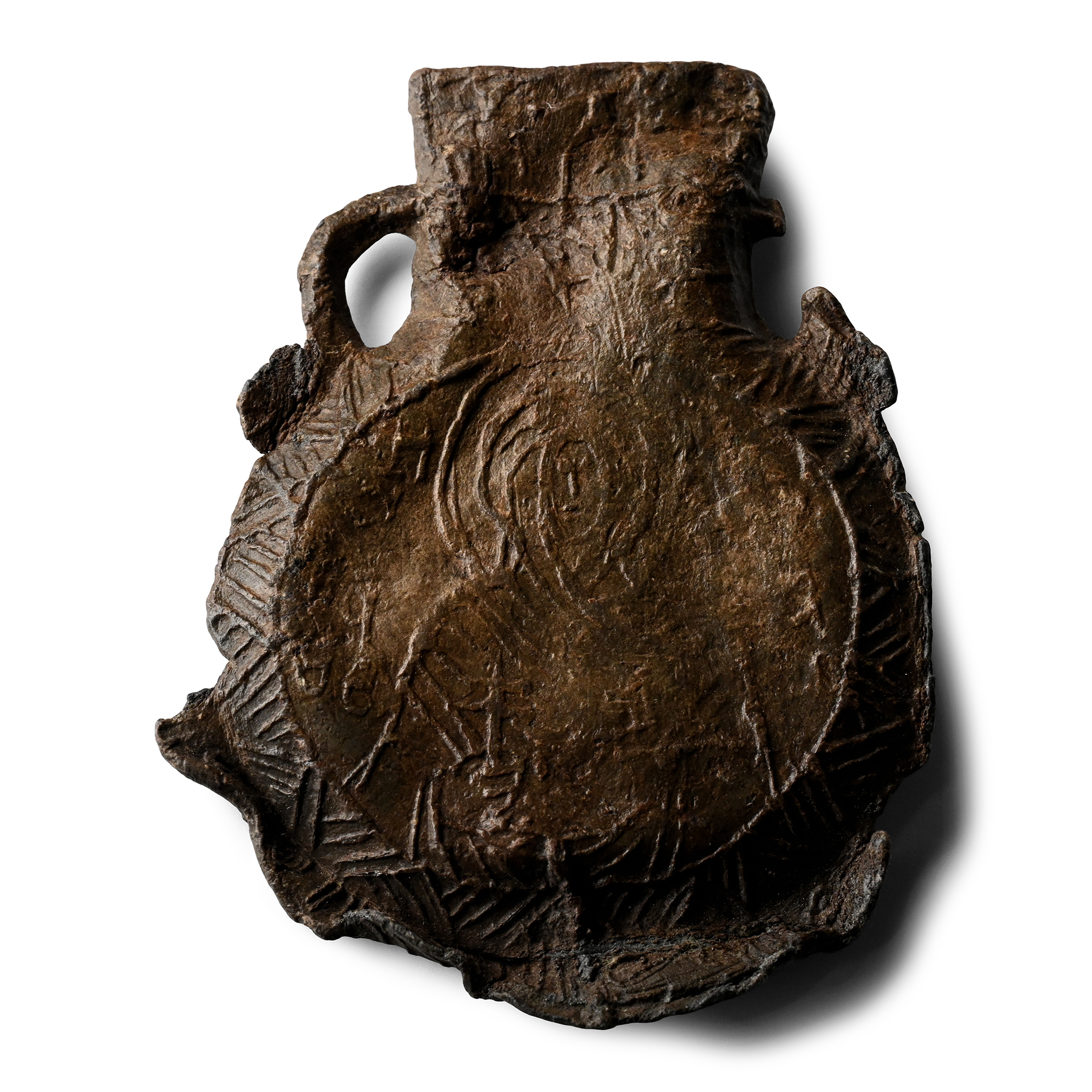
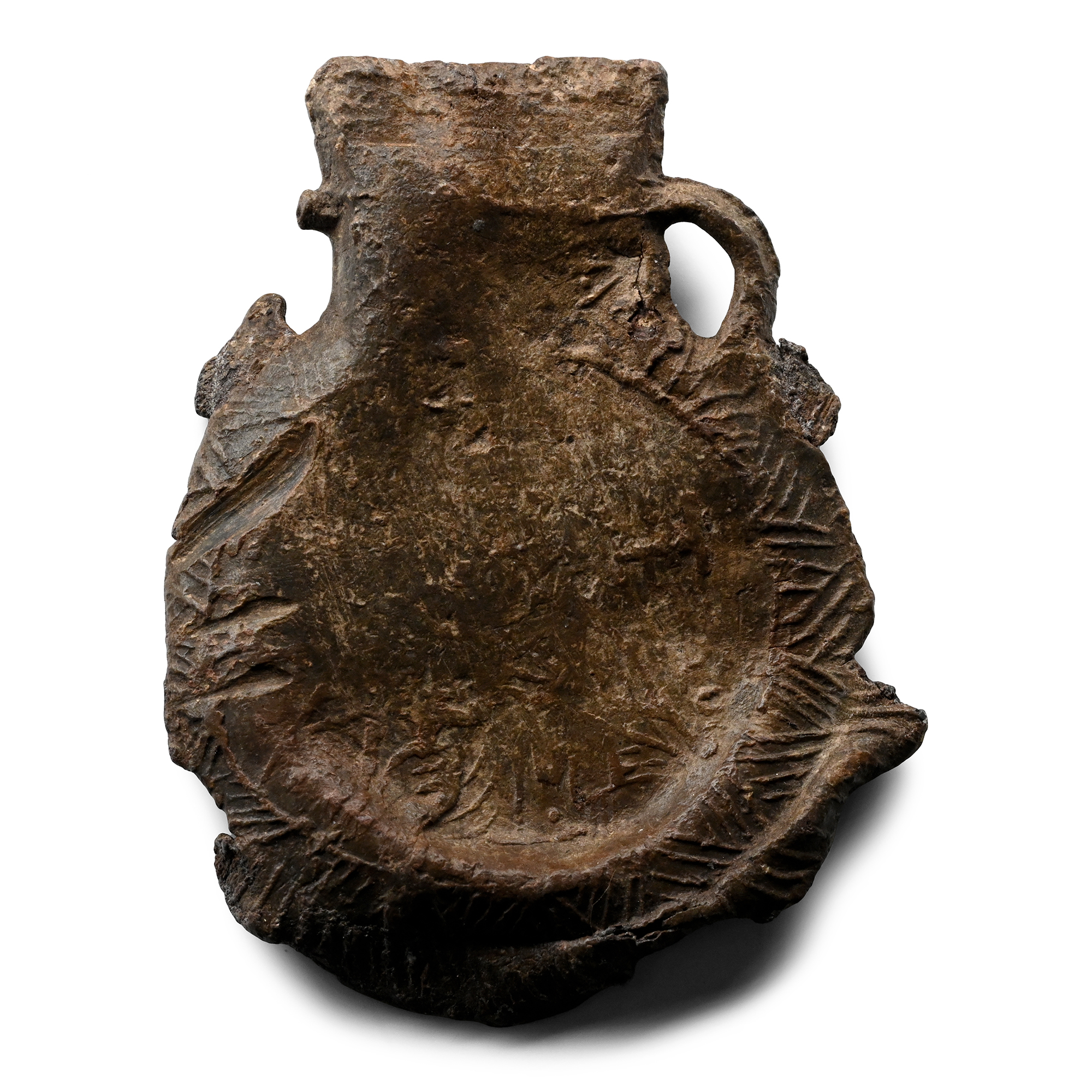
Byzantine Lead Pilgrim's Koutrouvion Holy Water Flask with Saint
14TH-15TH CENTURY A.D.
2 7/8 in. (81.1 grams, 73 mm).
With discoid body and cylindrical neck, two lateral small suspension handles; obverse with low-relief facing image of Saint Demetrios with cloak and spear, reverse with Saint Theodora in monastic garments; hatched bands to borders, flange to lower edge; a myrrh flask (koutrouvion). [No Reserve]
ProvenanceFrom a retired Lincolnshire, UK, gentleman's collection, a long time member of the Pewter Society.
LiteratureCf. Museum of Byzantine Culture, Thessaloniki, item ΒΑ 74/13.
FootnotesFor the Byzantines, koutrouvia were vessels made of clay or lead in which pilgrims carried the aromatic oil (myrrh) which they acquired from the cult centres of saints.
CONDITIONTimeLine Auctions follows a vetting process to ensure the authenticity and legality of all items, reinforcing our commitment to integrity and responsible trading. Each antiquity, antique, and coin lot undergoes thorough examination by a vetting committee of at least ten external specialists, professional trade association members, scientists, and archaeologists: Our Vetting Process
AUCTIONS:
TimeLine is a leading auction house specialising in antiquities, ancient art, collectables, natural history, coins, medals, and books. Our auctions offer museums, collectors, historians, and enthusiasts the opportunity to acquire unique and historically significant pieces.
LOT 1348
Byzantine Lead Pilgrim's Koutrouvion Holy Water Flask with Saint
Sold for (Inc. bp): £143
-
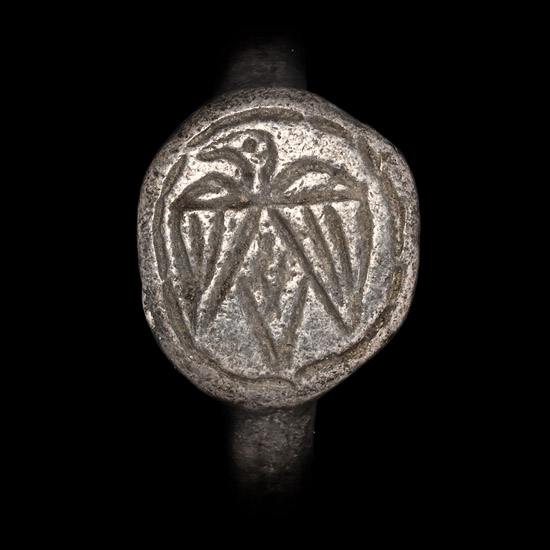
Byzantine Silver Ring with Spread Eagle
12th-14th century A.D.Sold for (Inc. bp): £117
D-section hoop and a circular bezel with a stylised eagle looking left. 5.82 grams, 23.22 mm overall, 18.70 mm internal diameter (approximate size British P, USA 7 1/2, Europe 16.23, Japan 15)
Ex German art market, 2000s. Acquired from an EU collector living in London. From the collection of a Surrey, UK, gentleman. -
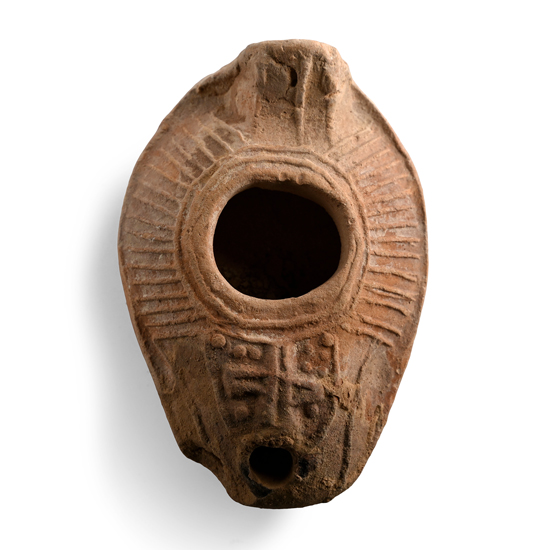
Byzantine Terracotta Slipper Oil Lamp with Cross
6th-8th century A.D.Sold for (Inc. bp): £39
Slipper-shaped in plan with a low rim around the filler hole, a stub nozzle, a lug handle to the rear, radiating linear decoration to the shoulder and cross-and-pellets to the nozzle, low basal ring. 65 grams, 84 mm
From a collection of lamps of a late Scottish gentleman, 1970-1990s. -
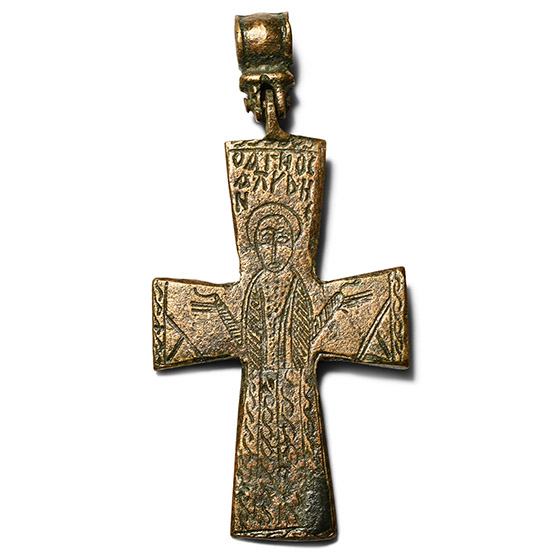
Byzantine Bronze Cross Pendant
10th-12th century A.D.Sold for (Inc. bp): £572
Comprising a cruciform panel with slightly flared arms attached to a hinged suspension loop with barrel-shaped bale; incised facing figure to obverse with arms in orans pose, legend above 'ΟΑΓΗΟC ΑΛΚΔΗΝ' (saint ?). 28.2 grams, 83 mm
Ex German art market, 2000s. Acquired from an EU collector living in London. From the collection of a Surrey, UK, gentleman.
