
Loading, please wait...
LOT 0750
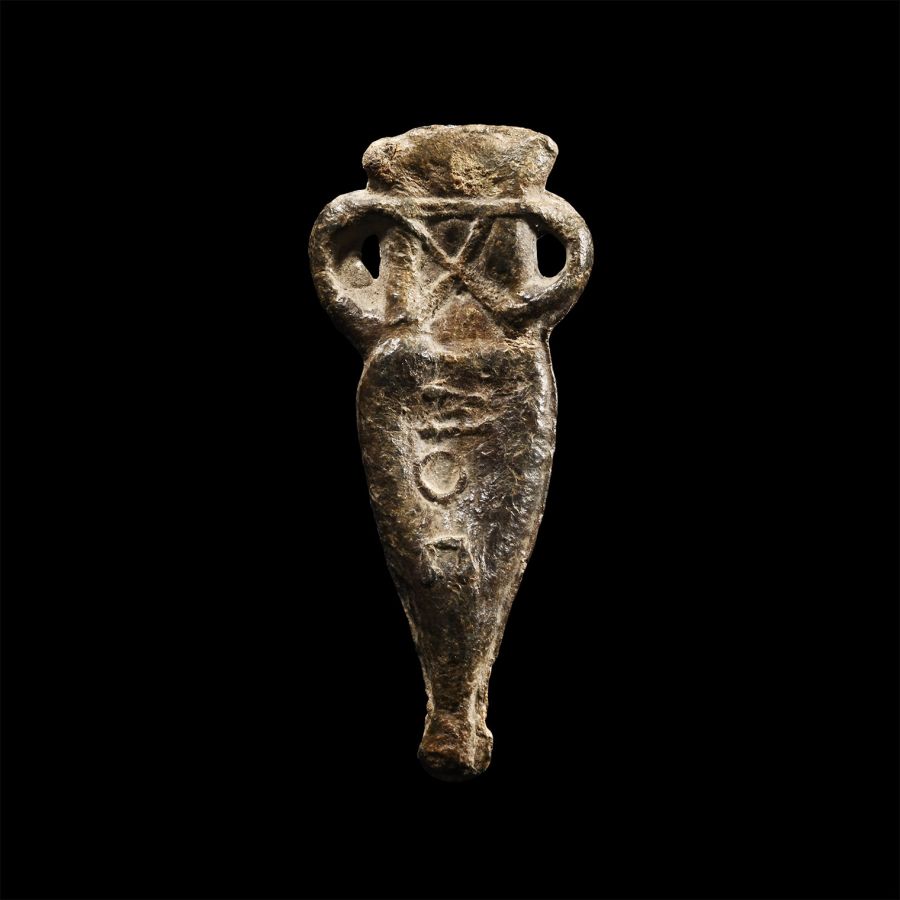
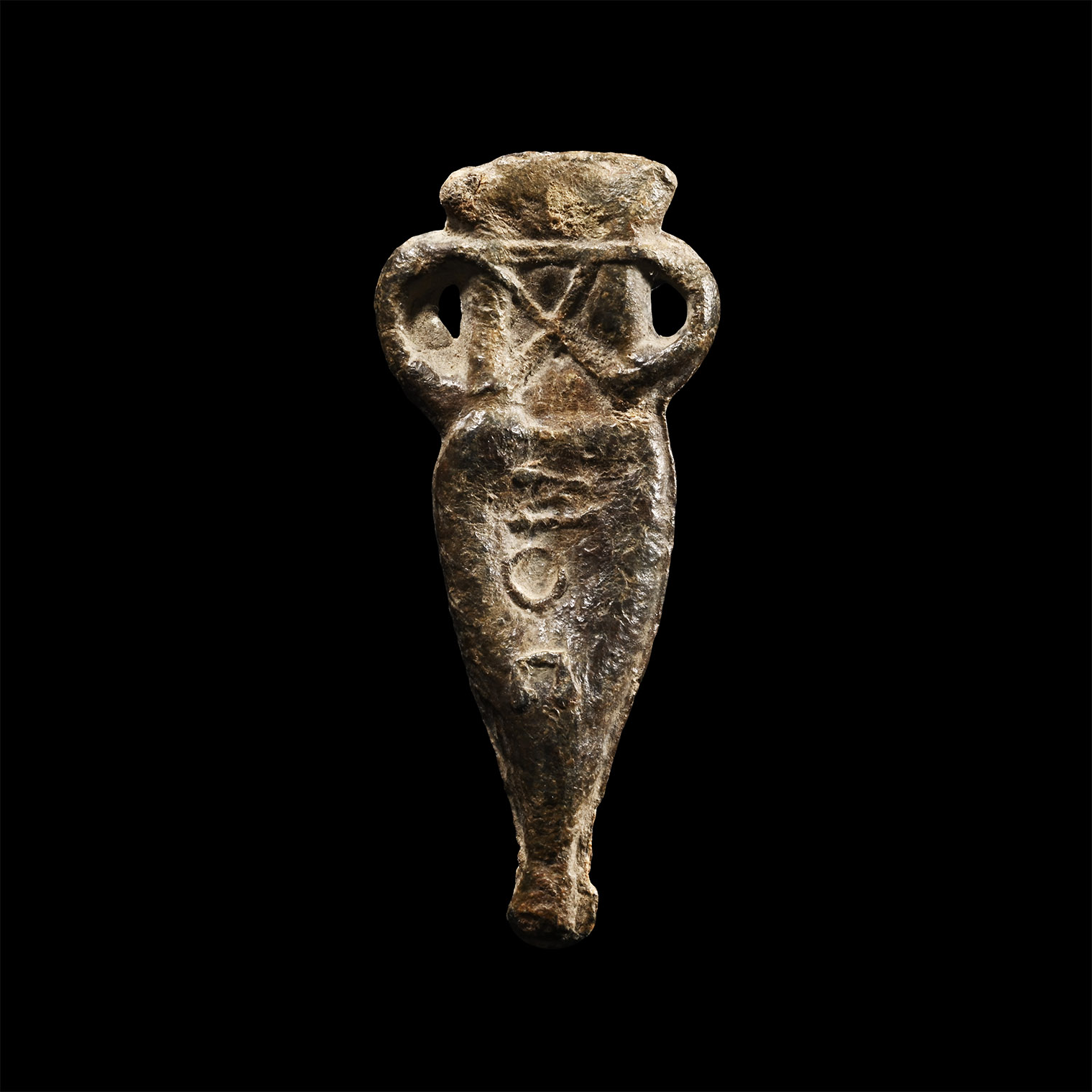
Byzantine Lead Pilgrim's Holy Water Ampulla
CIRCA 8TH-13TH CENTURY A.D.
2 in. (16.4 grams, 51 mm).
Flat, piriform type with low-relief saltire to the neck and two loop handles. [No Reserve]
ProvenanceAcquired on the UK art market in the 1990s.
Property of a Stowmarket, UK, gentleman.
TimeLine Auctions follows a vetting process to ensure the authenticity and legality of all items, reinforcing our commitment to integrity and responsible trading. Each antiquity, antique, and coin lot undergoes thorough examination by a vetting committee of at least ten external specialists, professional trade association members, scientists, and archaeologists: Our Vetting Process
AUCTIONS:
TimeLine is a leading auction house specialising in antiquities, ancient art, collectables, natural history, coins, medals, and books. Our auctions offer museums, collectors, historians, and enthusiasts the opportunity to acquire unique and historically significant pieces.
-
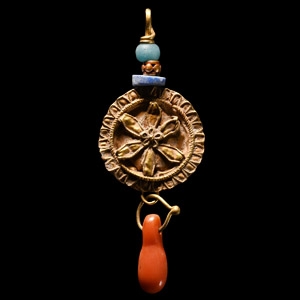
Byzantine Gold Floral Pendant with Bead Drop
6th-10th century A.D.Sold for (Inc. bp): £364
Comprising a discoid plaque with filigree rosette to the rim, applied foil leaves and central filigree rosette; wire loop below with carnelian dangle; suspension loop with lapis lazuli, glass and gold-granule collars. 3.1 grams, 53 mm
UK private collection formed before 2000. Ex North London, UK, gallery. -
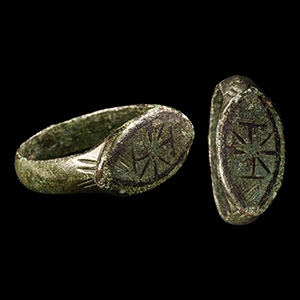
Byzantine Bronze Signet Ring with Niello Cross
Circa 14th century A.D.Sold for (Inc. bp): £78
With a D-section hoop, keeled shoulders supporting a lentoid bezel; the bezel with a niello border and a radiating cross motif. 5.04 grams, 22.85 mm overall, 17.65 mm internal diameter (approximate size British P, USA 7 1/2, Europe 16.23, Japan 15)
Private collection formed since the 1940s. UK art market. Property of an Essex gentleman. -
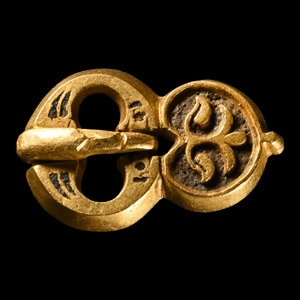
Byzantine Gold Buckle with Heart-Shaped Plate
Later 6th-early 7th century A.D.Estimate: £1,000 - 1,400 (+bp*)
Opening Bid: £500
With loop formed as a disc with two circular piercings and inlaid niello detailing. flared sidewall, hinged tongue with ridge to the forward end, plate with reserved foliage in a cell with knop to the rear edge; three attachment lops to the underside. 15 grams, 32 mm
From a private collection formed in the 1990s. Ex London, UK, gallery.
