
Loading, please wait...
LOT 0969
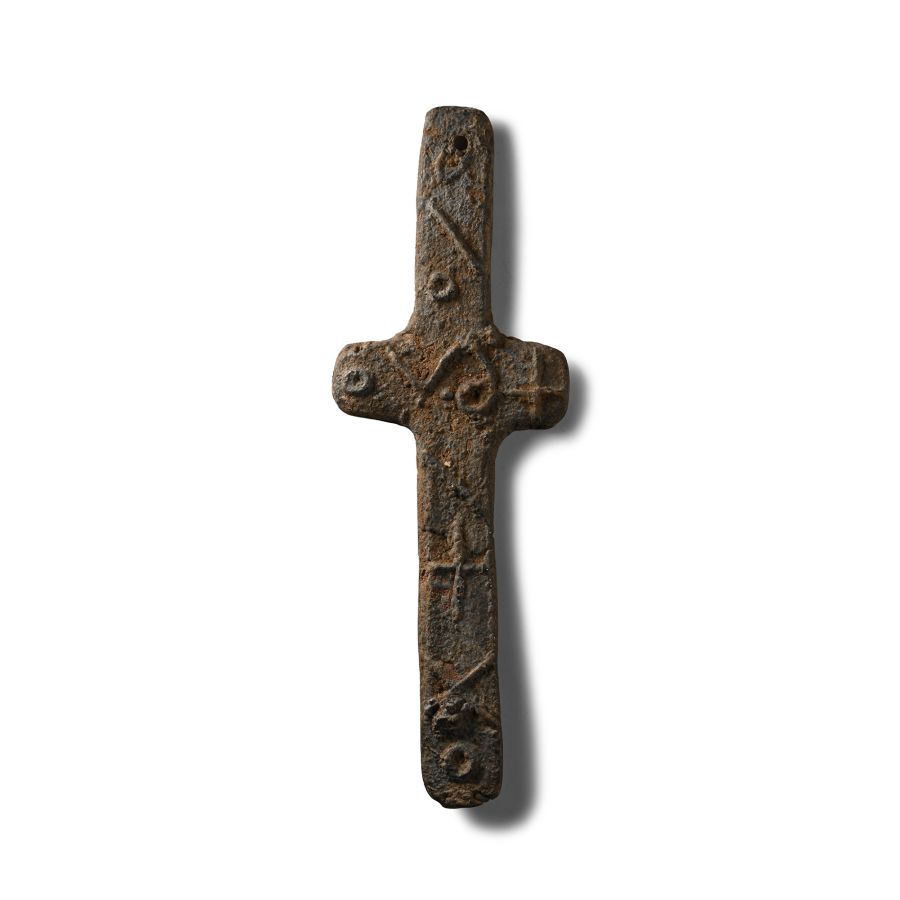
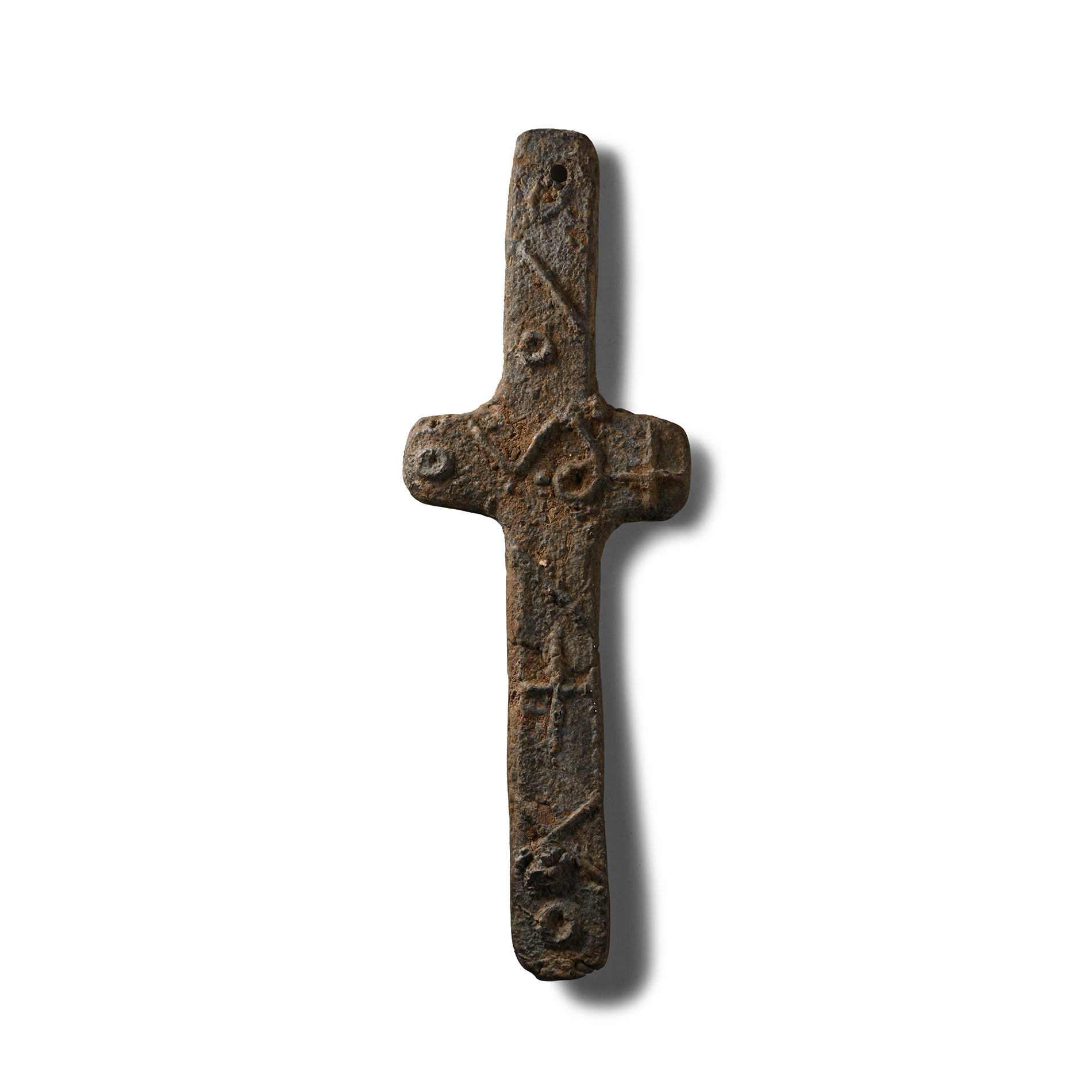
Byzantine Lead Cross
5TH-7TH CENTURY A.D.
8 1/2 in. (357 grams, 21.5 cm).
Flat-section cruciform mount with stub arms and attachment point at one end; high-relief saltires, hoops and other detailing.
ProvenanceAcquired in the mid 1980s-1990s.
From the family collection of Mr S.A., Switzerland, thence by descent.
Private collection since the late 1990s.
TimeLine Auctions follows a vetting process to ensure the authenticity and legality of all items, reinforcing our commitment to integrity and responsible trading. Each antiquity, antique, and coin lot undergoes thorough examination by a vetting committee of at least ten external specialists, professional trade association members, scientists, and archaeologists: Our Vetting Process
AUCTIONS:
TimeLine is a leading auction house specialising in antiquities, ancient art, collectables, natural history, coins, medals, and books. Our auctions offer museums, collectors, historians, and enthusiasts the opportunity to acquire unique and historically significant pieces.
LOT 0969
Byzantine Lead Cross
Estimate £500 - 700€580 - 810 (for guidance only)$680 - 950 (for guidance only)
-
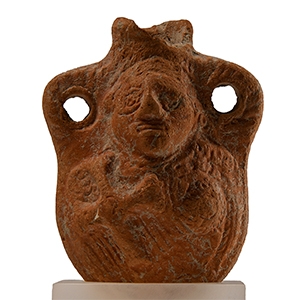
Byzantine Terracotta Pilgrim Flask with a Saint
6th century A.D.Estimate: £1,200 - 1,700 (‡+bp*)
Opening Bid: £600
Piriform in profile with two thick lug handles to the shoulder, obverse with low-relief facing figure holding a large cross and orb, reverse with facing figure with hand held up in the orans posture; with a display stand. 47.2 grams, 77 mm (71.4 grams total, 91 mm including stand)
Ex private collection, Mrs L.S., 1990s. Acquired from the above, 2001. Private European collection. This lot has been checked against the Interpol Database of stolen works of art and is accompanied by a search certificate number no.12110-218216. -
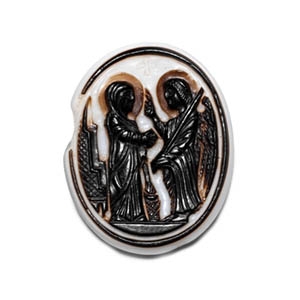
Byzantine Cameo with Virgin Mary and Archangel Gabriel
6th century A.D.Sold for (Inc. bp): £5,720
Ellipsoid in plan with reserved image of the Annunciation and a frond. 2.3 grams, 25 mm
Formerly in the collection of Michael Dennis O'Hara, 1970. From the private collection of the late Alison Barker, a retired barrister, formed 1970-1990. Ex North American collection. Accompanied by an academic report by Dr Raffaele D'Amato. This lot has been checked against the Interpol Database of stolen works of art and is accompanied by search certificate no.12401-226381.
The cameo represents the well known episode of the Gospel of Saint Luke (1.26.38), where the Archangel Gabriel brings Virgin Mary the news of her pregnancy. -
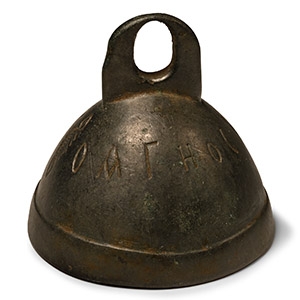
Byzantine Inscribed Bronze Bell for St Blaise
8th-10th century A.D.Sold for (Inc. bp): £390
Domed high-tin bronze with pierced lug suspension and thickened rim; incised Greek inscription to the shoulder 'ΟΑΓΗΟCΒΛΑCHOC' (Hagios Blasios). 35.6 grams, 46 mm
Acquired in the 1980s. From the collection of a London antiquarian.
The name is normally anglicised as 'St Blaise', an early bishop who was martyred in 316 AD in Sebaste, Armenia.
