
Loading, please wait...


LOT 1397
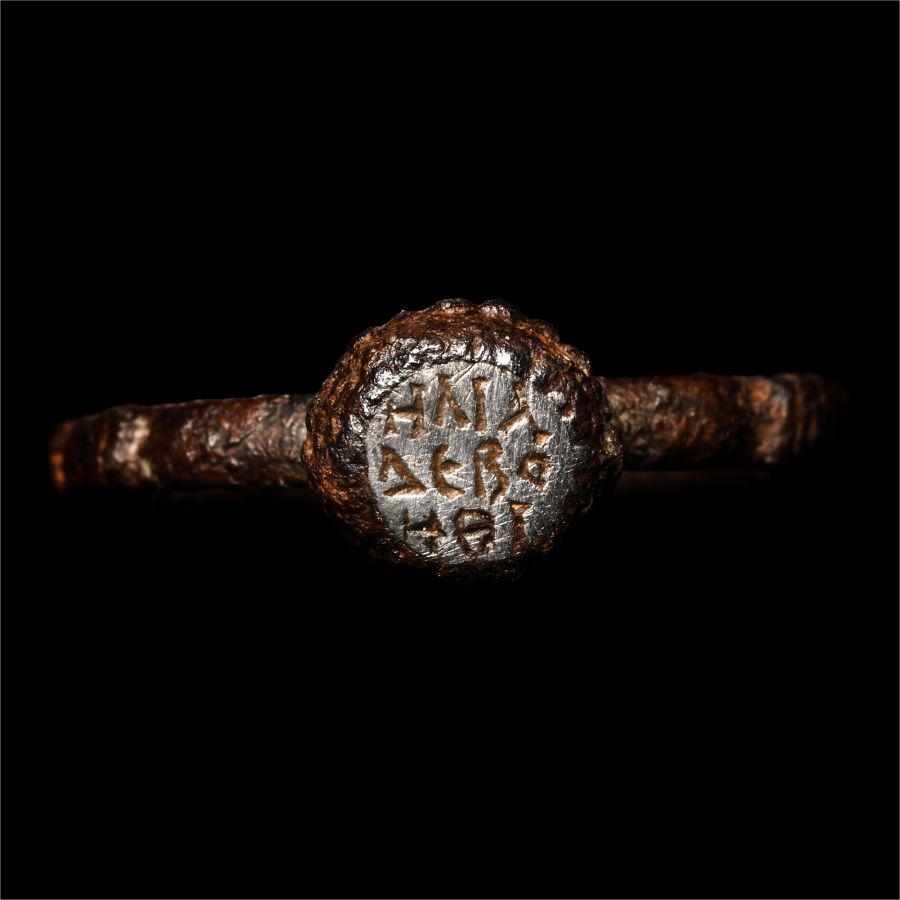
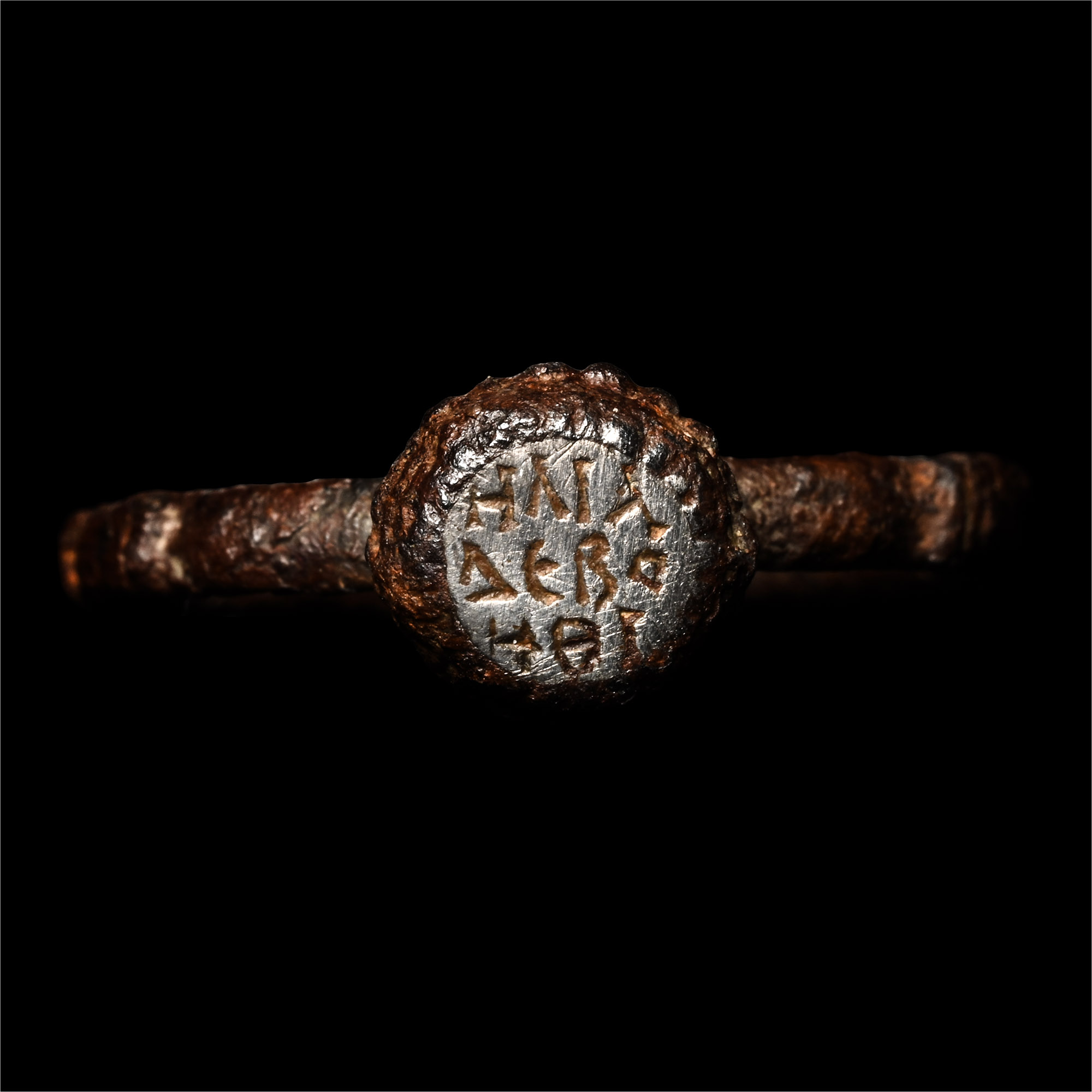
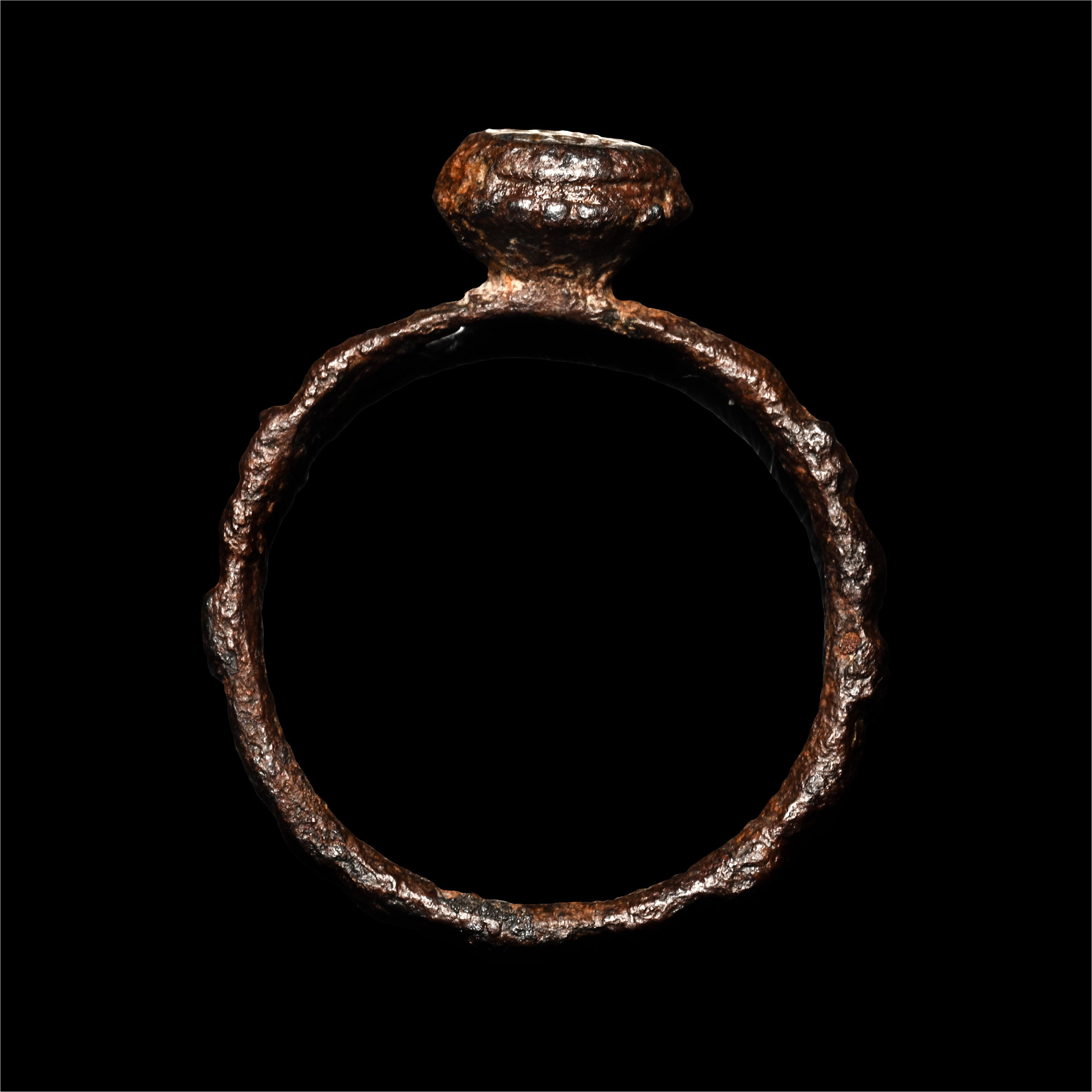
Byzantine Iron Ring with Silver Inscribed Bezel
CIRCA 6TH-7TH CENTURY A.D.
1 in. (2.65 grams, 27.68 mm overall, 18.66 x 19.26 mm internal diameter (approximate size British R, USA 8 1/2, Europe 18 3/4, Japan 18)).
Comprising a narrow D-section hoop with segmented projections, cup bezel with silver panel to upper face, inscribed 'ΗΛΙΑΔΕΒΟΗΘΙ' (Iliad ...).
ProvenancePrivate collection of Kal Noselson, New York, acquired between 1976 and the late 1990s; thence by descent.
LiteratureCf. Chadour, A.B., Rings. The Alice and Louis Koch Collection, volume I, Leeds, 1994, items 436, 463, 483, for type.
CONDITIONTimeLine Auctions follows a vetting process to ensure the authenticity and legality of all items, reinforcing our commitment to integrity and responsible trading. Each antiquity, antique, and coin lot undergoes thorough examination by a vetting committee of at least ten external specialists, professional trade association members, scientists, and archaeologists: Our Vetting Process
AUCTIONS:
TimeLine is a leading auction house specialising in antiquities, ancient art, collectables, natural history, coins, medals, and books. Our auctions offer museums, collectors, historians, and enthusiasts the opportunity to acquire unique and historically significant pieces.
LOT 1397
Byzantine Iron Ring with Silver Inscribed Bezel
Estimate £100 - 140€120 - 160 (for guidance only)$140 - 190 (for guidance only)
Opening Bid
£50 (EUR 58; USD 68) ‡+BP*
-
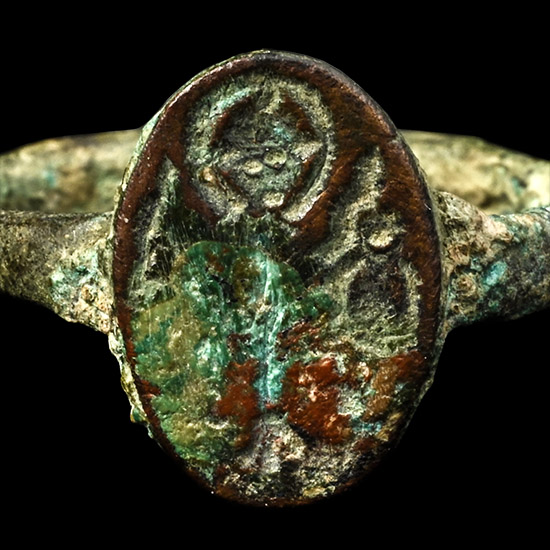
Byzantine Bronze Ring with Figure
Circa 11th-12th century A.D.Estimate: £60 - 80 (‡+bp*)
Opening Bid: £5
With scaphoid bezel, low-relief standing nimbate figure with wings spread laterally. 3.66 grams, 25.29 mm overall, 19.40 mm internal diameter (approximate size British S, USA 9, Europe 20, Japan 19)
Private collection of Kal Noselson, New York, acquired between 1976 and the late 1990s; thence by descent. -
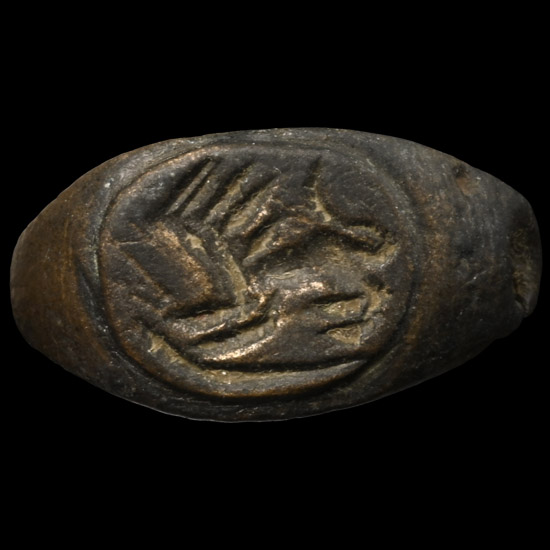
Byzantine Bronze Ring with Lion
6th-7th century A.D.Estimate: £40 - 60 (+bp*)
Bids: 1 | Current Bid: £5
Ellipsoid plaque with incuse border to the tondo, profile lion with forelegs extended and tail raised, radiating strokes denoting the mane; casting flaw to shoulder. 3.23 grams, 21.40 mm overall, 18.64 x 14.70 mm internal diameter (approximate size British J 1/2, USA 5, Europe 9.32, Japan 9)
From the private collection of a European gentleman (1942-2024), formed since the 1970s. -
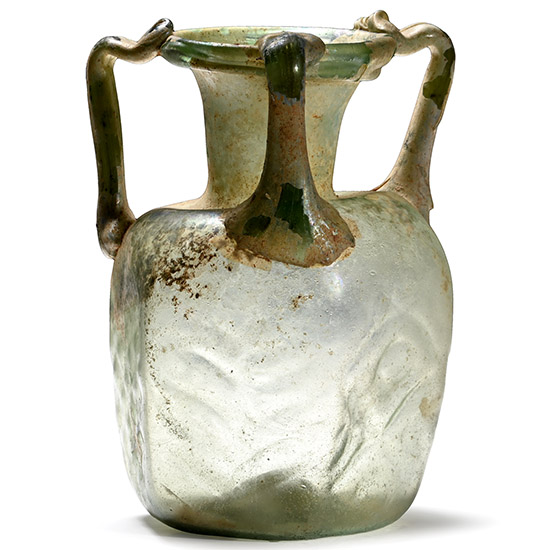
Byzantine Mould-Blown Translucent Pale Green Glass Three-Handled Jug
5th-8th century A.D.Estimate: £1,000 - 1,400 (+bp*)
Opening Bid: £550
Hexagonal body with a short cylindrical neck and a flaring rim, three applied handles extending from the rim to the shoulders, geometric decoration on the panels. 58 grams, 93 mm high
Roman glass from an important London collection, acquired from the early 1980s. From an important London glass collection, 1990s. Accompanied by a typed previous catalogue information page with provenance.
These octagonal or hexagonal jugs or jars were possibly made as tokens for pilgrims visiting the holy sites in Jerusalem or for use in burial rites. In the late 6th and early 7th century A.D., they were mass-produced in moulds for the pilgrim trade in the Holy Land, in the vicinity of the holy city, but they were found all around the Mediterranean, especially in islands like Cyprus, an important place on the sea route that brought pilgrims to Jerusalem. Such vessels were probably filled with oil from holy sites and sold to pilgrims.
