
Loading, please wait...
LOT 0313
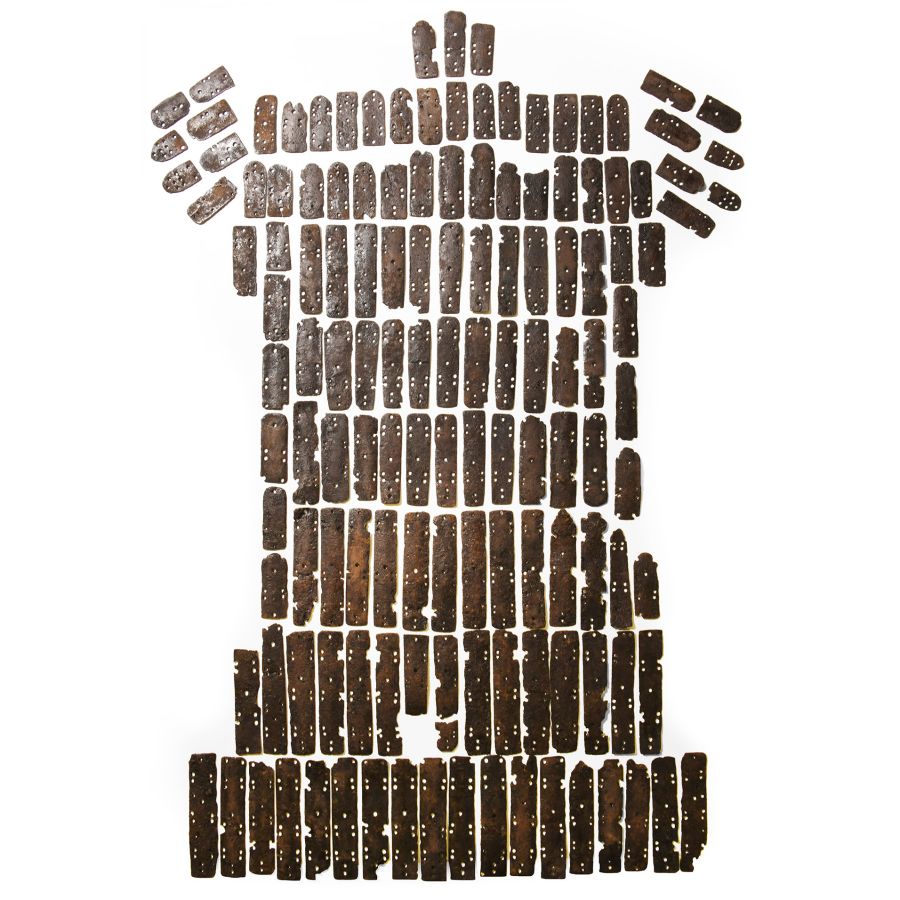
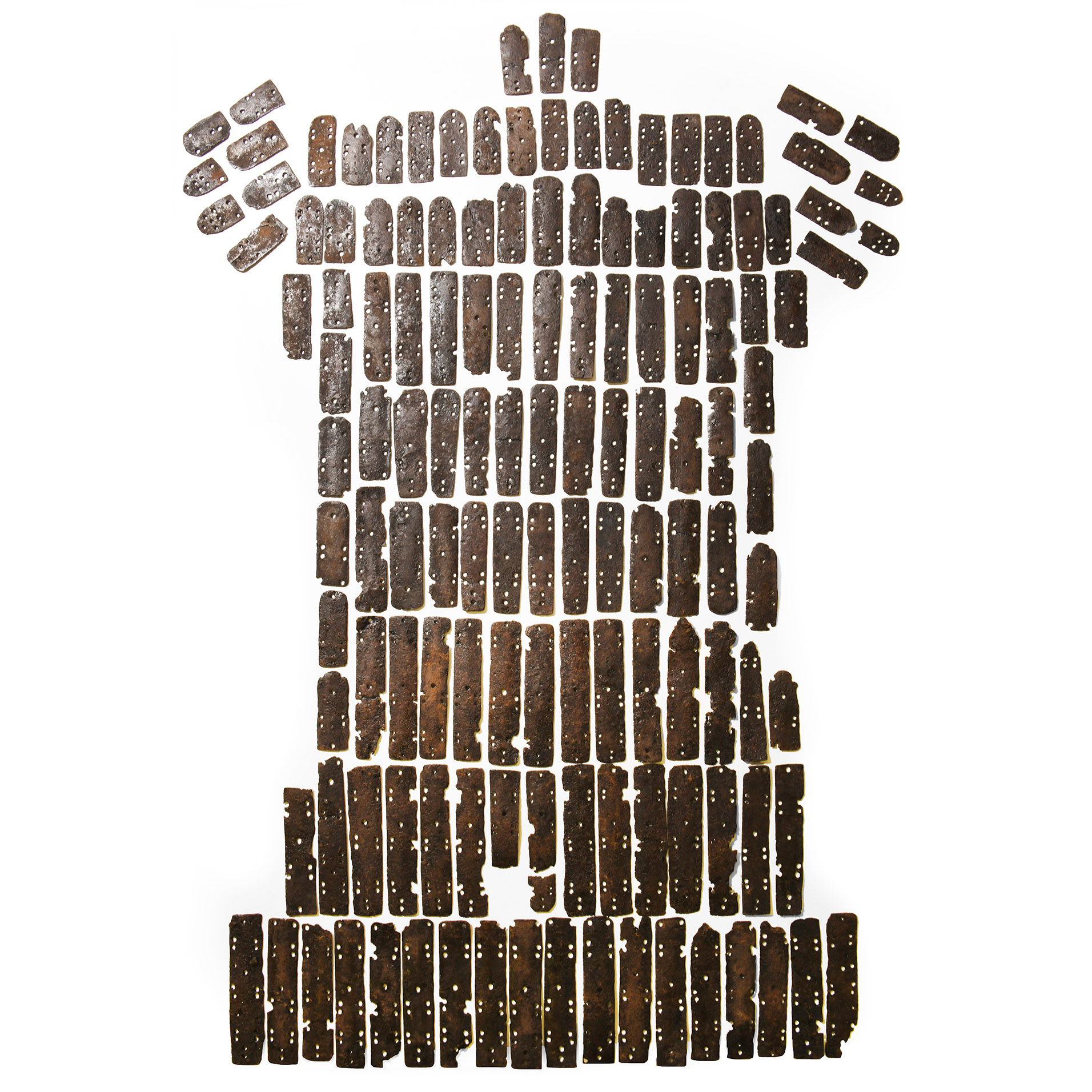
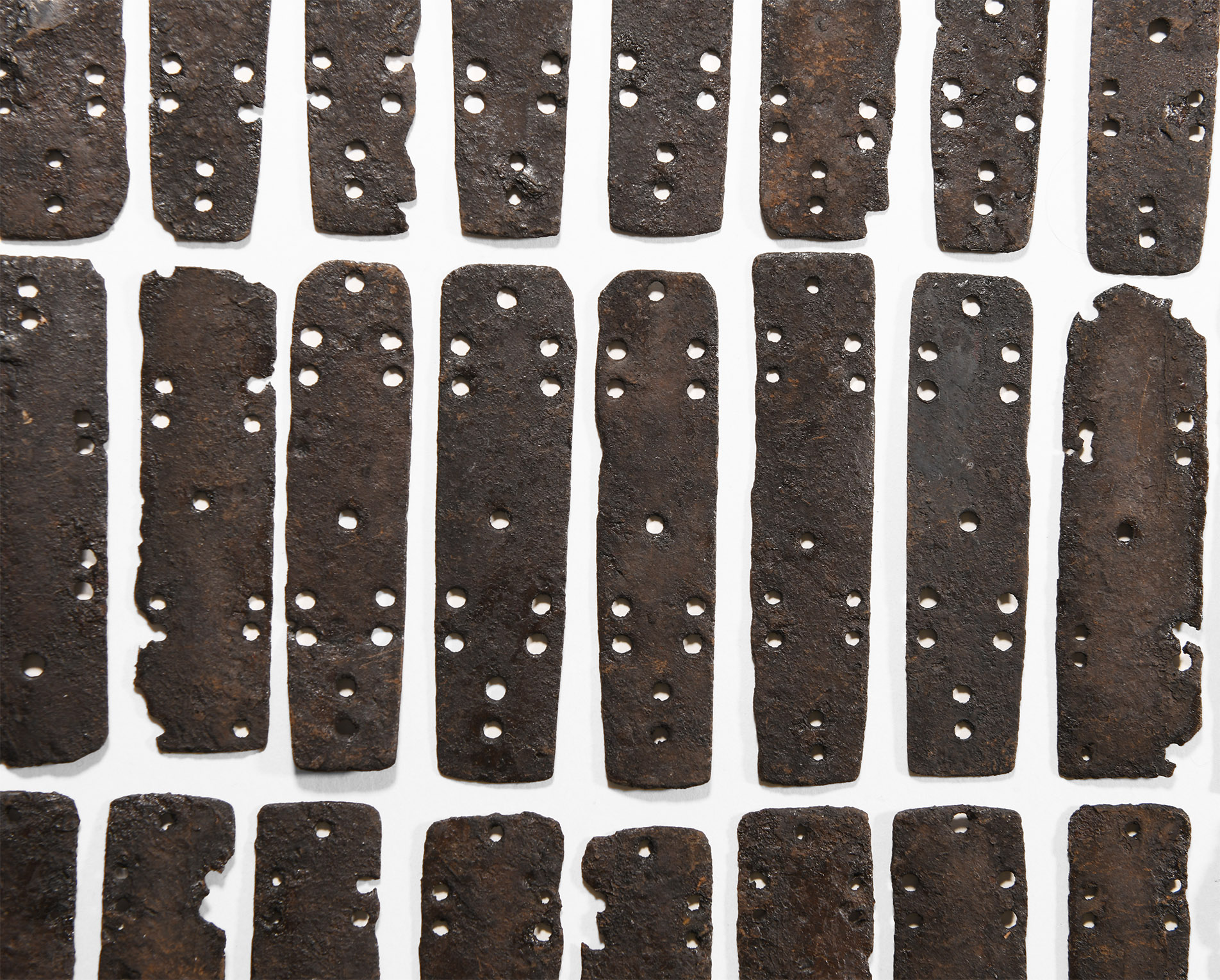
Byzantine Iron Lamellar Armour Group
CIRCA 12TH-13TH CENTURY A.D.
1 1/2 - 4 3/4 in. (1.43 kg total, 4-12 cm).
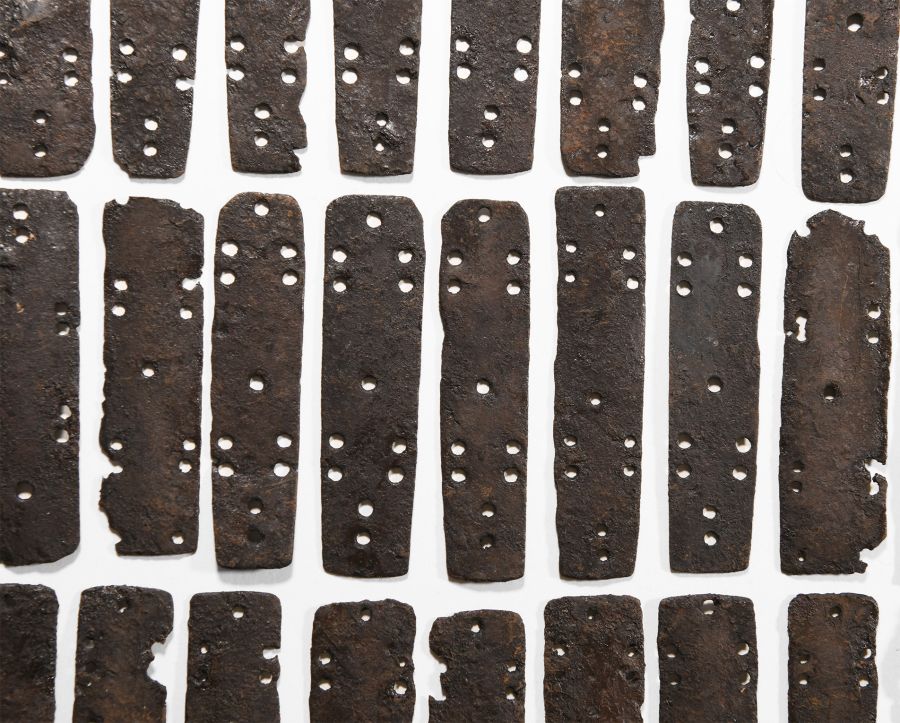
A Byzantine or Eastern European armour group comprising 138 plates from a klivanion in forty different shapes; originally the plates would have been interlaced and attached to an undergarment to form a compact cuirass. [138, No Reserve]
ProvenanceFrom the private collection of a London gentleman, from his grandfather's collection formed before the early 1970s.
Accompanied by an academic report by Dr Raffaele D'Amato.
This lot has been checked against the Interpol Database of stolen works of art and is accompanied by search certificate no.11929-209662.
Cf. Thordeman, B., Armour from the battle of Wisby, 1361, Malmo, 1939 (London, 2001), pp.246-247; Dawson, T., One Thousand Years of lamellar construction in the Roman World, Armidale, 2003; D’Amato, R., Pflaum, V., ‘Two suites of lamellar armour from Kranj (Carnium), Slovenia, in the light of archaeological analogies, written sources and contemporary iconography’, in Acta Militaria Mediaevalia XV, Kraków–Sanok–Wrocław 2019, s. 7-50.
FootnotesThe lamellar protection was particularly effective when used by mounted troops as it provided not just protection but enabled free movement due to its loose construction. A similar type of armour was already used by the Assyrians in the 9th century B.C. Its use increased in the west during the 4th and 5th centuries A.D. As a result of changes in warfare techniques, where the archer’s role in the initial stages of the battle was of utmost importance, the use of lamellar armour was widespread amongst the Roman army and Germanic peoples.
There are various ways in which the present suite of plates could have been assembled, although it was likely a short (thigh-length) form of lamellar armour.
TimeLine Auctions follows a vetting process to ensure the authenticity and legality of all items, reinforcing our commitment to integrity and responsible trading. Each antiquity, antique, and coin lot undergoes thorough examination by a vetting committee of at least ten external specialists, professional trade association members, scientists, and archaeologists: Our Vetting Process
AUCTIONS:
TimeLine is a leading auction house specialising in antiquities, ancient art, collectables, natural history, coins, medals, and books. Our auctions offer museums, collectors, historians, and enthusiasts the opportunity to acquire unique and historically significant pieces.
-
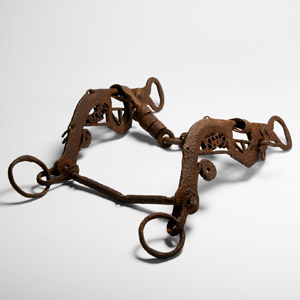
Byzantine Iron Horse Bit
14th-15th century A.D.Estimate: £150 - 200 (+bp*)
Opening Bid: £83
Composed of arched openwork shanks with looped terminals; one end fitted with large hoops and bar between; one end with a tripartite mouthpiece comprising two collared bars connected by a central hoop; Byzantine or early Ottoman. 340 grams, 19.5 cm
Fine condition.
Collection of Dr. Hanns-Ulrich Haedeke (1928-2017), author of ‘Schmuck Aus Drei Jahrtausenden’ and who became the director of the Museum of Klingenmuseum in Solingen, Germany, in 1968; the collection was formed in the early 1960s. From an important private Dutch collection.
This type of horse bit is visible on one of the most important equestrian artworks of the 15th century - the Cappella dei Magi by Benozzo Gozzoli, a painting representing the Three Kings visiting Christ, depicted in costumes belonging to the early quarter of the 15th century. All the cavalrymen in the artwork had heavy curb-bits (with short and curved shanks, as in our specimen) and heavy, single reins. -
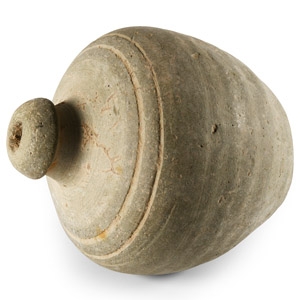
Byzantine 'Greek Fire' Ceramic Fire Bomb or Hand Grenade
9th-11th century A.D.Sold for (Inc. bp): £416
Piriform body with domed filler-hole, marked by horizontal lines to the shoulder; intended to be filled with explosive liquid and wick, used as a hand grenade. 355 grams, 10.3 cm
Acquired 1980-2015. Ex Abelita family collection. Accompanied by an academic paper by military specialist Dr Raffaele D'Amato, dated 15 July 2019 and titled 'Eastern Roman Empire - Greek Fire Bomb or Hand Grenade (μεσαίον kακάβιον) 9th-11th century AD'.
Apart from the use of siphons or manual flame-throwers called cheirosiphona, special corps of Roman soldiers employed terracotta grenades, in the form of small jars, abundantly evidenced in archaeological excavations. Such were the γανωτα, vessels (sometimes also of bronze) used for Greek fire. They were called μεσαία kακαβιά or κυτροκακάβια where the former had a bulbous shape and the latter a more cylindrical form. -
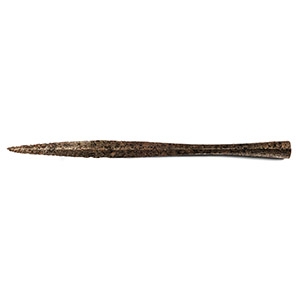
Viking Age Iron Socketted Spearhead
11th-12th century A.D.Sold for (Inc. bp): £234
Type N leaf-shaped slender blade, with flattened transition area between blade and socket, continuing far up onto the blade. 255 grams, 39 cm
Ex private collection of Mr M.B., Mainz, Germany, since the 1980s. Acquired from the above, 2004.
The spearheads of type N were a minor group in the Viking spearheads, found throughout the whole of the 10th century A.D. They make up circa 10% of the Viking Age spears.
