LOT 4167
Byzantine Iconographic PB Seal. Circa 6th century AD.
Bust facing / Monogram. Condition as seen.(3.60gr, 14mm, 6h.).
ProvenanceAcquired on the European coin market.
Property of a Kent, UK, gentleman.
TimeLine Auctions follows a vetting process to ensure the authenticity and legality of all items, reinforcing our commitment to integrity and responsible trading. Each antiquity, antique, and coin lot undergoes thorough examination by a vetting committee of at least ten external specialists, professional trade association members, scientists, and archaeologists: Our Vetting Process
AUCTIONS:
TimeLine is a leading auction house specialising in antiquities, ancient art, collectables, natural history, coins, medals, and books. Our auctions offer museums, collectors, historians, and enthusiasts the opportunity to acquire unique and historically significant pieces.
LOT 4167
Byzantine Iconographic PB Seal.
Estimate £20 - 30€23 - 35 (for guidance only)$27 - 41 (for guidance only)
Opening Bid
£5 (EUR 6; USD 7) +BP*
-
Byzantine Iconographic PB Seal in the name of Euthymios I Syncellus, Patriarch of Constantinople. AD 907-912.
Estimate: £300 - 400 (+bp*)
Opening Bid: £35
[VΠЄΡΑΓΙΑ ΘЄΟΤΟΚЄ Β]OHΘЄΙ ⧾, Mother of God Hodeghetria standing facing, holding the Christ Child in her left arm; all within border of dots / ЄVΘ[ΥΜΙѠ] ΑΡΧΙЄΠΙ[CΚΟΠѠ] ΚѠΝCΤΑ[ΝΤΙΝΟV]ΠΟΛЄѠ[C] [ΝЄ]ΑC ΡѠΜ[ΗΣ] • • ⧾ [...] in six lines. Translation: [Most holy Mother of God] help Euthymios, archbishop [patriarch] of Constantinople, the New Rome. Unpublished in the standard references; for seals of predecessor patriarchs with similar iconography or/and inscriptions see: BLS II 5 (Methodios I, 843-47); DOCBS VI 112.1 (Ignatios, 847-58, 867-77); DOCBS VI 113.1 (Photios, 858-67, 877-86); DOCBS VI 115 (Nicholas I Mystikos, 901-907, 912-925). 10.66gr, 35mm, 12h.
Condition as seen. Apparently the only extant seal of Patriarch Euthymios I and thus of the highest historical significance.
Ex Roma Numismatics Ltd, E-Sale 110, 3 August 2023, lot 1734. Acquired on the European coin market. Property of a Kent, UK, gentleman.
Euthymios a monk of a monastery on Mt. Olympus in Asia Minor, he became later abbot of St. Theodora in Constantinople and confessor to Leo VI. He was also the confidential deacon (Syncellus) for the Patriarch of Constantinople before his rise to patriarchal cathedra. He used his influence over the Emperor to protect the followers of the late-9th-century Patriarch Photios. Euthymios became Patriarch as a result of a controversy within the Church of Constantinople over emperor Leo's numerous marriages to produce an heir, and particularly over his fourth marriage, a marriage not then allowed within the Eastern Church. The controversy began after the death of Leo's second wife, Zoe Zaoutzaina. The Patriarch Nicholas I Mystikos permitted Leo's third marriage to Eudokia Baiana but forbade him from marrying a fourth time. Thus, after the death of Eudokia, Leo took Zoe Karbonopsina as his mistress. In 905, Zoe gave birth to a son, the future Constantine VII. Leo wanted to legitimize Constantine by marrying Zoe. Patriarch Nicholas refused the marriage and conspired to overthrow Leo. In 907, Leo forced Nicholas to resign from office and replaced him with Euthymios Syncellus, who, while opposed, acknowledged the marriage but refused to let Zoe use the title "empress". In 912, near the time of Leo's death, Leo recalled Nicholas and deposed Euthymios. This began a long struggle between the supporters of Euthymios and those of Nicholas until the years of the reign of Emperor Romanus I Lecapenos, when the two factions finally reconciled with each other. Also, during his reign from 956 to 970, Patriarch Polyeuctos, who had questioned the legitimacy of marriage of Constantine VII's parents, restored the good name of Patriarch Euthymios I Syncellus. Our seal, apparently the only extant of Patriarch Euthymios I, continues the iconography and inscriptions of those of his predecessors. In S. Simmons' article, "The Seal of Approval: Visualizing Patriarchal Power and Legitimacy in Ninth-Century Constantinople", ATHANOR XXXII, 2014, p. 18 we read that 'of the extant Byzantine seals, John Cotsonis observed that Methodios is the first patriarch to feature an image of the Theotokos and the first to use the epithet "Most Holy" in his invocation. He also identifies Ignatios as the only patriarch to feature an image of Christ, the first patriarch to refer to himself as an Archbishop, and the first to refer to Constantinople as New Rome on his seal. This paper moves Cotsonis observations forward by discussing why Photios chose to emulate certain aspects of Methodios and Ignatios's seals to establish his patriarchal identity and promote his legitimacy'. -
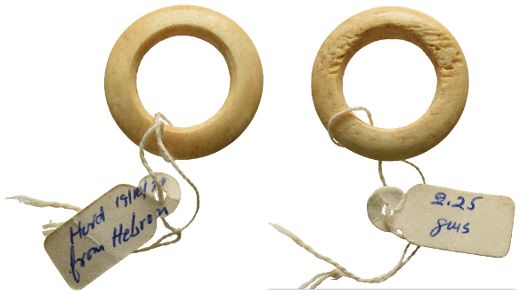
Asia Minor and Levante Bone Weight of Uncertain Standard. Circa 750-300 BC.
Estimate: £30 - 40 (+bp*)
Opening Bid: £5
Bone ring with wide hole and old inked tag: 'Hara 19/10/71 / from Hebron'. For a similar example see British Museum 1969,0401.120. 2.25gr, 26mm, 12h.
Condition as seen.
Found Hebron in 1971. From the Gabby family collection, 1960s-1970s. -
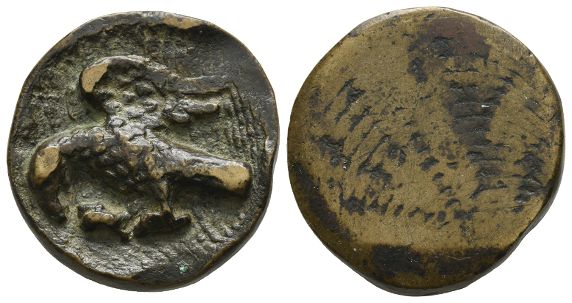
Late Roman PB Seal. Circa 4th-6th century AD.
Estimate: £30 - 40 (+bp*)
Opening Bid: £5
Standing figure to left, holding uncertain object; illegible inscription around / Blank. 14.76gr, 19mm, 12h.
Fine.
Acquired on the UK art market circa 2004. From the private collection of a North West London gentleman.
.jpg&width=0&height=110&crop=0&heightc=110&widthc=110)