
Loading, please wait...
_900x900.jpg "Byzantine Holy Land Terracotta Oil Lamp")
_200x200.jpg "Byzantine Holy Land Terracotta Oil Lamp")
.jpg "Byzantine Holy Land Terracotta Oil Lamp")
LOT 1065
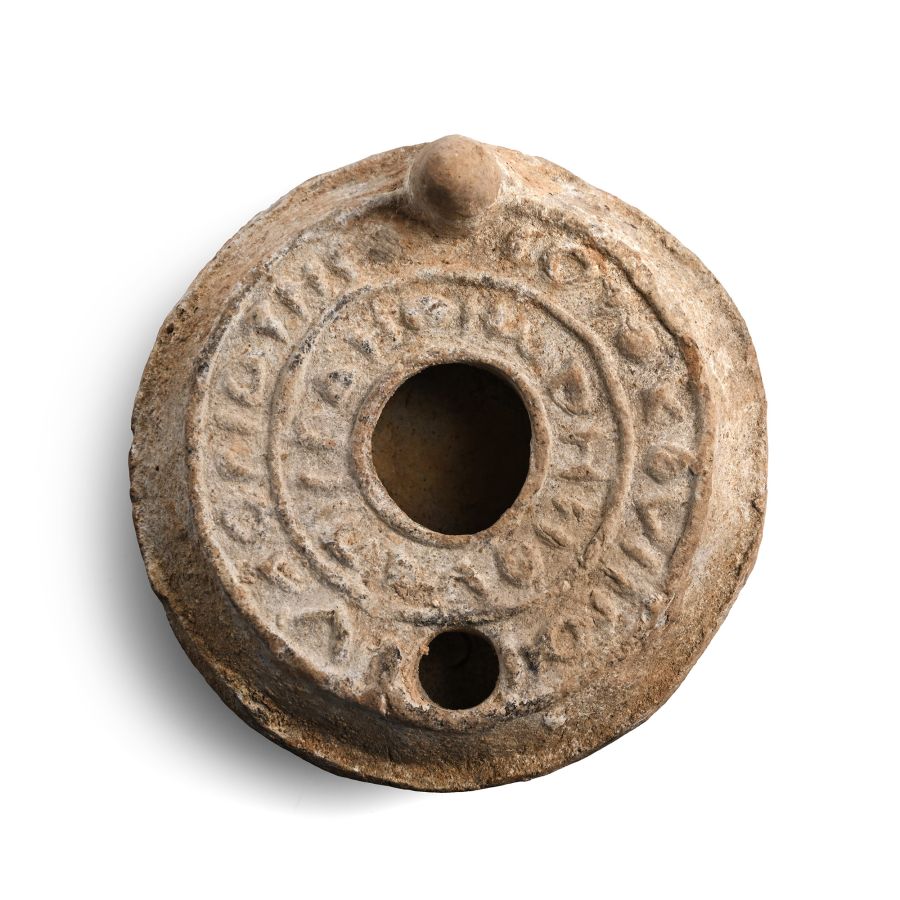
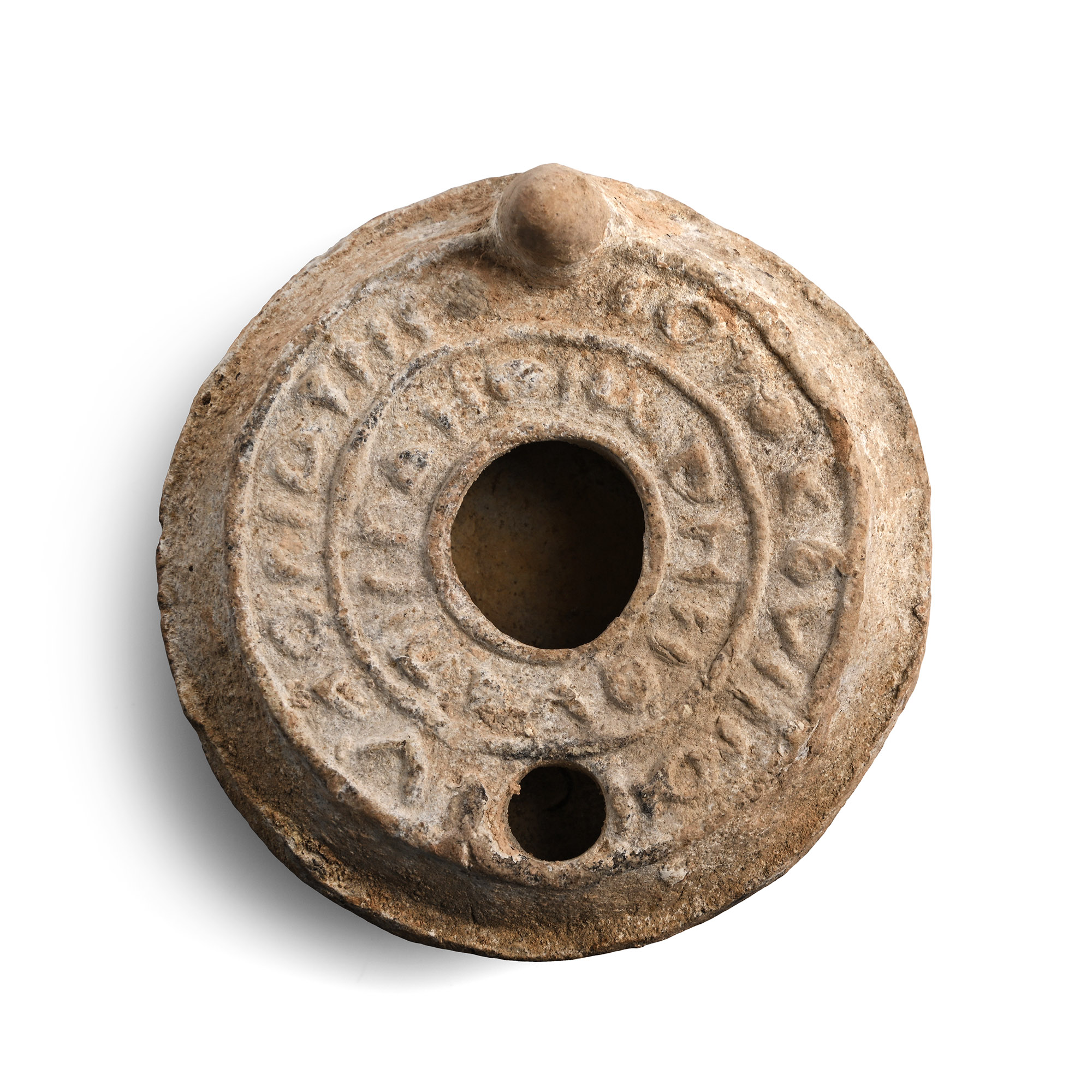
Byzantine Holy Land Terracotta Oil Lamp
SYRO-PALESTINIAN, 7TH-8TH CENTURY A.D.
2 7/8 in. (82 grams, 74 mm).
Discoid in plan and biconvex in section with spike handle, rosette to the lower sidewall and concentric quatrefoil panels to the base; shoulder with Greek inscription invoking the blessing of Mary Theotokos.
ProvenanceFrom the collection of Dame Joan Evans (1893-1977), thence gifted during her lifetime to a gentleman collector friend from South East England.
LiteratureCf. Bagatti (1964- 2), pp. 266-268, No.12; Qedem, Monographs of the Institute of Archaeology by Rosenthal & Sivan 1978, No.581. Ancient Lamps from the Mediterranean by Srdjan Djuric 1995, No.C248. D. 3.
FootnotesDame Joan Evans, DBE, FSA, FRHistS, enjoyed a long and distinguished career as an author and historian. She was appointed the president of the Society of Antiquaries in 1959, the first woman to hold this position, serving until 1964. From 1948 to 1951, Joan Evans served as President of the Royal Archaeological Institute. She received the Society’s gold medal in 1973. Joan Evans was honoured with a host of honorary degrees and fellowships, as well as fellowships of the Royal Historical Society and the Royal Society of Literature. She was a Chevalier of the Légion d’Honneur, and was appointed a Dame of the British Empire in 1976. She served as a trustee of both the London and the British museums, and as a member of the advisory council of the Victoria and Albert Museum.
CONDITIONTimeLine Auctions follows a vetting process to ensure the authenticity and legality of all items, reinforcing our commitment to integrity and responsible trading. Each antiquity, antique, and coin lot undergoes thorough examination by a vetting committee of at least ten external specialists, professional trade association members, scientists, and archaeologists: Our Vetting Process
AUCTIONS:
TimeLine is a leading auction house specialising in antiquities, ancient art, collectables, natural history, coins, medals, and books. Our auctions offer museums, collectors, historians, and enthusiasts the opportunity to acquire unique and historically significant pieces.
-
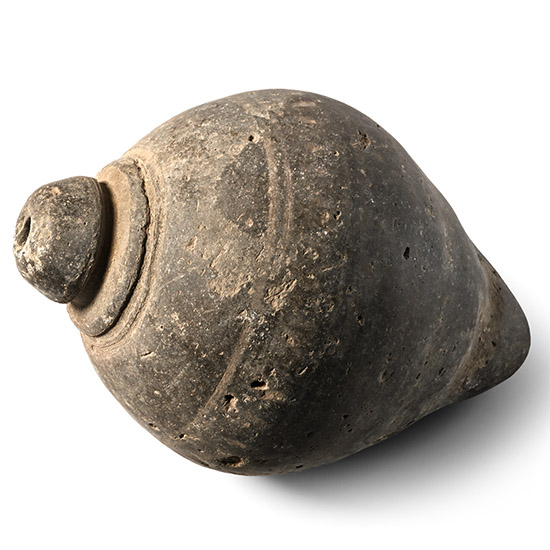
Byzantine 'Greek Fire' Ceramic Fire Bomb or Hand Grenade
9th-11th century A.D.Sold for (Inc. bp): £104
Piriform in profile with an undecorated body; intended to be filled with explosive liquid and a wick, and used as a hand grenade. 484 grams, 12.5 cm
From a specialist collection, London, UK, 1990-2000s. Accompanied by an academic paper by military specialist Dr Raffaele D'Amato, dated 15 July 2019 and titled 'Eastern Roman Empire - Greek Fire Bomb or Hand Grenade (μεσαίον kακάβιον) 9th-11th century AD'.
Apart from the use of siphons or manual flame-throwers called cheirosiphona, special corps of Roman soldiers employed terracotta grenades, in the form of small jars, abundantly evidenced in archaeological excavations. They were called μεσαία kακαβιά or κυτροκακάβια, where the former had a bulbous shape and the latter a more cylindrical form. -
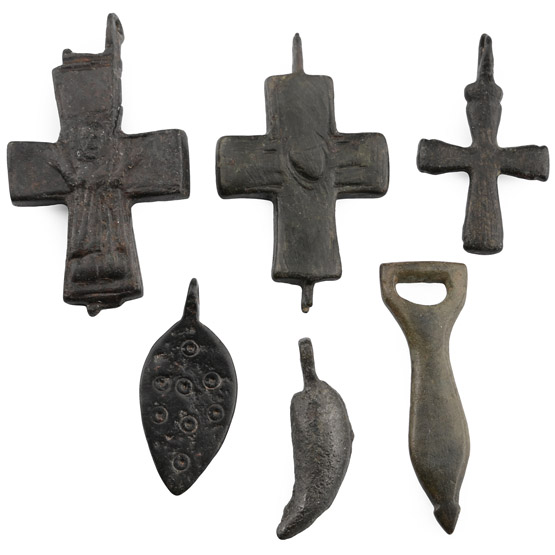
Byzantine Bronze Cross and Other Pendant Collection
6th-12th century A.D.Sold for (Inc. bp): £85
Including a leaf-shaped strap end, vesica-shaped pendant and other items. 24.12 grams total, 26-41 mm
Ex German art market, 2000s. Acquired from an EU collector living in London. From the collection of a Surrey, UK, gentleman. -
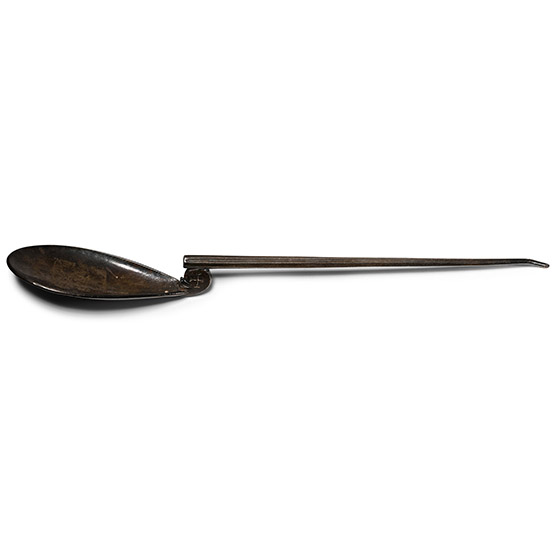
Byzantine Silver Swan-Necked Ligula Spoon with Cross
5th-7th century A.D.Estimate: £1,500 - 2,000 (‡+bp*)
Opening Bid: £750
Shallow piriform bowl attached to a stepped baluster, hexagonal-section handle with spike finial; engraved cross potent to either side of the junction. 46 grams, 22.7 cm
French private collection. Acquired on the French art market in 2011. Acquired by the present owner at the above. This lot has been checked against the Interpol Database of stolen works of art and is accompanied by search certificate number no.12240-222347.
The lateral incised cross motifs suggest that the spoon may have had a liturgical purpose, possibly associated with baptism.
