
Loading, please wait...


LOT 0919
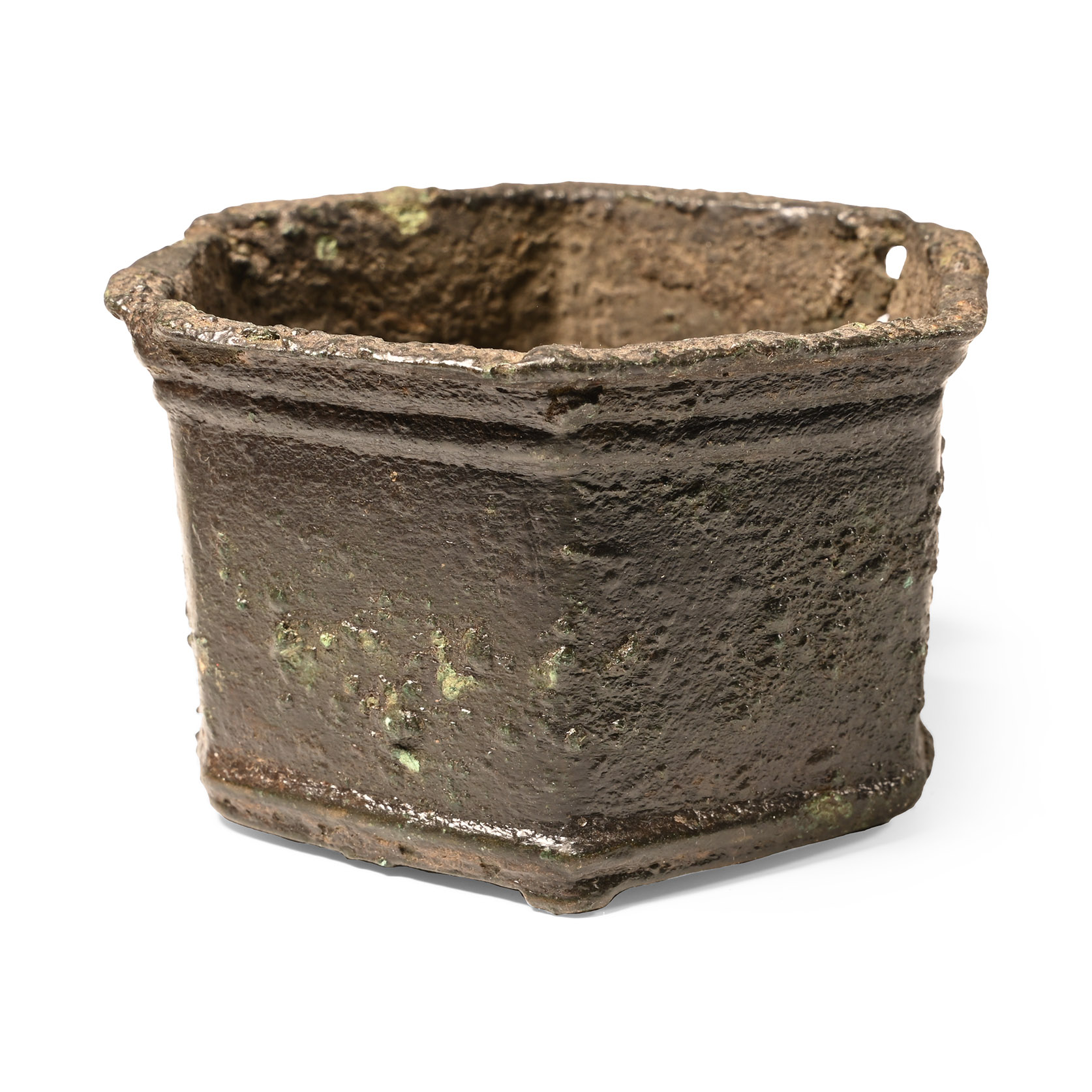
Byzantine Hexagonal Bronze Censer Base
5TH-7TH CENTURY A.D.
3 1/8 in. (194 grams, 80 mm).
With flared and stepped rim and foot; pierced for attachment; carbonised accretion within. [No Reserve]
ProvenanceFrom a family collection mostly formed in the 1940s-1950s, thence by descent.
CONDITIONTimeLine Auctions follows a vetting process to ensure the authenticity and legality of all items, reinforcing our commitment to integrity and responsible trading. Each antiquity, antique, and coin lot undergoes thorough examination by a vetting committee of at least ten external specialists, professional trade association members, scientists, and archaeologists: Our Vetting Process
AUCTIONS:
TimeLine is a leading auction house specialising in antiquities, ancient art, collectables, natural history, coins, medals, and books. Our auctions offer museums, collectors, historians, and enthusiasts the opportunity to acquire unique and historically significant pieces.
-
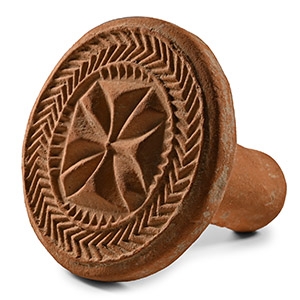
Byzantine Terracotta Bread Stamp
10th-11th century A.D.Sold for (Inc. bp): £1,300
Discoid in plan with integral stub handle; central Maltese cross within a herringbone ring. 319 grams, 95 mm
From the collection of Sir Daniel Donohue [1919-2014] and the Countess Bernardine [1904-1968], Los Angeles, USA; the collection was assembled in the 1950-1960s, but before March 1968. with Bonhams, London, 13 April 2011, no.310 [Part]. Acquired on the English art market, 2011. Private collection, Europe. Accompanied by copies of the relevant Bonhams catalogue pages. -
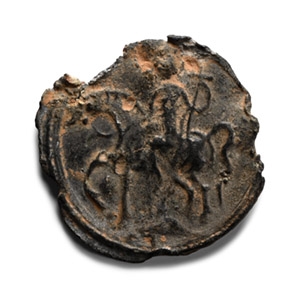
Byzantine Bronze St. George Amulet
6th-7th century A.D.Estimate: £100 - 140 (+bp*)
Opening Bid: £50
Bifacial amulet with chipped rim; obverse: St George with cross on horseback overcoming a dragon; reverse: mary and Infant Jesus flanked by angels. 5.4 grams, 28 mm
From the collection of a gentleman, acquired on the London art market in the 1990s. -
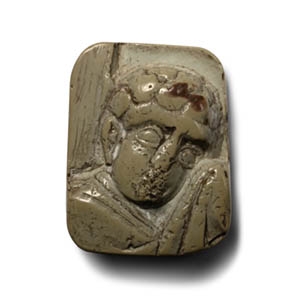
Byzantine Steatite Mount with a Saint
12th century A.D.Estimate: £800 - 1,000 (‡+bp*)
Opening Bid: £400
Showing a bust of a man dressed in a cloak and with his head turned to look over his right shoulder; rectangular in plan with rounded corners. 2.52 grams, 19 mm
Acquired from Artemis Gallery, 2003. Private collection, Europe.
