
Loading, please wait...



LOT 0184
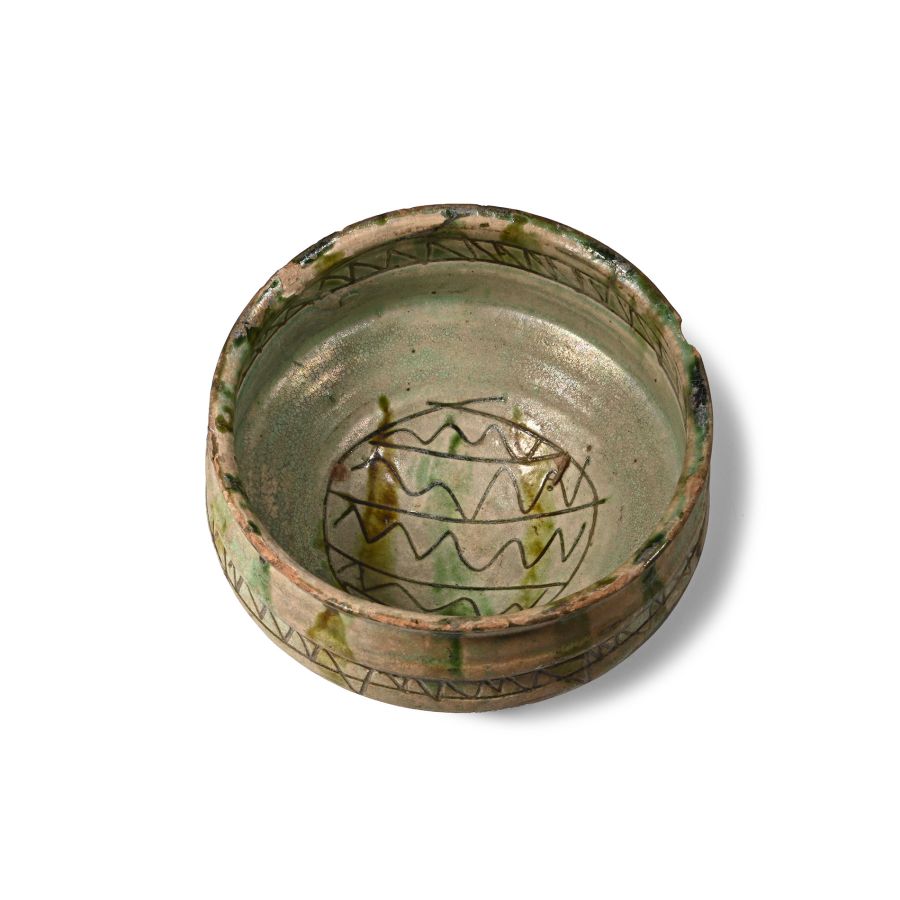
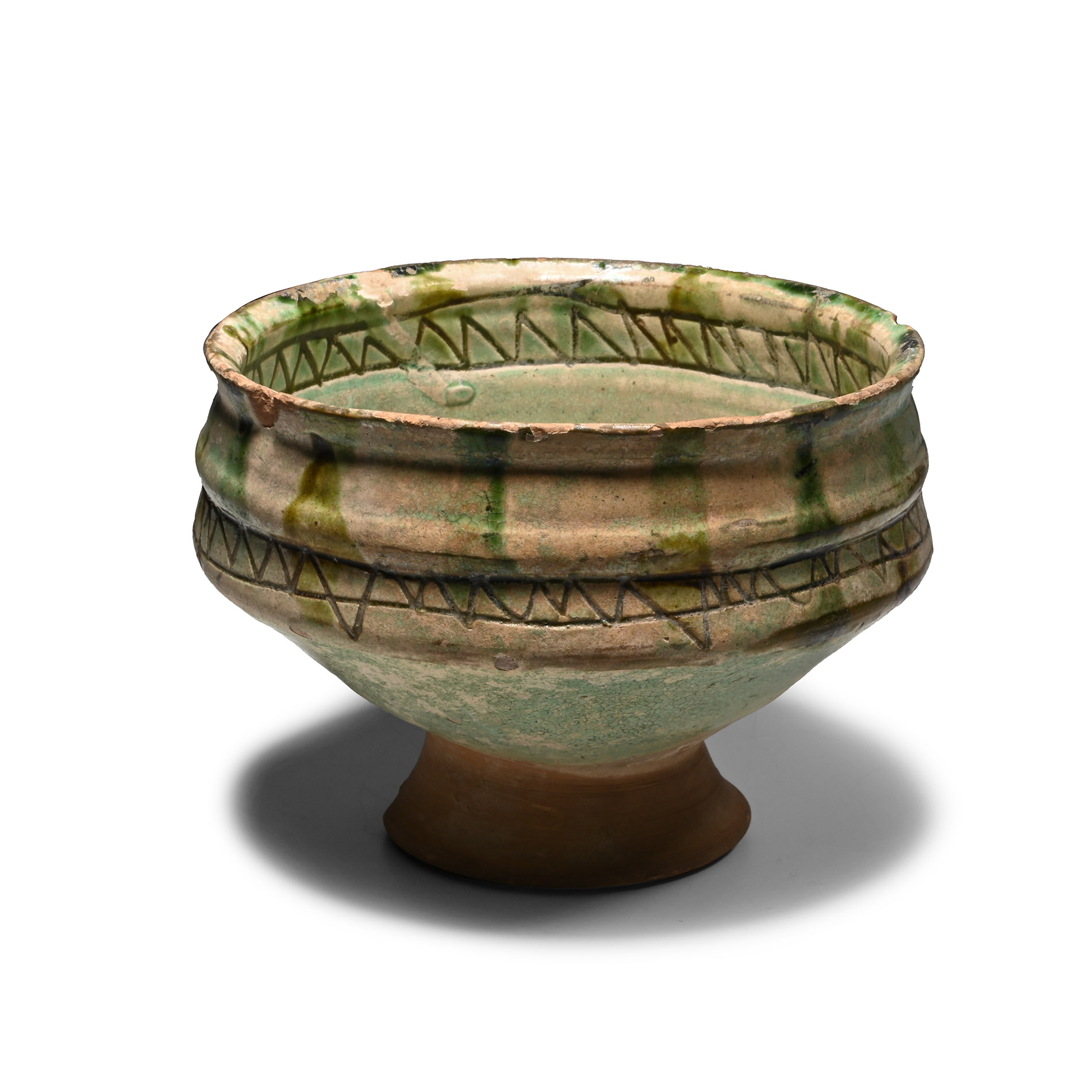
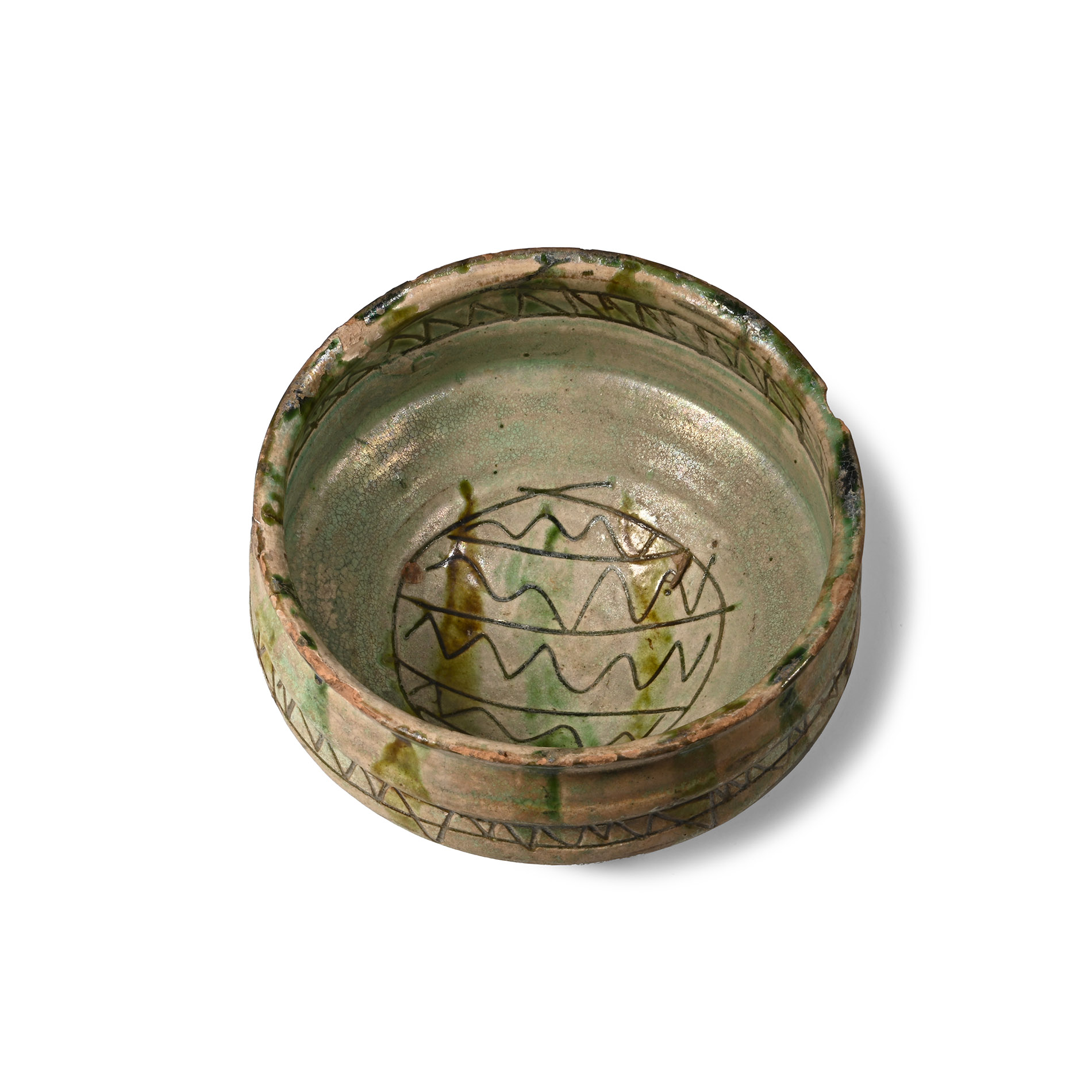
Byzantine Green Glazed Sgraffito Footed Bowl
13TH CENTURY A.D.
5 1/8 in. (372 grams, 13 cm).
Carinated in profile with narrow flared base, green-glazed upper body; to the inner face a central roundel with zigzag fill and a zigzag band above the gallery, to the outer face horizontal zigzag band to the shoulder; old Christie's label with '144/2 5540'.
ProvenanceEx Charles Gillot (1853-1903).
with Christie's Paris, 2008.
European private collection.
This lot is accompanied by an illustrated lot declaration signed by the Head of the Antiquities Department, Dr Raffaele D’Amato.
Cf. similar item in the Metropolitan Museum of Art, New York, under accession no.12.45.2.
CONDITIONTimeLine Auctions follows a vetting process to ensure the authenticity and legality of all items, reinforcing our commitment to integrity and responsible trading. Each antiquity, antique, and coin lot undergoes thorough examination by a vetting committee of at least ten external specialists, professional trade association members, scientists, and archaeologists: Our Vetting Process
AUCTIONS:
TimeLine is a leading auction house specialising in antiquities, ancient art, collectables, natural history, coins, medals, and books. Our auctions offer museums, collectors, historians, and enthusiasts the opportunity to acquire unique and historically significant pieces.
LOT 0184
Byzantine Green Glazed Sgraffito Footed Bowl
Estimate £800 - 1,000€930 - 1,160 (for guidance only)$1,080 - 1,350 (for guidance only)
-
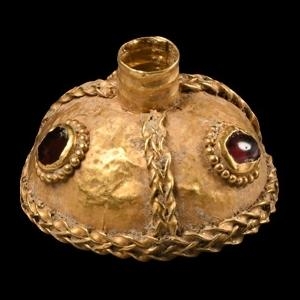
Byzantine Gold Dagger Pommel Cap with Garnets
Circa 8th century A.D.Sold for (Inc. bp): £780
Sheet gold dome with braided filigree band to the rim, three vertical bands and three cells each set with a garnet cabochon, collar to the apex. 2.13 grams, 22 mm
From a continental collection prior to 2000. Acquired on the UK art market in 2010. Ex property of a UK gentleman. This lot is accompanied by an illustrated lot declaration signed by the Head of the Antiquities Department, Dr Raffaele D’Amato.
Eastern Roman daggers of 7th-8th centuries typically displayed gold ornaments embellished with garnets and filigree, visible on the specimens gifted by the Empire to foreign rulers, such as the famous Bulgarian leader Kuvrat. -
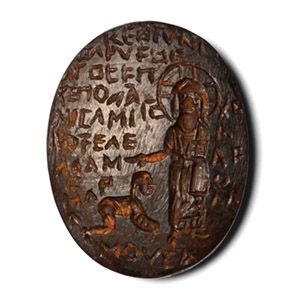
Byzantine Hematite Inscribed Gemstone with Figure
6th-7th century A.D.Sold for (Inc. bp): £650
Ellipsoid in plan with chamfered edge; standing nimbate figure in ankle-length robe extending one hand in blessing above a crawling supplicant; extensive Greek text transcribed as: ''ΚΕ Η ΓVNΙ / ΙΛ ΡVCΕΙ Ε / ΛTΟΣ ΕΤΙ / ΚΕ ΠΟΛΑ / ΝΙCΛ ΜΙ / Ν ωFΕΛΕ / ΛΑΑΜ / ΕΡ / ΗΛ / Λ / ΜΟVCΑ ' and 'A / ΛF / O / ΛΛ'.…'[καὶ γυνὴ οὗσα ἐν ῥύσει αἵματος δώδεκα ἔτη καὶ πολλὰ παθοῦσα ὑπὸ πολλῶν ἰατρῶν καὶ δαπανήσασα τὰ παρ᾽ αὐτῆς πάντα καὶ μηδὲν ὠφεληθεῖσα ἀλλὰ μᾶλλον εἰς τὸ χεῖρον ἐλθοῦσα…' 10.2 grams, 27 mm
UK private collection before 2000. Acquired on the UK art market. Property of a London gentleman. This lot is accompanied by an illustrated lot declaration signed by the Head of the Antiquities Department, Dr Raffaele D’Amato.
The scene and surrounding text refers to the miracle concerning the woman with the issue of blood; the Greek text is abbreviated from Mark 5, 25-34: 'And there was a woman who had had a discharge of blood for twelve years, and who had suffered much under many physicians, and had spent all that she had, and was no better but rather grew worse. She had heard the reports about Jesus and came up behind him in the crowd and touched his garment. For she said, 'If I touch even his garments, I will be made well.' And immediately the flow of blood dried up, and she felt in her body that she was healed of her disease. And Jesus, perceiving in himself that power had gone out from him, immediately turned about in the crowd and said, 'Who touched my garments?' And his disciples said to him, 'You see the crowd pressing around you, and yet you say, ‘Who touched me?' And he looked around to see who had done it. But the woman, knowing what had happened to her, came in fear and trembling and fell down before him and told him the whole truth. And he said to her, 'Daughter, your faith has made you well; go in peace, and be healed of your disease.' -
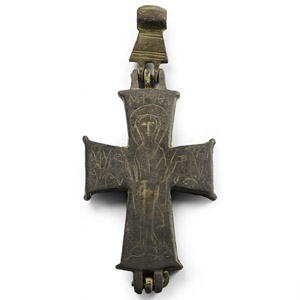
Byzantine Bronze Reliquary Cross Pendant
Circa 10th-12th century A.D.Sold for (Inc. bp): £286
Formed from two hinged plates with a recess to the inner face of each, cast suspension loop to the upper hinge; obverse with four incised equal-arm crosses and 'MIXAHΛ' (Michael) legend; reverse with low-relief image of nimbate Mary in orans pose. 56.8 grams, 10.1 cm
Ex German art market, 2000s. Acquired from an EU collector living in London. From the collection of Surrey, UK, gentleman. This lot is accompanied by an illustrated lot declaration signed by the Head of the Antiquities Department, Dr Raffaele D’Amato.
