
Loading, please wait...
_900x900.jpg "Byzantine Green Glazed Sgraffito Bowl with Lion")
_200x200.jpg "Byzantine Green Glazed Sgraffito Bowl with Lion")
.jpg "Byzantine Green Glazed Sgraffito Bowl with Lion")
LOT 0165
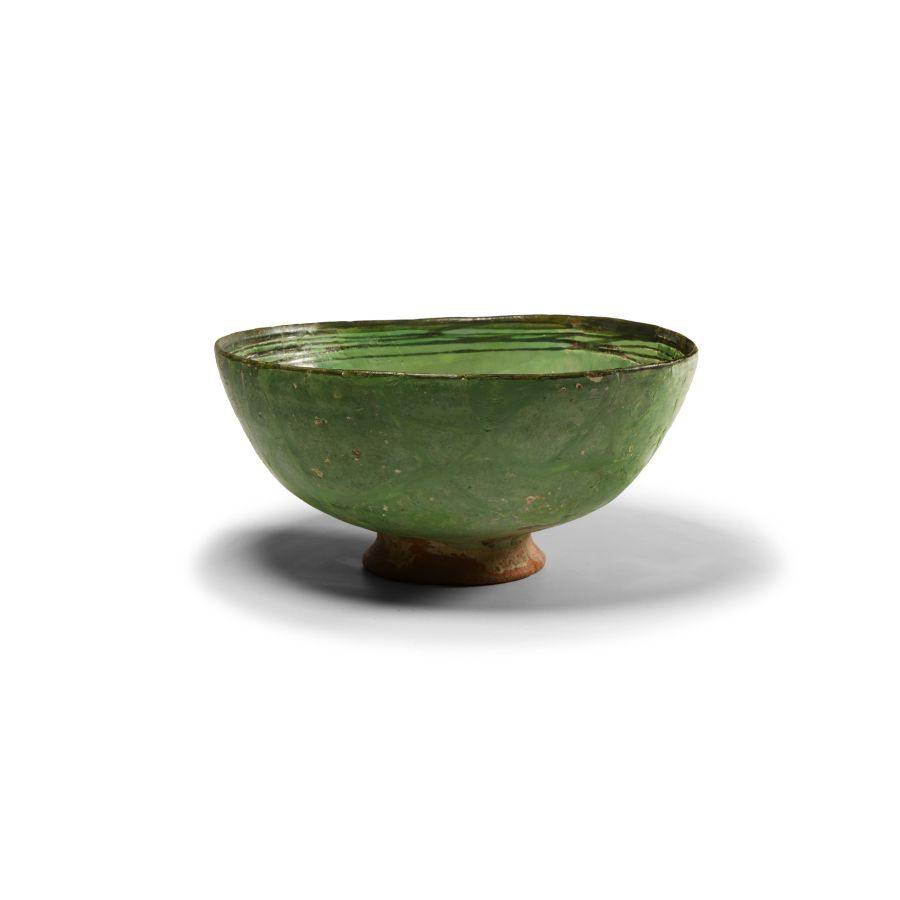
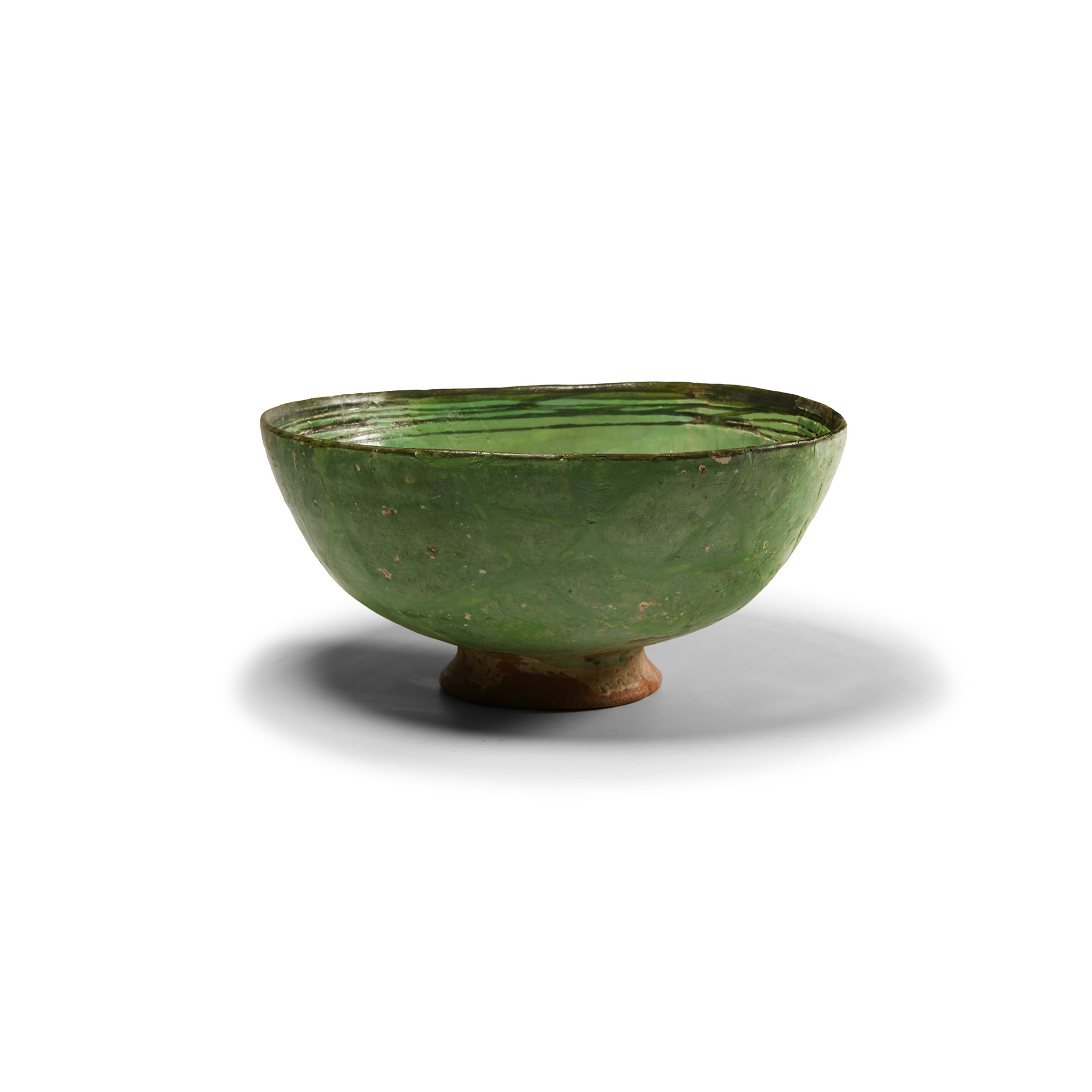
Byzantine Green Glazed Sgraffito Bowl with Lion
12TH-15TH CENTURY A.D.
6 3/4 in. (340 grams, 17.2 cm wide).
A roughly hemispherical ceramic bowl with splayed foot, decorated with a green glaze to the interior and exterior faces, a stylised leaping lion incised to the interior with decorative banding to the rim above, restored.
ProvenanceEx private German collection, 1980s.
This lot has been checked against the Interpol Database of stolen works of art and is accompanied by search certificate no.11636-198828.
Cf. sgraffito technique on a 14th century, glazed earthenware bowl in the collection of the Metropolitan Museum of Art, New York under reference number 33.141.
CONDITIONTimeLine Auctions follows a vetting process to ensure the authenticity and legality of all items, reinforcing our commitment to integrity and responsible trading. Each antiquity, antique, and coin lot undergoes thorough examination by a vetting committee of at least ten external specialists, professional trade association members, scientists, and archaeologists: Our Vetting Process
AUCTIONS:
TimeLine is a leading auction house specialising in antiquities, ancient art, collectables, natural history, coins, medals, and books. Our auctions offer museums, collectors, historians, and enthusiasts the opportunity to acquire unique and historically significant pieces.
LOT 0165
Byzantine Green Glazed Sgraffito Bowl with Lion
Estimate £2,000 - 3,000€2,320 - 3,480 (for guidance only)$2,700 - 4,050 (for guidance only)
-
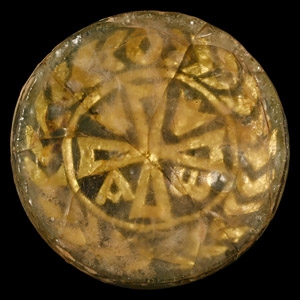
Byzantine Gold in Glass Roundel with Cross
4th-5th century A.D. or laterSold for (Inc. bp): £650
A glass roundel with rounded lower edge and dished centre, containing a gold leaf cross at centre surrounded by a stylised wreath. 22.7 grams, 41 mm wide
French collection, 1960s-early 2000s. From an important Paris gallery, France. -
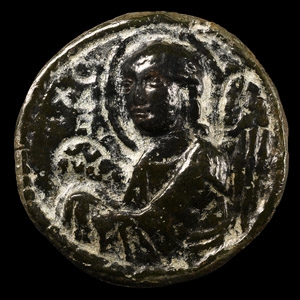
Byzantine Roundel with Saint
Circa 12th century A.D.Sold for (Inc. bp): £143
A roundel bearing an angel in high-relief to one face, looking left, the hands in offering gesture covered by his garment, Greek letters 'APX' (for Archangel) on the left side of his face. 29.2 grams, 44 mm
German art market, 1990s. Mr A.H., a North American collector living in the UK. -
.jpg)
Large Byzantine Cosmatesque Mosaic Panel
12th-13th century A.D.Sold for (Inc. bp): £10,400
A rectangular marble floor panel recalling similar workmanship to the floor of the Sistine Chapel, comprising a large central panel with a chequerboard design of alternating geometric floral motifs with speckled porphyry squares, surrounded by seven green and porphyry roundels, each with a bicolour border composed of interlocking triangles and lozenges; each corner with an L-shaped panel displaying a unique geometric design composed of alternating square, lozenge-shaped and small rectangular tiles. 57 kg, 80cm
French gallery, Paris, 1990s. From a family collection. Accompanied by an academic report by Dr Raffaele D'Amato. This lot has been checked against the Interpol Database of stolen works of art and is accompanied by search certificate no.11586-199348.
The Cosmatesque Style was a characteristic type of ornamentation of Eastern Roman origin (opus alexandrinum) used by the post-Roman marble makers of the 12th and 13th centuries A.D. It embellishes floors, ciboriums and cloisters of churches by means of polychrome marble inlays of varied and imaginative geometric shapes. The wider use of this decoration began in the 12th century, at which time techniques were improved: the Cosmati floors were made with pieces of stone cut in various shapes and sizes, a property quite different from the mosaics in opus tessellatum, in which the motifs were made from small units all having the same size and shape, or from the opus sectile, intended to create representations with pieces of multi-coloured marble cut out and arranged for this purpose. The stones used by Cosmati artists were often material salvaged from the ruins of ancient Roman buildings. The composition of such mosaics recalls the floors of the most important churches of Rome; in addition to the floor of the Sistine Chapel (created probably in the 14th century for the previous building or Cappella Maggiore), one can cite that of Santa Maria Maggiore (1145-1153 A.D.), San Giovanni in Laterano (14th century A.D.), Saint Clement (1099-1120 A.D.), Santi Quattro Coronati (13th century A.D.), Santa Croce in Gerusalemme (12th century A.D.) and many others.
