
Loading, please wait...
LOT 1957
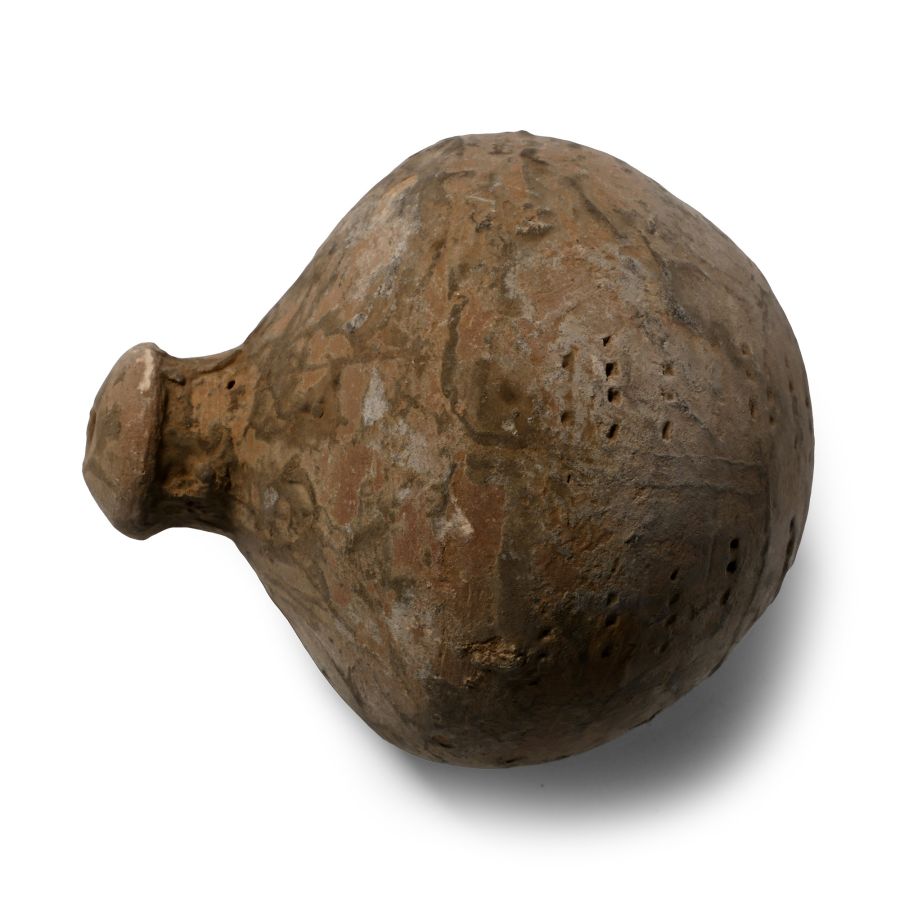
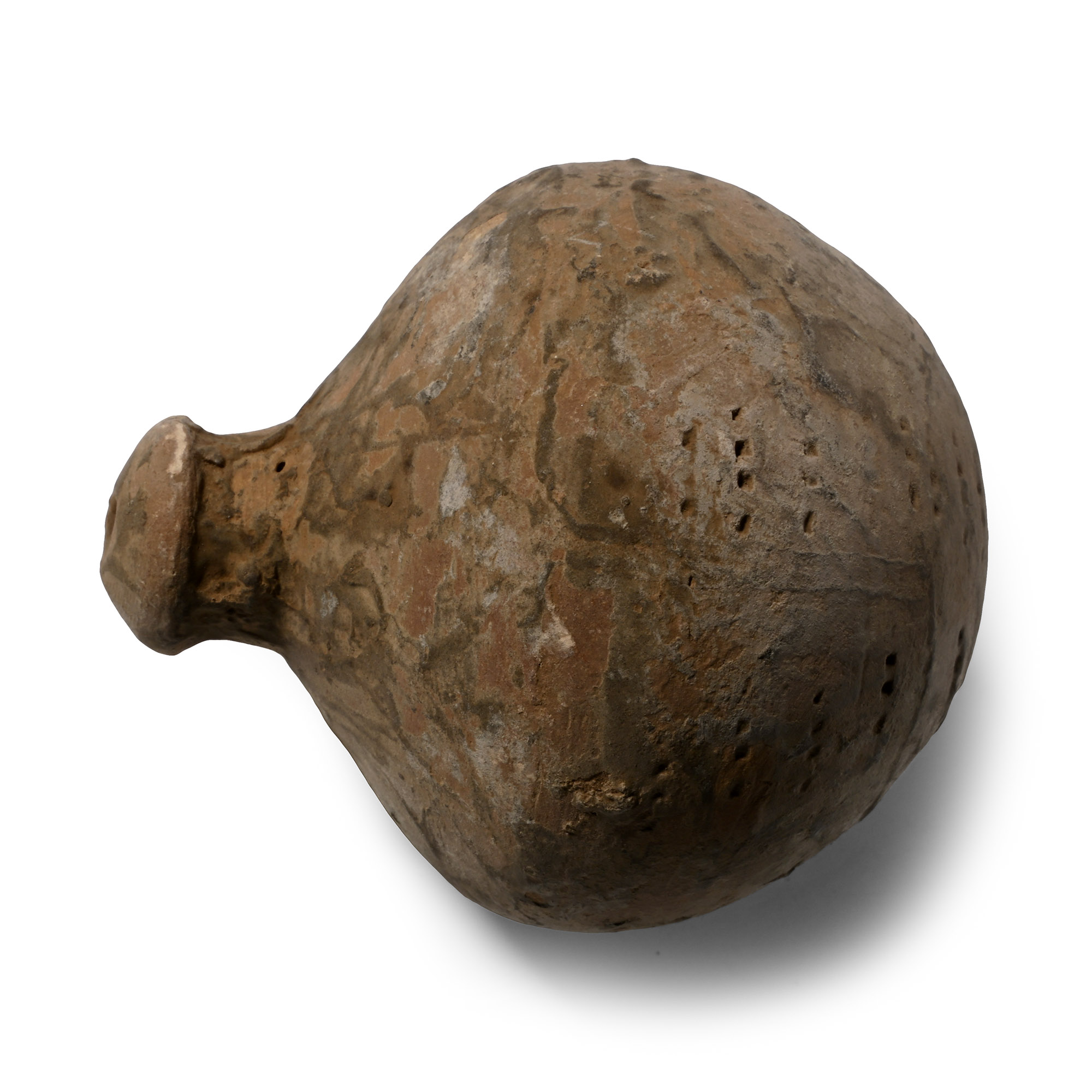
Byzantine 'Greek Fire' Ceramic Fire Bomb or Hand Grenade
9TH-11TH CENTURY A.D.
4 1/8 in. (370 grams, 10.4 cm).
Ovoid in profile with domed filler hole; intended to be filled with explosive liquid and a wick, and used as a hand grenade. [No Reserve]
ProvenanceFrom an important specialist collection, London, UK, 1990s onwards.
Accompanied by an academic paper by military specialist Dr Raffaele D'Amato, dated 15 July 2019 and titled 'Eastern Roman Empire - Greek Fire Bomb or Hand Grenade (μεσαίον kακάβιον) 9th-11th century AD'.
Apart from the use of siphons or manual flame-throwers called cheirosiphona, special corps of Roman soldiers employed terracotta grenades, in the form of small jars, abundantly evidenced in archaeological excavations. They were called μεσαία kακαβιά or κυτροκακάβια where the former had a bulbous shape and the latter a more cylindrical form.
CONDITIONTimeLine Auctions follows a vetting process to ensure the authenticity and legality of all items, reinforcing our commitment to integrity and responsible trading. Each antiquity, antique, and coin lot undergoes thorough examination by a vetting committee of at least ten external specialists, professional trade association members, scientists, and archaeologists: Our Vetting Process
AUCTIONS:
TimeLine is a leading auction house specialising in antiquities, ancient art, collectables, natural history, coins, medals, and books. Our auctions offer museums, collectors, historians, and enthusiasts the opportunity to acquire unique and historically significant pieces.
LOT 1957
Byzantine 'Greek Fire' Ceramic Fire Bomb or Hand Grenade
Estimate £80 - 100€93 - 116 (for guidance only)$108 - 135 (for guidance only)
Opening Bid
£5 (EUR 6; USD 7) +BP*
-
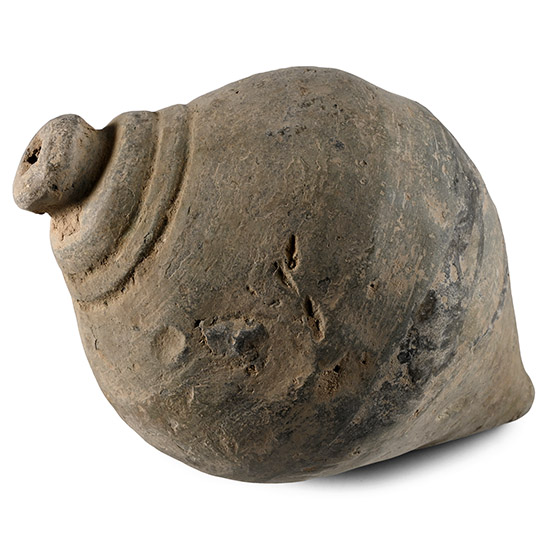
Byzantine 'Greek Fire' Ceramic Fire Bomb or Hand Grenade
9th-11th century A.D.Estimate: £70 - 90 (+bp*)
Opening Bid: £5
Biconical body with pointed base and a domed filler hole; intended to be filled with explosive liquid and a wick, and used as a hand grenade. 540 grams, 13.3 cm
Ex important collection of weaponry, London, UK, 1980-1990s. Accompanied by an academic paper by military specialist Dr Raffaele D'Amato, dated 15 July 2019 and titled 'Eastern Roman Empire - Greek Fire Bomb or Hand Grenade (μεσαίον kακάβιον) 9th-11th century AD'.
Apart from the use of siphons or manual flame-throwers called cheirosiphona, special corps of Roman soldiers employed terracotta grenades, in the form of small jars, abundantly evidenced in archaeological excavations. They were called μεσαία kακαβιά or κυτροκακάβια, where the former had a bulbous shape and the latter a more cylindrical form. -
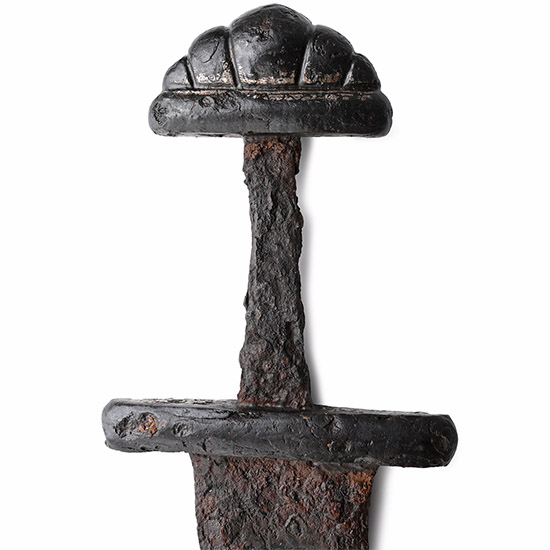
Scandinavian Viking Iron Sword with Silver Inlaid Hilt
Circa 9th-10th century A.D.Estimate: £5,000 - 7,000 (+bp*)
Bids: 10 | Current Bid: £440
Double-edged cutting sword of Petersen's Type K, with parallel-sided blade, shallow fullers showing some traces of pattern-welded construction and a possible inscription (+VLFBERHT+?) on both sides, short rectangular-section tang, boat-shaped lower guard with silver ring-chain ornament to the upper face; five-lobed pommel with remains of silver-sheet ornament to lower edge. 770 grams, 69.2 cm long
Private collection formed in Europe in the 1980s. Westminster collection, central London, UK Accompanied by an academic report by Dr Raffaele D'Amato. This lot has been checked against the Interpol Database of stolen works of art and is accompanied by search certificate no.13433-261728.
This blade of 9th or 10th century A.D. is most beautifully shaped bearing a possible ‘VLFBERHT’ inscription, with the iron inlay of pattern-welded form. The elements of the hilt are inlaid in silver. Petersen regarded his type K with its characteristic five (rarely seven) lobed pommel as being native by Frankish lands by the Rhine, and speculated that the type came to Norway in the first half of 9th century as a result of Viking raids. -
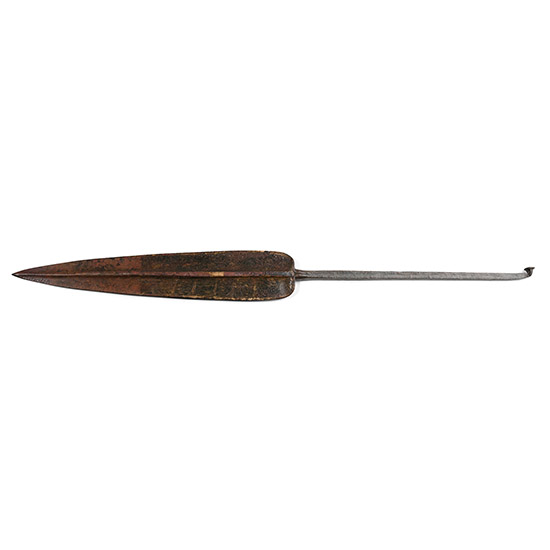
Greek Bronze Hoplite Spearhead
Circa 7th-5th century B.C.Estimate: £300 - 400 (+bp*)
Opening Bid: £150
Comprising a square-section tapering shank developing to the midrib of a leaf-shaped two-edged blade with flange to each shoulder, tang with hooked end and button finial. 295 grams, 50.3 cm
Ex Abelita collection, 1980s-2010.
