
Loading, please wait...
LOT 1934
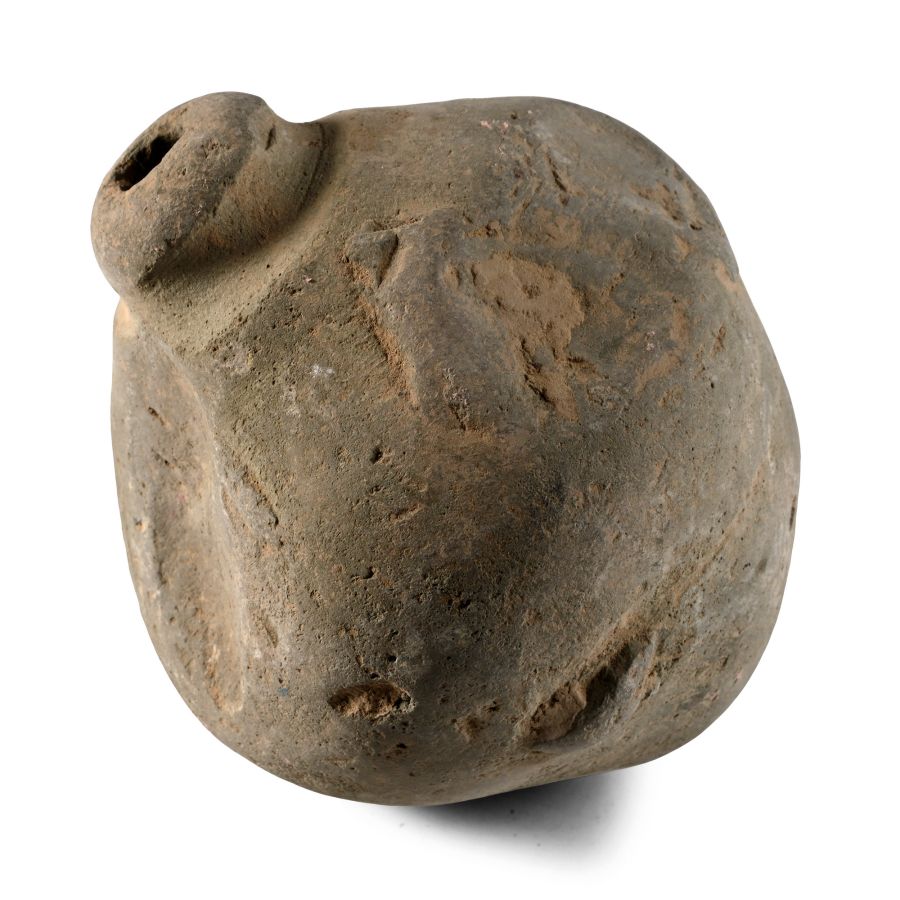
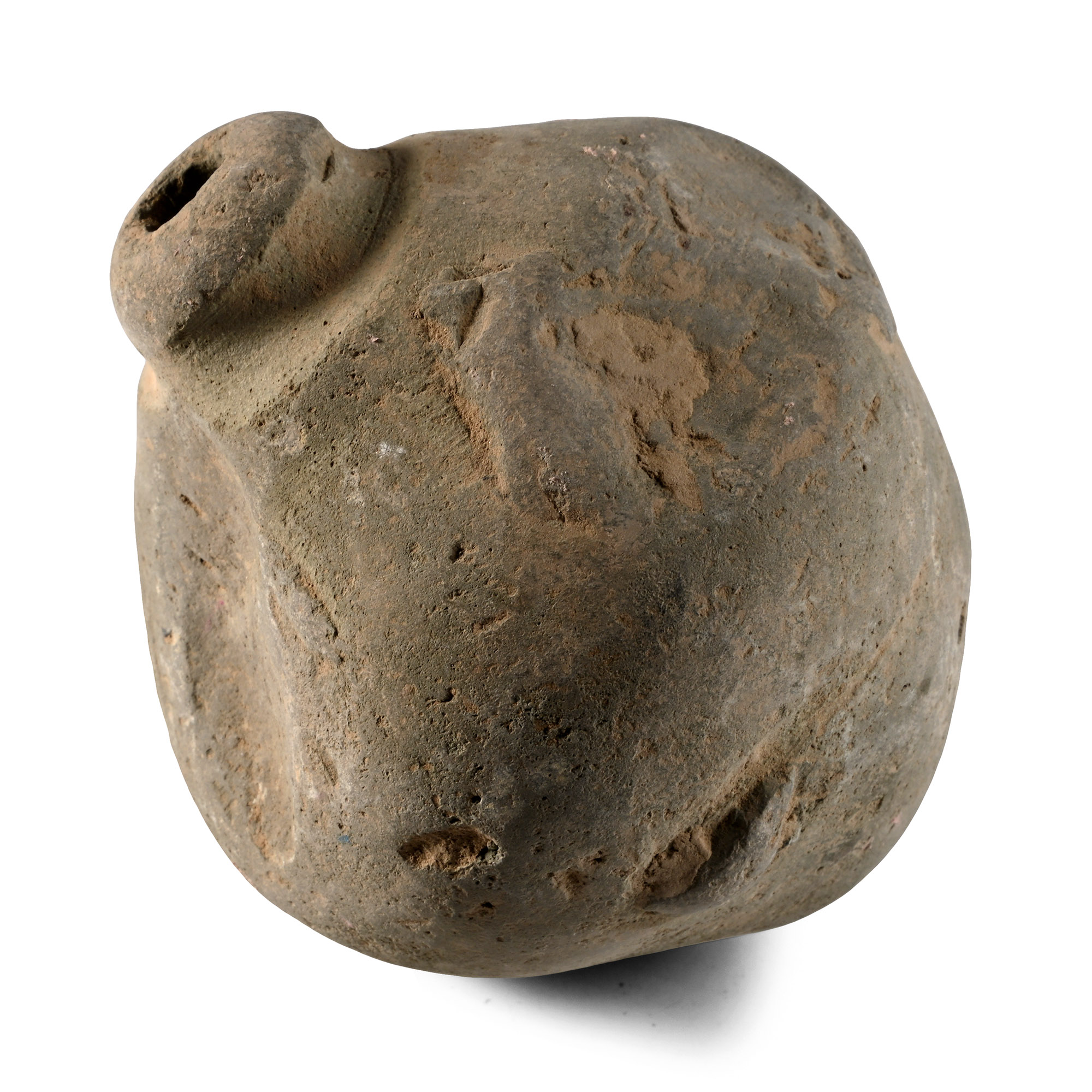
Byzantine 'Greek Fire' Ceramic Fire Bomb or Hand Grenade
9TH-11TH CENTURY A.D.
4 in. (590 grams, 10.3 cm).
Bulbous body with rounded base and domed filler hole; intended to be filled with explosive liquid and a wick, and used as a hand grenade. [No Reserve]
ProvenanceEx important collection of weaponry, London, UK, 1980-1990s.
Accompanied by an academic paper by military specialist Dr Raffaele D'Amato, dated 15 July 2019 and titled 'Eastern Roman Empire - Greek Fire Bomb or Hand Grenade (μεσαίον kακάβιον) 9th-11th century AD'.
Cf. Arendt, W. I., Granaten des 13-14. Jahrhunderts, die an der Wolga gefunden sind, Zeitschrift fur Historische Waffen-und Kostumkunde, 11 (1926-8), p.42; cf. Arendt, W., Die Spharisch-konischen Gefäße aus Gebranntem Ton, ibid; cf. Ayalon, D., Gunpowder and Firearms in the Mamluk Kingdom, London, 1956, p.16.
FootnotesApart from the use of siphons or manual flame-throwers called cheirosiphona, special corps of Roman soldiers employed terracotta grenades, in the form of small jars, abundantly evidenced in archaeological excavations. They were called μεσαία kακαβιά or κυτροκακάβια, where the former had a bulbous shape and the latter a more cylindrical form.
CONDITIONTimeLine Auctions follows a vetting process to ensure the authenticity and legality of all items, reinforcing our commitment to integrity and responsible trading. Each antiquity, antique, and coin lot undergoes thorough examination by a vetting committee of at least ten external specialists, professional trade association members, scientists, and archaeologists: Our Vetting Process
AUCTIONS:
TimeLine is a leading auction house specialising in antiquities, ancient art, collectables, natural history, coins, medals, and books. Our auctions offer museums, collectors, historians, and enthusiasts the opportunity to acquire unique and historically significant pieces.
LOT 1934
Byzantine 'Greek Fire' Ceramic Fire Bomb or Hand Grenade
Estimate £70 - 90€81 - 104 (for guidance only)$95 - 122 (for guidance only)
-
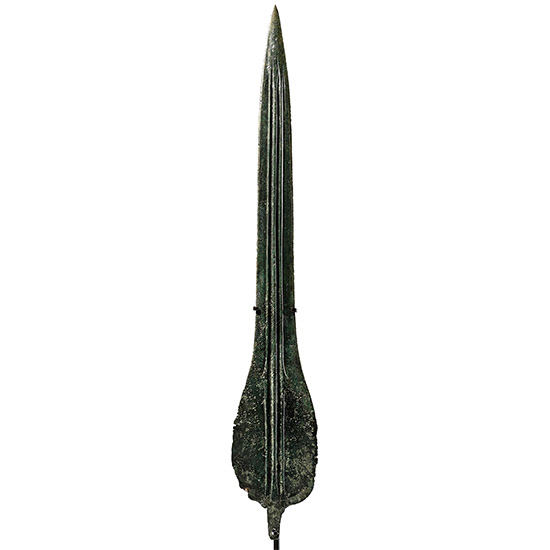
Luristan Bronze Sword Blade
13th-7th century B.C.Estimate: £600 - 800 (+bp*)
Bids: 2 | Current Bid: £500
Slender blade widening at the base, three raised median ribs extending to the short tang; accompanied by a custom-made display stand. 420 grams total, 41 cm high including stand
German collection, cologne 1990s. Ex John Lawton private collection, Surrey, UK.
According to Moorey, such categories of swords were distributed in the Northern Iran area, as proved by the Amarlu finds. Based on the example from the Ashmolean Museum, he dated them to the end of the 2nd millennium B.C., more precisely to a period between the 14th and 13th centuries B.C. The type was in use until the 7th century B.C. -
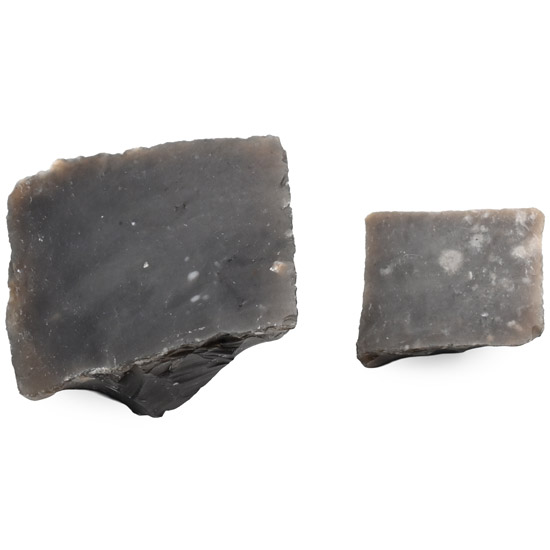
Post Medieval Pistol and Rifle Flints from Suffolk
17th-19th century A.D.Estimate: £20 - 30 (+bp*)
Opening Bid: £5
Comprising two triangular-section rectangular flints. 11.2 grams total, 17-28 mm
Found Brandon, Suffolk, UK. From the private collection of Peter Clayton, FCILIP, Dip, Arch, FSA, FRNS, Hemel Hempstead, Hertfordshire, UK; formed since the late 1950s. Accompanied by an old information packet handwritten by Peter Clayton. -
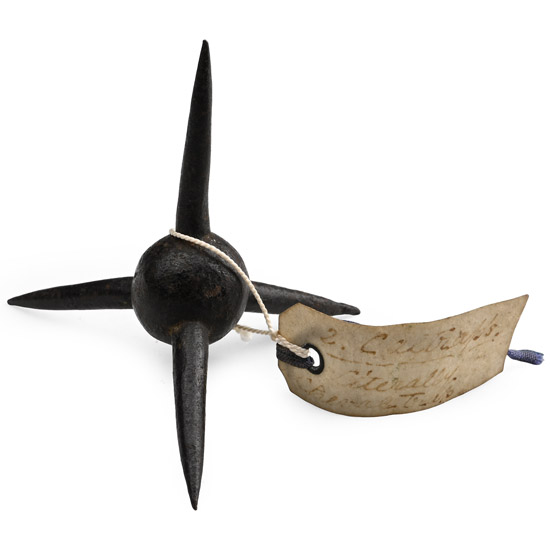
Medieval Iron Caltrop
15th-16th century A.D.Estimate: £40 - 60 (+bp*)
Bids: 4 | Current Bid: £20
Comprising a sphere with four radiating round-section spikes; old collector's label 71 grams, 82 mm
From the private collection of Peter Clayton, FCILIP, Dip, Arch, FSA, FRNS, Hemel Hempstead, Hertfordshire, UK; formed since the late 1950s.
Caltrops were strewn in front of an army in order to injure attacking horses or infantry stepping on them. The design means that they always land with one spike vertical.
