
Loading, please wait...
LOT 1476
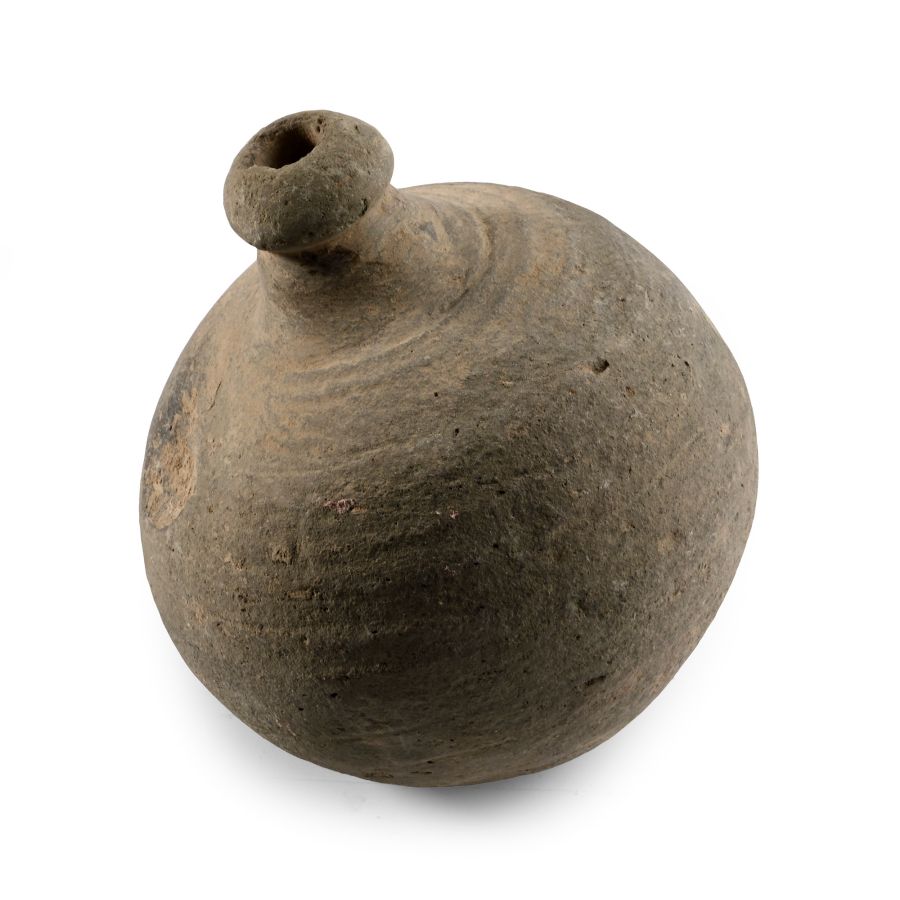
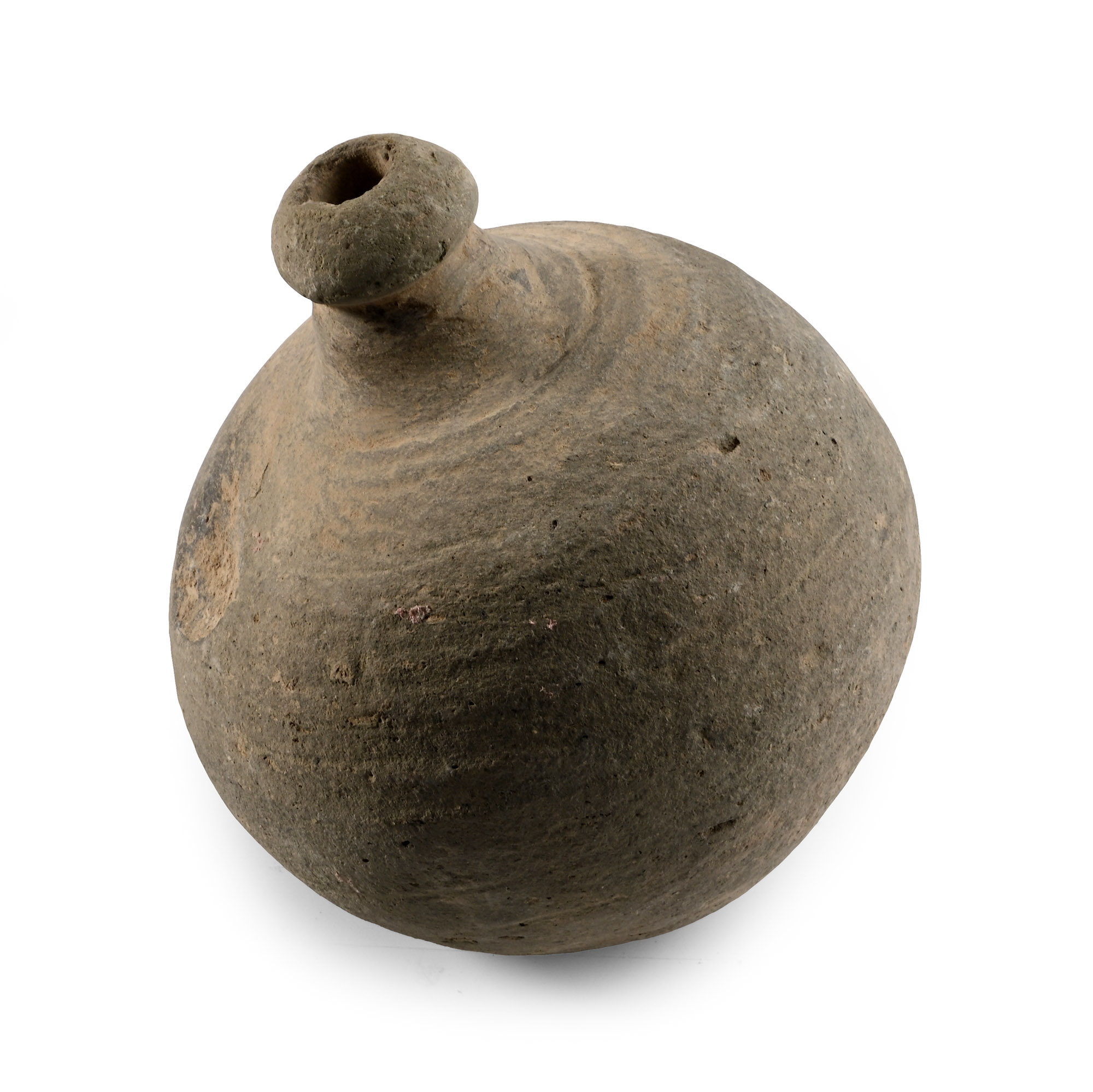
Byzantine 'Greek Fire' Ceramic Fire Bomb or Hand Grenade
9TH-11TH CENTURY A.D.
4 1/2 in. (682 grams, 11.3 cm).
Bulbous body with rounded base and domed filler-hole; intended to be filled with explosive liquid and a wick, and used as a hand grenade. [No Reserve]
ProvenanceFrom an important specialist collection, London, UK, 1990s.
Accompanied by an academic paper by military specialist Dr Raffaele D'Amato, dated 15 July 2019 and titled 'Eastern Roman Empire - Greek Fire Bomb or Hand Grenade (μεσαίον kακάβιον) 9th-11th century AD'.
Cf. Arendt, W. I., Granaten des 13-14. Jahrhunderts, die an der Wolga gefunden sind, Zeitschrift fur Historische Waffen-und Kostumkunde, 11 (1926-8), p.42; cf. Arendt, W., Die Spharisch-konischen Gefäße aus Gebranntem Ton, ibid; cf. Ayalon, D., Gunpowder and Firearms in the Mamluk Kingdom, London, 1956, p.16.
FootnotesApart from the use of siphons or manual flame-throwers called cheirosiphona, special corps of Roman soldiers employed terracotta grenades, in the form of small jars, abundantly evidenced in archaeological excavations. They were called μεσαία kακαβιά or κυτροκακάβια, where the former had a bulbous shape and the latter a more cylindrical form.
CONDITIONTimeLine Auctions follows a vetting process to ensure the authenticity and legality of all items, reinforcing our commitment to integrity and responsible trading. Each antiquity, antique, and coin lot undergoes thorough examination by a vetting committee of at least ten external specialists, professional trade association members, scientists, and archaeologists: Our Vetting Process
AUCTIONS:
TimeLine is a leading auction house specialising in antiquities, ancient art, collectables, natural history, coins, medals, and books. Our auctions offer museums, collectors, historians, and enthusiasts the opportunity to acquire unique and historically significant pieces.
LOT 1476
Byzantine 'Greek Fire' Ceramic Fire Bomb or Hand Grenade
Sold for (Inc. bp): £91
-
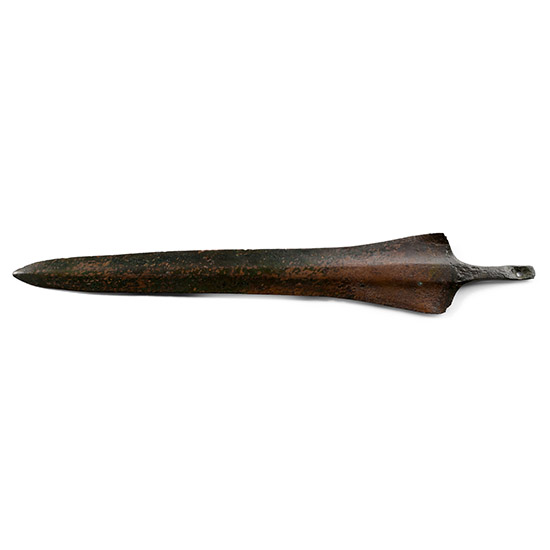
Western Asiatic Bronze Dagger
1800-1600 B.C.Estimate: £200 - 300 (+bp*)
Current Winning Bid: £100
The blade expanding towards the shoulders, a pierced rectangular-section tang. 174 grams, 29.2 cm
Ex Abelita family collection, 1990s. -
.jpg)
Luristan Dagger with Animal-Headed Hilt
Circa 1000-700 B.C.Sold for (Inc. bp): £1,690
With a lentoid-section blade, tongue-shaped in plan; integral tapering hilt with flared lobes to the finial, lateral spurs to the grip with incised detailing; baluster formed as a pair of addorsed horse-heads forming a stylised grotesque mask; mounted on a custom-made stand. 540 grams total, 36 cm including stand
with Art Ancient, London, UK. Private collection, London, UK.
Pre-Mongol remains in Kazakhstan, and the Russian-Ukrainian steppes can be attributed to the Cumans, also called Kiptchaks. In the latter region, the Cuman presence is particularly associated with 12th- to 13th-century kurgan groups. Certain elements of the grave goods are highly characteristic of the Cumans, such as gold sceptres made from a coiled metal rod, which sometimes resemble a straightened torque. -
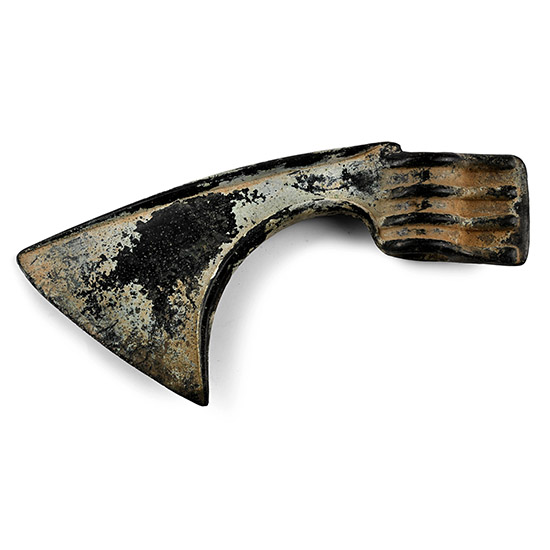
Luristan Bronze Axehead
12th-11th century B.C.Sold for (Inc. bp): £286
A spike-butted axehead with a short cylindrical socket with four furrowed ribs leading to four short spikes, blade with curved upper and lower edges and a convex cutting edge. 390 grams, 22 cm
Ex Abelita family collection, 1980s-2000s.
It is difficult to know whether this type of axe, given its high decoration in some specimens, was used as a weapon or was a symbol of rank and prestige, employed for ceremonial or cult purposes. However, considering that the concept of parade weapons did not exist in the surrounding areas in antiquity, these axes were most probably used for both military and ceremonial purposes.
