
Loading, please wait...
LOT 1488
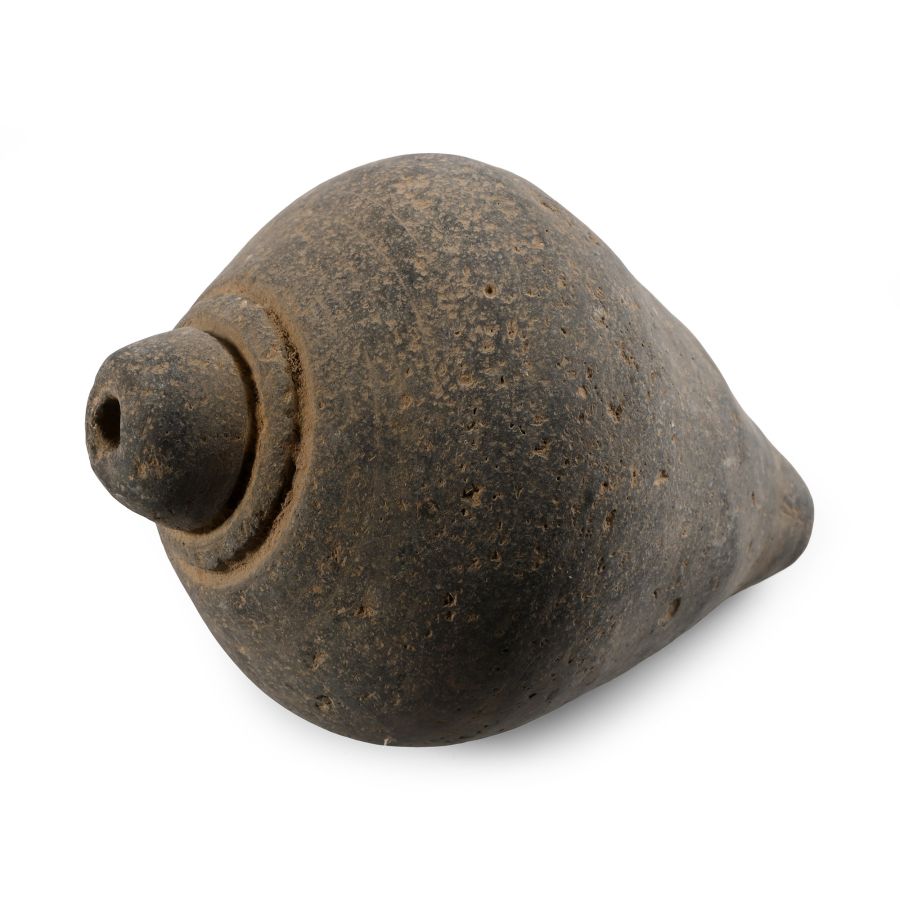
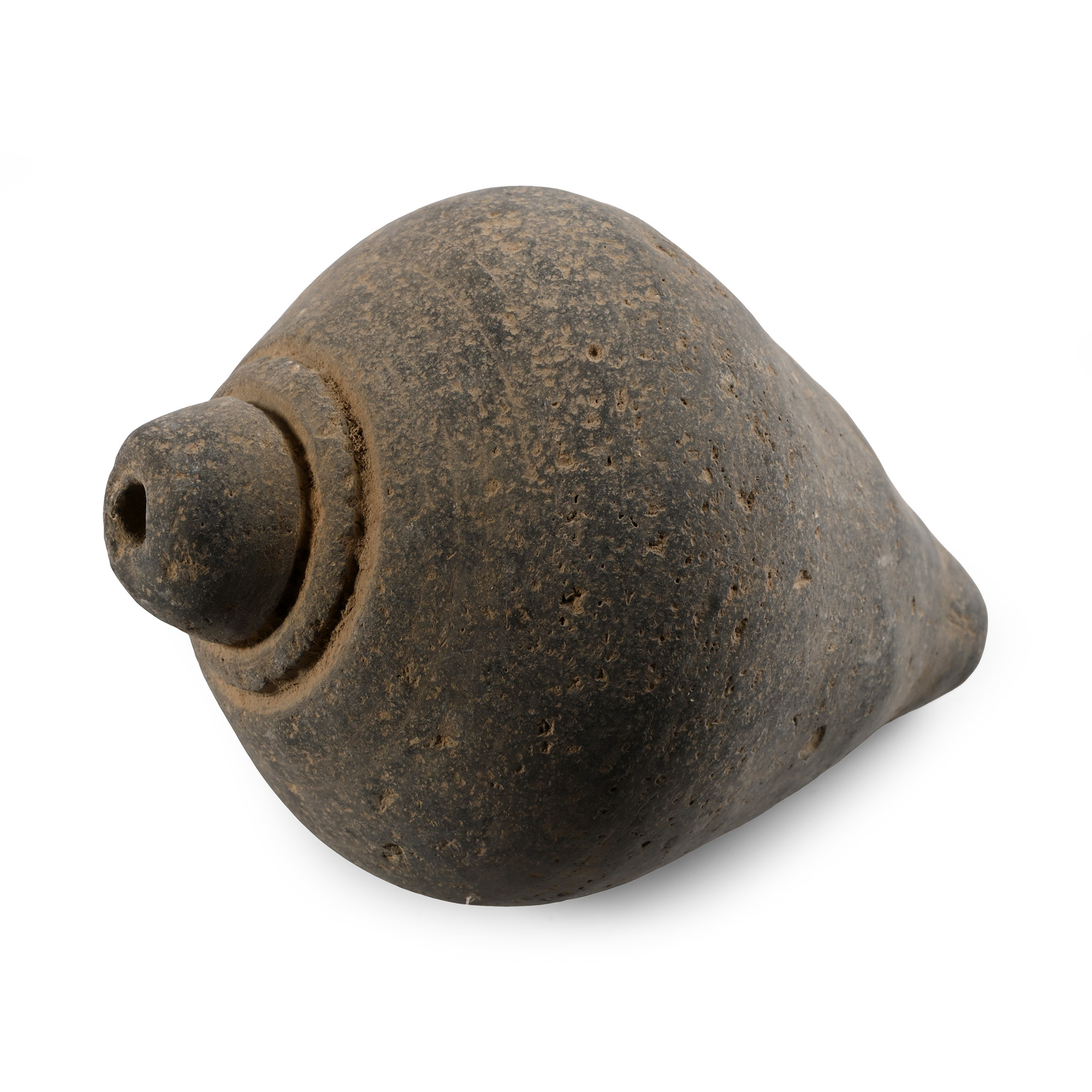
Byzantine 'Greek Fire' Ceramic Fire Bomb or Hand Grenade
9TH-11TH CENTURY A.D.
5 in. (536 grams, 12.7 cm).
Piriform body with dome filler-hole; intended to be filled with explosive liquid and a wick, and used as a hand grenade. [No Reserve]
ProvenanceFrom an important specialist collection, London, UK, 1990s.
Accompanied by an academic paper by military specialist Dr Raffaele D'Amato, dated 15 July 2019 and titled 'Eastern Roman Empire - Greek Fire Bomb or Hand Grenade (μεσαίον kακάβιον) 9th-11th century AD'.
Cf. Arendt, W. I., Granaten des 13-14. Jahrhunderts, die an der Wolga gefunden sind, Zeitschrift fur Historische Waffen-und Kostumkunde, 11 (1926-8), p.42; cf. Arendt, W., Die Spharisch-konischen Gefäße aus Gebranntem Ton, ibid; cf. Ayalon, D., Gunpowder and Firearms in the Mamluk Kingdom, London, 1956, p.16.
FootnotesApart from the use of siphons or manual flame-throwers called cheirosiphona, special corps of Roman soldiers employed terracotta grenades, in the form of small jars, abundantly evidenced in archaeological excavations. They were called μεσαία kακαβιά or κυτροκακάβια, where the former had a bulbous shape and the latter a more cylindrical form.
CONDITIONTimeLine Auctions follows a vetting process to ensure the authenticity and legality of all items, reinforcing our commitment to integrity and responsible trading. Each antiquity, antique, and coin lot undergoes thorough examination by a vetting committee of at least ten external specialists, professional trade association members, scientists, and archaeologists: Our Vetting Process
AUCTIONS:
TimeLine is a leading auction house specialising in antiquities, ancient art, collectables, natural history, coins, medals, and books. Our auctions offer museums, collectors, historians, and enthusiasts the opportunity to acquire unique and historically significant pieces.
LOT 1488
Byzantine 'Greek Fire' Ceramic Fire Bomb or Hand Grenade
Sold for (Inc. bp): £98
-
.jpg)
Western Asiatic Polished Stone Macehead
3rd-2nd millennium B.C.Estimate: £100 - 140 (+bp*)
Current Winning Bid: £50
With slightly carinated equator to the globular body and tubular shaft. 377 grams, 91 mm
From the collection of North West London, UK, gentleman, early 2000s. -
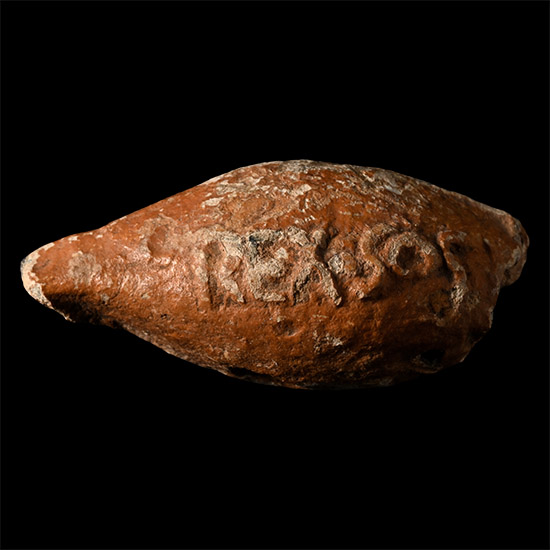
Greek Mauritanian Kingdom Lead Slingshot of King Mastanesosus
Circa 80-49 B.C.Sold for (Inc. bp): £780
Biconical in profile with casting seam and reserved monogram to obverse 'REX·SOS'; Neo-Punic monogram to reverse. 67.3 grams, 40 mm
Acquired on the UK art market, early 2000s. Property of a London, UK, antiquarian.
This remarkable slingshot offers a rare insight into a little-known period in the history of the Kingdom of Mauretania in the first century B.C. The piece can be linked to King Mastanesosus, who is known to have shortened his name to “Sos.” He was the son of Bocchus I (c. 110–80s BC), the ruler who famously betrayed King Jugurtha of Numidia to Sulla and the Roman Republic. The inscription in Latin shows the growing influence of Rome at the time. It may even suggest that Roman slingers were part of Sosus’s army. During this period, Mauretania was already coming under Roman control and influence. Later, Bocchus II, the grandson of Sosus, supported the winning side in Rome’s civil war, and Mauretania became a client kingdom. This eventually led to its full absorption into the Roman Empire after the murder of King Ptolemy, son of Juba, by the emperor Caligula. The reverse of the slingshot shows a monogram in neo-Punic, similar to those found on coins from the same period. This is almost certainly a personal symbol or mark of Sosus himself. The use of both Latin and neo-Punic makes the piece bilingual, which is particularly interesting. -
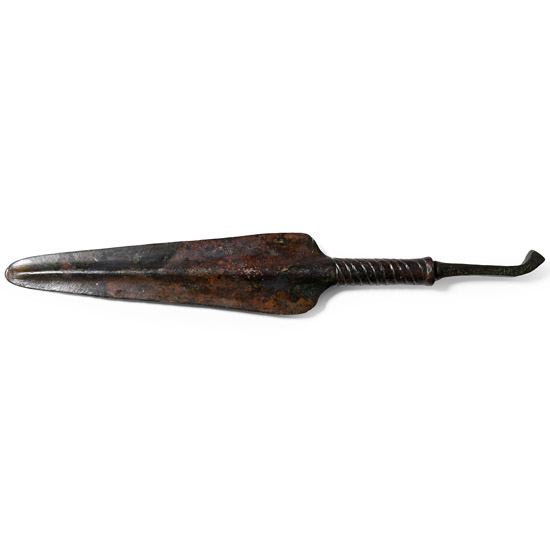
Western Asiatic Bronze Spear Blade
2nd-1st millennium B.C.Estimate: £180 - 240 (+bp*)
Current Winning Bid: £90
Comprising a triangular blade with a rounded tip, a flaring neck with incised barleytwist detailing, and a square-section tang with bent tip. 355 grams, 32.2 cm
Ex Abelita family collection, 1980s-2000s.
