
Loading, please wait...
LOT 1854
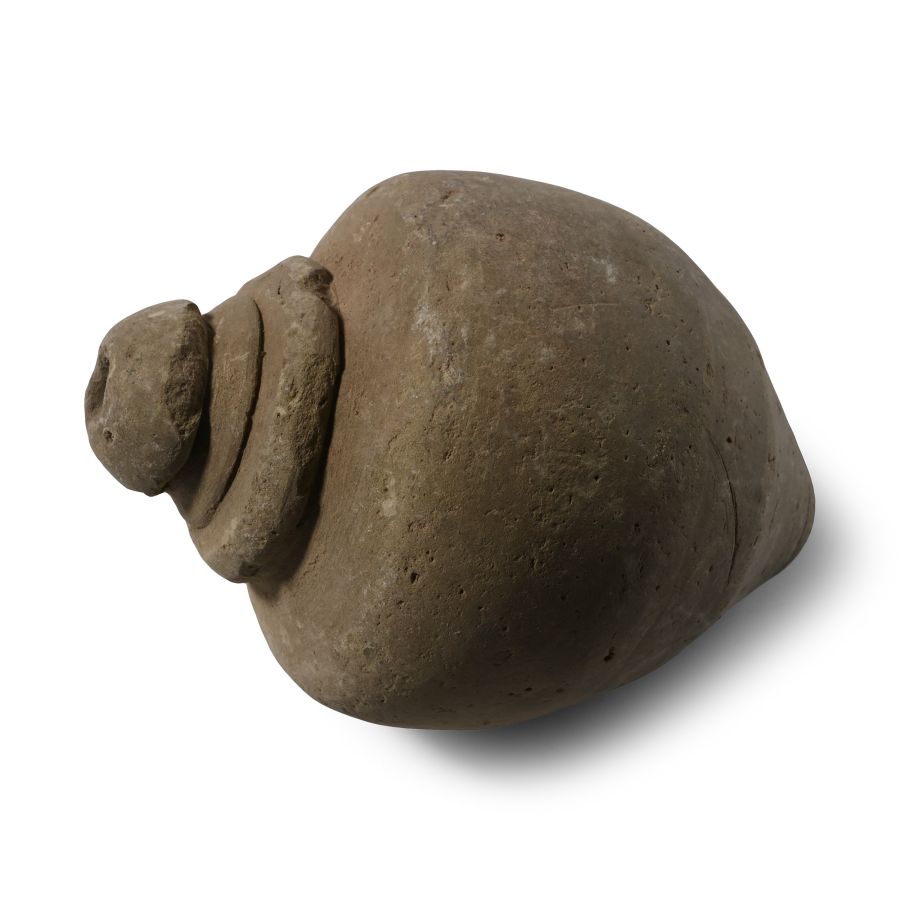
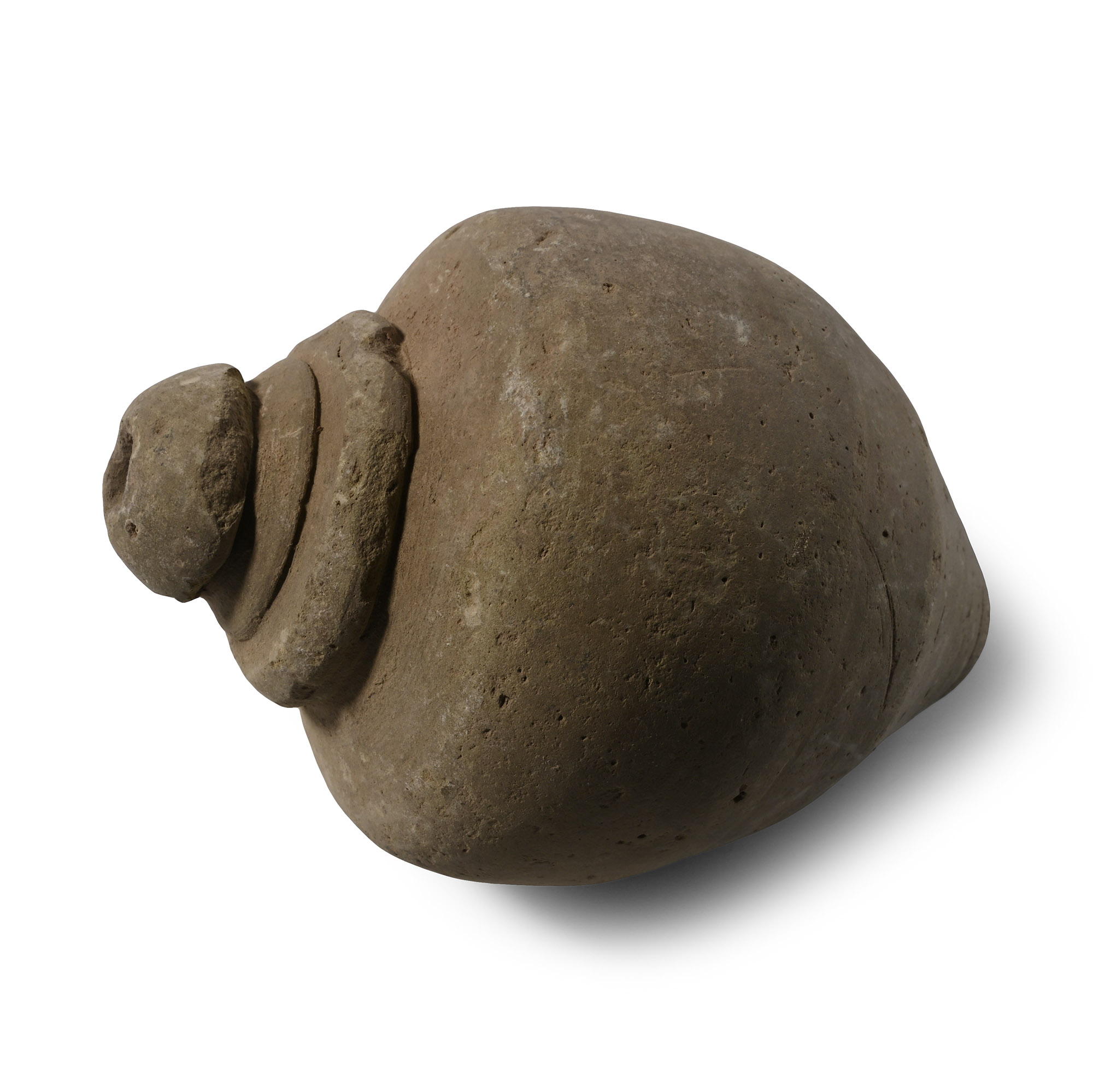
Byzantine 'Greek Fire' Ceramic Fire Bomb or Hand Grenade
9TH-11TH CENTURY A.D.
5 3/8 in. (700 grams, 13.8 cm).
Ovoid in profile with a domed tiered filler hole; intended to be filled with explosive liquid and a wick, and used as a hand grenade. [No Reserve]
ProvenanceFrom an important specialist collection, London, UK, 1990s onwards.
Accompanied by an academic paper by military specialist Dr Raffaele D'Amato, dated 15 July 2019 and titled 'Eastern Roman Empire - Greek Fire Bomb or Hand Grenade (μεσαίον kακάβιον) 9th-11th century AD'.
Apart from the use of siphons or manual flame-throwers called cheirosiphona, special corps of Roman soldiers employed terracotta grenades, in the form of small jars, abundantly evidenced in archaeological excavations. They were called μεσαία kακαβιά or κυτροκακάβια, where the former had a bulbous shape and the latter a more cylindrical form.
CONDITIONTimeLine Auctions follows a vetting process to ensure the authenticity and legality of all items, reinforcing our commitment to integrity and responsible trading. Each antiquity, antique, and coin lot undergoes thorough examination by a vetting committee of at least ten external specialists, professional trade association members, scientists, and archaeologists: Our Vetting Process
AUCTIONS:
TimeLine is a leading auction house specialising in antiquities, ancient art, collectables, natural history, coins, medals, and books. Our auctions offer museums, collectors, historians, and enthusiasts the opportunity to acquire unique and historically significant pieces.
LOT 1854
Byzantine 'Greek Fire' Ceramic Fire Bomb or Hand Grenade
Sold for (Inc. bp): £85
-
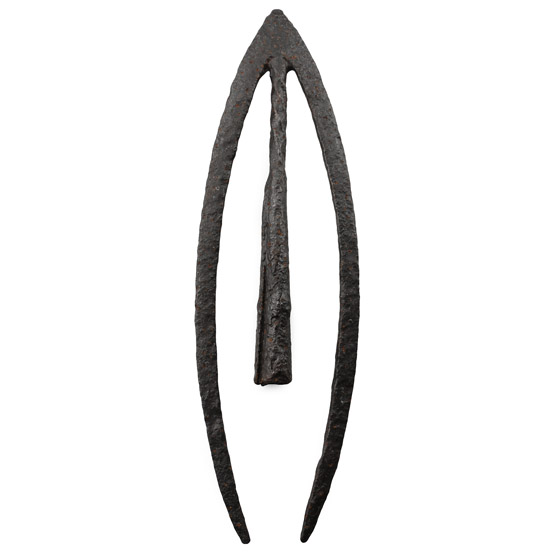
Very Large Medieval Socketted Iron Swallow-Tailed Arrowhead
Circa 13th-15th century A.D.Sold for (Inc. bp): £338
With elongated swept barbs flanking a butted socket. 29.3 grams, 14.5 cm
Acquired from a USA private collector in the 1990s. Ex Buckinghamshire, UK, collection. -
.jpg)
Viking Iron Sword Pommel and Lower Guard
10th-11th century A.D.Sold for (Inc. bp): £702
Comprising: lower guard, lentoid in plan with recessed underside, slot to accept the tang; pommel with integral upper guard, Petersen's Type X with semicircular profile and raised upper section, slot for tang in the underside. 480 grams total, 77-92 mm
London, UK, collection, formed in the late 1990s. -
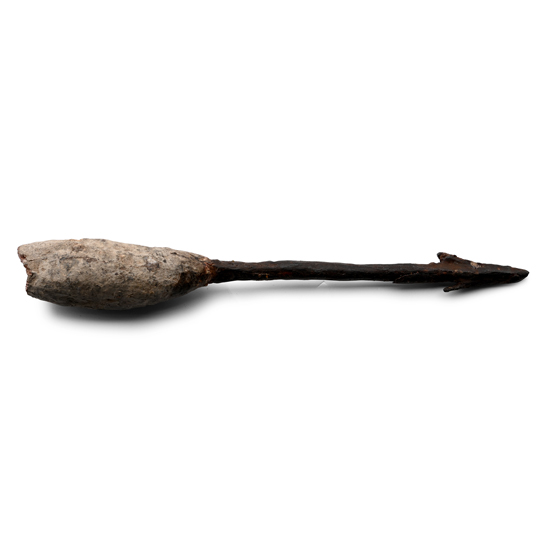
Late Roman Iron-Shafted Lead Plumbata
Circa 3rd-7th century A.D.Estimate: £300 - 400 (+bp*)
Opening Bid: £150
Comprising a barrel-shaped lead body with a round-section shaft with a barbed finial. 67.4 grams, 13 cm
Ex German art market, 2000s. Acquired from an EU collector living in London. From the collection of a Surrey, UK, gentleman.
Lead-weighted darts known as plumbatae mamillatae (or 'breasted javelin') were short darts mounted upon a shaft of the same shape, and thrown from a short distance. A Roman soldier would typically carry around 5-6 of these darts at any one time, fastened to the back of his shield. They could be thrown overhand or underhand, with an effective throwing range of up to 60 metres by trained soldiers.
