
Loading, please wait...
LOT 1814
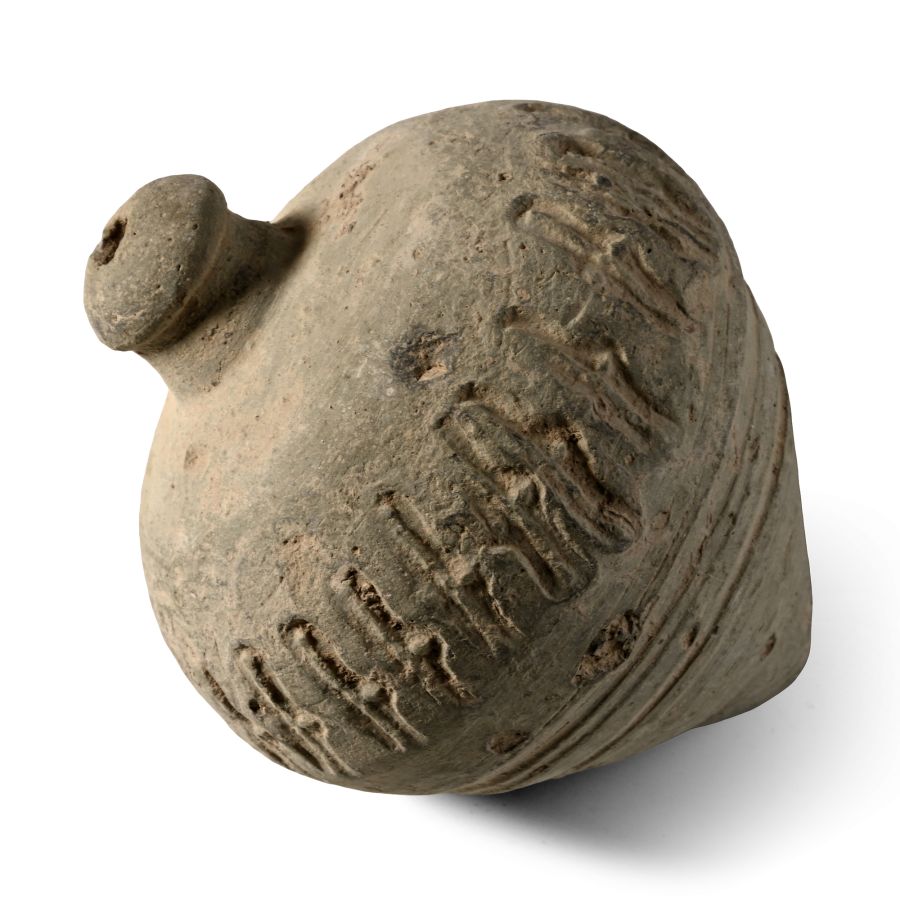
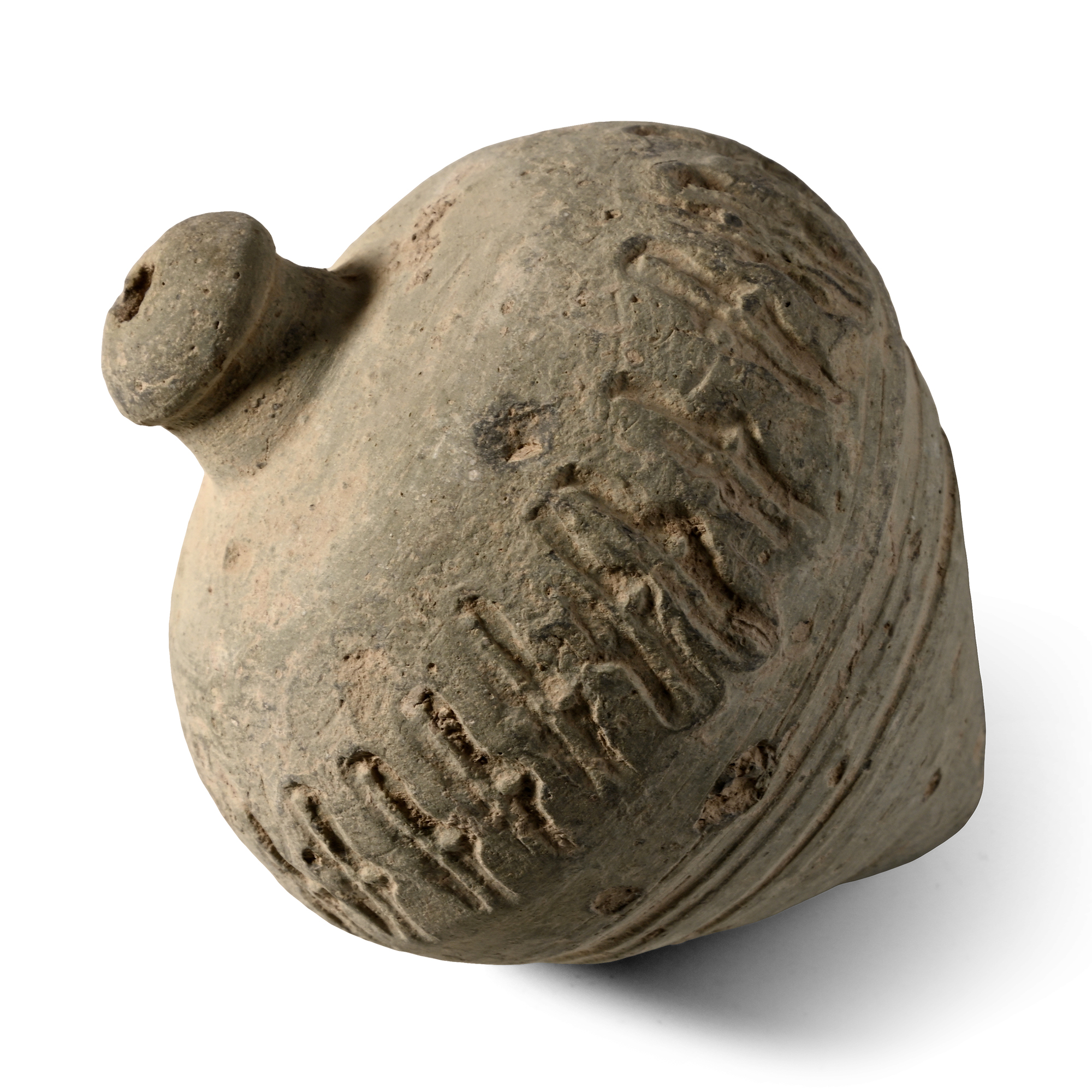
Byzantine 'Greek Fire' Ceramic Fire Bomb or Hand Grenade
9TH-11TH CENTURY A.D.
4 1/8 in. (461 grams, 10.5 cm).
Piriform in profile with impressed motifs on the shoulder; intended to be filled with explosive liquid and a wick, and used as a hand grenade. [No Reserve]
ProvenanceFrom an important specialist collection, London, UK, 1990s.
Accompanied by an academic paper by military specialist Dr Raffaele D'Amato, dated 15 July 2019 and titled 'Eastern Roman Empire - Greek Fire Bomb or Hand Grenade (μεσαίον kακάβιον) 9th-11th century AD'.
Cf. Arendt, W. I., Granaten des 13-14. Jahrhunderts, die an der Wolga gefunden sind, Zeitschrift fur Historische Waffen-und Kostumkunde, 11 (1926-8), p.42; cf. Arendt, W., Die Spharisch-konischen Gefäße aus Gebranntem Ton, ibid; cf. Ayalon, D., Gunpowder and Firearms in the Mamluk Kingdom, London, 1956, p.16.
FootnotesApart from the use of siphons or manual flame-throwers called cheirosiphona, special corps of Roman soldiers employed terracotta grenades, in the form of small jars, abundantly evidenced in archaeological excavations. They were called μεσαία kακαβιά or κυτροκακάβια, where the former had a bulbous shape and the latter a more cylindrical form.
CONDITIONTimeLine Auctions follows a vetting process to ensure the authenticity and legality of all items, reinforcing our commitment to integrity and responsible trading. Each antiquity, antique, and coin lot undergoes thorough examination by a vetting committee of at least ten external specialists, professional trade association members, scientists, and archaeologists: Our Vetting Process
AUCTIONS:
TimeLine is a leading auction house specialising in antiquities, ancient art, collectables, natural history, coins, medals, and books. Our auctions offer museums, collectors, historians, and enthusiasts the opportunity to acquire unique and historically significant pieces.
LOT 1814
Byzantine 'Greek Fire' Ceramic Fire Bomb or Hand Grenade
Sold for (Inc. bp): £130
-
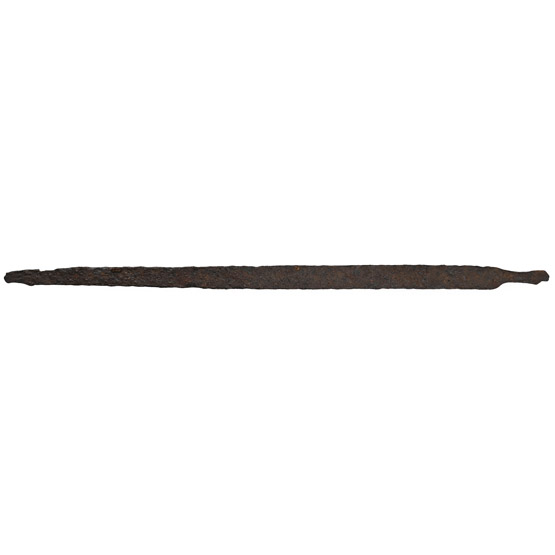
'Bourton-on-the-Water' Celtic Sword-Shaped Iron Currency Ingot
Iron Age, circa 200 B.C.-1st century A.D.Sold for (Inc. bp): £338
A substantial long iron bar in the shape of a sword with the original short folded-over handle to one end. 561 grams, 82 cm
Found Bourton-on-the-Water, Gloucestershire, UK, during the period between WWI and WWII. Property of the finder's family until sold by regional auction house, Tayler & Fletcher in Bourton-On-The-Water. From the private collection of a Stratford-upon-Avon, UK, gentleman.
Currency bars were standardised units used to trade in Iron Age Britain between circa 200 B.C.-1st century A.D. They were often sword-shaped and were used as a form of early currency or trade commodity in Iron Age Britain before coinage became widespread, serving as a store of wealth and medium of exchange. These high-status objects, requiring significant labour (25 man-days/kg), often featured a socket or hilt, possibly to show quality. Types including spit, sword, plough, and bay-leaf shapes have been found in hoards at hillforts like Hod Hill and Danebury. -
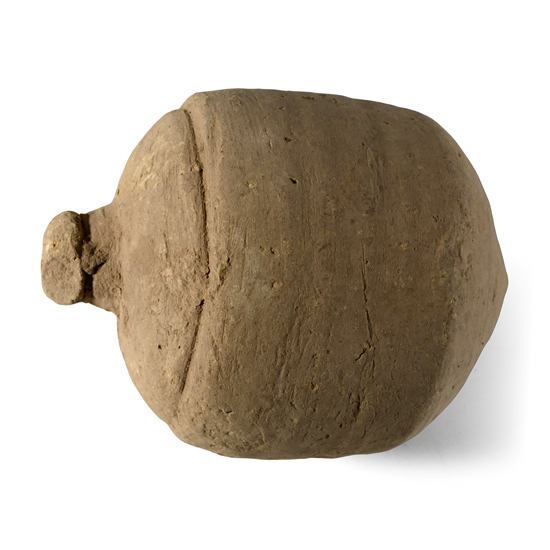
Byzantine 'Greek Fire' Ceramic Fire Bomb or Hand Grenade
9th-11th century A.D.Sold for (Inc. bp): £78
Large, cylindrical body with a domed filler hole; intended to be filled with explosive liquid and a wick, and used as a hand grenade. 770 grams, 13.7 cm
From an important specialist collection, London, UK, 1990s. Accompanied by an academic paper by military specialist Dr Raffaele D'Amato, dated 15 July 2019 and titled 'Eastern Roman Empire - Greek Fire Bomb or Hand Grenade (μεσαίον kακάβιον) 9th-11th century AD'.
Apart from the use of siphons or manual flame-throwers called cheirosiphona, special corps of Roman soldiers employed terracotta grenades, in the form of small jars, abundantly evidenced in archaeological excavations. They were called μεσαία kακαβιά or κυτροκακάβια, where the former had a bulbous shape and the latter a more cylindrical form. -
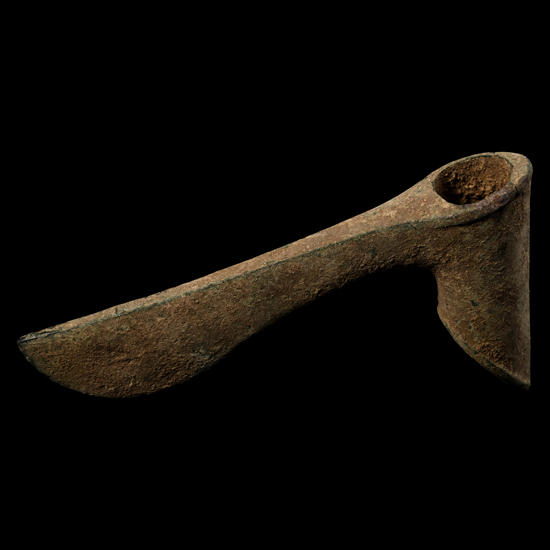
Luristan Bronze Socketted Axehead
2nd millennium B.C.Sold for (Inc. bp): £117
With a long D-shaped blade with a scooped profile and a tubular socket offset at the base. 313 grams, 16 cm
Ex Abelita family collection, 1980s-2000s.
Many examples of bronze axeheads are attributed to the Luristan culture and various shapes have been discussed by different scholars. Moorey (1971, pp.39-41) shows similar axeheads, stating that the texts executed on some specimens have shown them made of arsenical bronze, and attributes them to the late 3rd millennium B.C. or 2nd millennium B.C., period in which this alloy was used abundantly.
