
Loading, please wait...
LOT 1819
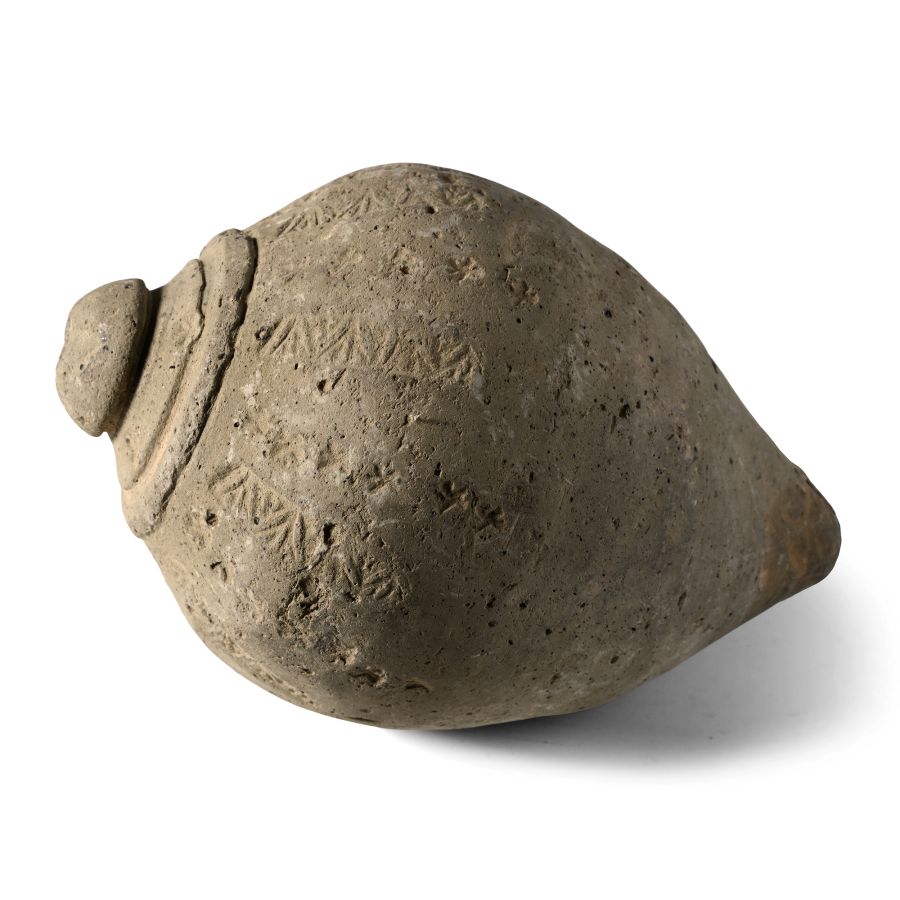
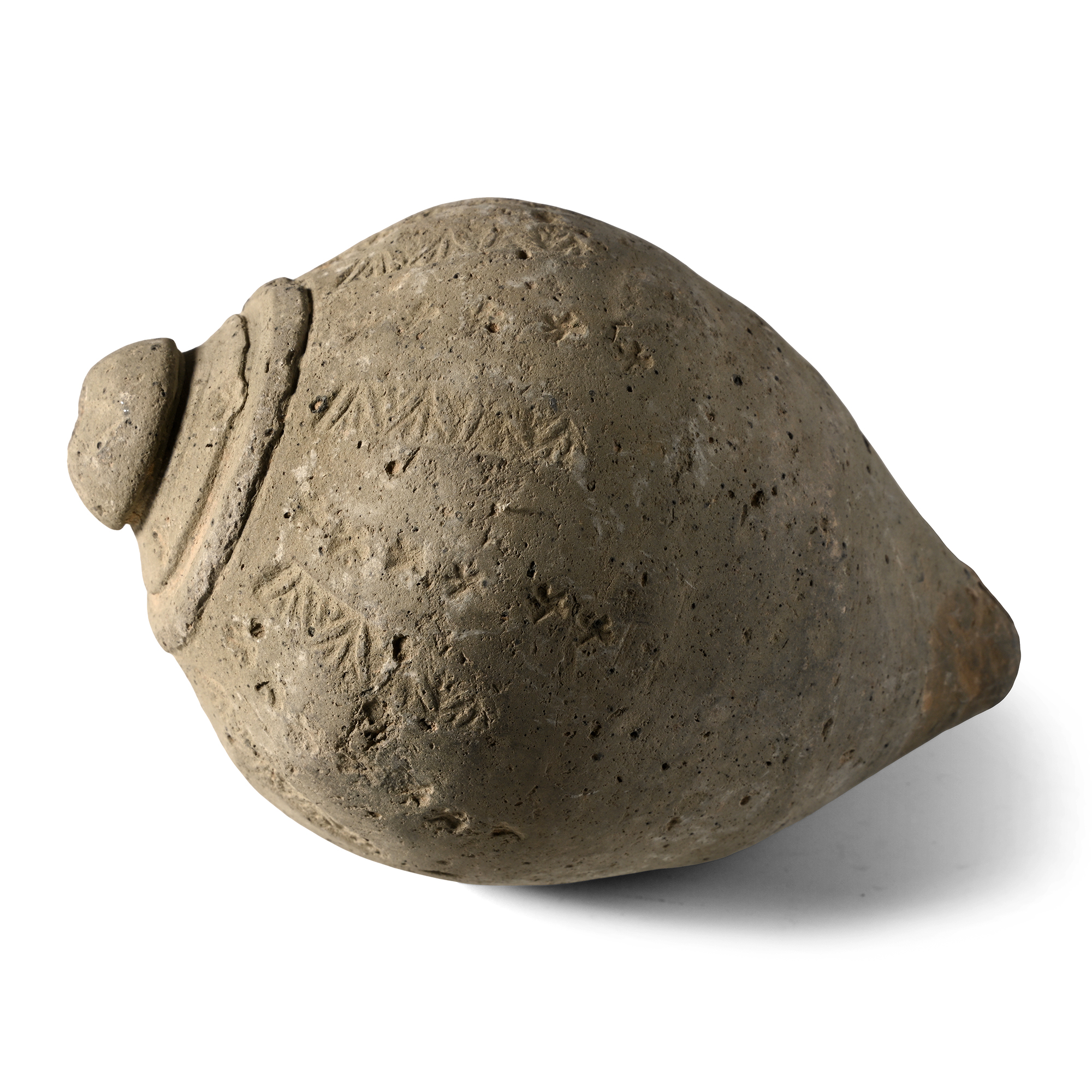
Byzantine 'Greek Fire' Ceramic Fire Bomb or Hand Grenade
9TH-11TH CENTURY A.D.
5 1/2 in. (754 grams, 13.9 cm).
Piriform in profile with impressed decoration on the upper body; intended to be filled with explosive liquid and a wick, and used as a hand grenade. [No Reserve]
ProvenanceFrom an important specialist collection, London, UK, 1990s.
Accompanied by an academic paper by military specialist Dr Raffaele D'Amato, dated 15 July 2019 and titled 'Eastern Roman Empire - Greek Fire Bomb or Hand Grenade (μεσαίον kακάβιον) 9th-11th century AD'.
Cf. Arendt, W. I., Granaten des 13-14. Jahrhunderts, die an der Wolga gefunden sind, Zeitschrift fur Historische Waffen-und Kostumkunde, 11 (1926-8), p.42; cf. Arendt, W., Die Spharisch-konischen Gefäße aus Gebranntem Ton, ibid; cf. Ayalon, D., Gunpowder and Firearms in the Mamluk Kingdom, London, 1956, p.16.
FootnotesApart from the use of siphons or manual flame-throwers called cheirosiphona, special corps of Roman soldiers employed terracotta grenades, in the form of small jars, abundantly evidenced in archaeological excavations. They were called μεσαία kακαβιά or κυτροκακάβια, where the former had a bulbous shape and the latter a more cylindrical form.
CONDITIONTimeLine Auctions follows a vetting process to ensure the authenticity and legality of all items, reinforcing our commitment to integrity and responsible trading. Each antiquity, antique, and coin lot undergoes thorough examination by a vetting committee of at least ten external specialists, professional trade association members, scientists, and archaeologists: Our Vetting Process
AUCTIONS:
TimeLine is a leading auction house specialising in antiquities, ancient art, collectables, natural history, coins, medals, and books. Our auctions offer museums, collectors, historians, and enthusiasts the opportunity to acquire unique and historically significant pieces.
LOT 1819
Byzantine 'Greek Fire' Ceramic Fire Bomb or Hand Grenade
Sold for (Inc. bp): £182
-
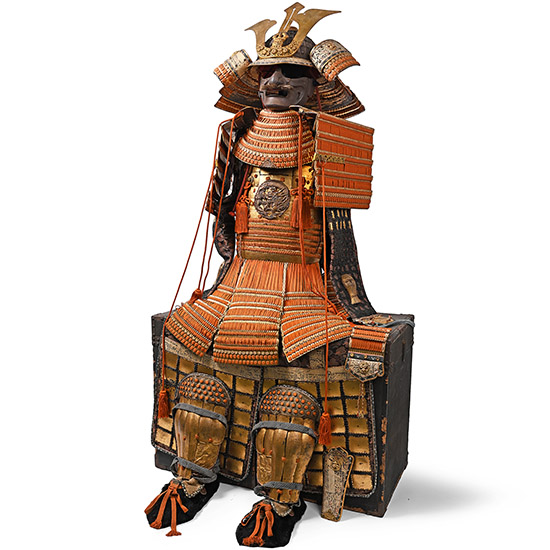
Japanese Edo Period Samurai Suit of Armour with Wooden Storage Boxes
Edo Period, 1603–1867 A.D. and laterSold for (Inc. bp): £13,000
Comprising: an iron and copper-alloy old style Gomai kabuto ridged helmet with suji-kabuto bowl, suji-tate raised ridges, terminating in a small four-stage tehen kanamono hole, fitted with a crossed plate; gilt-copper maedate (frontal ornament) with high raised datemono, antennae; mabizashi, (integral peak visor), lined with silk; fukigaeshi, (steel wings); the neck of the helmet is protected by a laminated shikoro (neck guard with solid plates), made of five steel plates (hachi tsuke- not-ita, ni-no-ita, san-no-ita, yon-no-ita), with red braid sugake-odoshi spaced lacing; the helmet with internal lining (ushibari); behind the nape of the bowl attached a kasa jirushi no kan ring for the red tuft; a fine mempō iron face mask, black lacquered on the outside, red on the inside, with high cheekbones engraved with deep wrinkles on either cheek, detachable nose with simple hooked nails odayori no kugi, flared nostrils and open mouth, moustache, to which is attached a laminated yodare-kake, (throat guard), made of four numbered iron gilded plates with red braid sugake-odoshi spaced lacing; a hybrid armour, composed of a okegawa-do type, constructed with large gilded iron solid horizontal plates joined by the lacing system known as sugake-odoshi in the upper part and kebiki-odoshi in the lower part; composing two valves (ni-mai) attached on the right side and over the shoulders by strings (aibiki no o), attached to it a kusazuri protection made from hardened leather plates hanging from the front and back of the dō to protect the lower body and upper leg; fastening lace agemaki-bow suspended from a ring on the back upper plate and on the sides of a central bronze dragon plaque; oda gote vambraces, arm protection with gilded lacquered splint iron plates (shino) connected with chain armour gusari fitted with tekkō gauntlets, the shino and tekkō decorated with gilded rosette motifs; mogani-sode, slightly curved shoulder guards, composed from six gilded raw-hide plates, fitted with red kake-o (suspending cords) and uke-o (securing cord), bordered by kesho-no-ita (strips of wood covered with leather) and a silk-lined kamuri-ita; Ita-haidate, thighguards, faced with fusa-gusari mail and connected with gilded rawhide splint armour, the upper part lined with silk; O-tateage no-suneate, with gilded iron splint armour (shino), fitted with small round armour plates (kikko) protecting the knees; in two metal-bound wooden transport cases. 29.95 kg total, 157 cm high (assembled)
Private collection, UK. Accompanied by a certificate issued by Chairman Hitoshi Nagata of the Japan Armour and Weapons Research Preservation Association, certificate no. Qing 1309. Accompanied by an academic report by Dr Raffaele D'Amato. This lot has been checked against the Interpol Database of stolen works of art and is accompanied by search certificate number no.13254-252260. -
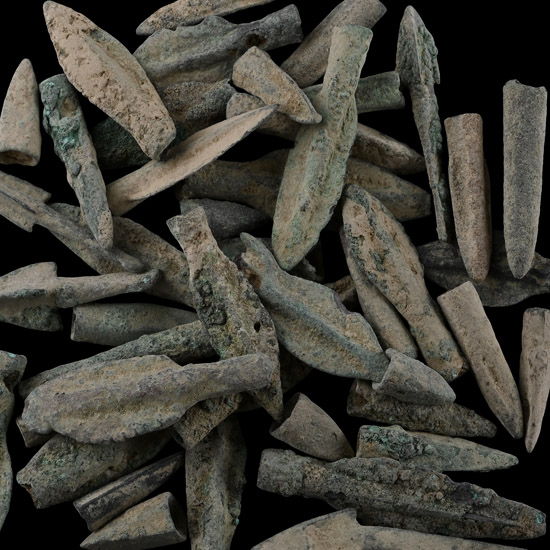
Greek and Scythian Bronze Arrowhead Collection
Circa 5th-3rd century B.C.Sold for (Inc. bp): £124
A mixed group of socketted and tanged arrowheads. 180 grams total, 16-52 mm
London, UK, collection, 1990s.
In ancient Greek warfare, archers were mainly employed by Scythians and Cretans. Both used composite bows made of wood, horn, bone and sinew. This explains the great range of Scythian arrowheads found on the Greek sites. -
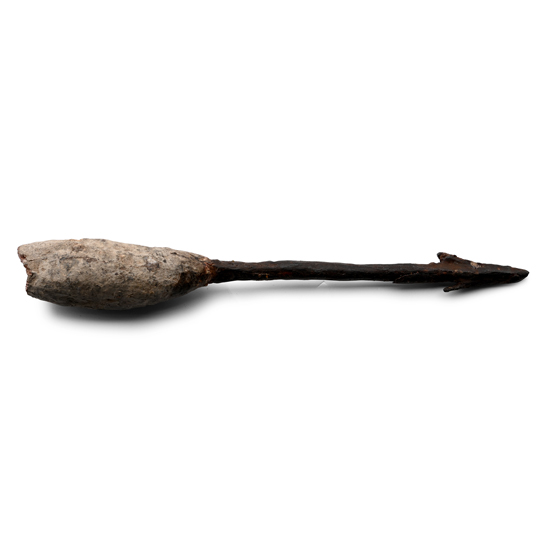
Late Roman Iron-Shafted Lead Plumbata
Circa 3rd-7th century A.D.Estimate: £300 - 400 (+bp*)
Opening Bid: £150
Comprising a barrel-shaped lead body with a round-section shaft with a barbed finial. 67.4 grams, 13 cm
Ex German art market, 2000s. Acquired from an EU collector living in London. From the collection of a Surrey, UK, gentleman.
Lead-weighted darts known as plumbatae mamillatae (or 'breasted javelin') were short darts mounted upon a shaft of the same shape, and thrown from a short distance. A Roman soldier would typically carry around 5-6 of these darts at any one time, fastened to the back of his shield. They could be thrown overhand or underhand, with an effective throwing range of up to 60 metres by trained soldiers.
