
Loading, please wait...
LOT 1872
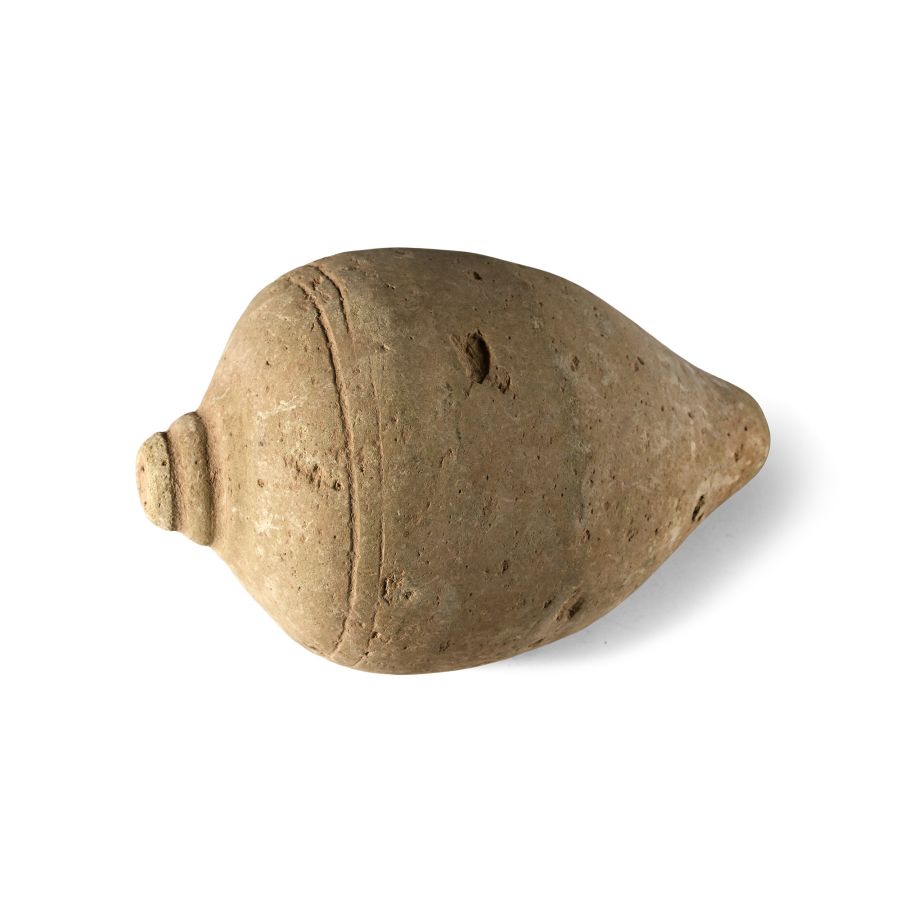
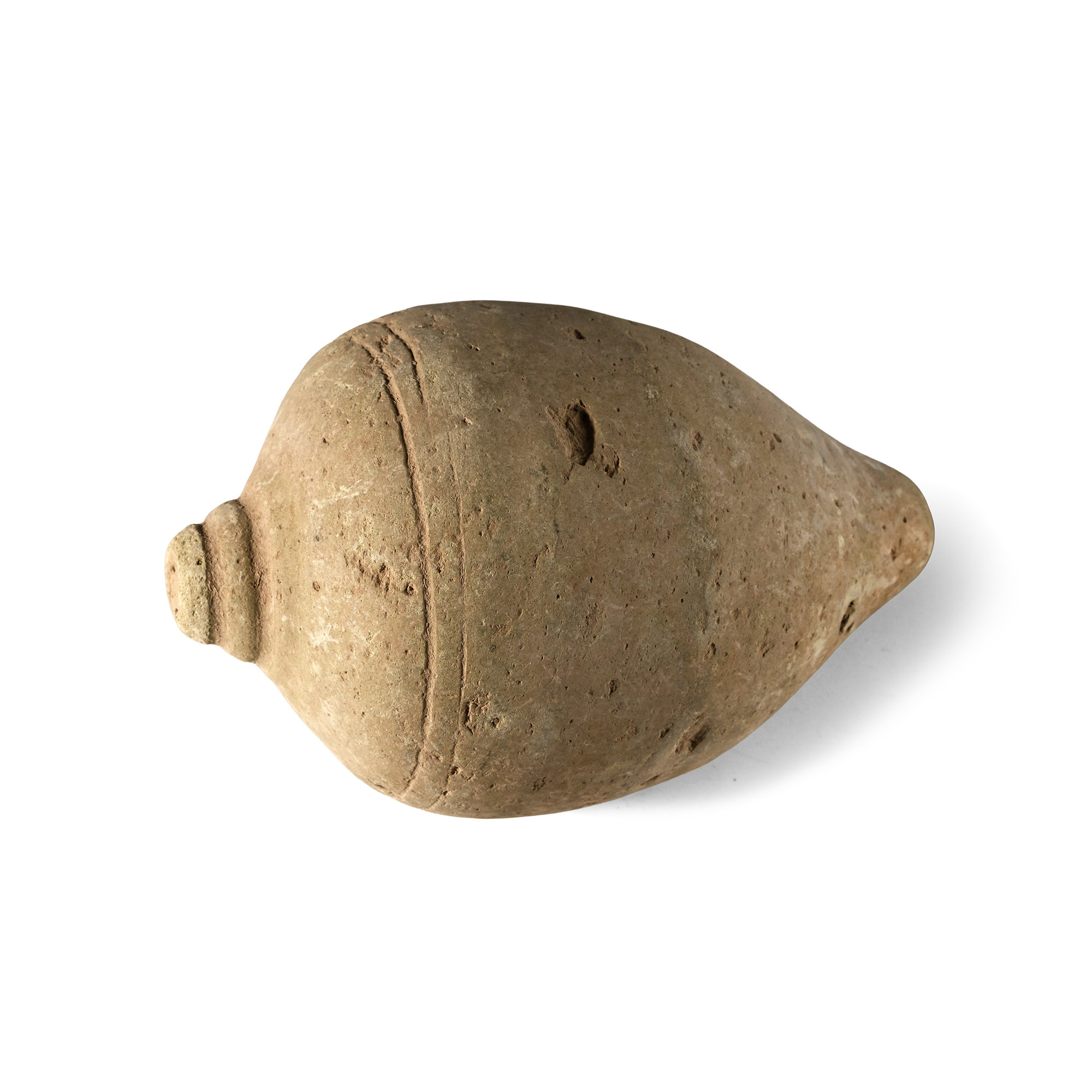
Byzantine 'Greek Fire' Ceramic Fire Bomb or Hand Grenade
9TH-11TH CENTURY A.D.
6 1/4 in. (718 grams, 16 cm).
Piriform body with domed filler hole, impressed circumferential bands on the shoulder; intended to be filled with explosive liquid and a wick, and used as a hand grenade. [No Reserve]
ProvenanceFrom an important specialist collection, London, UK, 1990s.
Accompanied by an academic paper by military specialist Dr Raffaele D'Amato, dated 15 July 2019 and titled 'Eastern Roman Empire - Greek Fire Bomb or Hand Grenade (μεσαίον kακάβιον) 9th-11th century AD'.
Cf. Arendt, W. I., Granaten des 13-14. Jahrhunderts, die an der Wolga gefunden sind, Zeitschrift fur Historische Waffen-und Kostumkunde, 11 (1926-8), p.42; cf. Arendt, W., Die Spharisch-konischen Gefäße aus Gebranntem Ton, ibid; cf. Ayalon, D., Gunpowder and Firearms in the Mamluk Kingdom, London, 1956, p.16.
FootnotesApart from the use of siphons or manual flame-throwers called cheirosiphona, special corps of Roman soldiers employed terracotta grenades, in the form of small jars, abundantly evidenced in archaeological excavations. They were called μεσαία kακαβιά or κυτροκακάβια where the former had a bulbous shape and the latter a more cylindrical form.
CONDITIONTimeLine Auctions follows a vetting process to ensure the authenticity and legality of all items, reinforcing our commitment to integrity and responsible trading. Each antiquity, antique, and coin lot undergoes thorough examination by a vetting committee of at least ten external specialists, professional trade association members, scientists, and archaeologists: Our Vetting Process
AUCTIONS:
TimeLine is a leading auction house specialising in antiquities, ancient art, collectables, natural history, coins, medals, and books. Our auctions offer museums, collectors, historians, and enthusiasts the opportunity to acquire unique and historically significant pieces.
LOT 1872
Byzantine 'Greek Fire' Ceramic Fire Bomb or Hand Grenade
Sold for (Inc. bp): £156
-
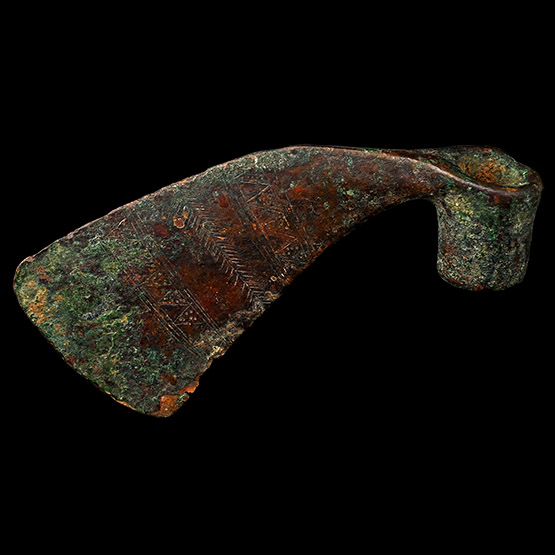
Bactrian Bronze Decorated Socketted Axehead
Bronze Age, 2nd millennium B.C.Sold for (Inc. bp): £351
Comprising a short tubular socket with flared neck to the angled blade; incised herringbone ornament to both faces flanked by pounced triangular panels in bilinear bands, 104 grams, 11.6 cm
From an old English collection formed since 1960. -
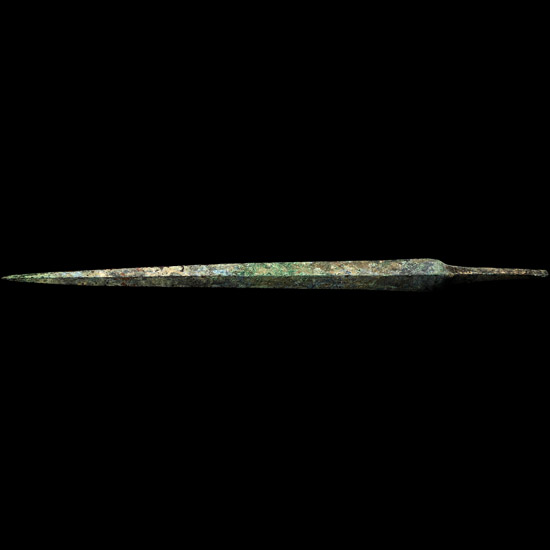
Luristan Bronze Tanged Lancehead
800-600 B.C.Sold for (Inc. bp): £124
With a tapering rectangular-section blade and a short tang. 239 grams, 31 cm
Ex Abelita family collection, 1980s-2000s.
These shoulderless spearheads are introducing the Luristan and Hamadan in the Median and Achaemenid Periods. The bronze type was cast in a mould, and the length suggests it was a throwing weapon or used in conjunction with a chariot. -
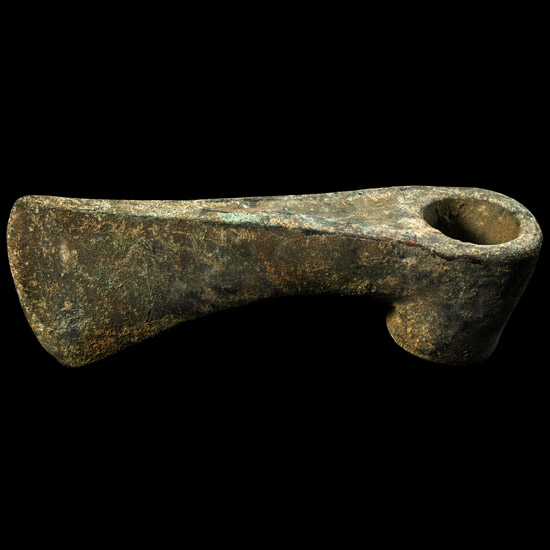
Luristan Bronze Socketted Axehead
3rd millennium B.C.Sold for (Inc. bp): £124
Circular socket and a slender triangular-section blade with a curving cutting edge. 691 grams, 15 cm
Ex Abelita family collection, 1980s-2000s.
This is an example of socketted axes with plano-convex blade, variant H2Cd of Gernez classification. Unadorned weapons, especially axes, adzes and picks, were made by Luristan craftsmen using simple clay or stone bivalve moulds. Typically, the metallic composition consisted of a combination of arsenical bronze and copper, together with a small percentage of lead.
