
Loading, please wait...
LOT 1343
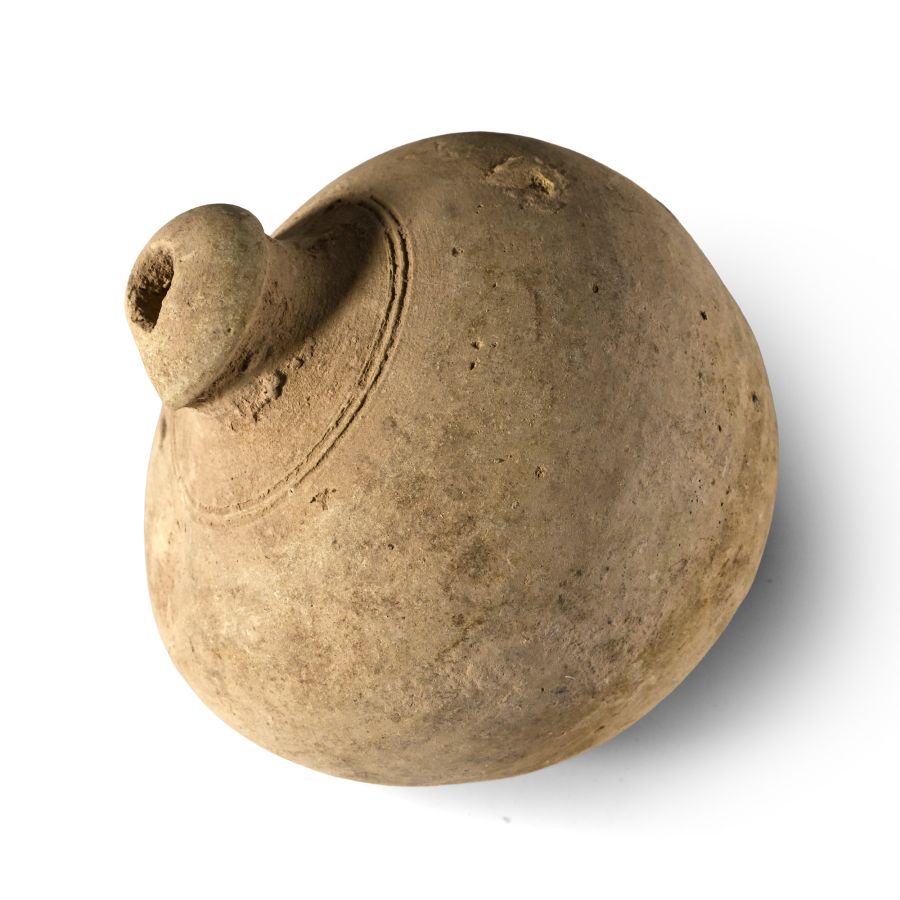
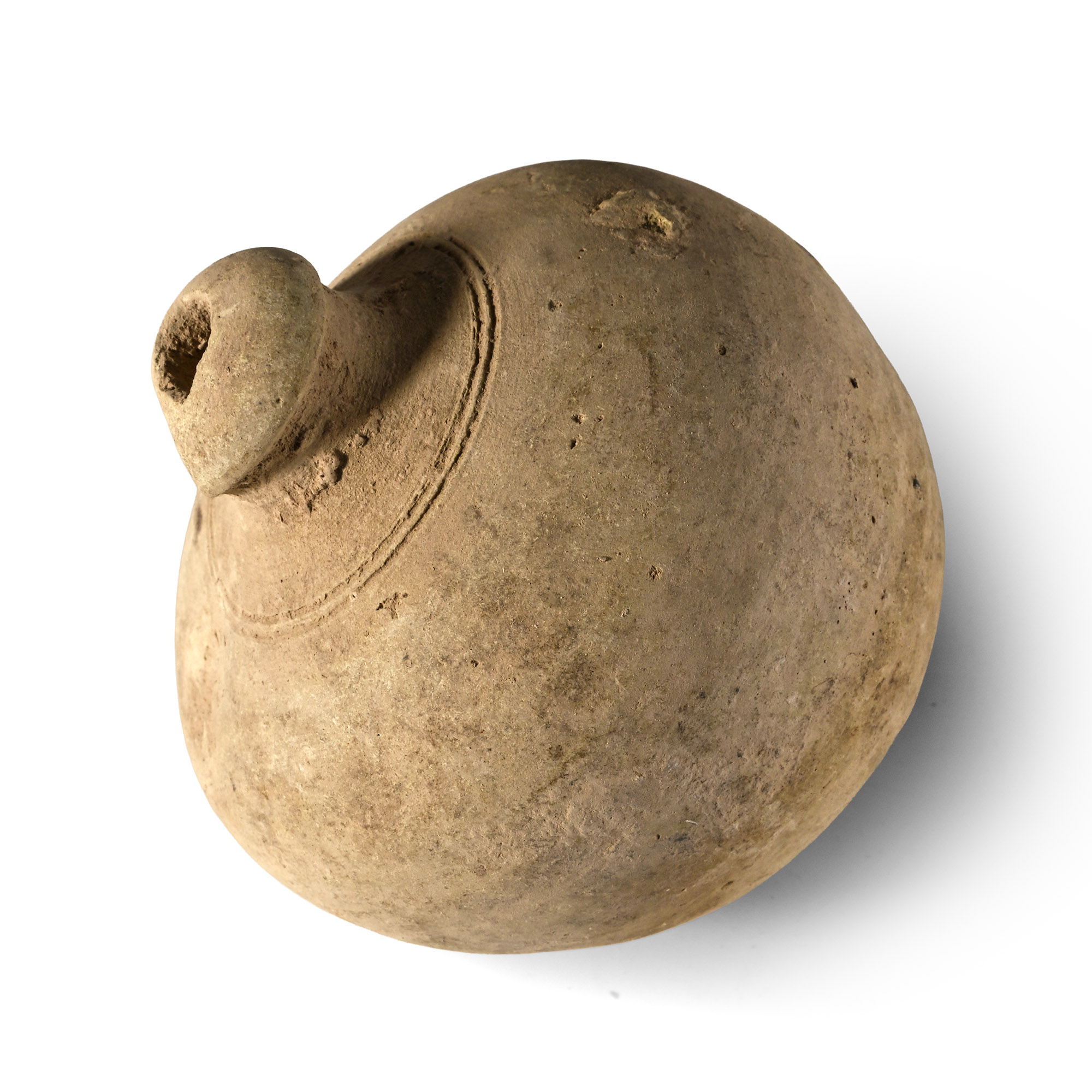
Byzantine 'Greek Fire' Ceramic Fire Bomb or Hand Grenade
9TH-11TH CENTURY A.D.
3 1/2 in. (407 grams, 89 mm).
Bulbous body with domed filler hole, two circumferential bands below the neck; intended to be filled with explosive liquid and a wick, and used as a hand grenade. [No Reserve]
ProvenanceFrom an important specialist collection, London, UK, 1990s.
Accompanied by an academic paper by military specialist Dr Raffaele D'Amato, dated 15 July 2019 and titled 'Eastern Roman Empire - Greek Fire Bomb or Hand Grenade (μεσαίον kακάβιον) 9th-11th century AD'.
Apart from the use of siphons or manual flame-throwers called cheirosiphona, special corps of Roman soldiers employed terracotta grenades, in the form of small jars, abundantly evidenced in archaeological excavations. They were called μεσαία kακαβιά or κυτροκακάβια where the former had a bulbous shape and the latter a more cylindrical form.
CONDITIONTimeLine Auctions follows a vetting process to ensure the authenticity and legality of all items, reinforcing our commitment to integrity and responsible trading. Each antiquity, antique, and coin lot undergoes thorough examination by a vetting committee of at least ten external specialists, professional trade association members, scientists, and archaeologists: Our Vetting Process
AUCTIONS:
TimeLine is a leading auction house specialising in antiquities, ancient art, collectables, natural history, coins, medals, and books. Our auctions offer museums, collectors, historians, and enthusiasts the opportunity to acquire unique and historically significant pieces.
LOT 1343
Byzantine 'Greek Fire' Ceramic Fire Bomb or Hand Grenade
Sold for (Inc. bp): £59
-
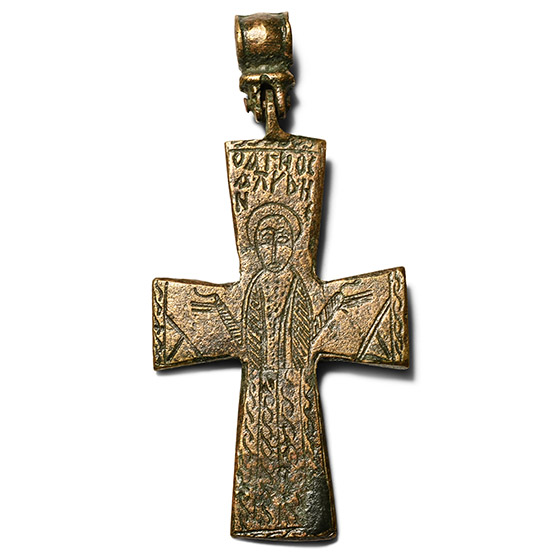
Byzantine Bronze Cross Pendant
10th-12th century A.D.Sold for (Inc. bp): £572
Comprising a cruciform panel with slightly flared arms attached to a hinged suspension loop with barrel-shaped bale; incised facing figure to obverse with arms in orans pose, legend above 'ΟΑΓΗΟC ΑΛΚΔΗΝ' (saint ?). 28.2 grams, 83 mm
Ex German art market, 2000s. Acquired from an EU collector living in London. From the collection of a Surrey, UK, gentleman. -
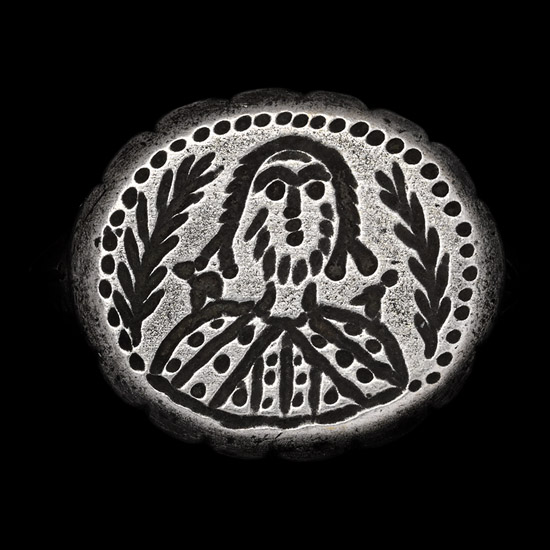
Byzantine Silver Ring with Bust
12th-15th century A.D.Sold for (Inc. bp): £234
Featuring a D-section hoop with a palm frond on both shoulders, oval bezel with a piecrust edge and pelletted border, central profile bust of a robed and bearded man flanked by palm fronds. 7.45 grams, 22.59 mm overall, 18.57 mm internal diameter (approximate size British Q, USA 8, Europe 17.49, Japan 16)
From the collection of a gentleman, acquired on the London art market in the 1990s. -
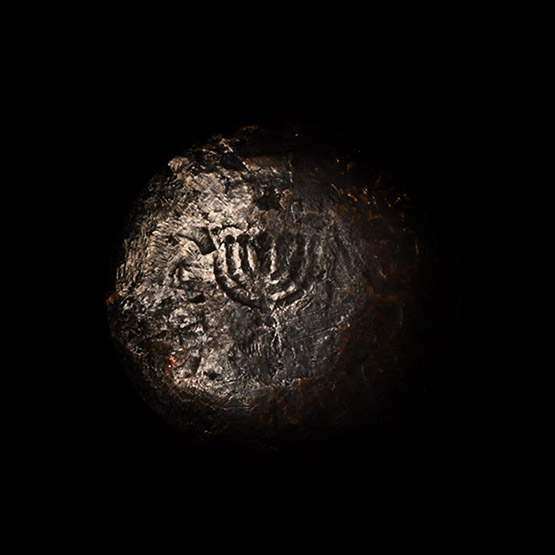
Byzantine Bronze Punch with Menorah and Hebrew Inscription
Circa 5th-6th century A.D.Estimate: £800 - 1,000 (+bp*)
Opening Bid: £428
Columnar stem with conical base extending to a square-section shank. 18.8 grams, 31 mm
From the collection of a gentleman, acquired on the London art market in the 1990s.
Stamping in antiquity and in the Roman Empire was under strict regulations, and it was not limited to food and liquid containers. Bricks and tiles used in construction were impressed with the names of magistrates, workshops, estate owners from whom the material came, and the names of individual makers. Among the myriad Late Roman stamps, a great number were to mark bread or containers holding flour and other foods, as well as a variety of liquids such as wine, oil, fish and fruits preserved in sauces, medical ointments, and even water. It is interesting to note as the Jewish symbols here engraved are very stylised: as mentioned by various scholars, the Jewish representations of shofar and lulav on this category of stamps degenerated in quality in Late Antiquity, and this is why they are variously dated between the 4th and the 7th century.
