
Loading, please wait...
LOT 1352
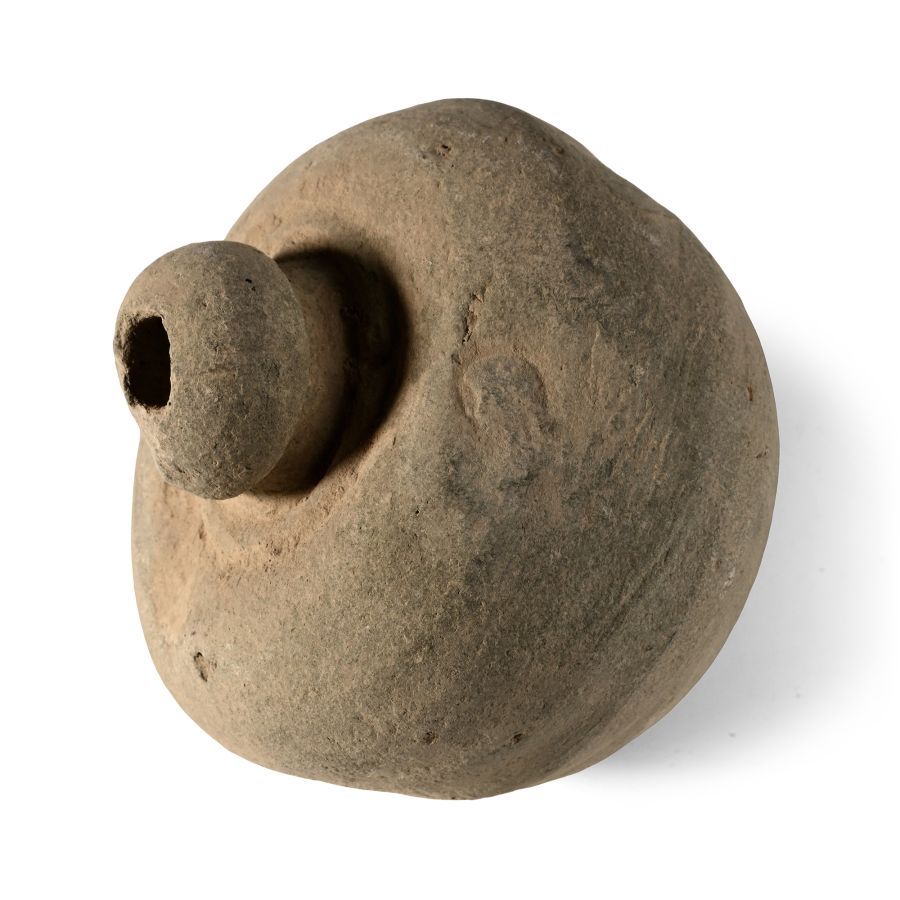
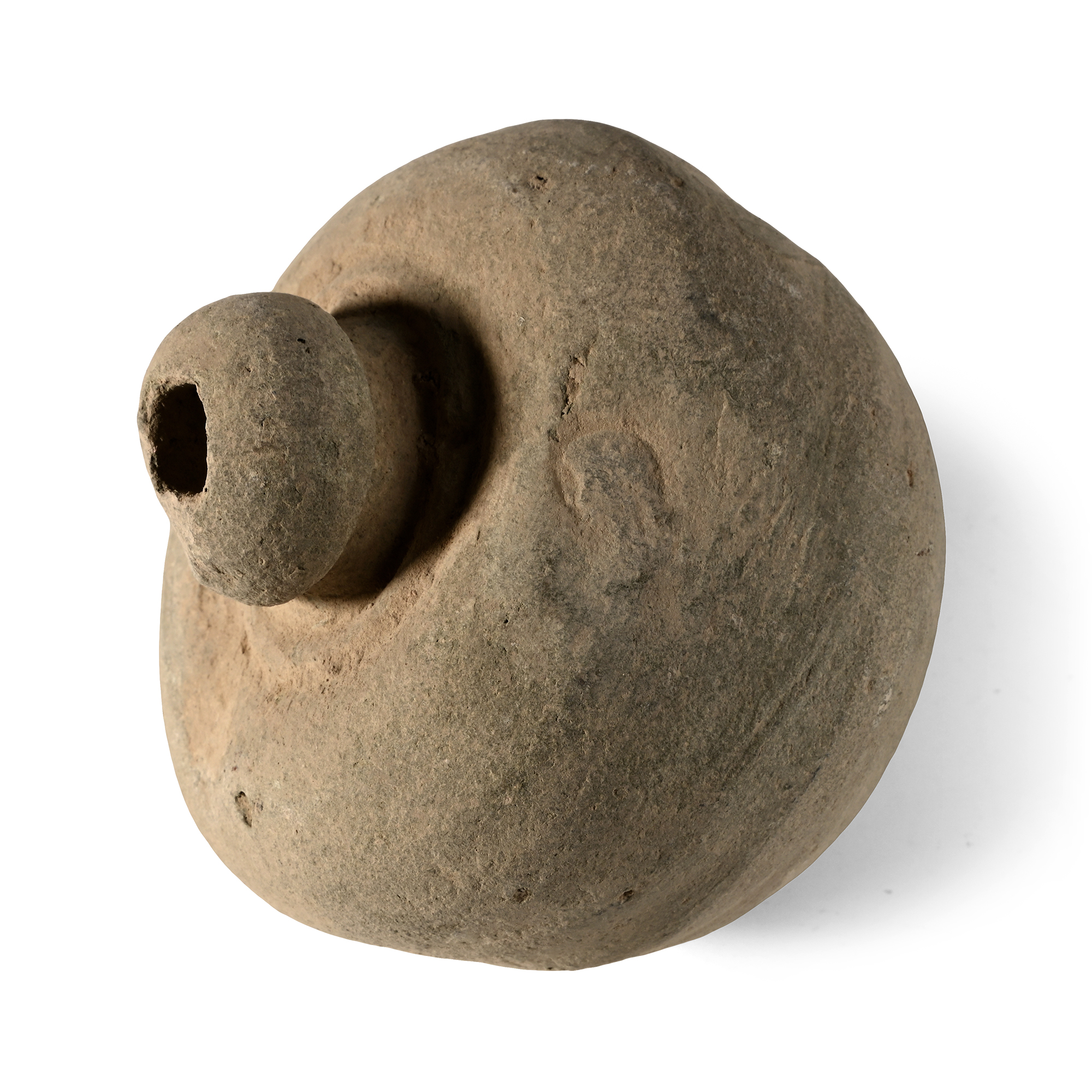
Byzantine 'Greek Fire' Ceramic Fire Bomb or Hand Grenade
9TH-11TH CENTURY A.D.
3 1/2 in. (349 grams, 88 mm).
Ovoid in profile with a domed filler hole; intended to be filled with explosive liquid and a wick, and used as a hand grenade. [No Reserve]
ProvenanceFrom an important specialist collection, London, UK, 1990s.
Accompanied by an academic paper by military specialist Dr Raffaele D'Amato, dated 15 July 2019 and titled 'Eastern Roman Empire - Greek Fire Bomb or Hand Grenade (μεσαίον kακάβιον) 9th-11th century AD'.
Cf. Arendt, W. I., Granaten des 13-14. Jahrhunderts, die an der Wolga gefunden sind, Zeitschrift fur Historische Waffen-und Kostumkunde, 11 (1926-8), p.42; cf. Arendt, W., Die Spharisch-konischen Gefäße aus Gebranntem Ton, ibid; cf. Ayalon, D., Gunpowder and Firearms in the Mamluk Kingdom, London, 1956, p.16.
FootnotesApart from the use of siphons or manual flame-throwers called cheirosiphona, special corps of Roman soldiers employed terracotta grenades, in the form of small jars, abundantly evidenced in archaeological excavations. They were called μεσαία kακαβιά or κυτροκακάβια where the former had a bulbous shape and the latter a more cylindrical form.
CONDITIONTimeLine Auctions follows a vetting process to ensure the authenticity and legality of all items, reinforcing our commitment to integrity and responsible trading. Each antiquity, antique, and coin lot undergoes thorough examination by a vetting committee of at least ten external specialists, professional trade association members, scientists, and archaeologists: Our Vetting Process
AUCTIONS:
TimeLine is a leading auction house specialising in antiquities, ancient art, collectables, natural history, coins, medals, and books. Our auctions offer museums, collectors, historians, and enthusiasts the opportunity to acquire unique and historically significant pieces.
LOT 1352
Byzantine 'Greek Fire' Ceramic Fire Bomb or Hand Grenade
Sold for (Inc. bp): £52
-
.jpg)
Byzantine Silver Bearded 'Hidden Face' Belt Mount
6th-7th century A.D.Sold for (Inc. bp): £39
Hollow-formed plaque with lobed outer edge, scooped sides and notched band at the inner edge; openwork circle and crescent motifs; with the remains of the original leather strap. 38.15 grams, 42 mm
Acquired on the UK art market before 2000. Property of an Essex, UK, gentleman. -
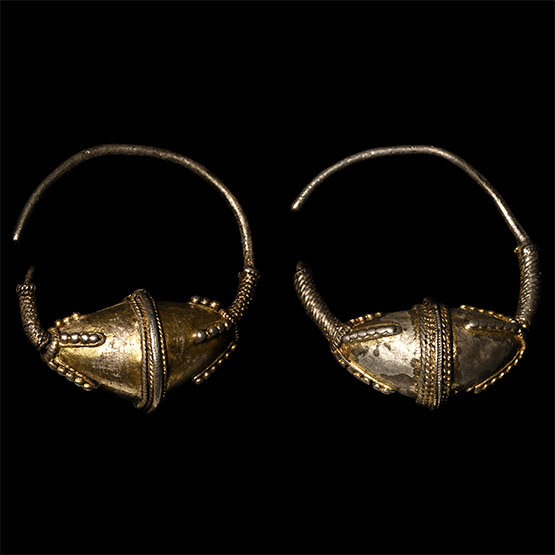
Byzantine Silver-Gilt Earring Pair
6th-10th century A.D.Sold for (Inc. bp): £187
A matched pair with round-section hoops and decorative 'bulbs' featuring medial ropework collars, with applied beads and collars of 'ropework' to both ends. 9.54 grams total, 35-36 mm
Ex German art market, 2000s. Acquired from an EU collector living in London. From the collection of a Surrey, UK, gentleman. -
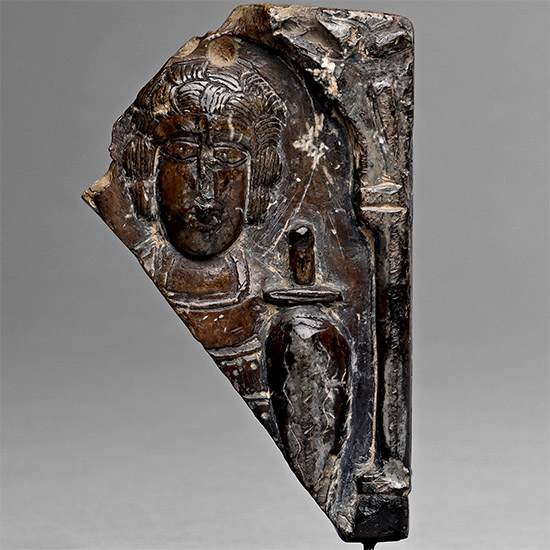
Byzantine Steatite Icon with Military Saint
10th-12th century A.D.Estimate: £7,000 - 9,000 (‡+bp*)
Opening Bid: £3,500
Fragment of an icon depicting a facing saint modelled in the half-round within an arch; an ellipsoid low-relief face with hatched collar-length hair, lentoid eyes with pointillé pupils flanking a long nose; wearing a lamellar cuirass (klivanion); stylised sword (spathion) to the shoulder with lobe pommel, piriform blade with hatched median bar and undulations to the flanks (simulating damascening); arch resting on a balustered column with shallow fixing socket above the saint's head; mounted on a custom-made stand. 60 grams total, icon: 72 mm high
Jacques and Henriette Schumann collection, Paris, France. with Christie's, Paris, France, 30 September 2003, no.248. European private collection. Accompanied by a copy of French passport no.061301, dated 3 September 2003. Accompanied by an academic report by Dr Raffaele D'Amato. This lot has been checked against the Interpol Database of stolen works of art and is accompanied by a search certificate number no.12690-234660. This lot has been cleared against the Art Loss Register database, and is accompanied by an illustrated lot declaration signed by the Head of the Antiquities Department, Dr Raffaele D'Amato.
Jacques and Henriette Schumann were distinguished Parisian collectors known for their discerning taste and passion for antiquities and decorative arts. Their collection, assembled over several decades, reflected a deep appreciation for cultural heritage and historical significance. Works from their collection have been included in major European auctions and are recognised for their provenance and quality.
