
Loading, please wait...
LOT 1102
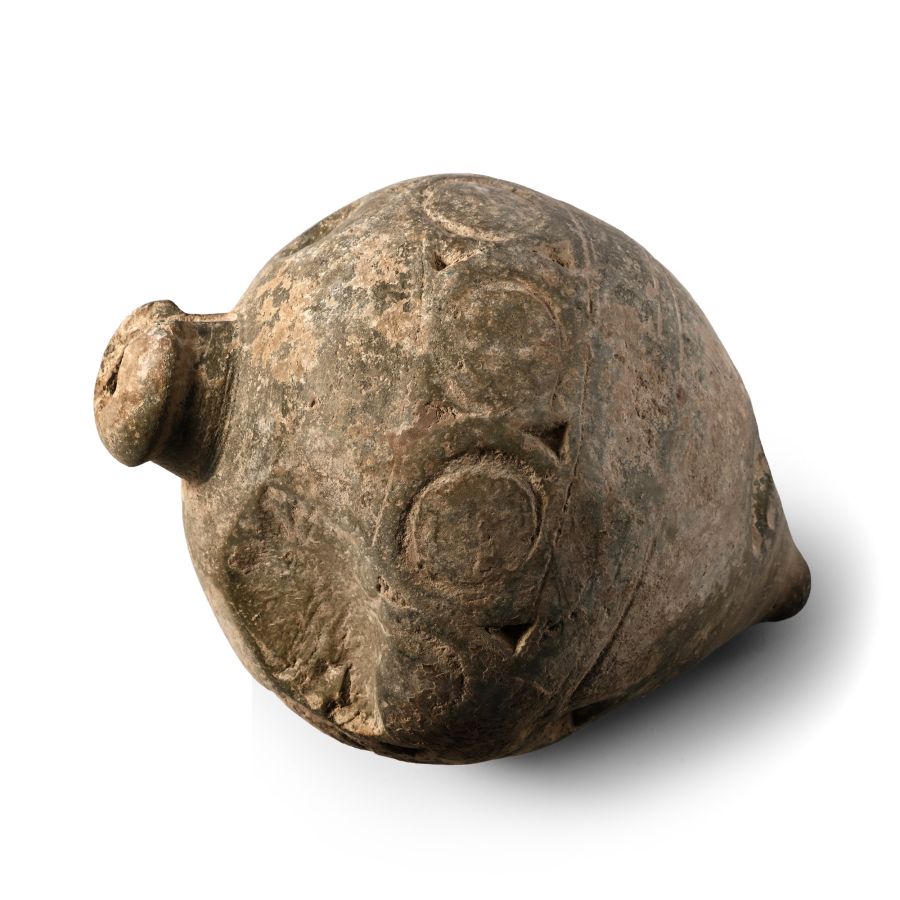
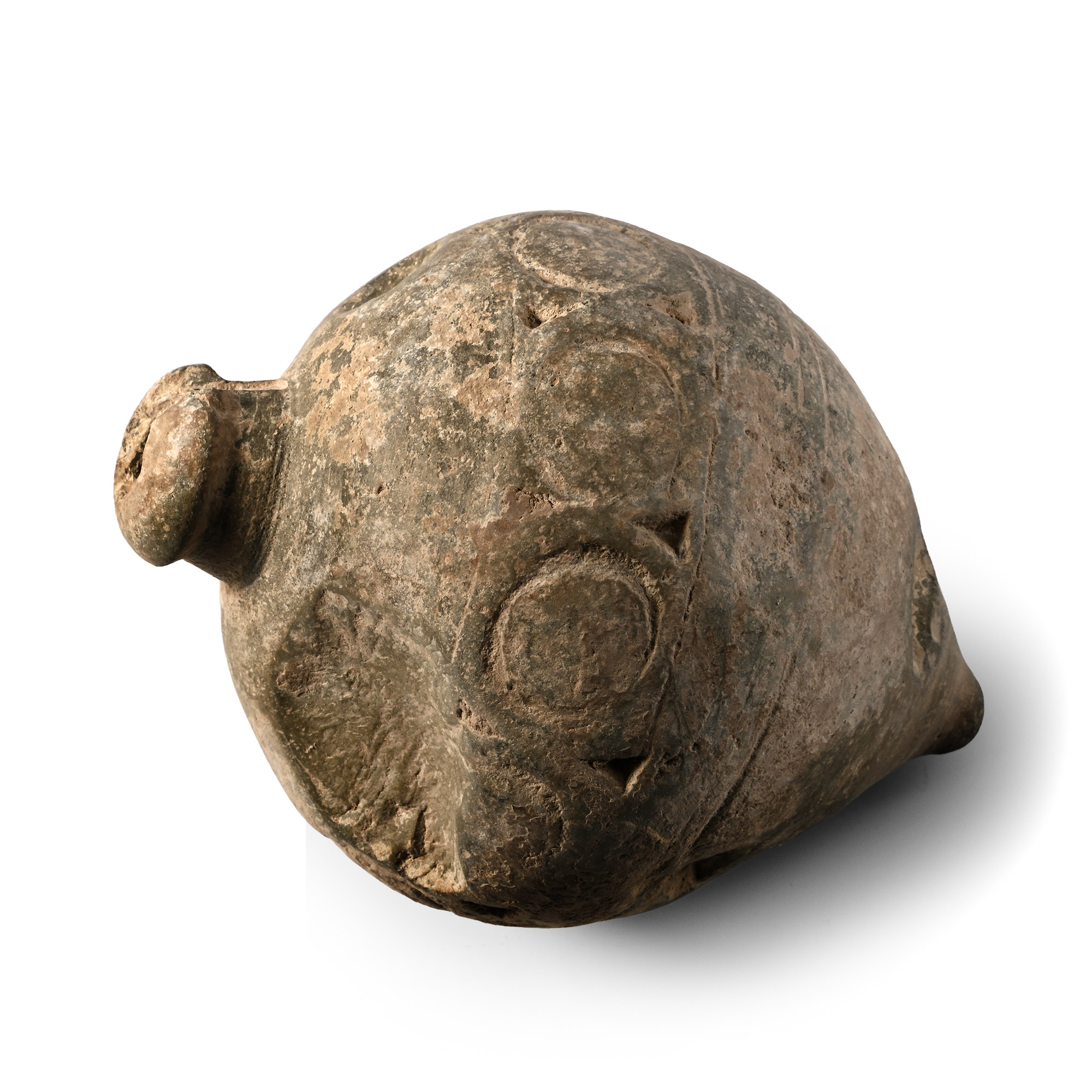
Byzantine 'Greek Fire' Ceramic Fire Bomb or Hand Grenade
9TH-11TH CENTURY A.D.
4 5/8 in. (533 grams, 11.9 cm).
Piriform in profile with a band of impressed annulets on the shoulder; intended to be filled with explosive liquid and a wick, and used as a hand grenade. [No Reserve]
ProvenanceFrom a specialist collection, London, UK, 1990-2000s.
Accompanied by an academic paper by military specialist Dr Raffaele D'Amato, dated 15 July 2019 and titled 'Eastern Roman Empire - Greek Fire Bomb or Hand Grenade (μεσαίον kακάβιον) 9th-11th century AD'.
Cf. Arendt, W. I., Granaten des 13-14. Jahrhunderts, die an der Wolga gefunden sind, Zeitschrift fur Historische Waffen-und Kostumkunde, 11 (1926-8), p.42; cf. Arendt, W., Die Spharisch-konischen Gefäße aus Gebranntem Ton, ibid; cf. Ayalon, D., Gunpowder and Firearms in the Mamluk Kingdom, London, 1956, p.16.
FootnotesApart from the use of siphons or manual flame-throwers called cheirosiphona, special corps of Roman soldiers employed terracotta grenades, in the form of small jars, abundantly evidenced in archaeological excavations. They were called μεσαία kακαβιά or κυτροκακάβια, where the former had a bulbous shape and the latter a more cylindrical form.
CONDITIONTimeLine Auctions follows a vetting process to ensure the authenticity and legality of all items, reinforcing our commitment to integrity and responsible trading. Each antiquity, antique, and coin lot undergoes thorough examination by a vetting committee of at least ten external specialists, professional trade association members, scientists, and archaeologists: Our Vetting Process
AUCTIONS:
TimeLine is a leading auction house specialising in antiquities, ancient art, collectables, natural history, coins, medals, and books. Our auctions offer museums, collectors, historians, and enthusiasts the opportunity to acquire unique and historically significant pieces.
LOT 1102
Byzantine 'Greek Fire' Ceramic Fire Bomb or Hand Grenade
Sold for (Inc. bp): £91
-
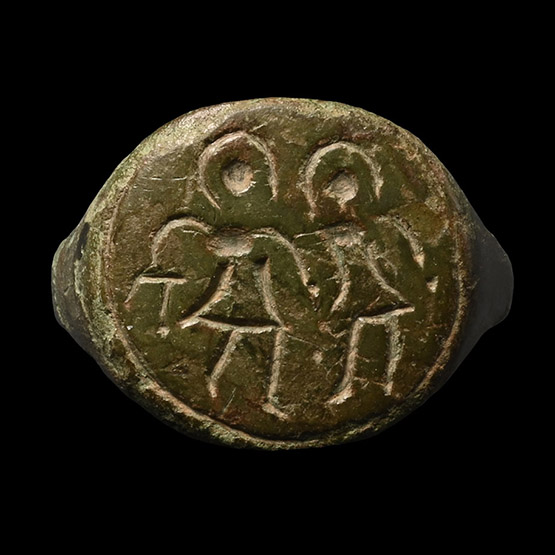
Byzantine Bronze Ring with Saints
11th century A.D.Sold for (Inc. bp): £442
Comprising a D-section hoop and a large discoid bezel with two stylised nimbate figures dressed in short tunics. 6.46 grams, 22.33 mm overall, 19.15 mm internal diameter (approximate size British R 1/2, USA 8 3/4, Europe 19.38, Japan 18)
Acquired on the UK and EU art market before 2000. From the private collection of a Surrey, UK, gentleman.
The oval hoop, in this category of rings, gradually widens into a full shoulder and massive flattened head. The bezel is ellipsoidal, decorated with stylised images, most probably of military saints, invoking protection and blessing. -
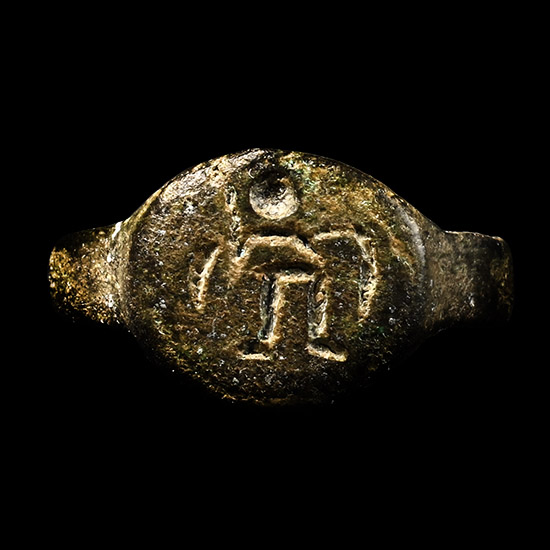
Byzantine Bronze Ring with Warrior Saint
11th-12th century A.D.Sold for (Inc. bp): £46
Slender hoop with discoid bezel showing a stylised warrior holding a long spear. 3.78 grams, 21.23 mm overall, 17.16 mm internal diameter (approximate size British M 1/2, USA 6 1/4, Europe 13.09, Japan 12)
Acquired on the UK and EU art market before 2000. From the private collection of a Surrey, UK, gentleman.
These banded rings, made of bronze sheet with a flattened ellipsoidal head, could be decorated with geometric or animal ornaments executed by shallow carving. In this circumstance, the bezel is decorated with a stylised image, most probably of Archangel Michael, who was asked for protection and blessing. -
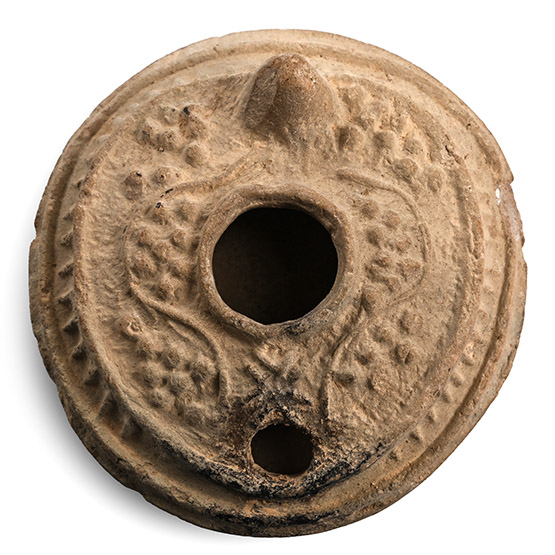
Byzantine Terracotta Oil Lamp with Grape Vines
5th-7th century A.D.Sold for (Inc. bp): £111
With a discoid body and spike handle; circular filling hole enclosed within bands of raised grape-and-vine motifs, hatched shoulder, low-relief starburst to the base. 109 grams, 88 mm
From the Lloyd and Jeanne Raport collection, Washington, D.C. and Florida, USA, formed between 1972-2000. Acquired through Bonhams, London, UK.
