
Loading, please wait...
LOT 1436
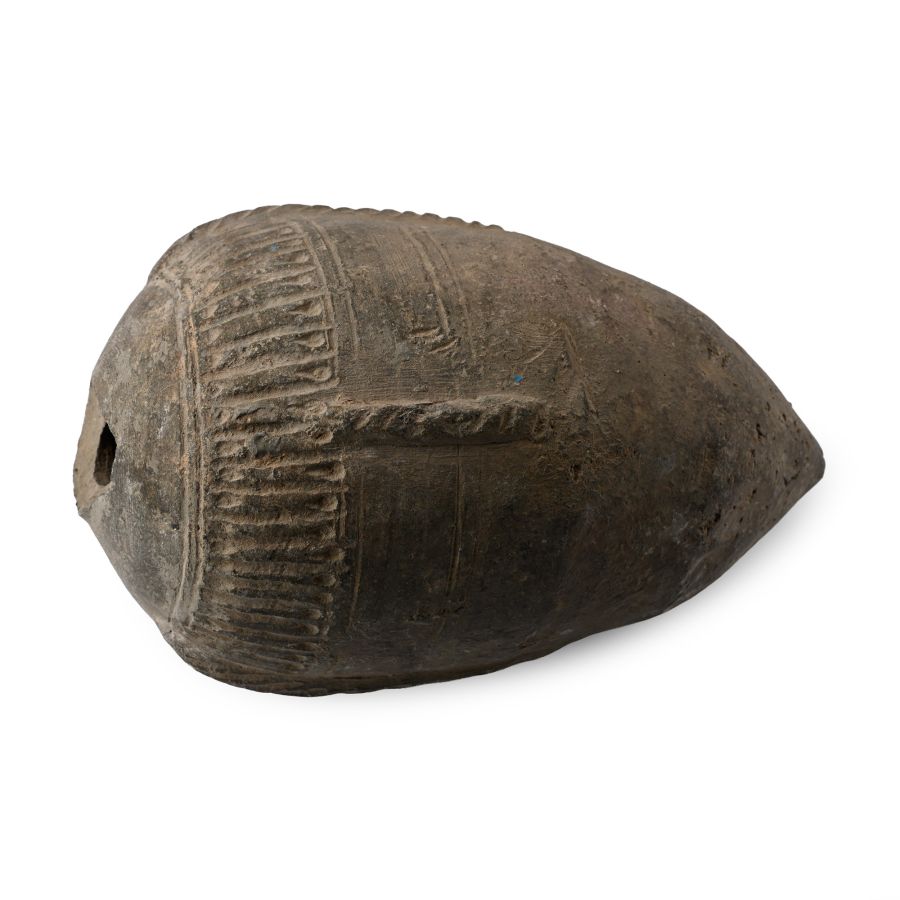
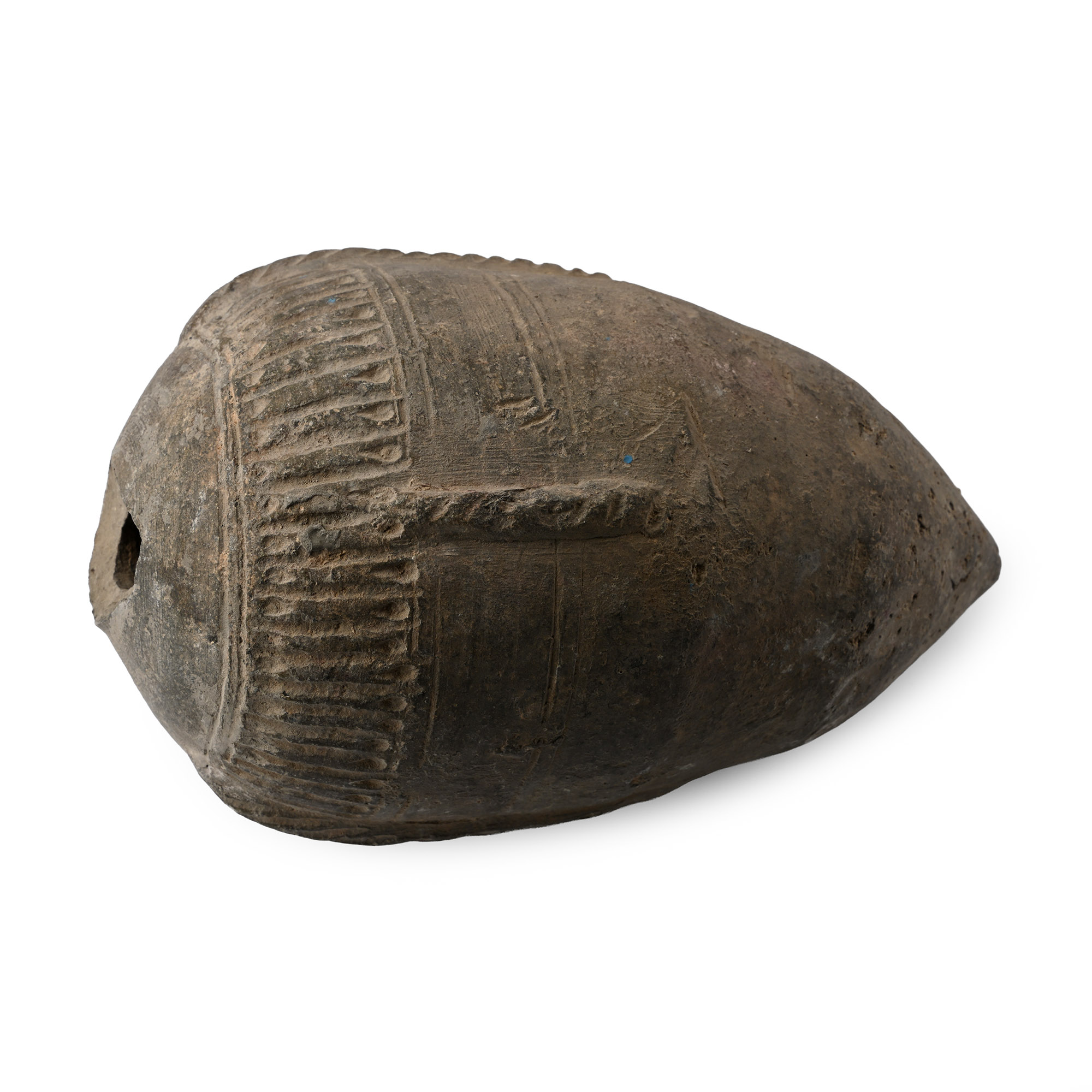
Byzantine 'Greek Fire' Ceramic Fire Bomb or Hand Grenade
9TH-11TH CENTURY A.D.
7 1/2 in. (1.46 kg, 19 cm).
Piriform in profile, four raised lugs on the body; intended to be filled with explosive liquid and wick, used as a hand grenade. [No Reserve]
ProvenanceFrom an important specialist collection, London, UK, 1990s onwards.
Accompanied by an academic paper by military specialist Dr Raffaele D'Amato, dated 15 July 2019 and titled 'Eastern Roman Empire - Greek Fire Bomb or Hand Grenade (μεσαίον kακάβιον) 9th-11th century AD'.
This lot is accompanied by an illustrated lot declaration signed by the Head of the Antiquities Department, Dr Raffaele D'Amato.
Cf. Arendt, W. I., Granaten des 13-14. Jahrhunderts, die an der Wolga gefunden sind, Zeitschrift fur Historische Waffen-und Kostumkunde, 11 (1926-8), p.42; cf. Arendt, W., Die Spharisch-konischen Gefäße aus Gebranntem Ton, ibid; cf. Ayalon, D., Gunpowder and Firearms in the Mamluk Kingdom, London, 1956, p.16.
FootnotesApart from the use of siphons or manual flame-throwers called cheirosiphona, special corps of Roman soldiers employed terracotta grenades, in the form of small jars, abundantly evidenced in archaeological excavations. They were called μεσαία kακαβιά or κυτροκακάβια where the former had a bulbous shape and the latter a more cylindrical form.
CONDITIONTimeLine Auctions follows a vetting process to ensure the authenticity and legality of all items, reinforcing our commitment to integrity and responsible trading. Each antiquity, antique, and coin lot undergoes thorough examination by a vetting committee of at least ten external specialists, professional trade association members, scientists, and archaeologists: Our Vetting Process
AUCTIONS:
TimeLine is a leading auction house specialising in antiquities, ancient art, collectables, natural history, coins, medals, and books. Our auctions offer museums, collectors, historians, and enthusiasts the opportunity to acquire unique and historically significant pieces.
LOT 1436
Byzantine 'Greek Fire' Ceramic Fire Bomb or Hand Grenade
Sold for (Inc. bp): £182
-
.jpg)
Viking Battle Axe Head with Silver Inlays
Northern Europe, 9th-11th century A.D.Sold for (Inc. bp): £8,450
With short, cylindrical socket to rear, narrow neck, flared blade with curved cutting edge; underside of the blade swept in a gentle curve; short flanges above and below the rear of the socket; decorated overall with finely engraved silver inlays forming two dragons and interlace patterns (probably not original); provided with a display stand. 390 grams, 15.7 cm (813 grams total, 26.2 cm high including stand)
Acquired 1982 in Kaliningrad and transported to Riga in 1986, moved to East Berlin in 1988, and again to Germany in 2000, then UK in 2014. Ex West London collection. Accompanied by a copy of an Art Loss Register certificate no.S00141022. Accompanied by an academic report by Dr Raffaele D'Amato. This lot has been checked against the Interpol Database of stolen works of art and is accompanied by search certificate number no.12476-228759. This lot has been cleared against the Art Loss Register database, and is accompanied by an illustrated lot declaration signed by the Head of the Antiquities Department, Dr Raffaele D'Amato. -
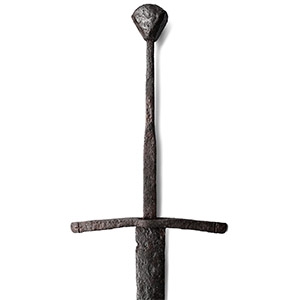
Massive Medieval Iron Two-Handed Knight's Sword with Crosses on Guard
Germany, circa 14th century A.D.Sold for (Inc. bp): £3,380
Tapering blade with a shallow fuller, long and narrow tang with a pear-shaped pommel and a curved cross-guard of Oakeshott Style 6 with incised crosses; professionally conserved. 1.94 kg, 1.42 m
From the private family collection of a lady, UK; acquired in Germany mid 20th century. Accompanied by an academic report by Dr Raffaele D’Amato. This lot has been checked against the Interpol Database of stolen works of art and is accompanied by search certificate number no.12788-240330. This lot has been cleared against the Art Loss Register database, and is accompanied by an illustrated lot declaration signed by the Head of the Antiquities Department, Dr Raffaele D'Amato.
The noteworthy element of this sword is its guard with the engraved crosses. The presence of the cross suggests that the sword once belonged to person belonging to a military order of chivalry. Considering that the Templars were already destroyed when the sword was made, the main candidates could be the Hospitallers or, most probably, the Teutonic Knights. -
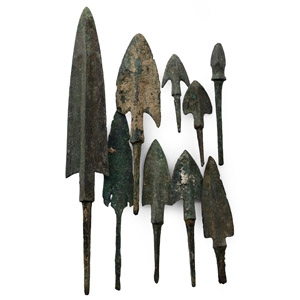
Luristan Bronze Arrowhead Collection
2nd millennium-9th century B.C.Sold for (Inc. bp): £85
Nine arrowheads most of deltoid form, having a sharp flat barbed blade and prominent midrib extending to a long tang; one with head without barbs, but prominent midrib extending to a tang; one with long tang and small pyramidal shape. 149 grams total, 5.4-18 cm
Fine condition.
Formerly from a late Japanese gentleman's collection, 1970-2010. From the private collection of John Meredith, acquired since the 1990s; thence by descent. This lot is accompanied by an illustrated lot declaration signed by the Head of the Antiquities Department, Dr Raffaele D'Amato.
This type of head was in use from the last centuries of the second through to the early centuries of the first millennium BC, with varieties of barbed heads continuing to be employed for a time after the ninth century BC, during the Neo-Assyrian period.
