
Loading, please wait...
LOT 0932
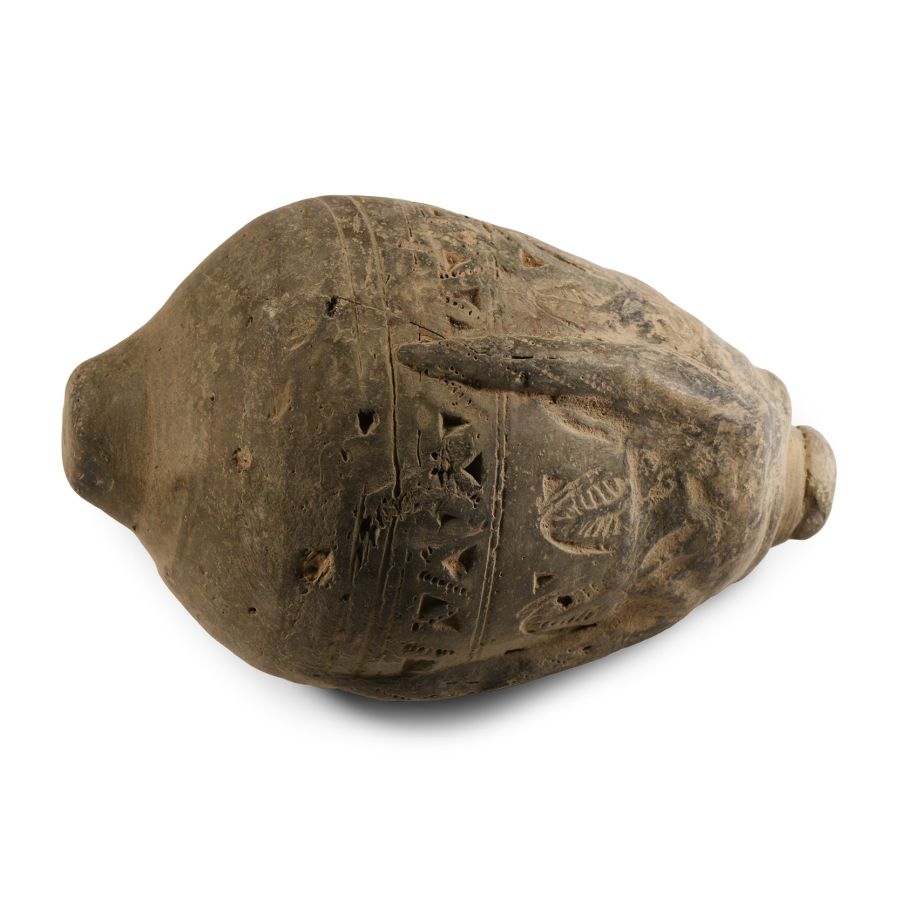
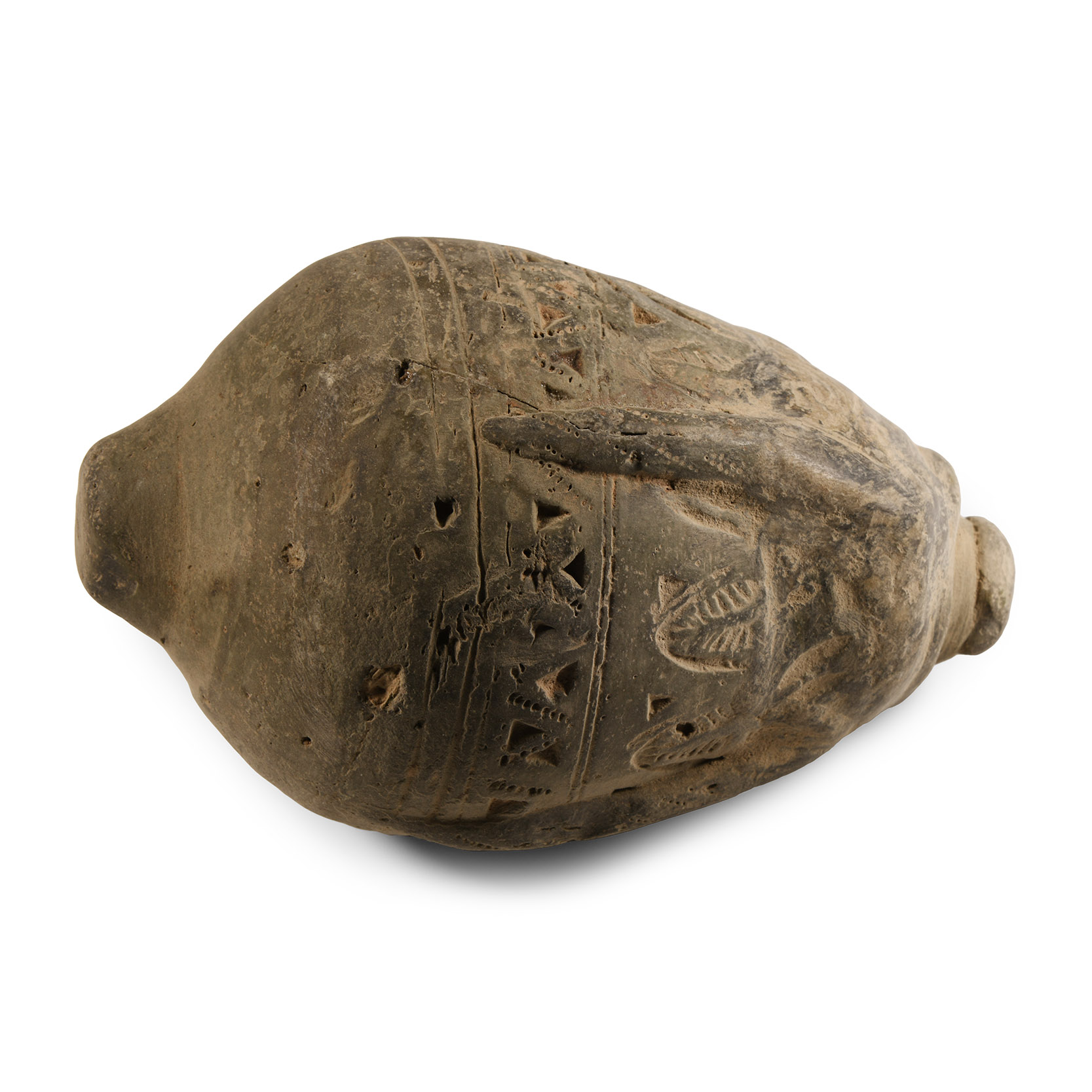
Byzantine 'Greek Fire' Ceramic Fire Bomb or Hand Grenade
9TH-11TH CENTURY A.D.
5 1/2 in. (573 grams, 14 cm).
Piriform body with vertical ribs to the body, interstitial panels of impressed foliage ornament, domed filler-hole, intended to be filled with explosive liquid and wick, used as a hand grenade. [No Reserve]
ProvenanceFrom a specialist collection of militaria, London, UK, collected 1990s onwards.
Accompanied by an academic paper by military specialist Dr Raffaele D'Amato, dated 15 July 2019 and titled 'Eastern Roman Empire - Greek Fire Bomb or Hand Grenade (μεσαίον kακάβιον) 9th-11th century AD'.
Cf. Arendt, W. I., Granaten des 13-14. Jahrhunderts, die an der Wolga gefunden sind, Zeitschrift fur Historische Waffen-und Kostumkunde, 11 (1926-8), p.42; cf. Arendt, W., Die Spharisch-konischen Gefasse aus Gebranntem Ton, ibid; cf. Ayalon, D., Gunpowder and Firearms in the Mamluk Kingdom, London, 1956, p.16; the shape is similar with a specimen from British Museum, inventory no. 1882,0720.1 from Bulandshahr, India, in Hildburgh, W.L., ‘Aeolopiles as fire blowers’ in Archaeologia, 94, 1951, pp..27-55, pl.XVI.c.
FootnotesThis piece was a sort of a ceramic fire grenade, similar to the ones used by the Eastern Romans but of Turco-Mongol type. Apart from the use of manual flame-throwers, special corps of soldiers employed terracotta grenades, in the form of small jars, abundantly evidenced in archaeological excavations, even in Burma.
CONDITIONTimeLine Auctions follows a vetting process to ensure the authenticity and legality of all items, reinforcing our commitment to integrity and responsible trading. Each antiquity, antique, and coin lot undergoes thorough examination by a vetting committee of at least ten external specialists, professional trade association members, scientists, and archaeologists: Our Vetting Process
AUCTIONS:
TimeLine is a leading auction house specialising in antiquities, ancient art, collectables, natural history, coins, medals, and books. Our auctions offer museums, collectors, historians, and enthusiasts the opportunity to acquire unique and historically significant pieces.
LOT 0932
Byzantine 'Greek Fire' Ceramic Fire Bomb or Hand Grenade
Sold for (Inc. bp): £195
-
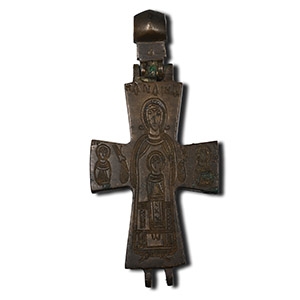
Byzantine Bronze Reliquary Cross Plate
10th-12th century A.D.Estimate: £800 - 1,000 (‡+bp*)
Opening Bid: £400
The enkolpion with hinged loop, nimbate figure in orans pose with a smaller robed figure before, inscription above, two nimbate saints to the arms. 49.5 grams, 10.6 cm
Acquired on the German art market, 2003. Private collection, Europe. -
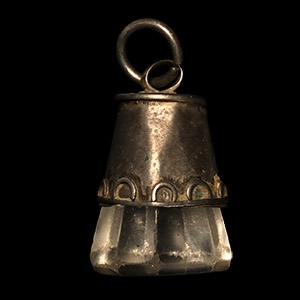
Byzantine Rock Crystal Stamp Seal in Silver Pendant with Military Saint on Horseback
Circa 6th-7th century A.D.Estimate: £3,000 - 4,000 (+bp*)
Opening Bid: £1,500
With a tapering octagonal body, the military saint on horseback holding a long spear, the horse wearing a detailed harness; set in a conical silver frame with suspension loop and crenellated edge. 7.9 grams, 30 mm
From an old New Zealand private collection. Acquired on the New Zealand art market circa 2014. Property of a New Zealand legal professional. Accompanied by an academic report by Dr Raffaele D’Amato. This lot has been checked against the Interpol Database of stolen works of art and is accompanied by search certificate number no.12327-223721.
The motif of a saint on horseback was common in the Romano-Christian culture of the 6th-7th centuries. The figure of a saint symbolised protection of the local church or monastery and its community, and could also be related to the priest leader of the community, as their personal seal. -
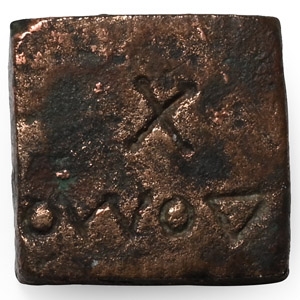
Byzantine Bronze Weight with Inscriptions
6th-8th century A.D.Sold for (Inc. bp): £33
Obverse with impressed text 'ΔΟΜΟ/Χ'. 7.9 grams, 14 mm
From the collection of a gentleman, acquired on the London art market in the 1990s.
