
Loading, please wait...
LOT 1071
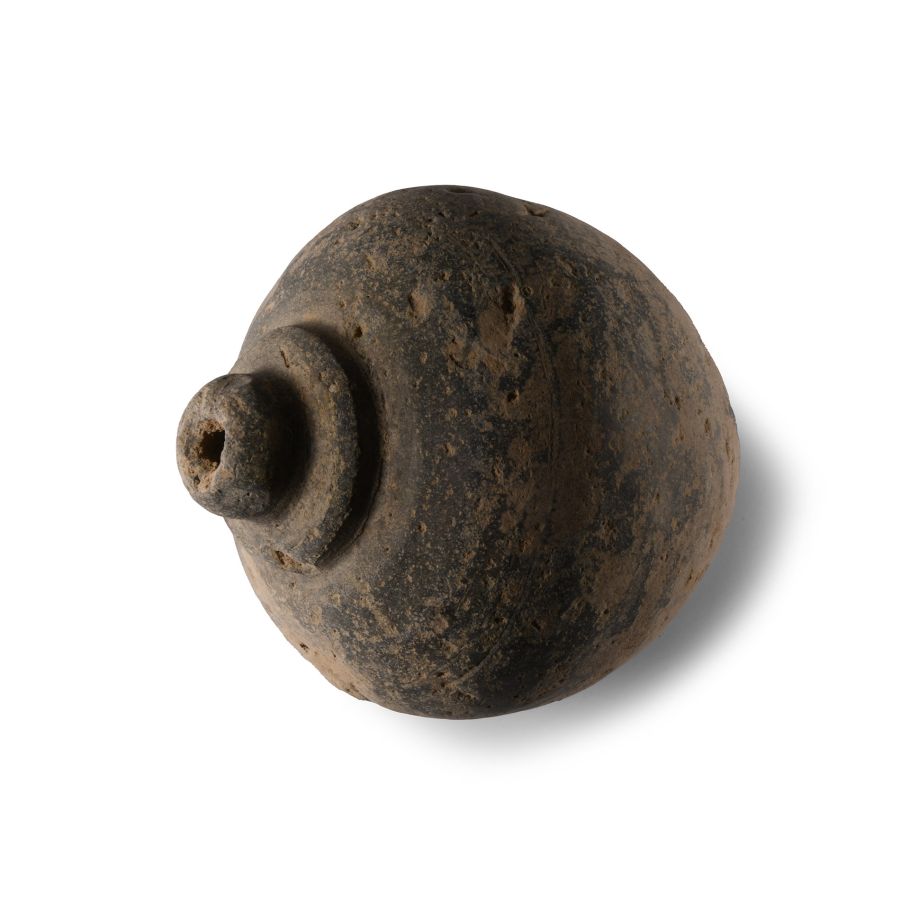
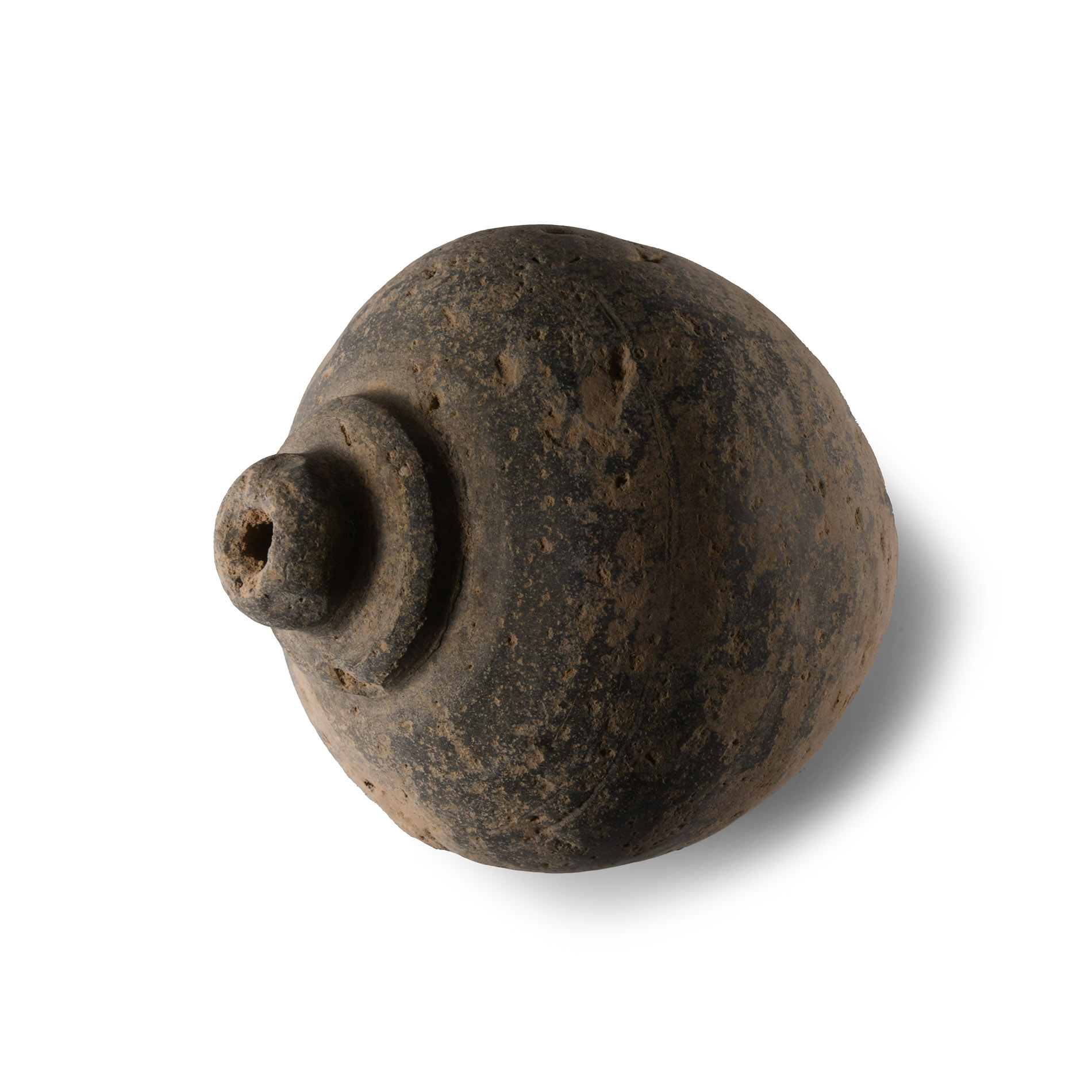
Byzantine 'Greek Fire' Ceramic Fire Bomb or Hand Grenade
CIRCA 11TH-14TH CENTURY A.D.
4 5/8 in. (603 grams, 11.8 cm high).
With a piriform body and domed mouth; intended to be filled with explosive liquid and wick, used as a hand grenade. [No Reserve]
ProvenanceAcquired 1980-2015.
Ex Abelita family collection.
Accompanied by an academic paper by military specialist Dr Raffaele D'Amato, dated 15 July 2019 and titled 'Eastern Roman Empire - Greek Fire Bomb or Hand Grenade (μεσαίον kακάβιον) 9th-11th century AD'.
Cf. Arendt, W. I., Granaten des 13-14. Jahrhunderts, die an der Wolga gefunden sind, Zeitschrift fur Historische Waffen-und Kostumkunde, 11 (1926-8), p.42; cf. Arendt, W., Die Spharisch-konischen Gefasse aus Gebranntem Ton, ibid; cf. Ayalon, D., Gunpowder and Firearms in the Mamluk Kingdom, London, 1956, p.16; for the way of employment see D'Amato, R., Byzantine Naval Forces 1261-1461, The Roman Empire's Last Marines, Oxford, 2016, plate B, p.41.
FootnotesApart from the use of siphons or manual flame-throwers called cheirosiphona, special Roman soldiers employed terracotta grenades, in the form of small jars, abundantly evidenced in archaeological excavations. Such were the γανωτα, vessels (sometimes also in bronze) used for Greek fire. They were called μεσαία kακαβιά or κυτροκακάβια where the former had a bulbous shape and the latter a more cylindrical form.
CONDITIONTimeLine Auctions follows a vetting process to ensure the authenticity and legality of all items, reinforcing our commitment to integrity and responsible trading. Each antiquity, antique, and coin lot undergoes thorough examination by a vetting committee of at least ten external specialists, professional trade association members, scientists, and archaeologists: Our Vetting Process
AUCTIONS:
TimeLine is a leading auction house specialising in antiquities, ancient art, collectables, natural history, coins, medals, and books. Our auctions offer museums, collectors, historians, and enthusiasts the opportunity to acquire unique and historically significant pieces.
LOT 1071
Byzantine 'Greek Fire' Ceramic Fire Bomb or Hand Grenade
Sold for (Inc. bp): £143
-
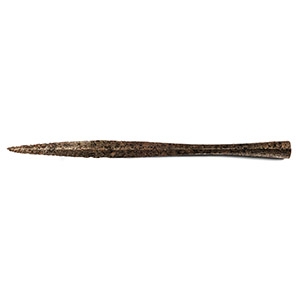
Viking Age Iron Socketted Spearhead
11th-12th century A.D.Sold for (Inc. bp): £234
Type N leaf-shaped slender blade, with flattened transition area between blade and socket, continuing far up onto the blade. 255 grams, 39 cm
Ex private collection of Mr M.B., Mainz, Germany, since the 1980s. Acquired from the above, 2004.
The spearheads of type N were a minor group in the Viking spearheads, found throughout the whole of the 10th century A.D. They make up circa 10% of the Viking Age spears. -
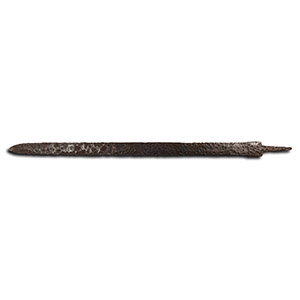
Late Roman Iron Sword of Herulian Type
5th-6th century A.D.Estimate: £3,000 - 4,000 (+bp*)
Opening Bid: £1,500
The double-edged spatha with parallel-sided blade and pointed tip, battle nicks to both cutting edges; the hilt and tang extending over the blade as a tight-fitting sleeve; remains of rivet on the tang. 604 grams, 89 cm
Ex private collection of Mr M.B., Mainz, Germany, since the 1980s. Acquired from the above, 2004. This lot has been checked against the Interpol Database of stolen works of art and is accompanied by search certificate number no. 11939-210916.
This sword belongs to the group of spathae of late Roman typology, widespread among the Germanic and Abkhazian foederati, and garrison troops of the Northern Black Sea and Caucasus. These swords could have been the prototypes of the Eastern Roman spathia, classified in the Strategikon of Pseudo-Mavrikios as Herouliskia (Herulian swords) for their connections with the Germanic mercenaries bearing them in service with the Roman army. -
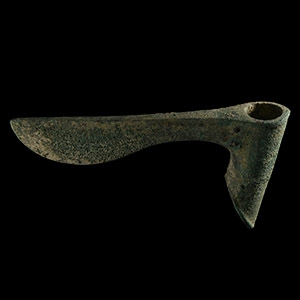
Luristan Sar-e Tabar Socketted Axehead
2nd millennium B.C.Sold for (Inc. bp): £208
With plain cylindrical socket and staff, off-set at the base, of simple undecorated shape with a long lentoid-section D-shaped blade with scooped profile. 465 grams, 18 cm
Earlier 20th century collection. Mayfair, London gallery, UK. Dr D.G. collection, 1990s-2019.
Many examples of bronze axeheads are attributed to the Luristan culture and various shapes have been discussed by different scholars. Moorey (1971, pp.39-41) shows similar axeheads, stating that the texts executed on some specimens have shown them made of arsenical bronze, and attributes them to the late 3rd millennium B.C. or 2nd millennium B.C., period in which this alloy was used abundantly.
