
Loading, please wait...
LOT 1163
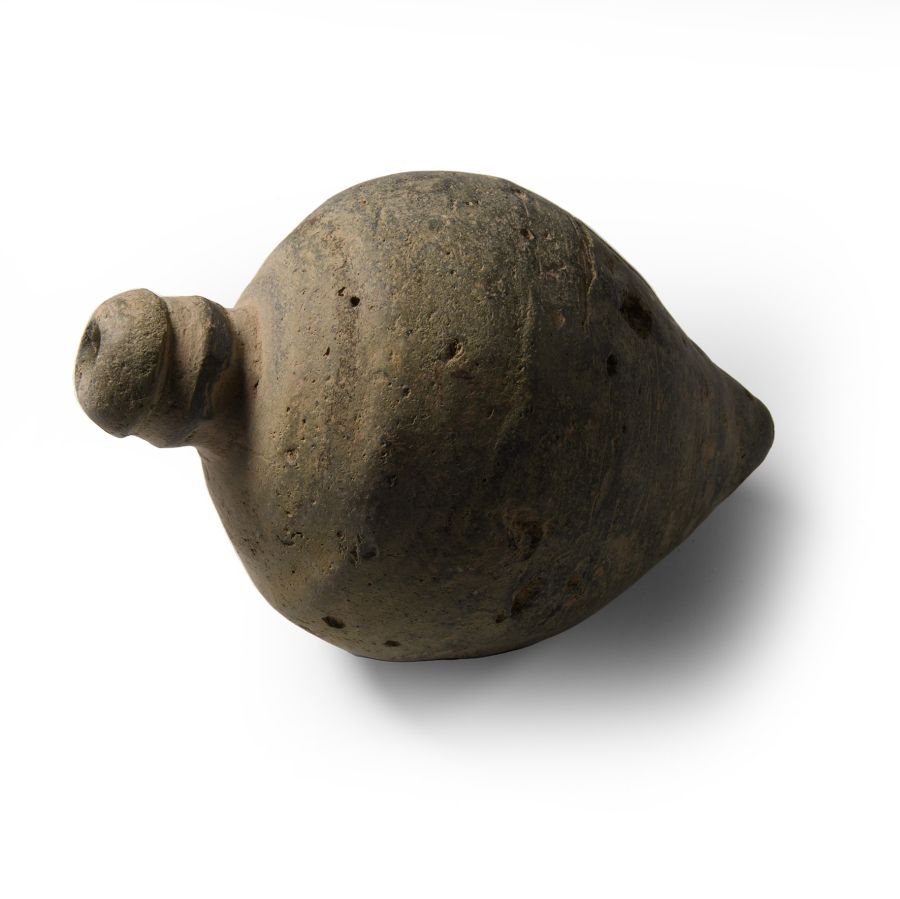
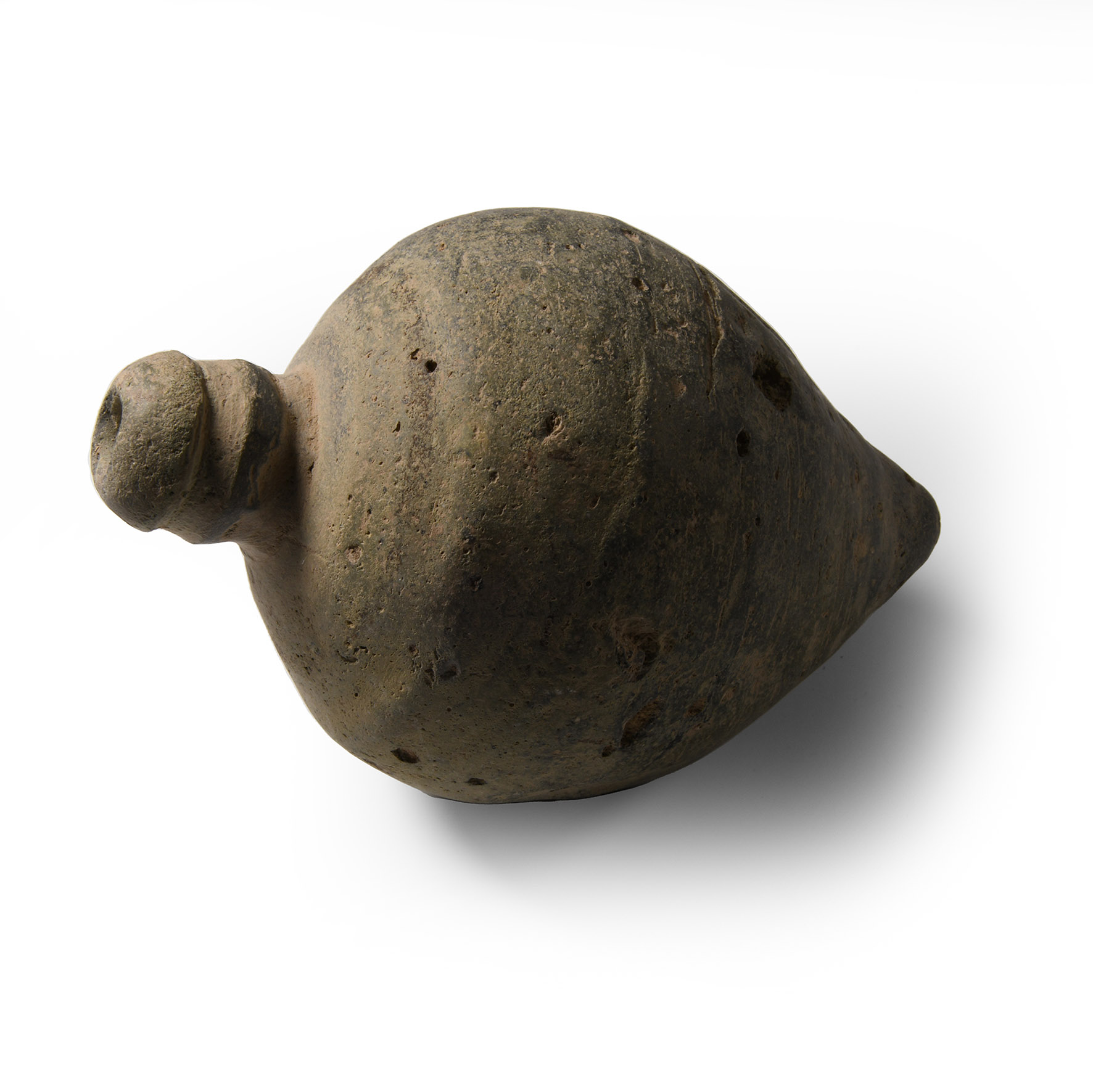
Byzantine 'Greek Fire' Ceramic Fire Bomb or Hand Grenade
9TH-11TH CENTURY A.D.
4 3/4 in. (500 grams, 12 cm).
Piriform body with domed filler-hole, raised vertical flanges to the shoulder; intended to be filled with explosive liquid and wick, used as a hand grenade. [No Reserve]
ProvenanceAcquired 1980-2015.
Ex Abelita family collection.
Accompanied by an academic paper by military specialist Dr Raffaele D'Amato, dated 15 July 2019 and titled 'Eastern Roman Empire - Greek Fire Bomb or Hand Grenade (μεσαίον kακάβιον) 9th-11th century AD'.
Cf. Arendt, W. I., Granaten des 13-14. Jahrhunderts, die an der Wolga gefunden sind, Zeitschrift fur Historische Waffen-und Kostumkunde, 11 (1926-8), p.42; cf. Arendt, W., Die Spharisch-konischen Gefasse aus Gebranntem Ton, ibid; cf. Ayalon, D., Gunpowder and Firearms in the Mamluk Kingdom, London, 1956, p.16.
FootnotesApart from the use of siphons or manual flame-throwers called cheirosiphona, special corps of Roman soldiers employed terracotta grenades, in the form of small jars, abundantly evidenced in archaeological excavations. Such were the γανωτα, vessels (sometimes also of bronze) used for Greek fire. They were called μεσαία kακαβιά or κυτροκακάβια where the former had a bulbous shape and the latter a more cylindrical form.
CONDITIONTimeLine Auctions follows a vetting process to ensure the authenticity and legality of all items, reinforcing our commitment to integrity and responsible trading. Each antiquity, antique, and coin lot undergoes thorough examination by a vetting committee of at least ten external specialists, professional trade association members, scientists, and archaeologists: Our Vetting Process
AUCTIONS:
TimeLine is a leading auction house specialising in antiquities, ancient art, collectables, natural history, coins, medals, and books. Our auctions offer museums, collectors, historians, and enthusiasts the opportunity to acquire unique and historically significant pieces.
LOT 1163
Byzantine 'Greek Fire' Ceramic Fire Bomb or Hand Grenade
Sold for (Inc. bp): £156
-
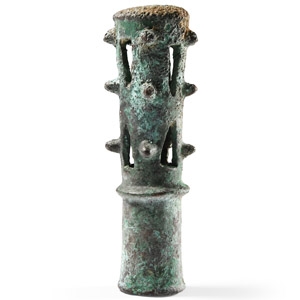
Luristan Bronze Macehead with Points and Fretwork
2600-2400 B.C.Sold for (Inc. bp): £312
Cylindrical in shape, the upper section with alternating holes and vertical rows of three prominent spikes, short cylindrical shaft. 363 grams, 14.5 cm
Collected from 1979-1999. From the collection of the late Mr S.M., London, UK.
This knopped mace head was probably made using the lost-wax method. It corresponds to the type M 2.A.b of the classification of Gernez: single-cylinder spiked maces. These elements are rare and quite diverse. They consist of a metal cylinder with rows of juxtaposed points. There are between 3 and 8 rows each, comprising 3 to 5 more or less pronounced spikes. -
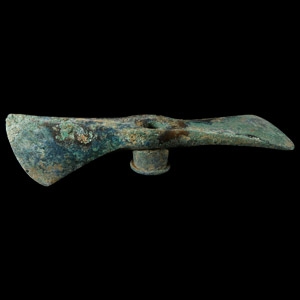
Western Asiatic Bronze Axehead
2nd-1st millennium B.C.Sold for (Inc. bp): £143
With central socket and shaft; cutting blade set vertically at a right-angle; the short pick-adze blade arranged horizontally. 1.3 kg, 26 cm
Acquired 1980-2015. Ex Abelita family collection.
The earliest axe-adzes from the 3rd millennium B.C. were weapons and tools furnished with socket holes. Usually a socket was a more secure way of attaching the object to a wooden haft than having a tang. These weapons developed into a plethora of different forms in the 2nd millennium B.C., and the numerous new forms and were used until at least 800 B.C. -
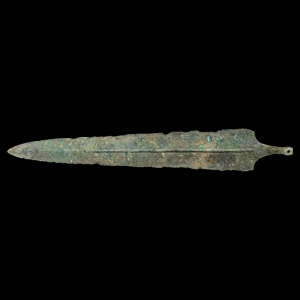
Luristan Bronze Spearhead Blade
2nd-1st millennium B.C.Sold for (Inc. bp): £117
With a short tang and long blade, raised midrib, a rivet to the base. 254 grams, 33 cm
Acquired 1980-2015. Ex Abelita family collection.
The spearhead belongs to type 2 according to the classification of Khorasani. A similar specimen was excavated by Negahban in Marlik.
