
Loading, please wait...
LOT 0952
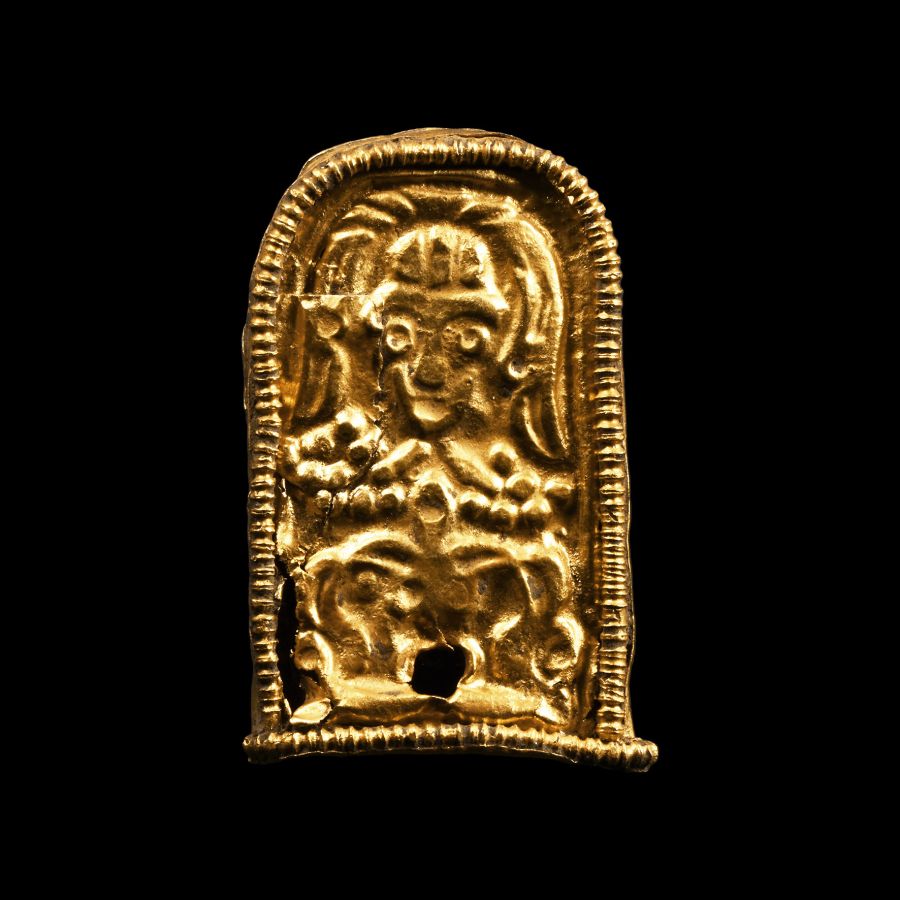
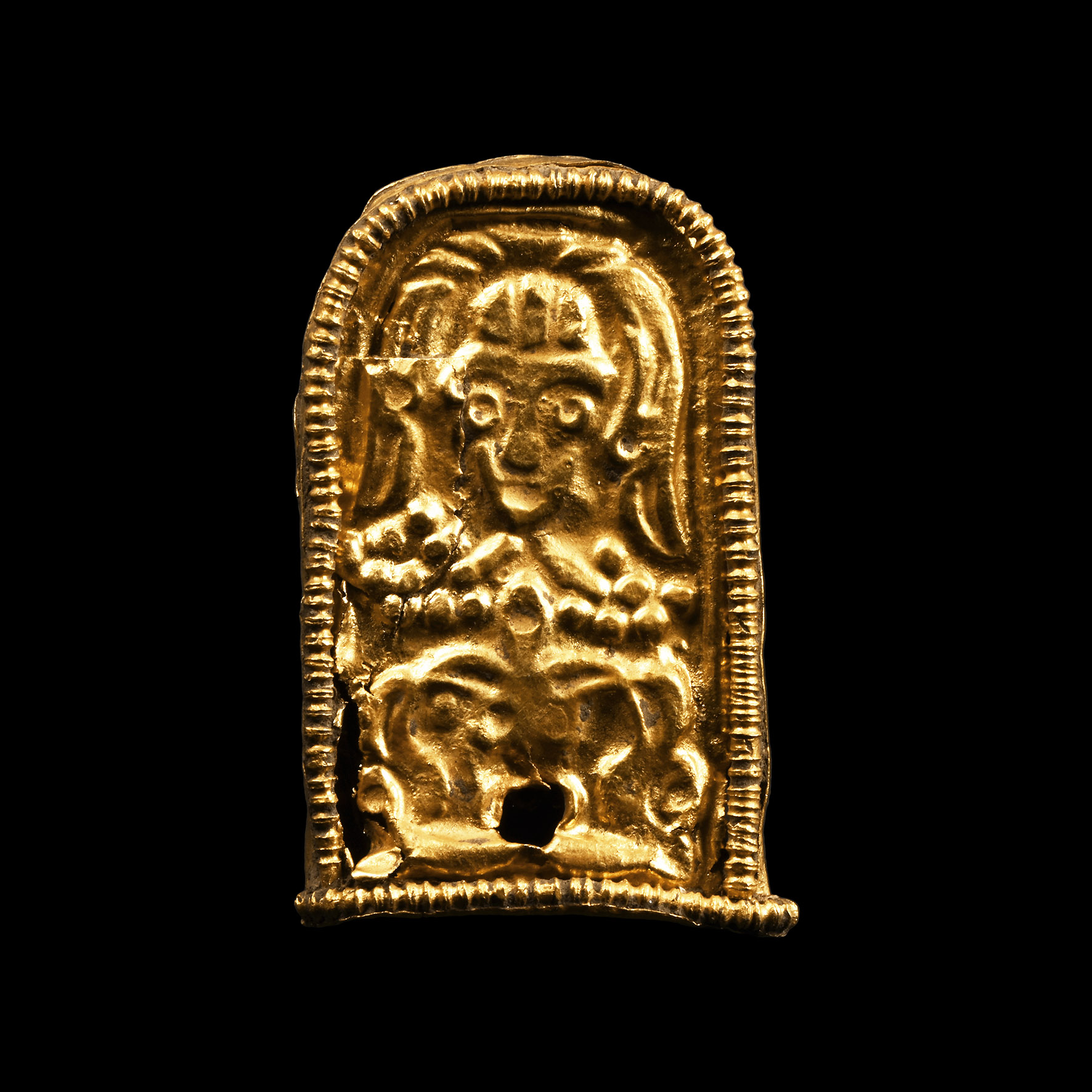
Byzantine Gold Strap End with Facing Figure
CIRCA 7TH-8TH CENTURY A.D.
1 1/2 in. (7.40 grams, 39 mm).
The hollow-formed, tongue-shaped body adorned with a filigree border, repoussé figure with pellets on the torso and serpents framing the head.
ProvenanceAcquired 1990s-early 2000s.
East Anglian private collection.
Cf. similar mount in the collection of the British Museum, London, under accession no.1991,1002.1; see also similar pendant (in style) in Arslan, E.A., L'oro D'egli Avari, Popolo delle Steppe In Europa (The gold of the Avars, Steppe People in Europe, In Italian), Milano, 2000, for illustration of use and for comparable pieces, particularly p.110, cat.82.
FootnotesThe beautiful horsemen burials found in the Avar necropolis of central Europe date to the last third of the 7th century A.D. and the early 8th century A.D. show wealth and pomp. This type of belt elements, although present in the Avar graves, were most likely produced in the workshops of the Eastern Roman Empire, from where they reached the Avar lands as imperial gifts or spoils of war. They could be simple fastenings for belts, or part of multiple belts, to which sabres and knives were attached, commonly used among Avars, Bulgars and Romans during the 6th -7th centuries A.D.
CONDITIONTimeLine Auctions follows a vetting process to ensure the authenticity and legality of all items, reinforcing our commitment to integrity and responsible trading. Each antiquity, antique, and coin lot undergoes thorough examination by a vetting committee of at least ten external specialists, professional trade association members, scientists, and archaeologists: Our Vetting Process
AUCTIONS:
TimeLine is a leading auction house specialising in antiquities, ancient art, collectables, natural history, coins, medals, and books. Our auctions offer museums, collectors, historians, and enthusiasts the opportunity to acquire unique and historically significant pieces.
LOT 0952
Byzantine Gold Strap End with Facing Figure
Estimate £500 - 700€580 - 810 (for guidance only)$680 - 950 (for guidance only)
-
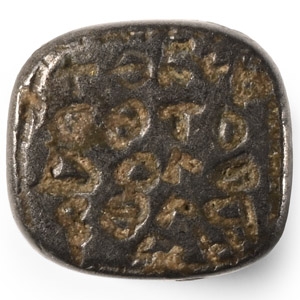
Byzantine Seal Matrix with Inscription
Circa 6th-12th century A.D.Estimate: £200 - 280 (+bp*)
Opening Bid: £111
With inscription '+ΘKEB / OΘTO / ΔΟΛΟ / ΤΘΛΑ' for 'ΘΕΟΤΟΚΕ ΒΟΗΘΕΛ ΤΩ ΔΟΥΛΩ ΤΟΥ ΘΕΟΥ ΛΑΔΕ' (Mother of God, help Lades, the servant of God). 13.1 grams, 18 mm
From an important collection formed before 1988, London and Geneva. -
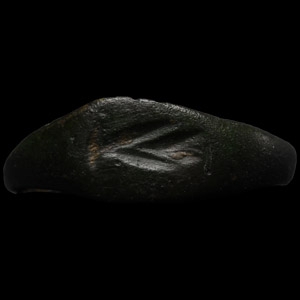
Byzantine Bronze Ring with Hand of God
6th-8th century A.D.Sold for (Inc. bp): £52
Integral ellipsoid plaque with incuse hand motif. 1.34 grams, 18.66 mm overall, 15.68 mm internal diameter (approximate size British F, USA 2 3/4, Europe 3.67, Japan 3)
Acquired 1980-2015. Ex Abelita family collection. -
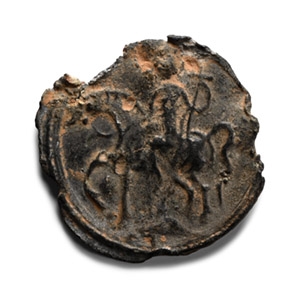
Byzantine Bronze St. George Amulet
6th-7th century A.D.Estimate: £100 - 140 (+bp*)
Opening Bid: £50
Bifacial amulet with chipped rim; obverse: St George with cross on horseback overcoming a dragon; reverse: mary and Infant Jesus flanked by angels. 5.4 grams, 28 mm
From the collection of a gentleman, acquired on the London art market in the 1990s.
