
Loading, please wait...
LOT 0192
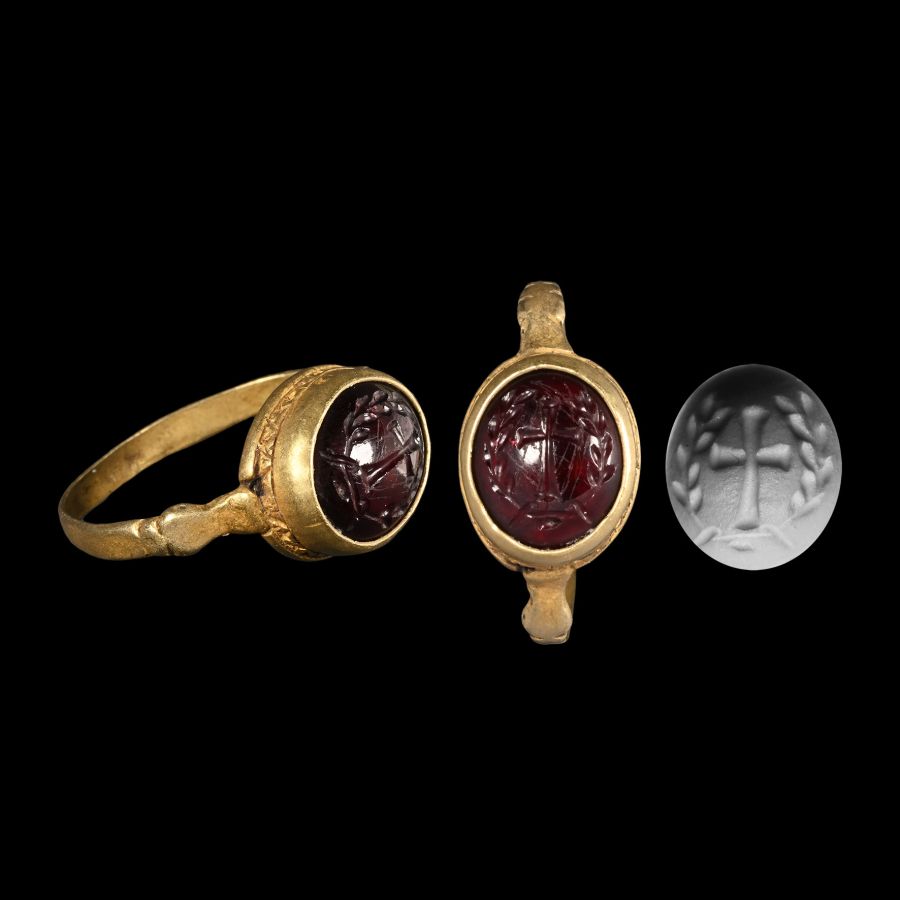
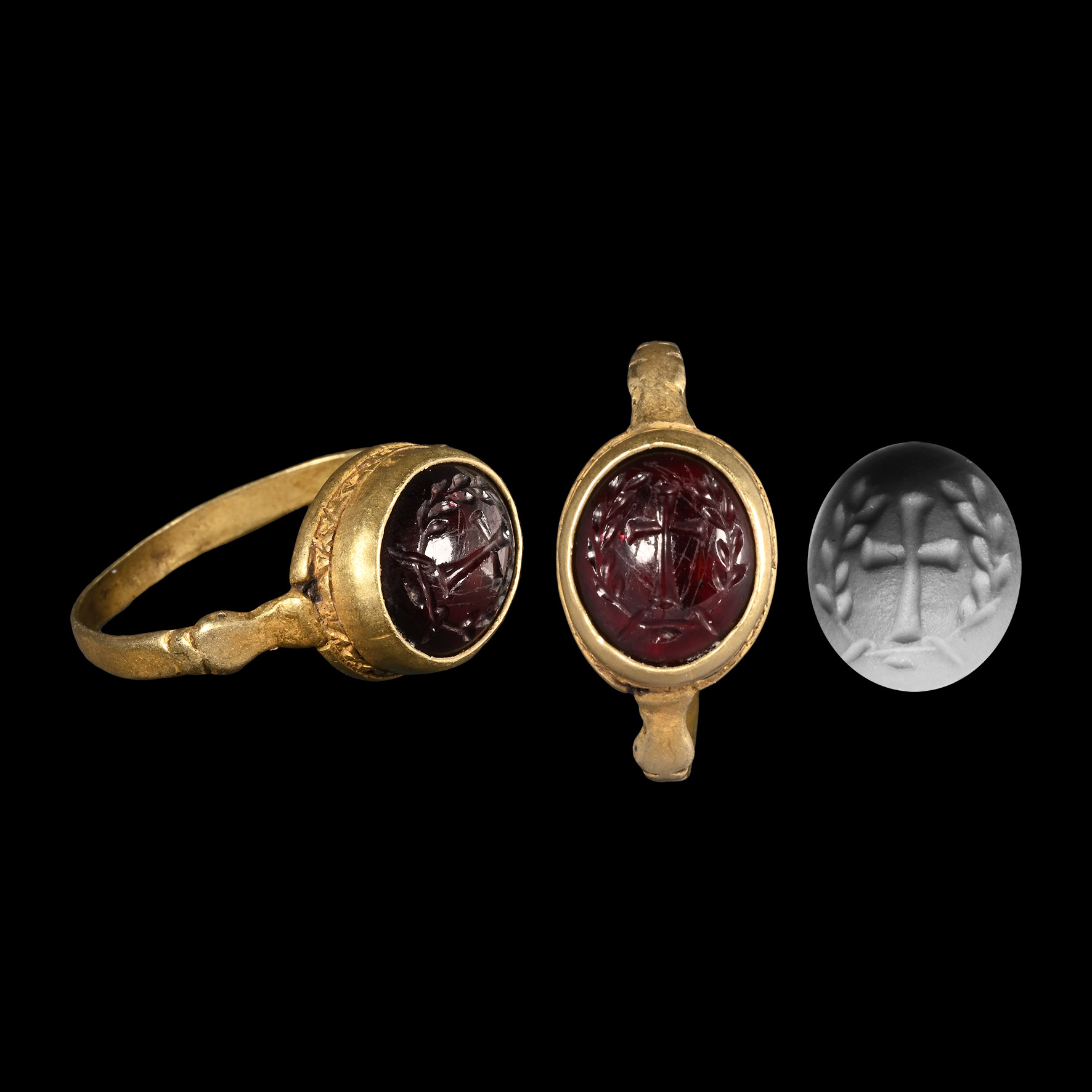
Byzantine Gold Ring with Engraved Cross Gemstone
6TH-8TH CENTURY A.D.
3/4 in. (3.35 grams, 21.60 mm overall, 19.51 mm internal diameter (approximate size British M, USA 6, Europe 12.46, Japan 12)).
With baluster detailing to the shoulders, ellipsoid bezel with decorative band to the cell wall, inset garnet cabochon with intaglio design of a cross beneath a wreath and dish below.
ProvenanceFrom a late Japanese specialist collector, 1970-2000s.
This lot has been checked against the Interpol Database of stolen works of art and is accompanied by search certificate number no.11865-206975.
Cf. Wamser, L., Die Welt von Byzanz - Europas Östliches Erbe, München, 2004, item 309, for type.
CONDITIONTimeLine Auctions follows a vetting process to ensure the authenticity and legality of all items, reinforcing our commitment to integrity and responsible trading. Each antiquity, antique, and coin lot undergoes thorough examination by a vetting committee of at least ten external specialists, professional trade association members, scientists, and archaeologists: Our Vetting Process
AUCTIONS:
TimeLine is a leading auction house specialising in antiquities, ancient art, collectables, natural history, coins, medals, and books. Our auctions offer museums, collectors, historians, and enthusiasts the opportunity to acquire unique and historically significant pieces.
LOT 0192
Byzantine Gold Ring with Engraved Cross Gemstone
Estimate £2,000 - 3,000€2,320 - 3,480 (for guidance only)$2,700 - 4,050 (for guidance only)
-
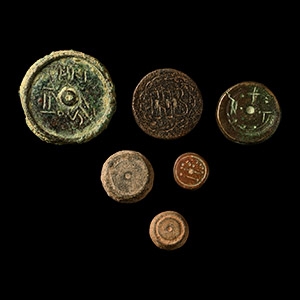
Byzantine Bronze Weight Collection
6th-8th century A.D.Sold for (Inc. bp): £65
Comprising six circular commercial weights of different types and sizes, including examples stamped with letter motifs. 61 grams total, 10-27 mm
Ex Simmons Gallery, London E11, UK, in the 1990s. From a North London collection.
The biggest weight is a one ounce weight, having an engraved monogram of Γ and Α. The flans of circular coin weights were turned on a lathe in the 6th century A.D., giving them a neat appearance. The designs are usually quite simple and often crudely executed, either engraved or slipped. -
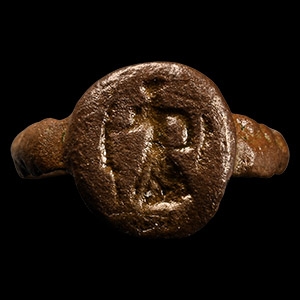
Byzantine Bronze Ring with Armed Warrior
Circa 5th-7th century A.D.Sold for (Inc. bp): £91
The slender hoop with worn remains of decorative notching to shoulders, oval bezel engraved with stylised standing figure holding shield and a spear or other weapon. 2.06 grams, 18.52 mm overall, 15.90 mm internal diameter (approximate size British I 1/2, USA 4 1/2, Europe 8.07, Japan 7)
Private collection formed since the 1940s. UK art market. Property of an Essex gentleman. -
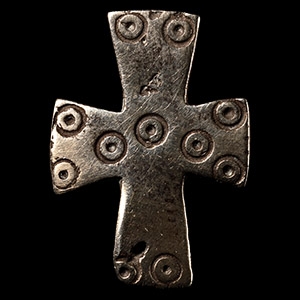
Byzantine Silver Cross Brooch
Circa 6th-7th century A.D.Sold for (Inc. bp): £182
Shaped as an equal-armed cross, surface decorated with pellet-in-circles, catch and fastening pin on the back; polished. 5.27 grams, 28 mm
Acquired on the UK art market. Property of a Ruislip, UK, gentleman, by inheritance.
The cross fibulae was part of a Roman female costume in the Mediterranean and in the regions around the Mediterranean. They were used to close the cloak at chest height.
