
Loading, please wait...
_900x900.jpg "Byzantine Gold Ring with Cross")
_200x200.jpg "Byzantine Gold Ring with Cross")
.jpg "Byzantine Gold Ring with Cross")
LOT 0220
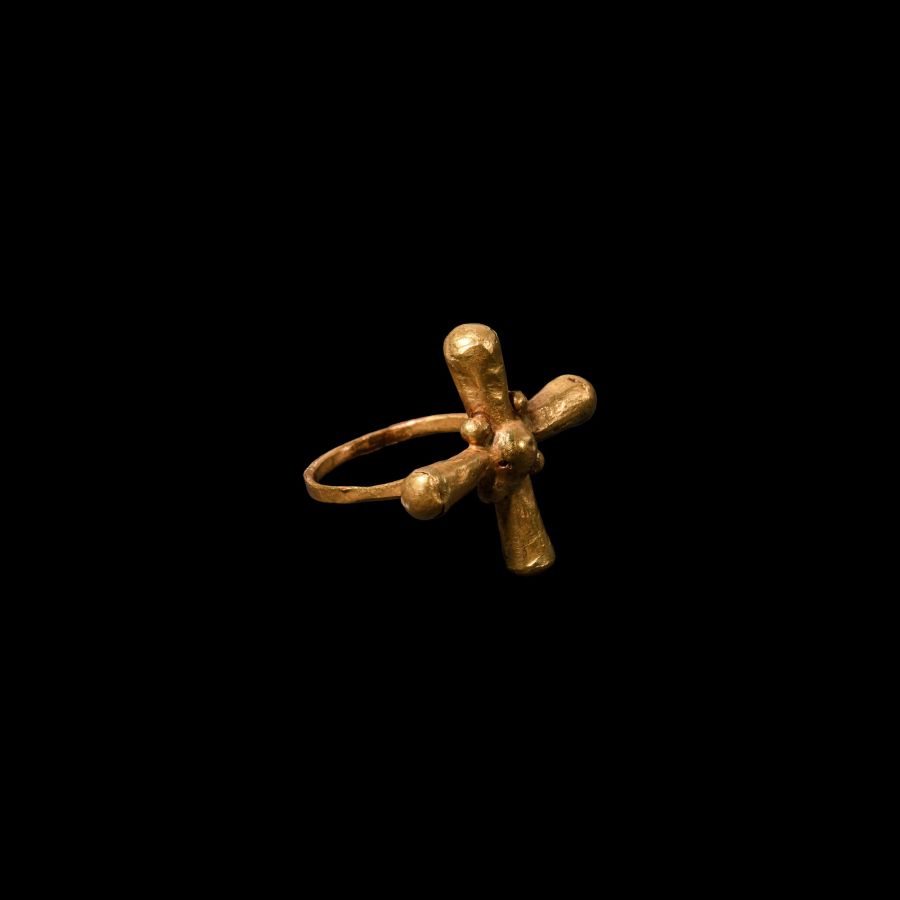
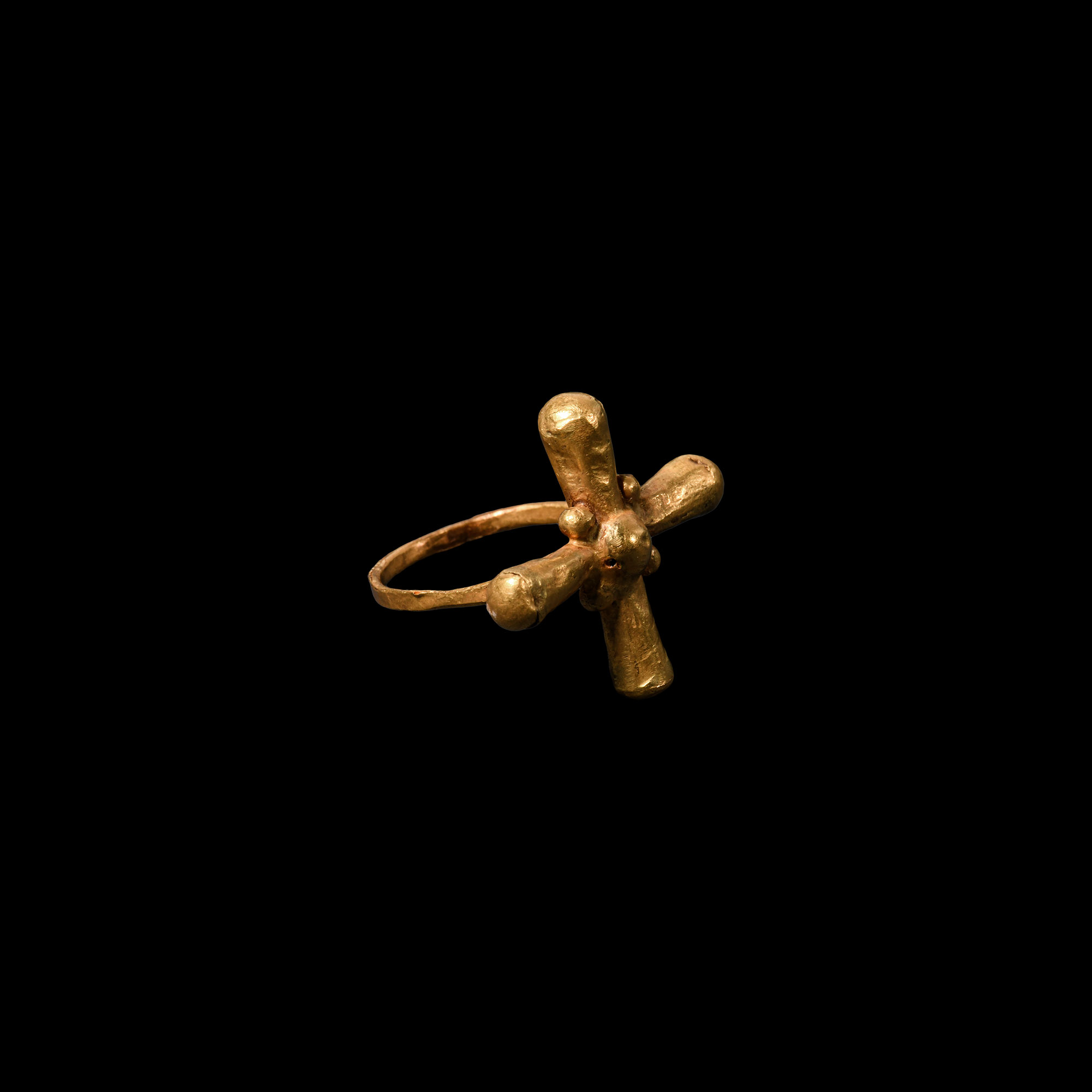
Byzantine Gold Ring with Cross
CIRCA 6TH-8TH CENTURY A.D.
3/4 in. (2.72 grams, 21.96 mm overall, 14.23 mm internal diameter (approximate size British G, USA 3 1/4, Europe 4.92, Japan 4)).
Composed of a slender rectangular-section hoop and cruciform bezel with expanding round-section arms, central dome and granule to each quarter; accompanied by a custom-made display stand.
ProvenancePrivate European collection since the 1950s.
Private collection, UK, 2010.
Cf. Ross, M.C., Catalogue of the Byzantine and Early Mediaeval Antiquities in the Dumbarton Oaks Collection, Volume 2: Jewelry, Enamels and Art of the Migration Period, Washington, 2005, item XIV(F) and XCVII(I), for type.
CONDITIONTimeLine Auctions follows a vetting process to ensure the authenticity and legality of all items, reinforcing our commitment to integrity and responsible trading. Each antiquity, antique, and coin lot undergoes thorough examination by a vetting committee of at least ten external specialists, professional trade association members, scientists, and archaeologists: Our Vetting Process
AUCTIONS:
TimeLine is a leading auction house specialising in antiquities, ancient art, collectables, natural history, coins, medals, and books. Our auctions offer museums, collectors, historians, and enthusiasts the opportunity to acquire unique and historically significant pieces.
-
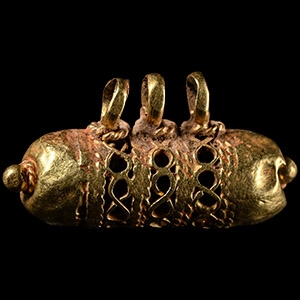
Byzantine Gold Pendant
Circa 6th-8th century A.D.Sold for (Inc. bp): £260
Of capsule form, possibly an amulet case; openwork filigree body and domed terminals with apex granules with filigree collars; three suspension loops above, each with a filigree collar. 0.76 grams, 15 mm
From a late Japanese specialist collector, 1970-2000s. -
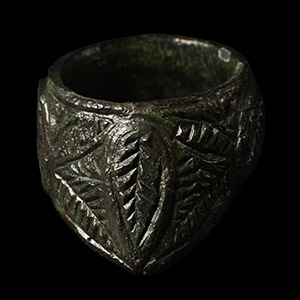
Byzantine Bronze Archer's Ring
Circa 12th-14th century A.D.Sold for (Inc. bp): £247
With a substantial keeled hoop with four panels of zig-zag motifs; triangular plaque with foliage motifs, raised central panel with frond motif. 22.81 grams, 34.44 mm overall, 21.06 mm internal diameter (approximate size British W 1/2, USA 11 1/4, Europe 25.66, Japan 24)
Acquired on the German art market before 2000. Property of a Surrey, UK, collector. -
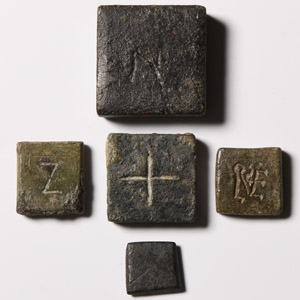
Byzantine Bronze Trade Weight Collection
Circa 8th-12th century A.D.Sold for (Inc. bp): £78
Group of tabular weights with markings including incised cross, monogram 'Z', 'N', NE monogram and others. 43.9 grams total, 10-20 mm
Ex Simmons Gallery, London E11, UK, in the 1990s. From a North London collection.
