
Loading, please wait...
LOT 0807
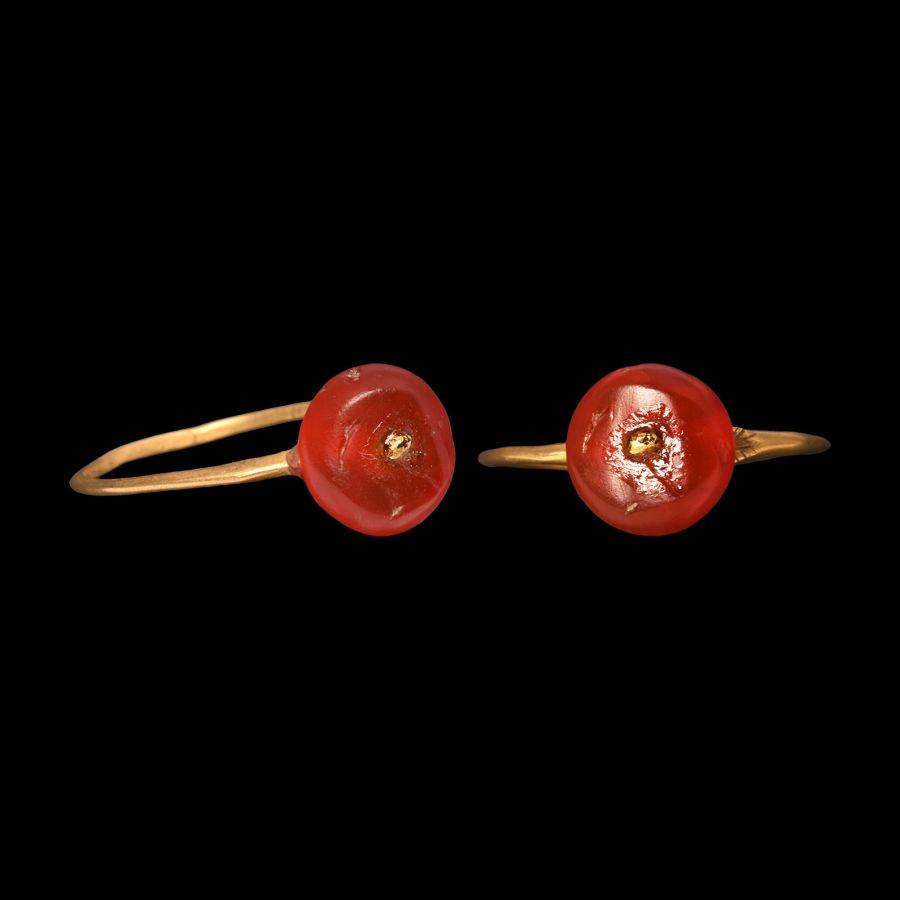
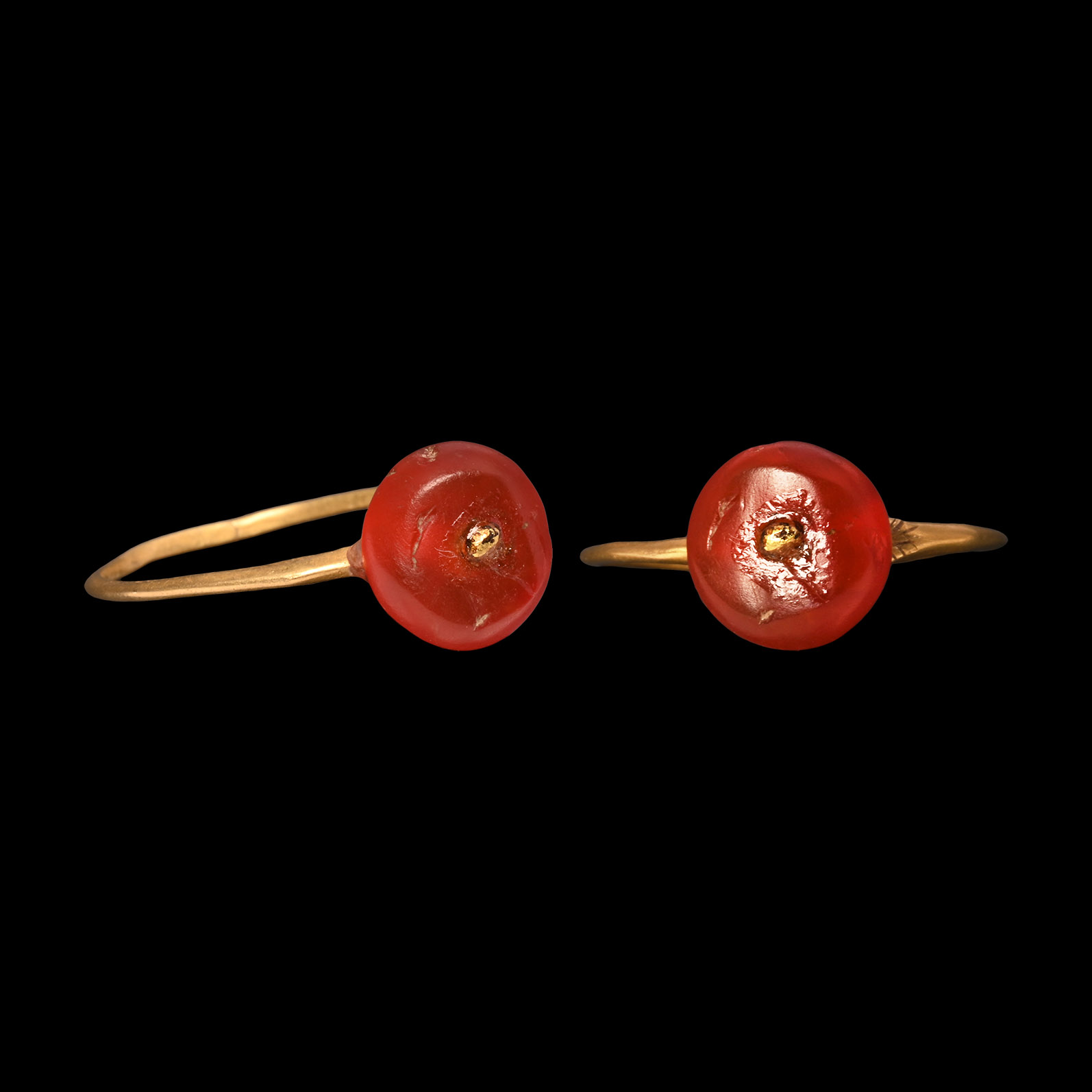
Byzantine Gold Ring with Carnelian
7TH CENTURY A.D.
7/8 in. (1.13 grams, 22.25 mm overall, 15.68 mm internal diameter (approximate size British I 1/2, USA 4 1/2, Europe 8.07, Japan 7)).
A gold finger ring with slender hoop and oblate red glass bead.
ProvenanceAcquired 1980-2010.
Collection of a late Japanese gentleman.
TimeLine Auctions follows a vetting process to ensure the authenticity and legality of all items, reinforcing our commitment to integrity and responsible trading. Each antiquity, antique, and coin lot undergoes thorough examination by a vetting committee of at least ten external specialists, professional trade association members, scientists, and archaeologists: Our Vetting Process
AUCTIONS:
TimeLine is a leading auction house specialising in antiquities, ancient art, collectables, natural history, coins, medals, and books. Our auctions offer museums, collectors, historians, and enthusiasts the opportunity to acquire unique and historically significant pieces.
-
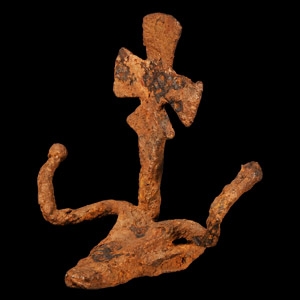
Byzantine Bull-Head Attachment with Cross
5th-8th century A.D.Estimate: £200 - 300 (+bp*)
Opening Bid: £80
An iron attachment composed of a stylised bull's head with slender recurved horns and pricked ears, a Christian expanding arm cross emerging from the animal's head on a rectangular arm. 55 grams, 74 mm
with a London, UK gallery 1971-early 2000s. -
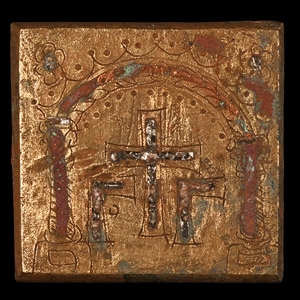
Byzantine Silver Inlaid Weight
4th-6th century A.D.Sold for (Inc. bp): £234
A bronze square tabular weight with silver inlay; inscribed arch with rosettes above the corners, spiral columns and pointillé detailing; silver-inlaid cross flaked by 'Γ Γ' for a quadrans (3 oz). 80 grams, 37 mm
Acquired 1969-1999. London collection of the late S.M., thence by descent. -
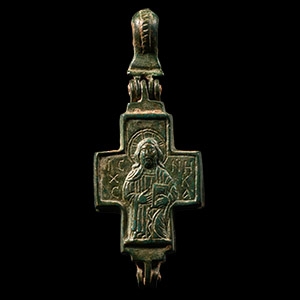
Byzantine Reliquary Cross Pendant
10th-12th century A.D.Sold for (Inc. bp): £1,820
A bronze enkolpion reliquary pendant with hinged body; suspension loop with ropework median panel, hollow body with obverse: nimbate Christ holding a book and legend 'ICXC / NHKA'; reverse: Mary Theotokos and infant Jesus and legend 'MΘΥ / ICXC'. 34.4 grams, 79 mm
Acquired in the late 1990s-2000. Property of an East London gentleman.
