
Loading, please wait...
LOT 0198
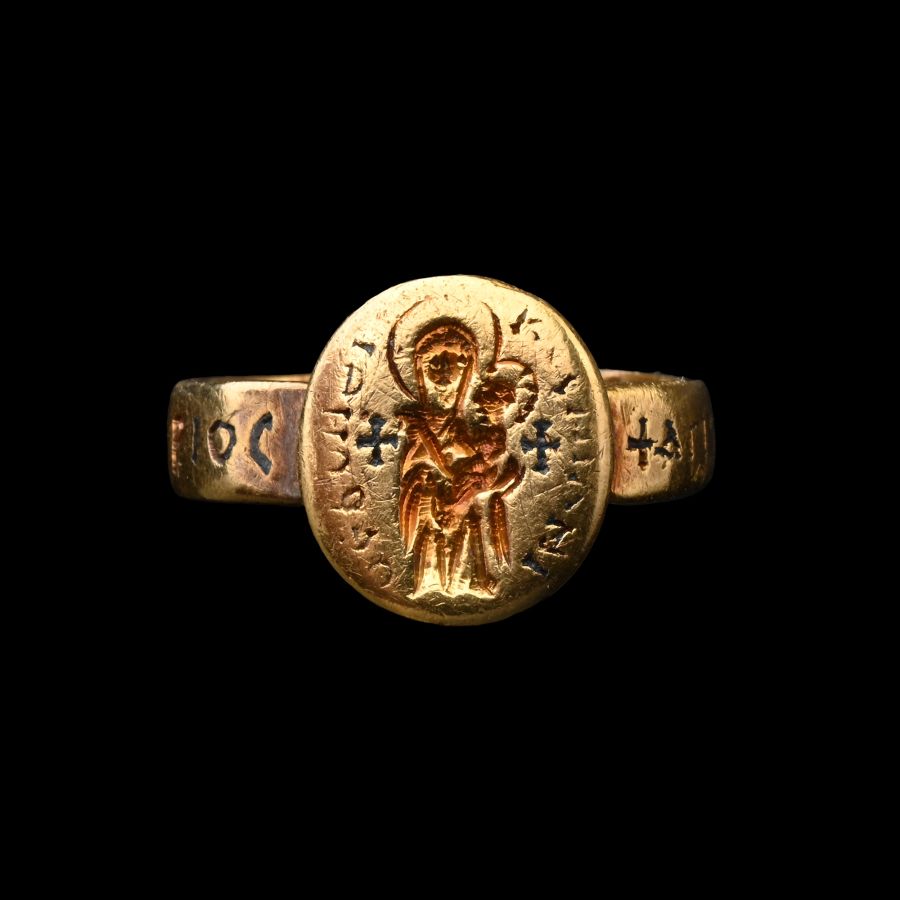
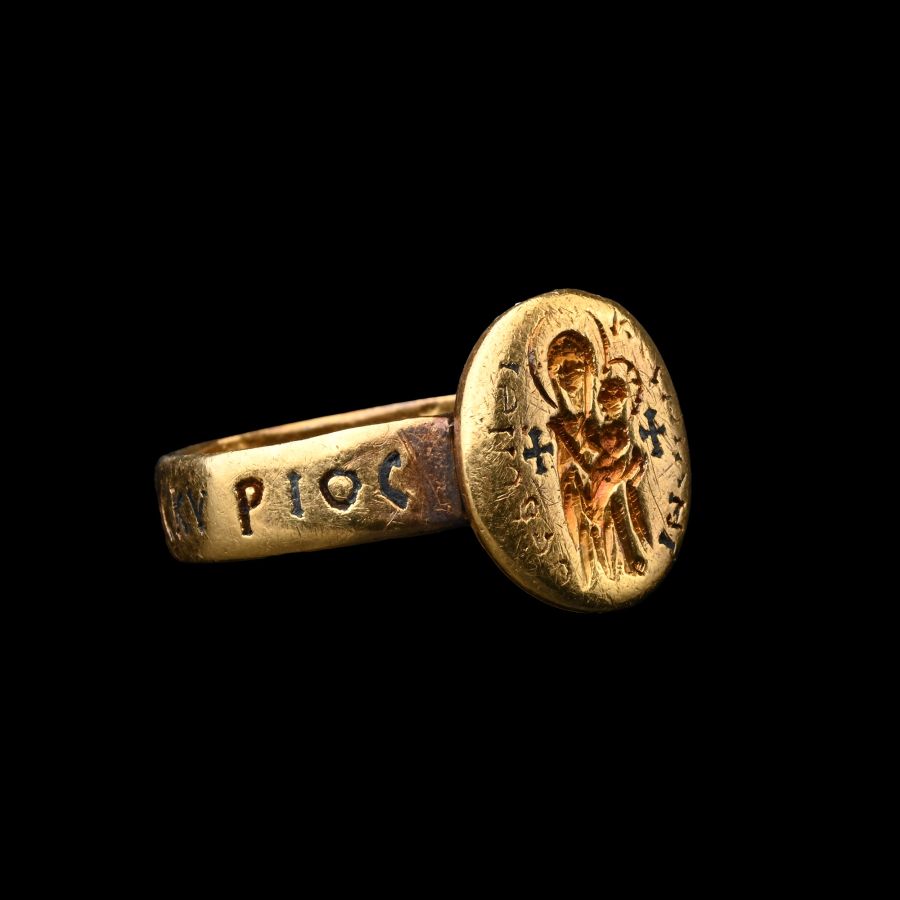
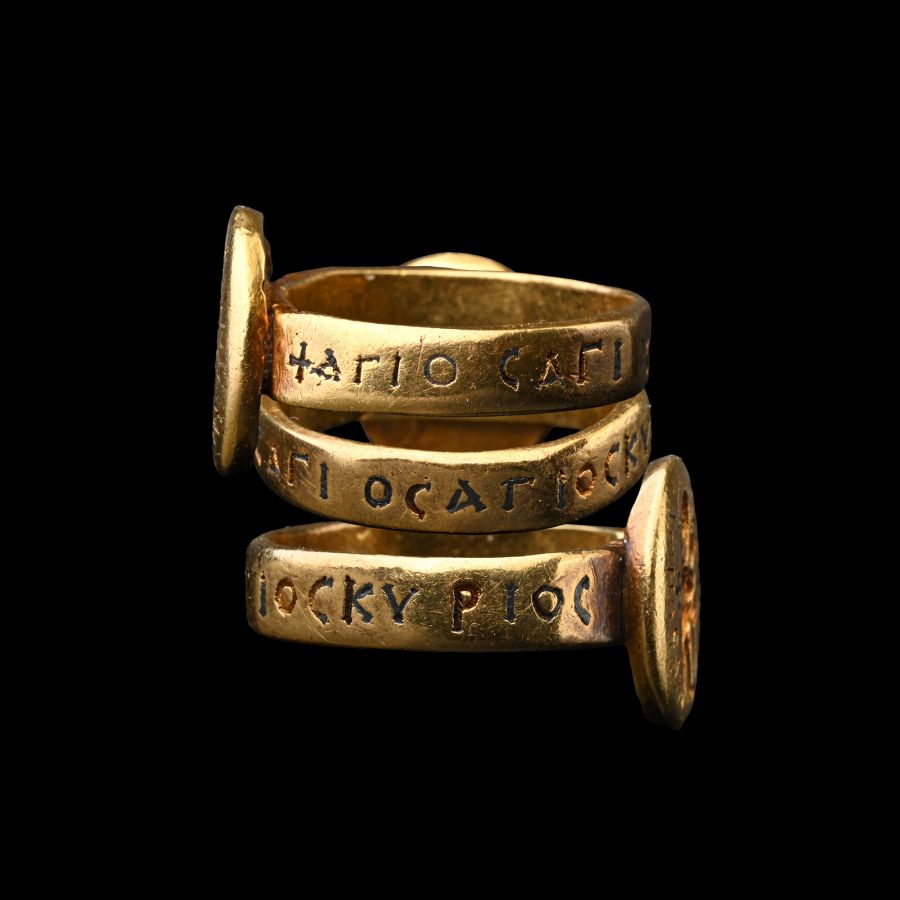
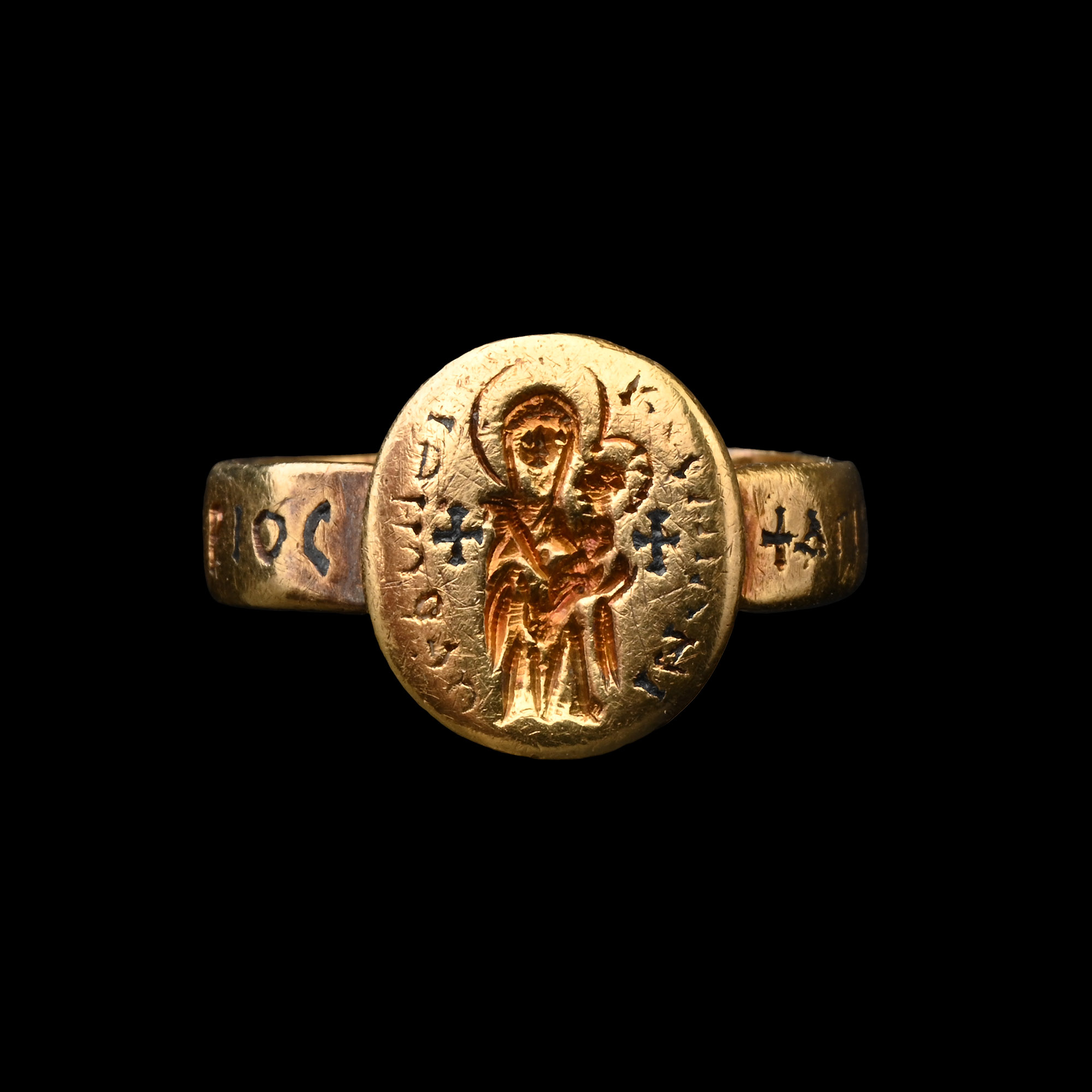
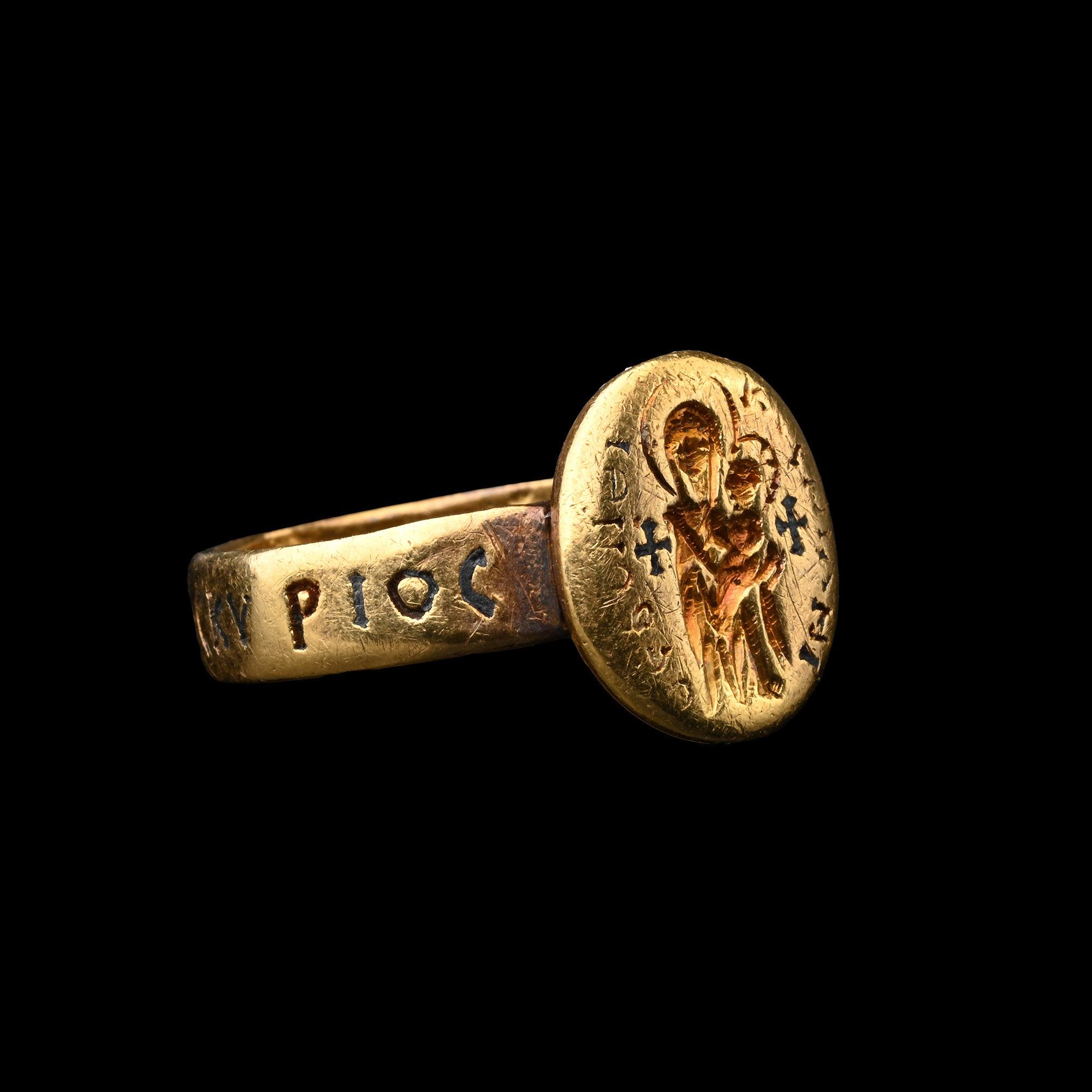
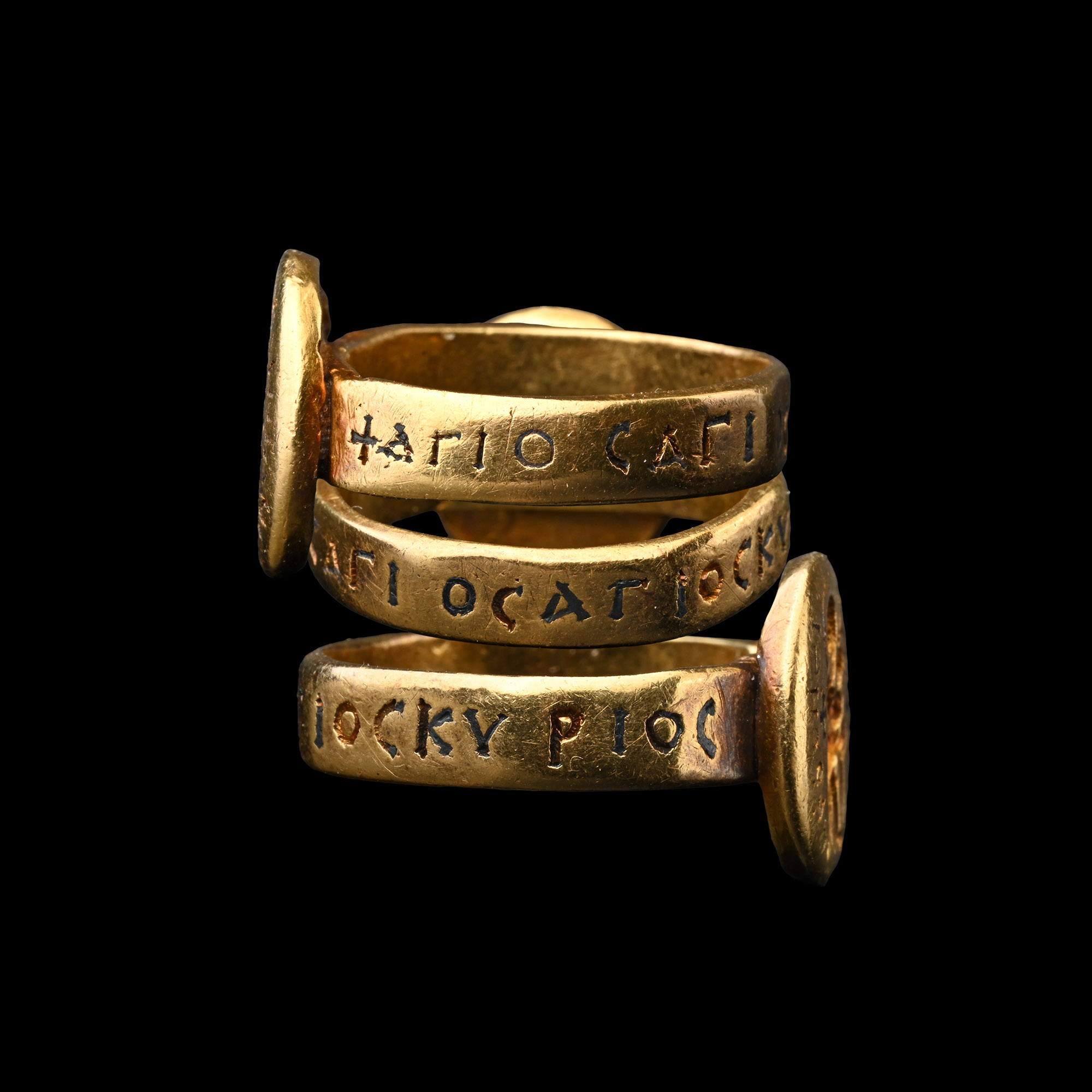
Byzantine Gold Ring Depicting the Virgin and Christ with Inscription
CIRCA 7TH CENTURY A.D.
3/4 in. (8.09 grams, 20.91 mm overall, 17.83 mm internal diameter (approximate size British N, USA 6 1/2, Europe 13.72, Japan 13)).
Thick flat-section hoop with incised legend 'ΑΓIOC ΑΓIOC ΑΓIOC KYPIOC' (holy holy holy Lord); oblate bezel with Mary Theotokos and infant, flanked by crosses potent and feint Greek legend to the border 'K[...]ΛHI / [..]OCHΘI'.
ProvenancePrivate collection of Kal Noselson, New York, acquired between 1976 and the late 1990s; thence by descent.
This lot has been checked against the Interpol Database of stolen works of art and is accompanied by search certificate no.13416-259786.
Cf. Chadour, A.B., Rings. The Alice and Louis Koch Collection, volume I, Leeds, 1994, item 487, for type; Baldini Lippolis, I., L'Oreficeria nell'Impero di Costantinopoli tra IV e VII secolo (the Jewellery in the Empire of Constantinople between IV and VII century, in Italian), Bari, 1999, p.206, for the type, especially no.20.
FootnotesThe ring belongs to the type of Eastern Roman band rings featuring a sheet-metal bezel, common between the 6th and 7th centuries. The inscription "thrice Holy" (*Aghios-Aghios-Aghios*) refers to the Cherubikon hymn, while the protective formula *K[YPIE] / [B]OHΘI* ...*ΛHI*.... ("Lord, help *ΛHI*") refers to the ring's owner.
CONDITIONTimeLine Auctions follows a vetting process to ensure the authenticity and legality of all items, reinforcing our commitment to integrity and responsible trading. Each antiquity, antique, and coin lot undergoes thorough examination by a vetting committee of at least ten external specialists, professional trade association members, scientists, and archaeologists: Our Vetting Process
AUCTIONS:
TimeLine is a leading auction house specialising in antiquities, ancient art, collectables, natural history, coins, medals, and books. Our auctions offer museums, collectors, historians, and enthusiasts the opportunity to acquire unique and historically significant pieces.
LOT 0198
Byzantine Gold Ring Depicting the Virgin and Christ with Inscription
Estimate £3,000 - 4,000€3,480 - 4,640 (for guidance only)$4,050 - 5,400 (for guidance only)
Opening Bid
£1,500 (EUR 1,740; USD 2,025) ‡+BP*
-
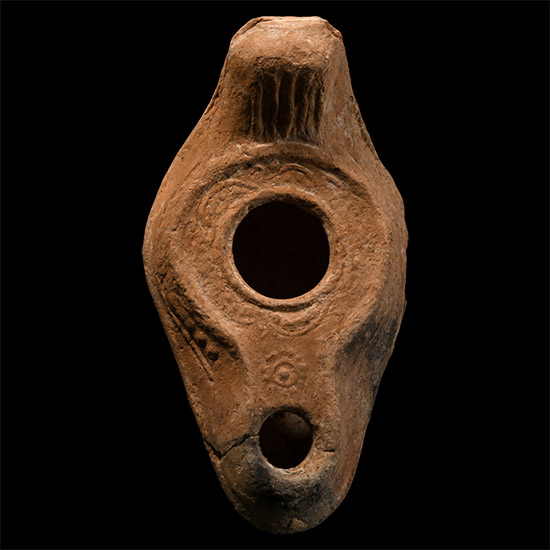
Byzantine Terracotta Oil Lamp
Holy Land, circa 6th-8th century A.D.Estimate: £40 - 60 (+bp*)
Bids: 1 | Current Bid: £5
Oval body with a central filler hole, ribbed handle to the rear, and the base with four ring-and-dot motifs. 95 grams, 10.5 cm
Ex J. Zadok & Sons, 18, King David Road, Jerusalem, Israel. From the G.H. Freelander collection, formed in the late 1970s. From the property of a late Lincolnshire, UK, gentleman; thence by descent. Accompanied by a previous catalogue information slip. -
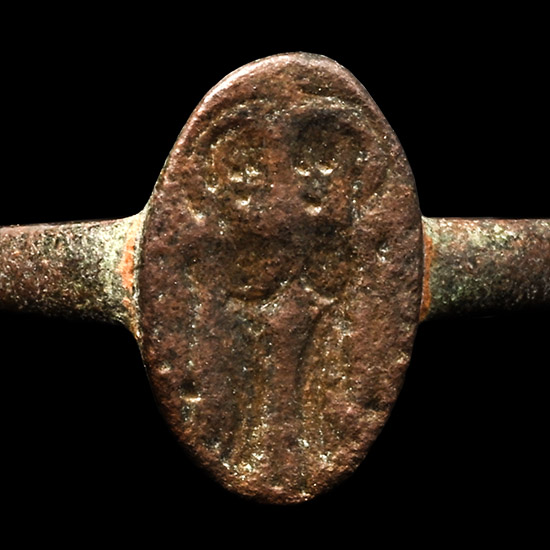
Byzantine Bronze Ring with Two Saints
6th-7th century A.D.Estimate: £30 - 40 (+bp*)
Opening Bid: £5
Ellipsoid bezel with two facing nimbate figures in floor-length robes. 2.86 grams, 23.50 mm overall, 20.20 mm internal diameter (approximate size British S 1/2, USA 9 1/4, Europe 20.63, Japan 19)
From the private collection of a European gentleman (1942-2024), formed since the 1970s. -
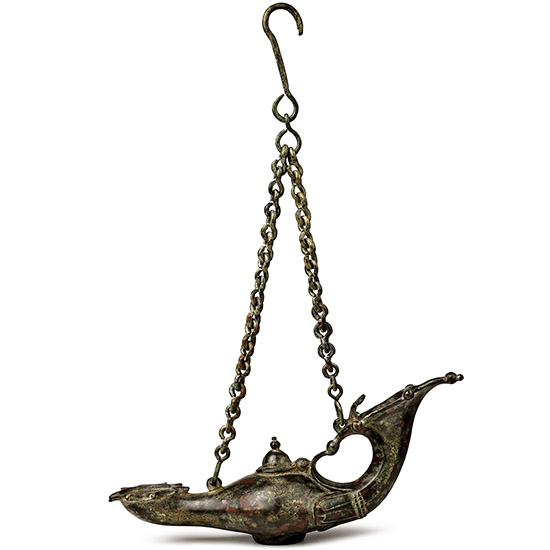
Byzantine Bronze Oil Lamp with Chain and Chi Rho
Circa 5th-6th century A.D.Estimate: £3,500 - 4,500 (‡+bp*)
Opening Bid: £1,750
With a carinated, round body and long, narrow nozzle with a flaring finial, a scalloped rim around the circular wick hole; small circular filling hole with a hinged, domed lid; the elaborate trumpet-shaped handle with a hexagonal lotus flower finial with knops, and a raised Chi Rho at the forward edge; looped suspension chain with a hook, and a square socket at the base to accommodate a stand pricket. 1.08 kg, 40 cm
Private collection, Stortford, England, 1982. with Christie's, New York, 9 June 2011, no.203. Accompanied by an academic report by Dr Raffaele D'Amato. This lot has been checked against the Interpol Database of stolen works of art and is accompanied by search certificate no.13194-250130.
These lamps were produced in the Eastern Mediterranean, possibly in more than one centre (one was certainly in Syracuse, Benevento, another probably in Asia Minor, but some specimens come from Rome and Constantinople).
