
Loading, please wait...
LOT 0186
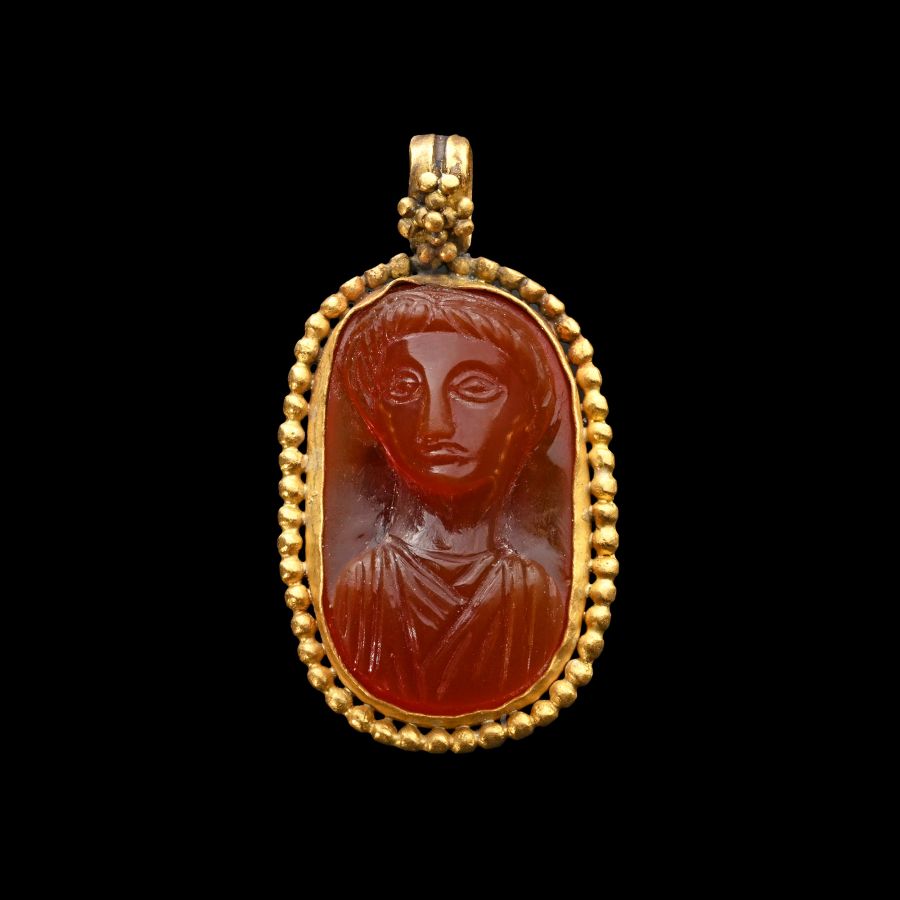
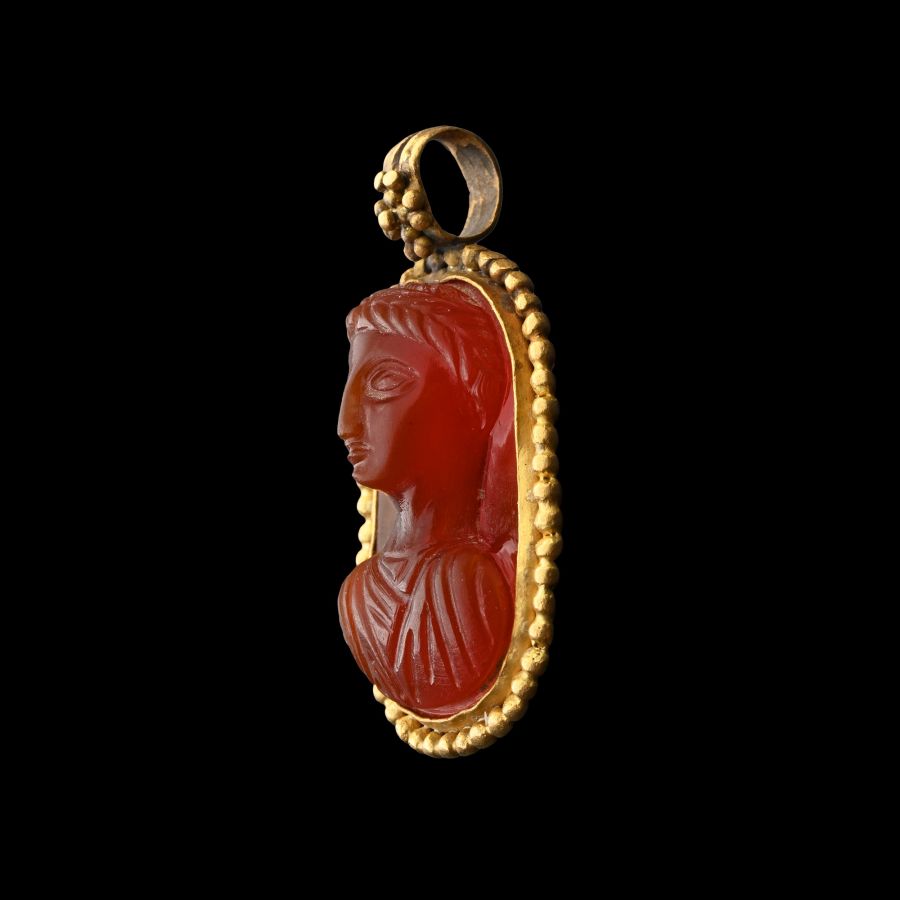
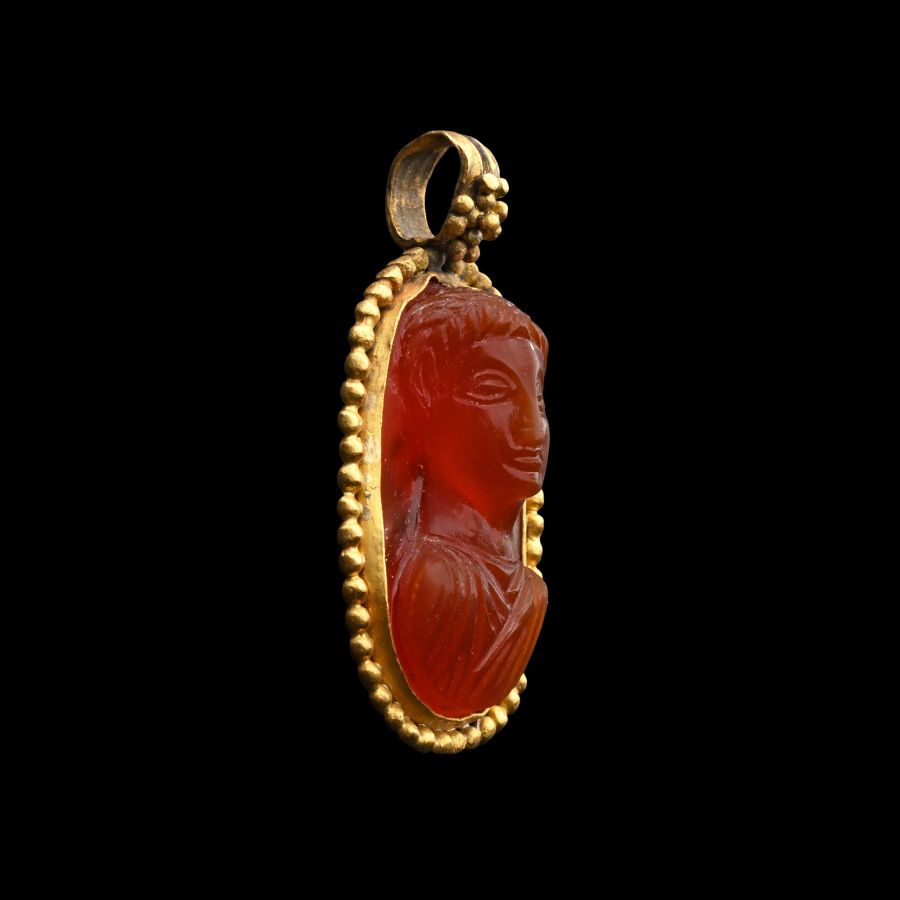
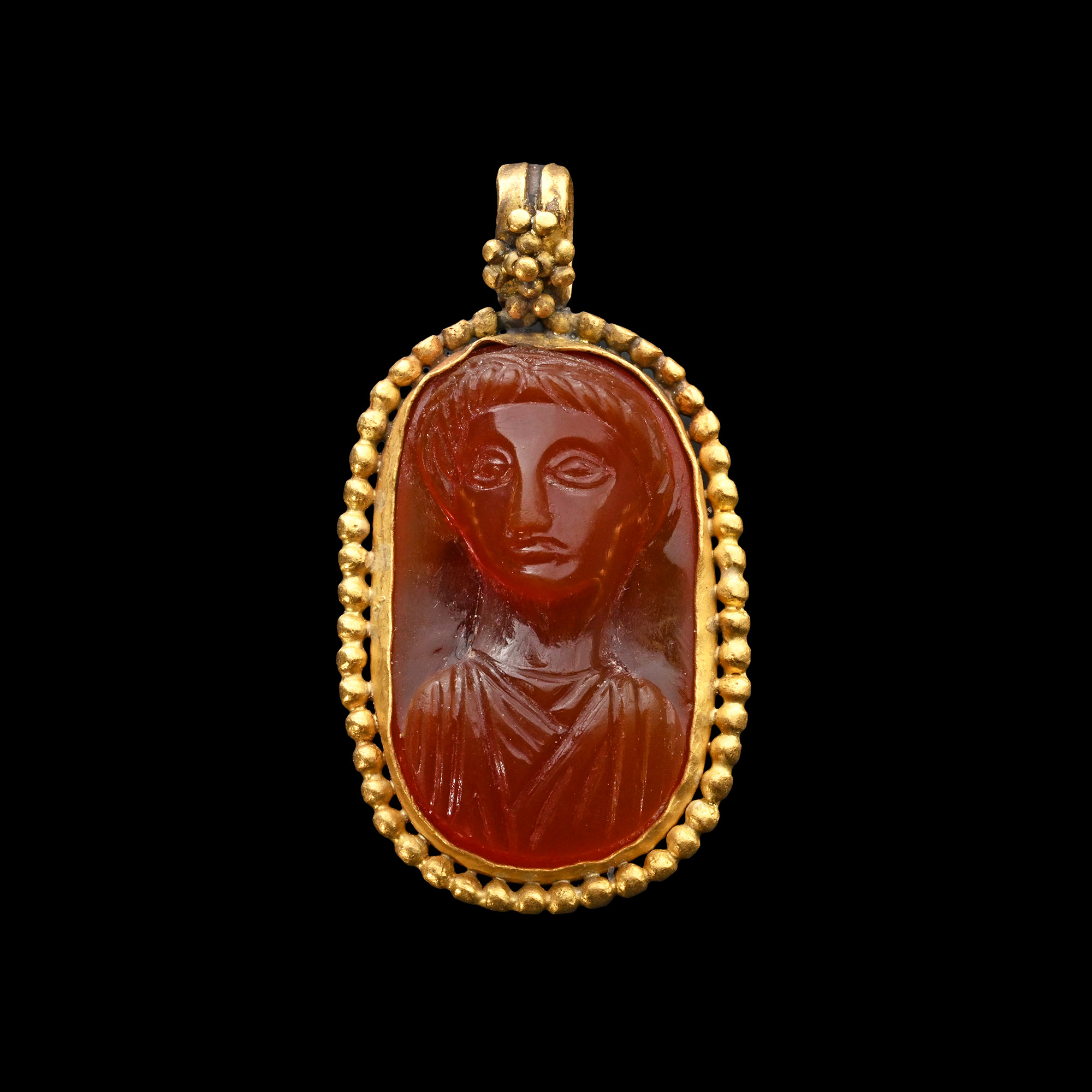
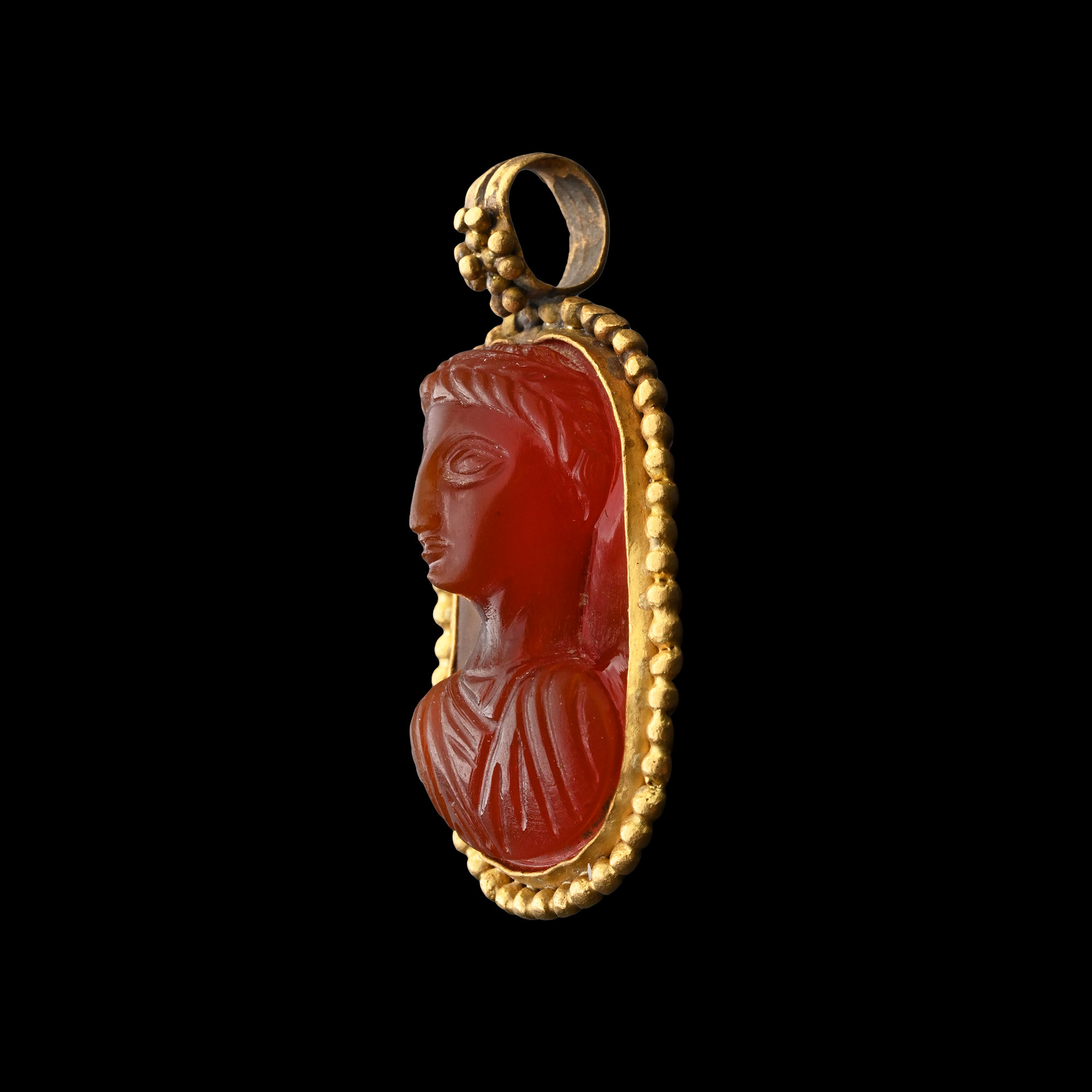
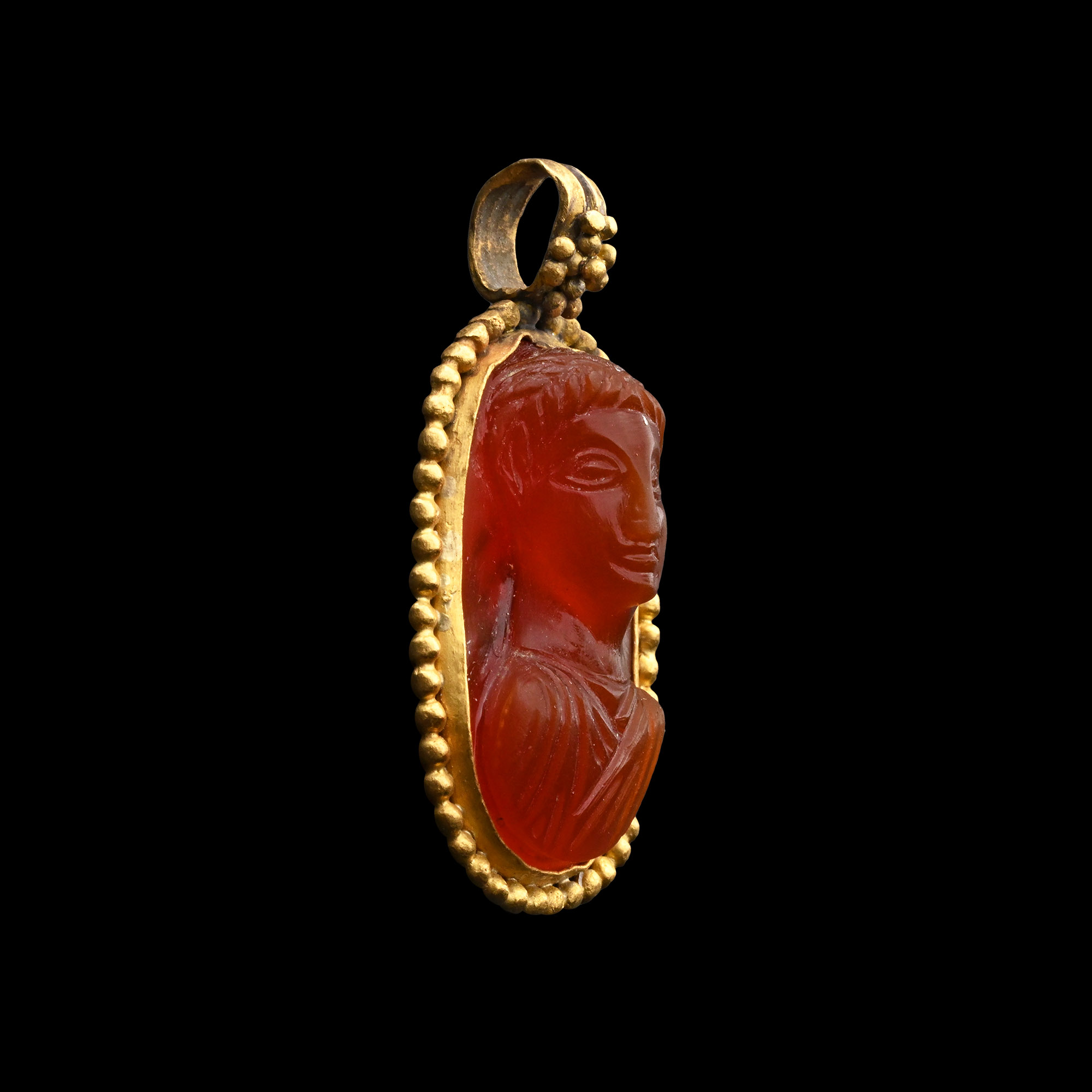
Byzantine Gold Pendant with Carnelian Cameo Bust
CIRCA 3RD-6TH CENTURY A.D.
1 1/2 in. (8.97 grams, 39 mm).
Carved bust modelled in the half-round with large lentoid eyes and braided hair to the brow, depicting a disciple, an apostle, or a portrait; gold cell with band of granules to the outer edge, ribbed suspension loop with granule detailing.
ProvenanceFrom a North American gentleman's collection, 1990s.
This lot has been checked against the Interpol Database of stolen works of art and is accompanied by search certificate number no.13367-259037.
Cf. Wamser, L., Die Welt von Byzanz - Europas Östliches Erbe, München, 2004, items 690, 692, for types of late Roman gemstones.
FootnotesTowards the end of the 3rd century, the Roman production of gemstones decreased quickly. At the same time, early Christian motifs appeared on the gemstones. Rare motifs like the one in the current gemstone show portraits of noblewomen or men.
CONDITIONTimeLine Auctions follows a vetting process to ensure the authenticity and legality of all items, reinforcing our commitment to integrity and responsible trading. Each antiquity, antique, and coin lot undergoes thorough examination by a vetting committee of at least ten external specialists, professional trade association members, scientists, and archaeologists: Our Vetting Process
AUCTIONS:
TimeLine is a leading auction house specialising in antiquities, ancient art, collectables, natural history, coins, medals, and books. Our auctions offer museums, collectors, historians, and enthusiasts the opportunity to acquire unique and historically significant pieces.
LOT 0186
Byzantine Gold Pendant with Carnelian Cameo Bust
Estimate £3,000 - 4,000€3,480 - 4,640 (for guidance only)$4,050 - 5,400 (for guidance only)
-
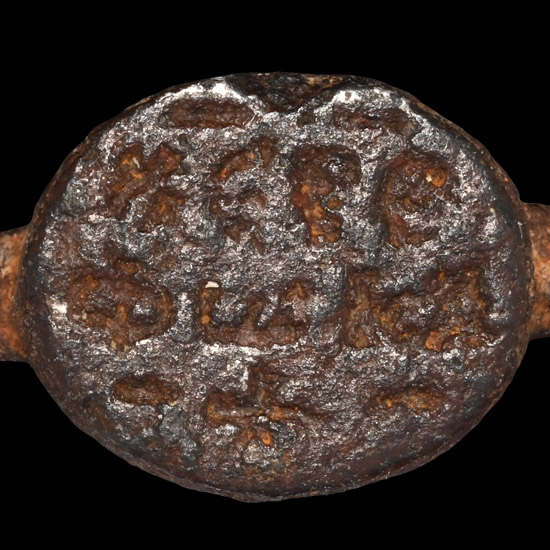
Byzantine Bronze Ring with Three Line Inscription
6th-8th century A.D.Sold for (Inc. bp): £26
Discoid bezel with three lines of enigmatic Greek text 'KE[.]E / ΦυΛA / -+-'; with old collector's ticket 'van Phocas'. 3.51 grams, 23.60 mm overall, 20.04 mm internal diameter (approximate size British T, USA 9 1/2, Europe 21.26, Japan 20)
From the private collection of a European gentleman (1942-2024), formed since the 1970s. -
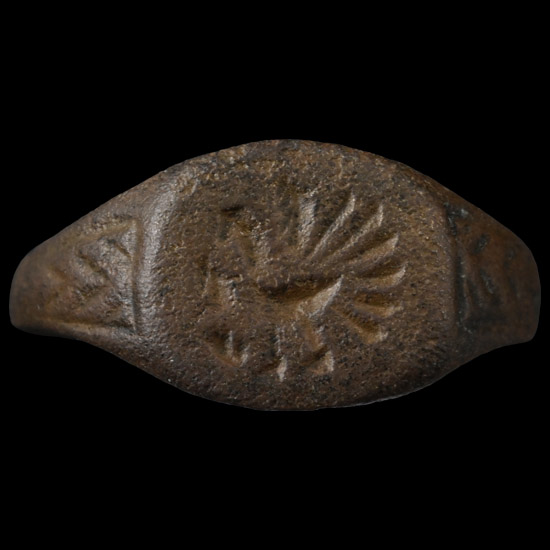
Large Byzantine Bronze Ring with Displaying Peacock
6th-8th century A.D.Sold for (Inc. bp): £33
Flat-section hoop and an oval bezel with an advancing peacock with spread tail feathers. 3.03 grams, 23.54 mm overall, 20.60 x 21.04 mm internal diameter (approximate size British V 1/2, USA 10 3/4, Europe 24.4, Japan 23)
From a UK collection formed in the 1980s. Property of an Essex, UK, gentleman. -
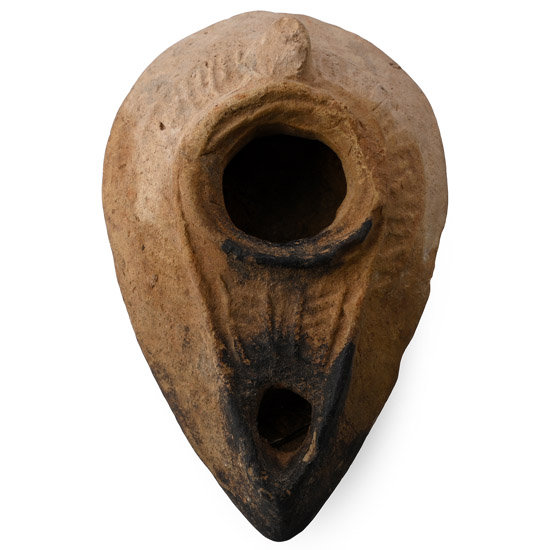
Byzantine Terracotta Oil Lamp
Circa 7th-8th century A.D.Sold for (Inc. bp): £59
Piriform body with raised edge to the filler hole and low-relief linear decoration on the body, the base with a rosette. 110 grams, 94 mm
From the collection of a Cambridge, UK, gentleman, by direct descent from his father, who acquired the items in London in circa 1960.
