
Loading, please wait...
LOT 0191
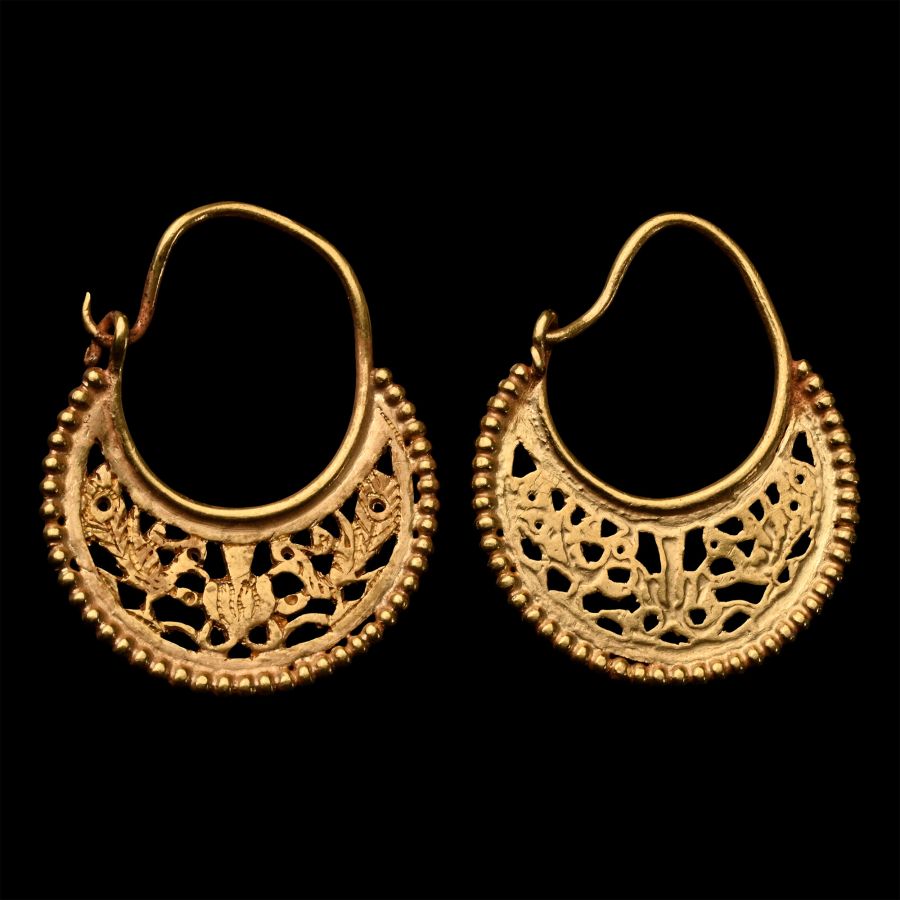
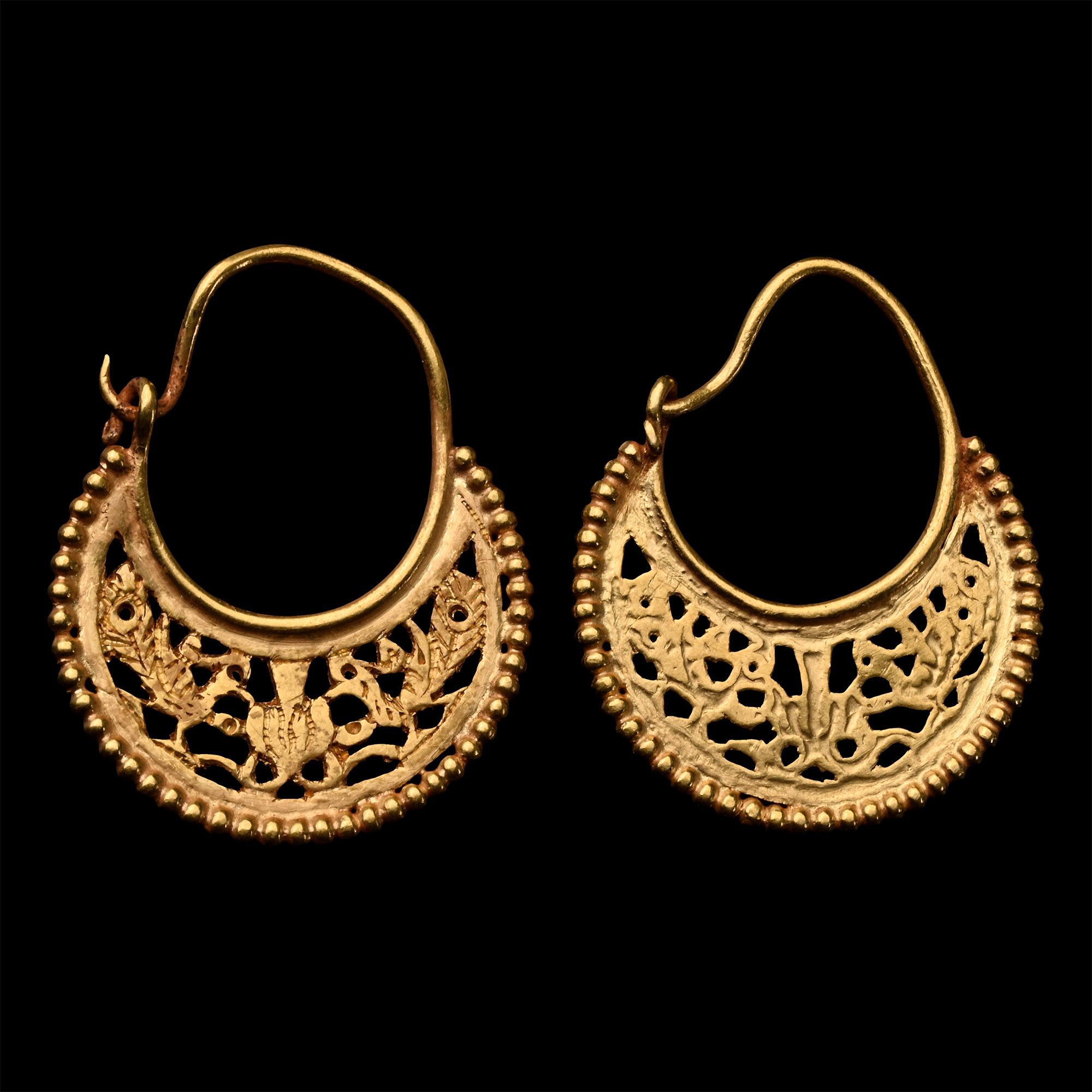
Byzantine Gold Openwork Earring Pair
6TH-8TH CENTURY A.D.
1 1/8 in. (5.75 grams total, 28-29 mm).
Each a crescent plaque with beaded borders, sprung hook and catch; openwork foliage motif with two opposing birds. [2]
ProvenancePrivate collection, 1990s-early 2000s.
CONDITIONTimeLine Auctions follows a vetting process to ensure the authenticity and legality of all items, reinforcing our commitment to integrity and responsible trading. Each antiquity, antique, and coin lot undergoes thorough examination by a vetting committee of at least ten external specialists, professional trade association members, scientists, and archaeologists: Our Vetting Process
AUCTIONS:
TimeLine is a leading auction house specialising in antiquities, ancient art, collectables, natural history, coins, medals, and books. Our auctions offer museums, collectors, historians, and enthusiasts the opportunity to acquire unique and historically significant pieces.
-
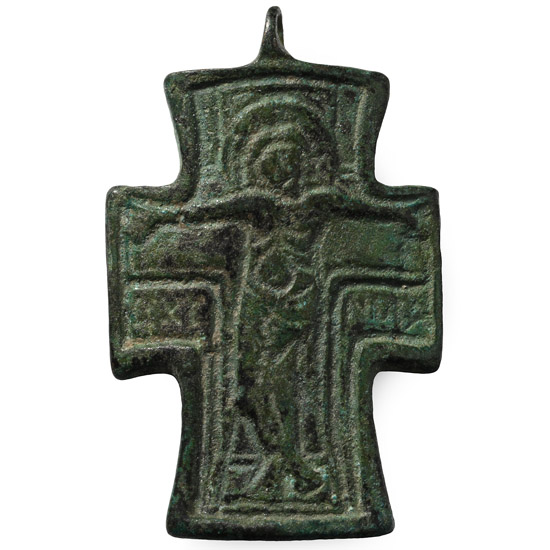
Byzantine Bronze Cross Pendant with Christ
Circa 10th-12th century A.D.Sold for (Inc. bp): £111
Cruciform with raised border, low-relief nimbate Corpus Christi with legend to lower edge of each arm, suspension loop above. 14.6 grams, 42 mm
From the private coin collection of a West London, UK, gentleman, formed since the mid 1980s. -
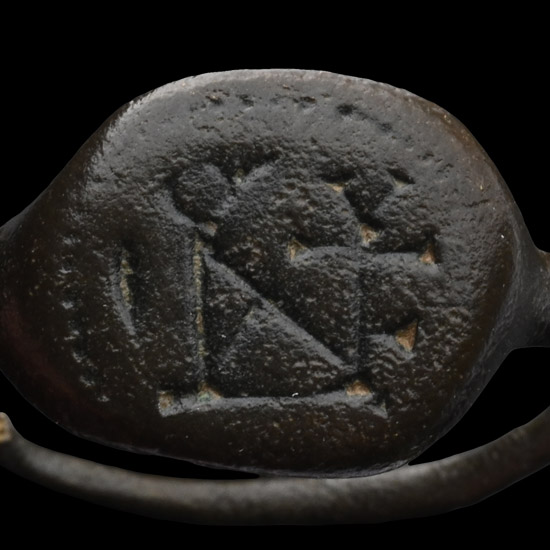
Byzantine Bronze Ring with Monogram
Circa 6th-8th century A.D.Sold for (Inc. bp): £26
Slender round-section hoop with an oval bezel bearing a monogram, the hoop split. 4.58 grams, 24.60 mm overall, 21.30 mm internal diameter (approximate size British U 1/2, USA 10 1/4, Europe 23.15, Japan 22)
Ex German art market, 2000s. Acquired from an EU collector living in London. From the collection of a Surrey, UK, gentleman. -
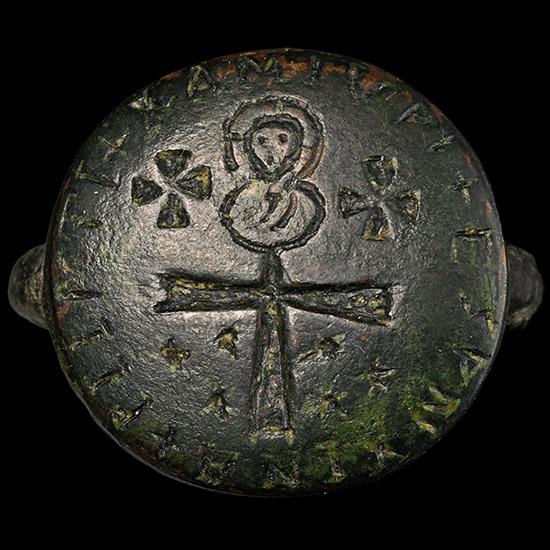
Large Byzantine Bronze Ring with Cross and Saint
Circa 6th-7th century A.D.Sold for (Inc. bp): £117
Comprising a thick round-section hoop and integral disc bezel; incuse cross with nimbate bust above flanked by two equal-arm crosses, enigmatic legend to the rim. 18.62 grams, 30.50 mm overall, 23.22 mm internal diameter (approximate size British U 1/2, USA 10 1/4, Europe 23.15, Japan 22)
Acquired circa 1980. Property of a Middlesex gentleman.
