
Loading, please wait...
LOT 0187
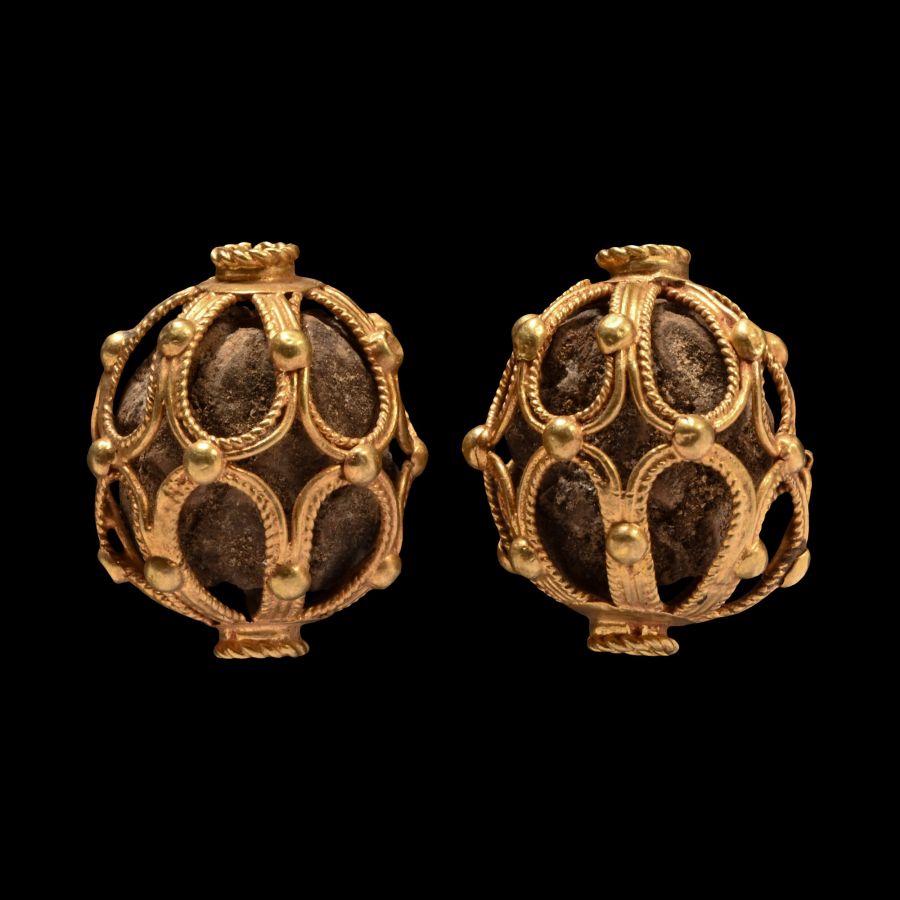
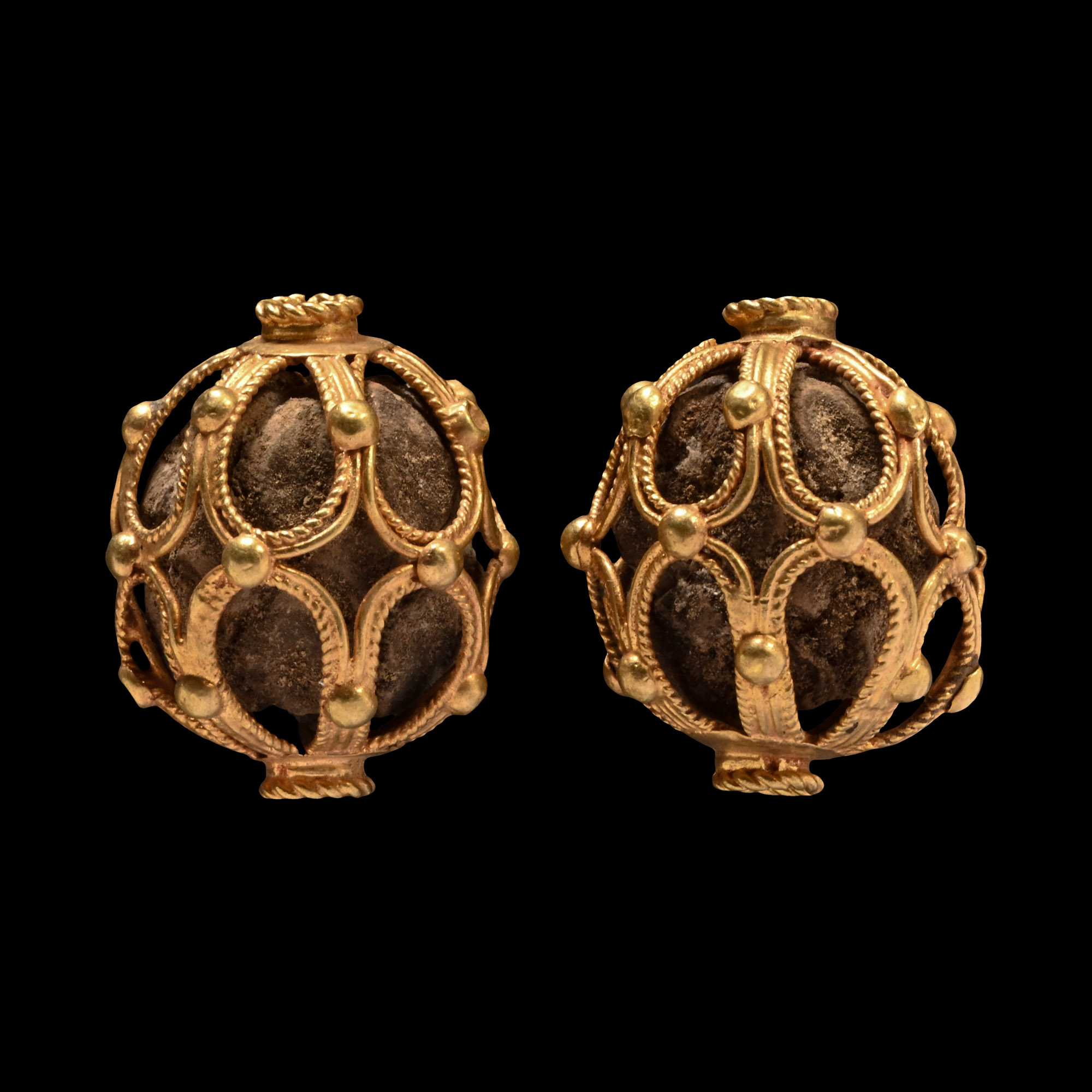
Byzantine Gold Openwork Beads from Earrings
10TH-11TH CENTURY A.D.
7/8 in. (13.8 grams, 22 mm each).
Each a spherical cage with ropework texturing, a granule at each node; oval glass bead within. [2]
ProvenanceAcquired on the Swiss art market, 1998.
Private collection, Europe.
Cf. for similar specimens inserted within a complete earring, Niederle, L., Příspěvky k vývoji byzantských šperků ze IV. - X. Století (Contributions to the development of Byzantine jewellery from the IV. - 10th century), Praha, 1930, fig.66.
FootnotesThe openwork beads were prepared to be inserted in an earring of ‘Grapevine’ typology, III type of earring in the Niederle classification. Similar specimens, imported from Byzantium, were found in Tokaj (Hungary) and dated to the time of the Emperor Romanus Lekapenos (920-944 A.D.).
CONDITIONTimeLine Auctions follows a vetting process to ensure the authenticity and legality of all items, reinforcing our commitment to integrity and responsible trading. Each antiquity, antique, and coin lot undergoes thorough examination by a vetting committee of at least ten external specialists, professional trade association members, scientists, and archaeologists: Our Vetting Process
AUCTIONS:
TimeLine is a leading auction house specialising in antiquities, ancient art, collectables, natural history, coins, medals, and books. Our auctions offer museums, collectors, historians, and enthusiasts the opportunity to acquire unique and historically significant pieces.
-
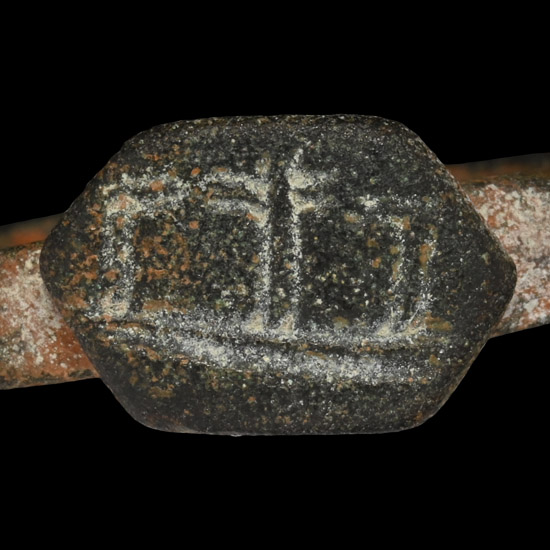
Byzantine Bronze Ring with Three Crosses of the Crucifixion
Circa 5th century A.D.Sold for (Inc. bp): £98
Comprising a D-section hoop and a hexagonal bezel with three crosses on a baseline. 4.23 grams, 23.24 mm overall, 19.00 x 17.01 mm internal diameter (approximate size British N 1/2, USA 6 3/4, Europe 14.35, Japan 13)
From the private collection of a European gentleman (1942-2024), formed since the 1970s. -
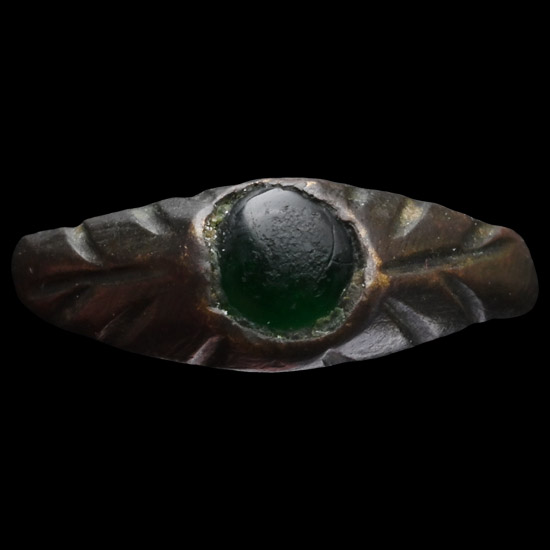
Byzantine Bronze Stirrup Ring with Green Gem
Circa 14th-15th century A.D.Sold for (Inc. bp): £91
With a slender hoop and thickened underside, conical bezel set with incuse foliage detailing, inset cabochon. 2.96 grams, 23.50 mm overall, 16.02 x 15.43 mm internal diameter (approximate size British J, USA 4 3/4, Europe 8.69, Japan 8)
From the private collection of Mr Brian Edwards, New Malden, Surrey, UK, formed from the late 1970s-early 1980s; thence by descent. Accompanied by the original collector's data sheet(s) with reference no.A45. -
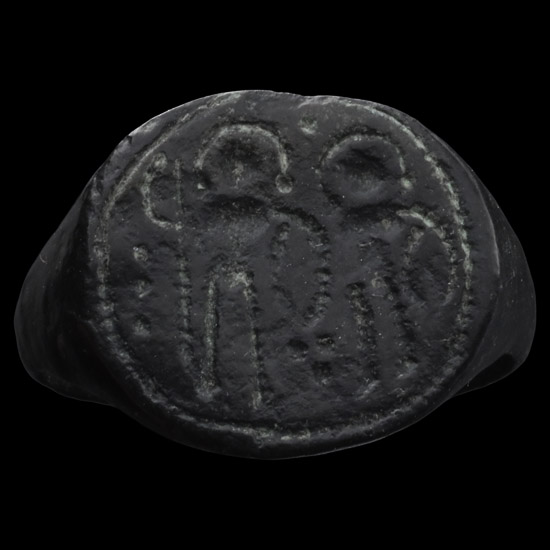
Byzantine Bronze Ring with Warrior Saints
Circa 6th-8th century A.D.Sold for (Inc. bp): £169
D-section hoop and a large oval bezel with two nimbate warriors holding shields and a spear. 5.83 grams, 22.35 mm overall, 18.92 mm internal diameter (approximate size British P, USA 7 1/2, Europe 16.23, Japan 15)
Ex German art market, 2000s. Acquired from an EU collector living in London. From the collection of a Surrey, UK, gentleman.
