
Loading, please wait...
LOT 0200
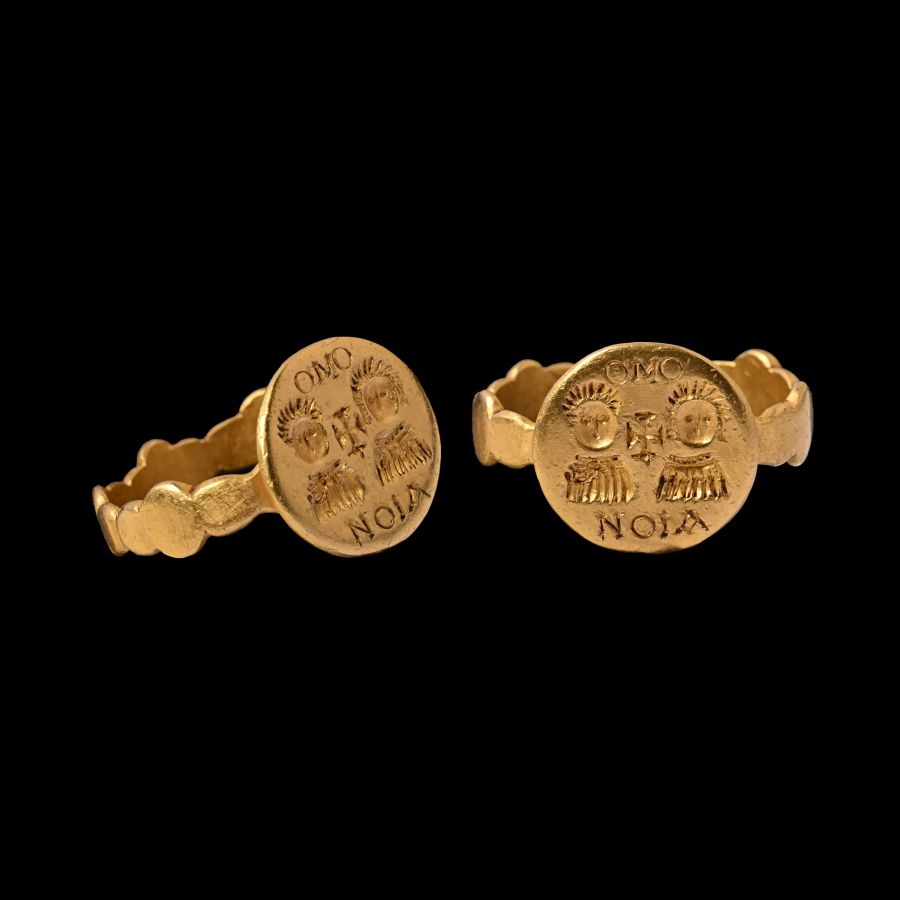
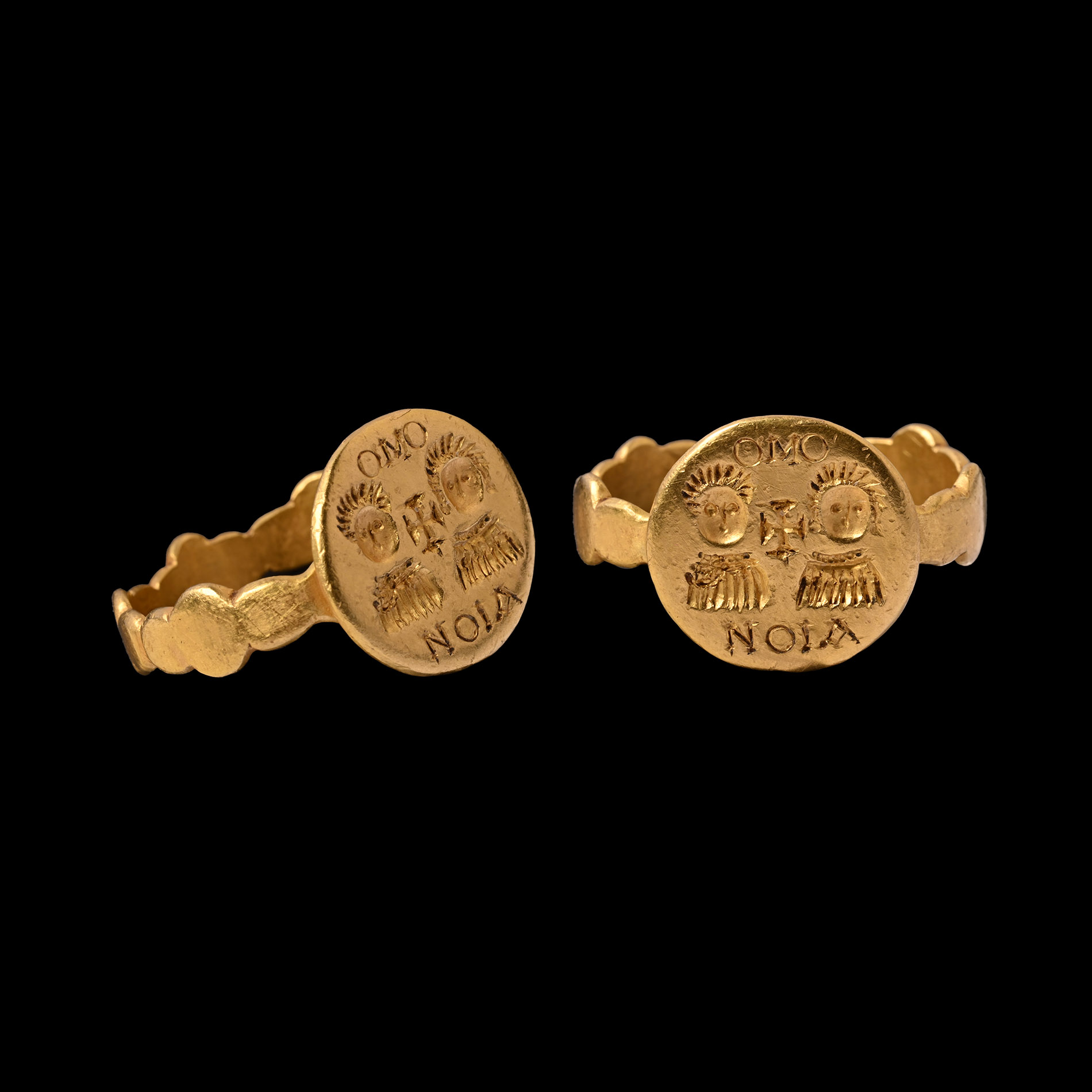
Byzantine Gold Marriage Ring with Busts
6TH-8TH CENTURY A.D.
7/8 in. (6.47 grams, 21.52 mm overall, 19.27 mm internal diameter (approximate size British O, USA 7, Europe 14.98, Japan 14)).
With hoop formed as a band of quatrefoils, applied discoid bezel with facing busts flanking a cross potent, legend 'OMO / NOIA' (harmony).
ProvenanceAcquired on the London art market in the late 1980s-1990s.
From the family collection of an East London, UK, gentleman.
This lot has been checked against the Interpol Database of stolen works of art and is accompanied by a search certificate no.12350-222584
Cf. similar subject in a ring of Museum of Fine Arts, Boston, accessory no.63.1555; see also The Museum of Fine Arts, Boston, Romans and Barbarians, Boston, 1976, p.179, no.202.
FootnotesThe marriage ring is one of the typologies on which figural decorations are frequently found. Generally marriage rings are engraved with a representation of the husband and wife, sometimes accompanied by Christ, and usually engraved with wishes for 'harmony, health and the grace of God'. Rings of this type had been used since the late 4th century A.D. and remained extremely popular in Byzantium in the 6th and 7th century.
CONDITIONTimeLine Auctions follows a vetting process to ensure the authenticity and legality of all items, reinforcing our commitment to integrity and responsible trading. Each antiquity, antique, and coin lot undergoes thorough examination by a vetting committee of at least ten external specialists, professional trade association members, scientists, and archaeologists: Our Vetting Process
AUCTIONS:
TimeLine is a leading auction house specialising in antiquities, ancient art, collectables, natural history, coins, medals, and books. Our auctions offer museums, collectors, historians, and enthusiasts the opportunity to acquire unique and historically significant pieces.
-
Byzantine Bronze Inscribed Weight
5th-6th century A.D.Sold for (Inc. bp): £46
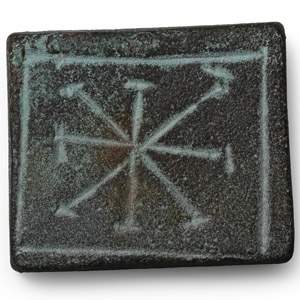
Tabular in form, obverse with eight-rayed starburst in a frame, reverse with incised text. 25.8 grams, 25 mm
From the collection of a gentleman, acquired on the London art market in the 1990s. -
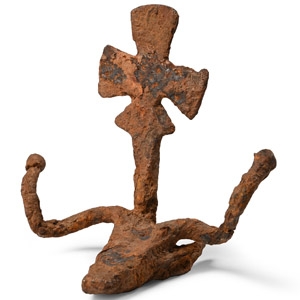
Byzantine Iron Bull-Head Attachment with Cross
5th-8th century A.D.Sold for (Inc. bp): £117
Composed of a stylised bull's head with slender recurved horns and pricked ears, an expanding arm cross emerging from the animal's head on a rectangular arm. 55 grams, 74 mm
with a London, UK gallery, 1971-early 2000s. -
.jpg)
Byzantine Bronze Stamp Seal with Inscription
6th-8th century A.D.Sold for (Inc. bp): £1,300
Formed as a fist with transverse hole, Greek legend to the flat end. 8.3 grams, 22 mm
From the collection of a gentleman, acquired on the London art market in the 1990s.
