
Loading, please wait...


LOT 0204
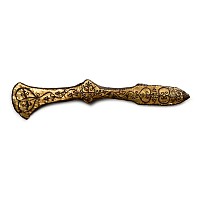
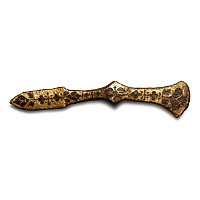
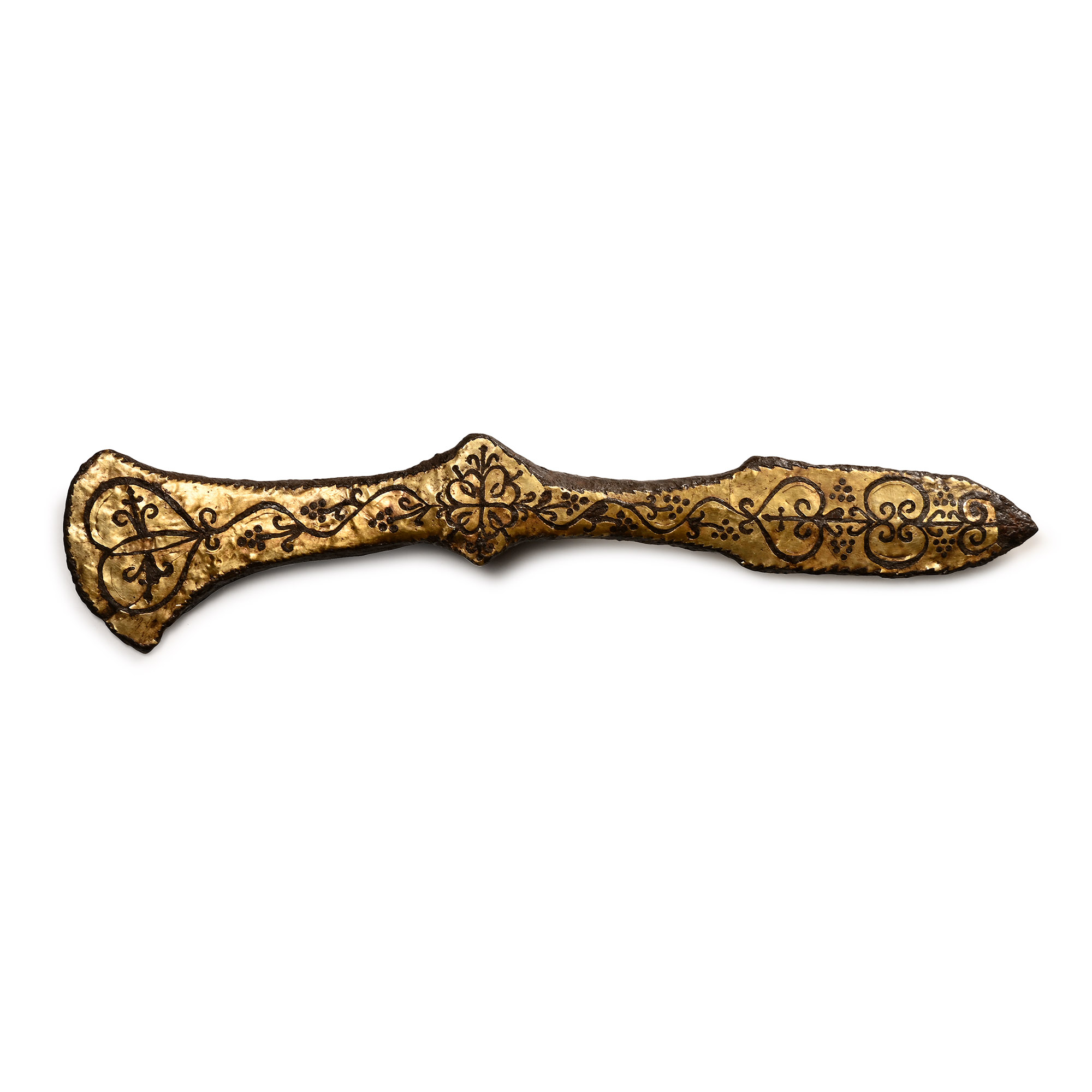
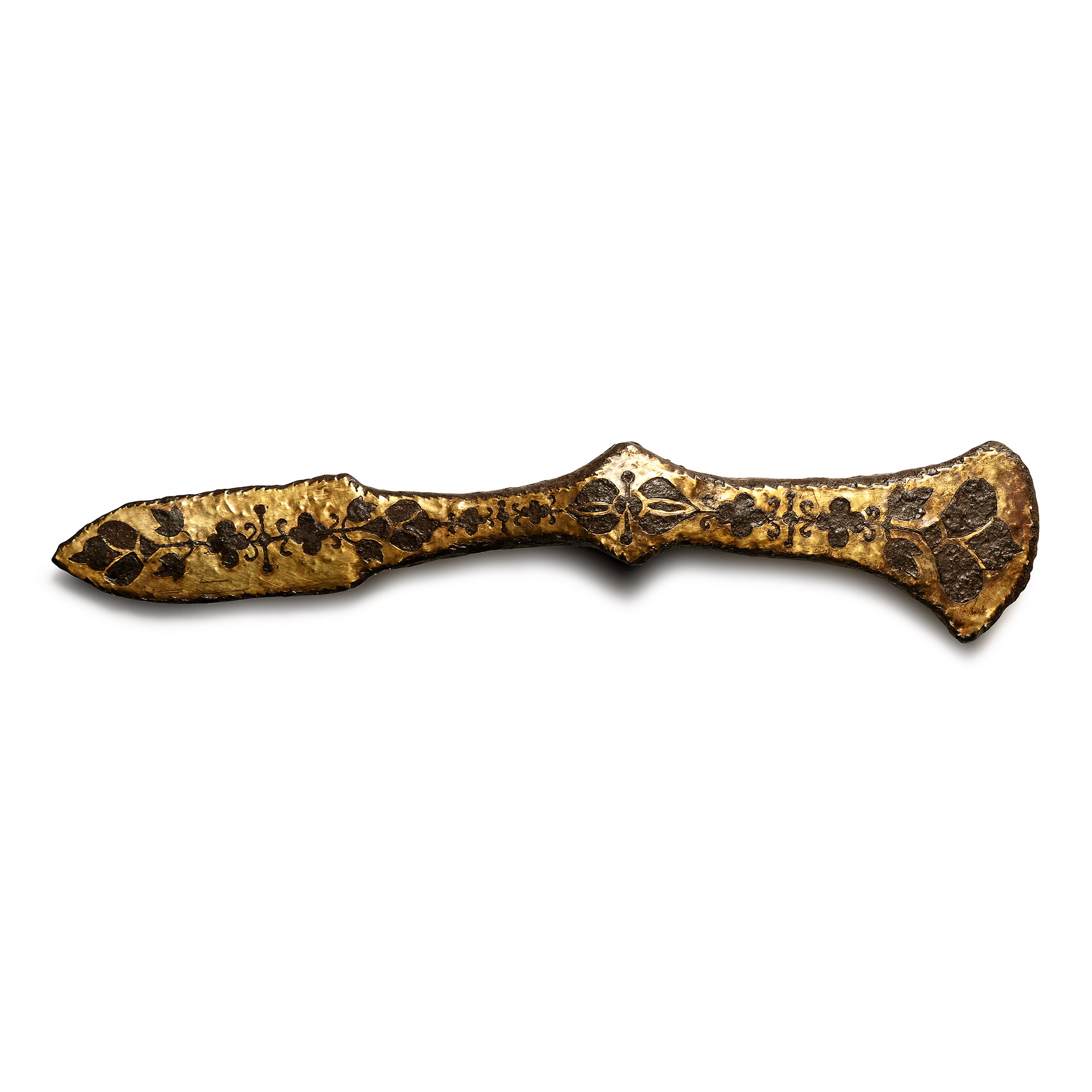
Byzantine Gold Inlaid Ceremonial Axe Head
CIRCA 9TH-12TH CENTURY A.D.
4 1/4 in. (28.88 grams, 10.9 cm).
A miniature tzikourion comprising a crescentic blade with long neck, flared socket and leaf-shaped blade to the rear; gilt surface with reserved florid and tendril detailing, stylised cross to the flared socket.
ProvenancePrivate collection formed in Europe in the 1980s.
Westminster collection, central London, UK.
Accompanied by an academic report by Dr Raffaele D’Amato.
This lot has been checked against the Interpol Database of stolen works of art and is accompanied by search certificate no. no.12340-225024.
See similar forms (iconography) in Nicolle, Arms and Armour of the Crusading Era, 1050-1350 AD, volume II, Islam, Eastern Europe and Asia, London, 1999, figs.33p &118c, pp.355 and 373; for battle specimens from the territories of Eastern Roman Empire cf. Yotov, V., Въоръжението и снаряжението от българското средновековие (VII-XI век), (Arms in Bulgaria in medieval period, 7th – 12th century), Варна 2004, no.637; Gorelik, M., ‘Arms and Armour in South-Eastern Europe in the Second Half of First Millennium AD’ in Nicolle, D. (ed.), A Companion to Medieval Arms and Armour, Oxford, 2002, pp.127-148, pl.XL-8, nos.33 ,34 (Khazar Khanate equipment).
FootnotesIt is possible that this axe was used as a status symbol for officers or their family. The axe was known to be a symbol of the Varangian Guard who protected the emperor.
CONDITIONTimeLine Auctions follows a vetting process to ensure the authenticity and legality of all items, reinforcing our commitment to integrity and responsible trading. Each antiquity, antique, and coin lot undergoes thorough examination by a vetting committee of at least ten external specialists, professional trade association members, scientists, and archaeologists: Our Vetting Process
AUCTIONS:
TimeLine is a leading auction house specialising in antiquities, ancient art, collectables, natural history, coins, medals, and books. Our auctions offer museums, collectors, historians, and enthusiasts the opportunity to acquire unique and historically significant pieces.
-
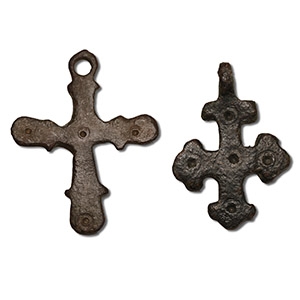
Byzantine Bronze Cross Pendant Group
6th-8th century A.D.Sold for (Inc. bp): £156
Comprising two pendants: one a cross pommée with ring-and-dot decoration; the other with bud finials and similar decoration. 9.25 grams total, 32-36 mm
Ex German art market, 2000s. Acquired from an EU collector living in London. From the collection of Surrey, UK, gentleman. -
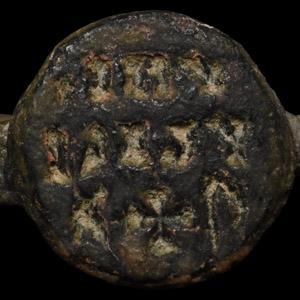
Byzantine Bronze 'in favour for health' Inscribed Ring
6th-8th century A.D.Sold for (Inc. bp): £59
Slender hoop and disc bezel with Greek text ΥΠΕΡ ΥΓΙΕΙΑΣ (in favour / for health' written retrograde for use as a seal. 1.66 grams, 21.53 mm overall, 19.44 mm internal diameter (approximate size British M 1/2, USA 6 1/4, Europe 13.09, Japan 12)
UK private collection before 2000. Acquired on the UK art market. Property of a London gentleman. -
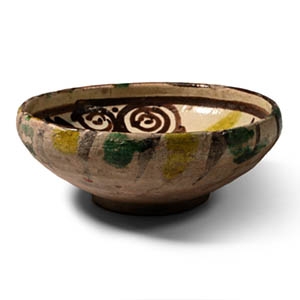
Byzantine Green Glazed-Ware Bowl
Circa 12th century A.D.Sold for (Inc. bp): £520
Squat in profile with inturned rim, transverse bands of polychrome geometric ornament to inner face with lateral spirals, segmented rim. 390 grams, 16 cm
Ex London, UK, gallery, 1971-early 2000s. London, UK, collection.
