
Loading, please wait...
LOT 0186
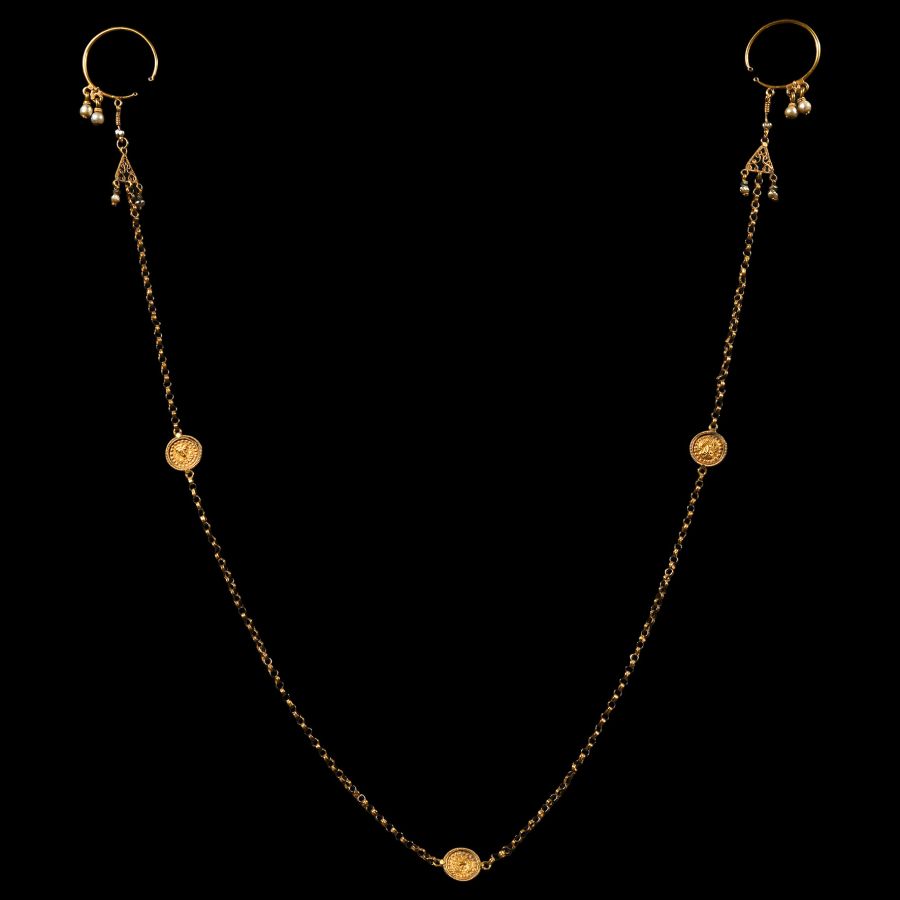
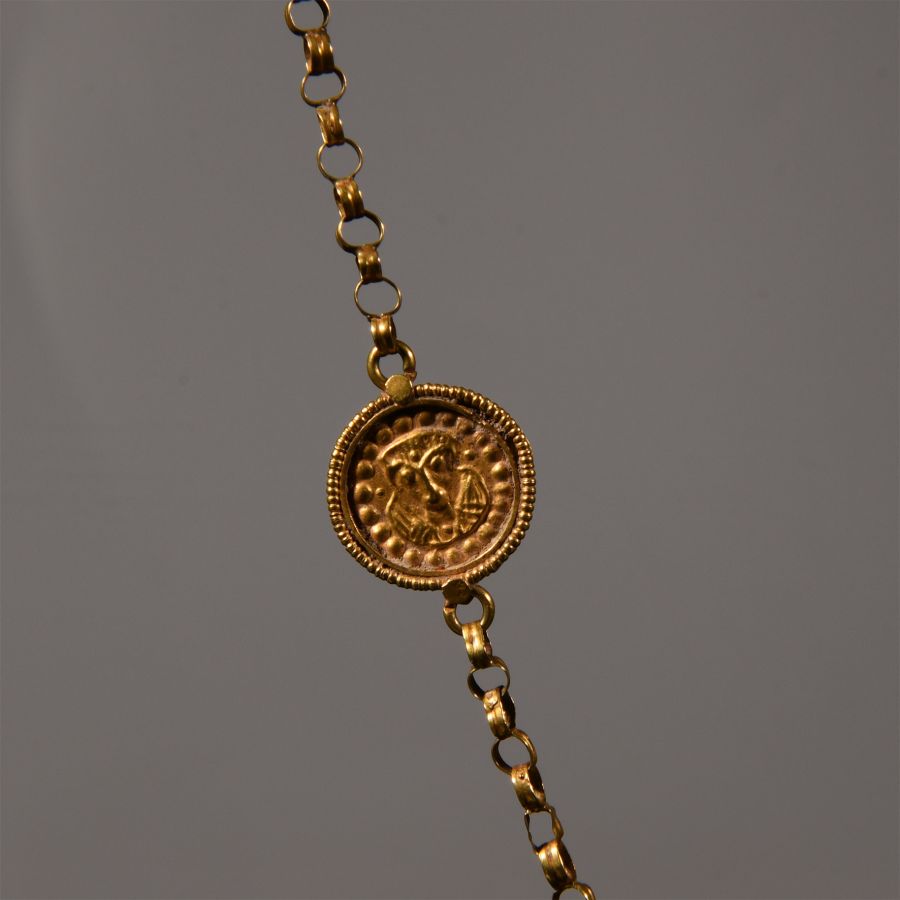
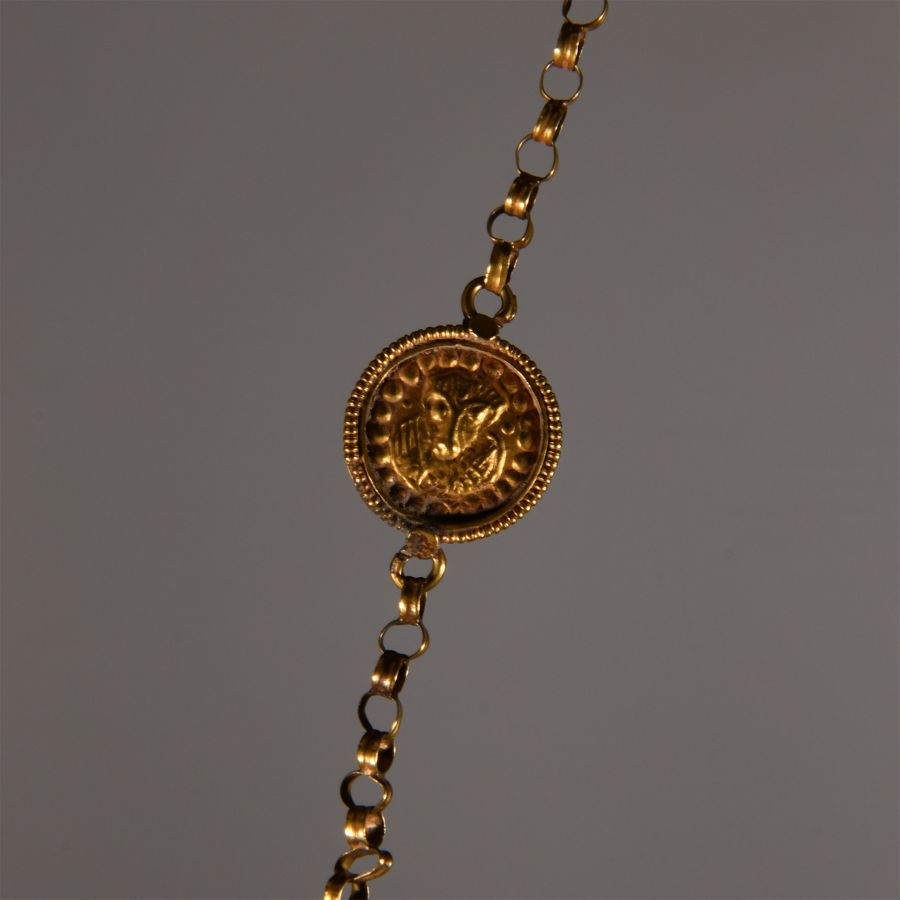
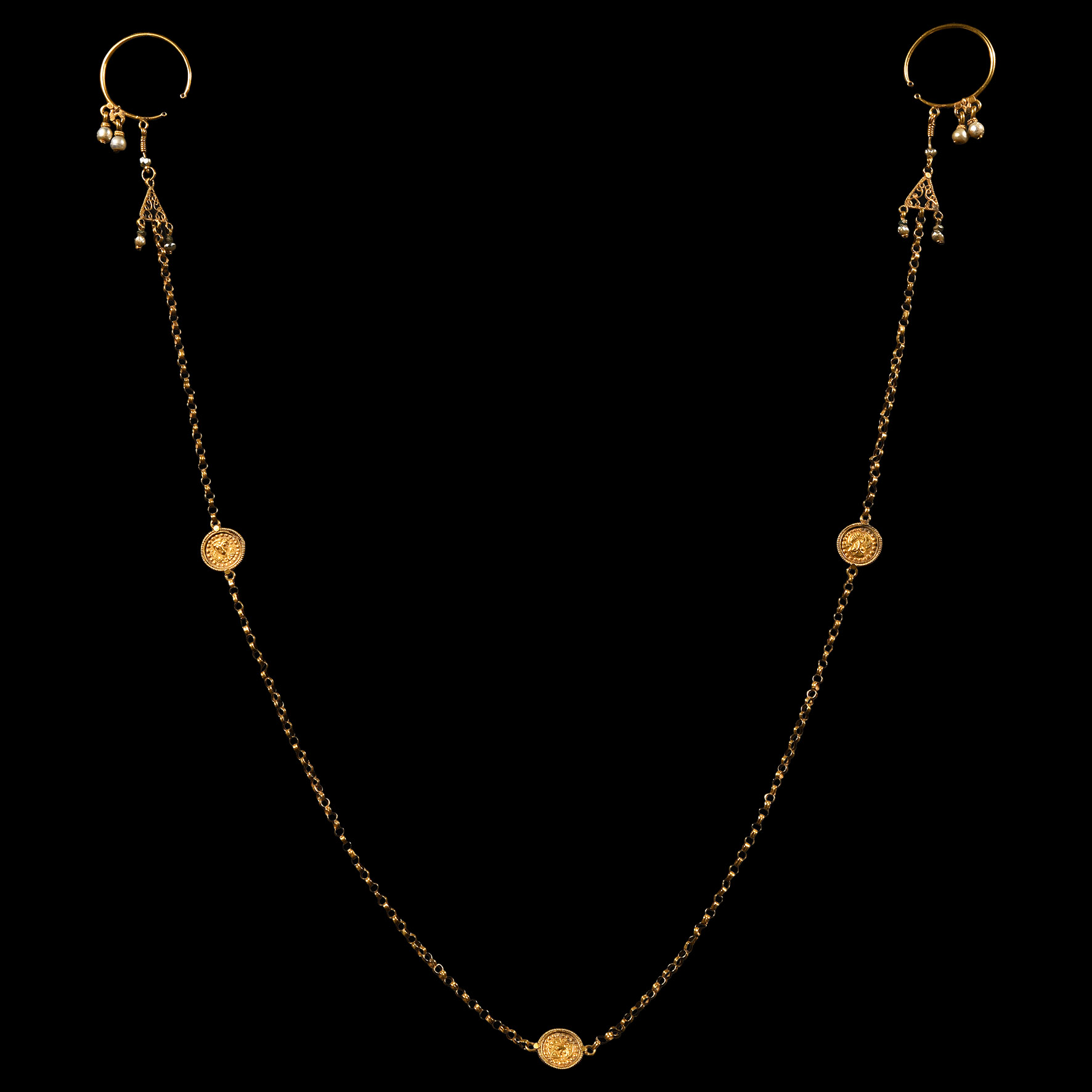
Byzantine Gold Hair Ornament with Earrings and Original Chain
6TH-8TH CENTURY A.D.
3 in. (26.35 grams, 77 cm long).
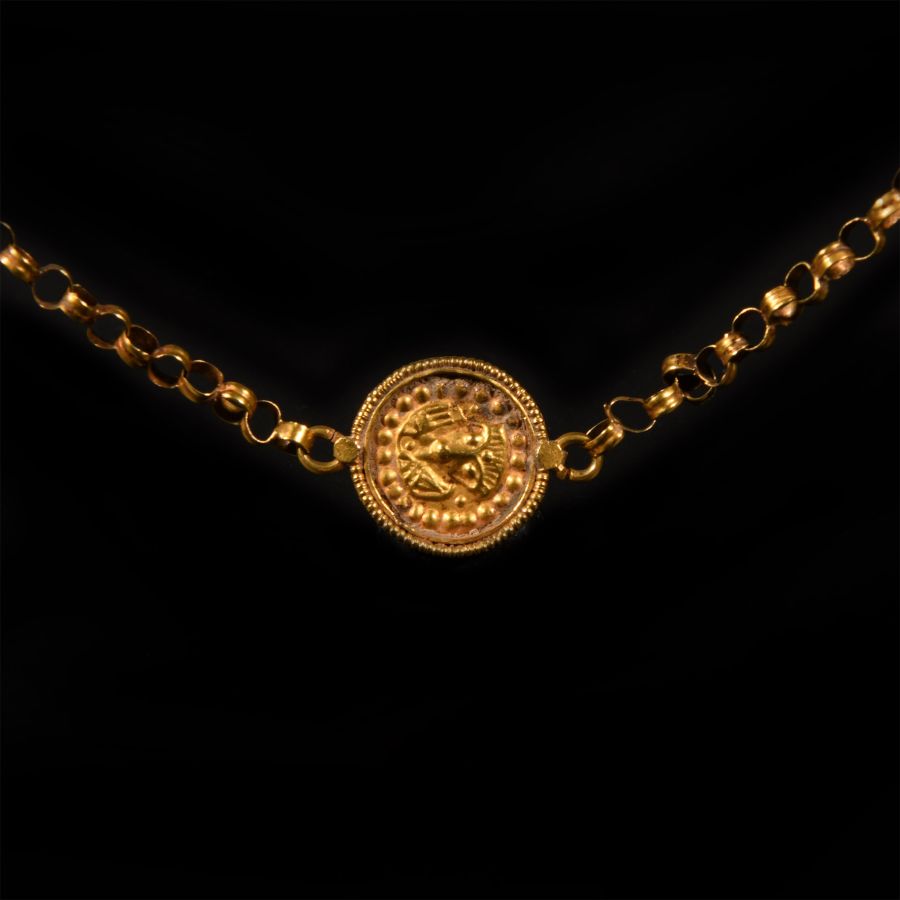
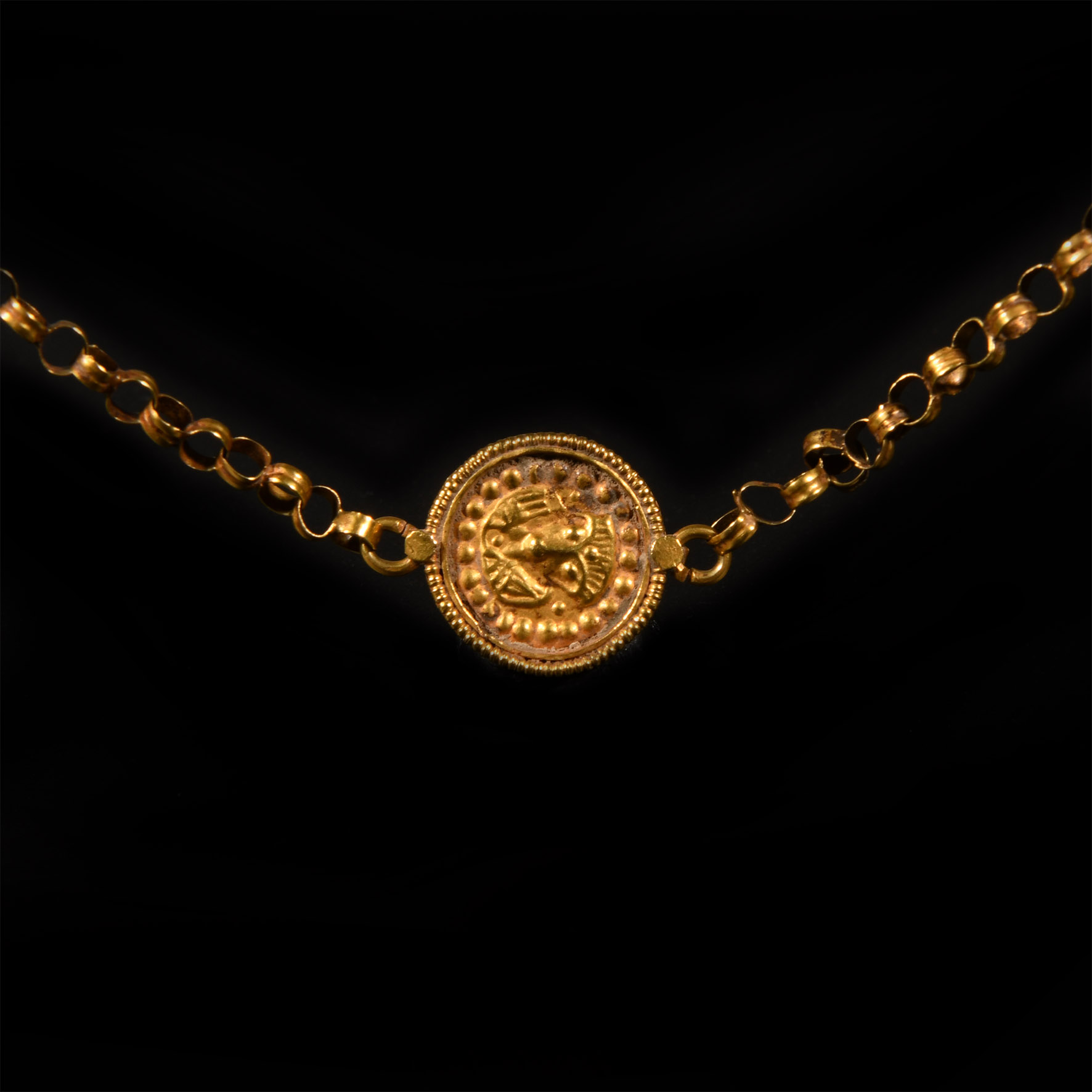
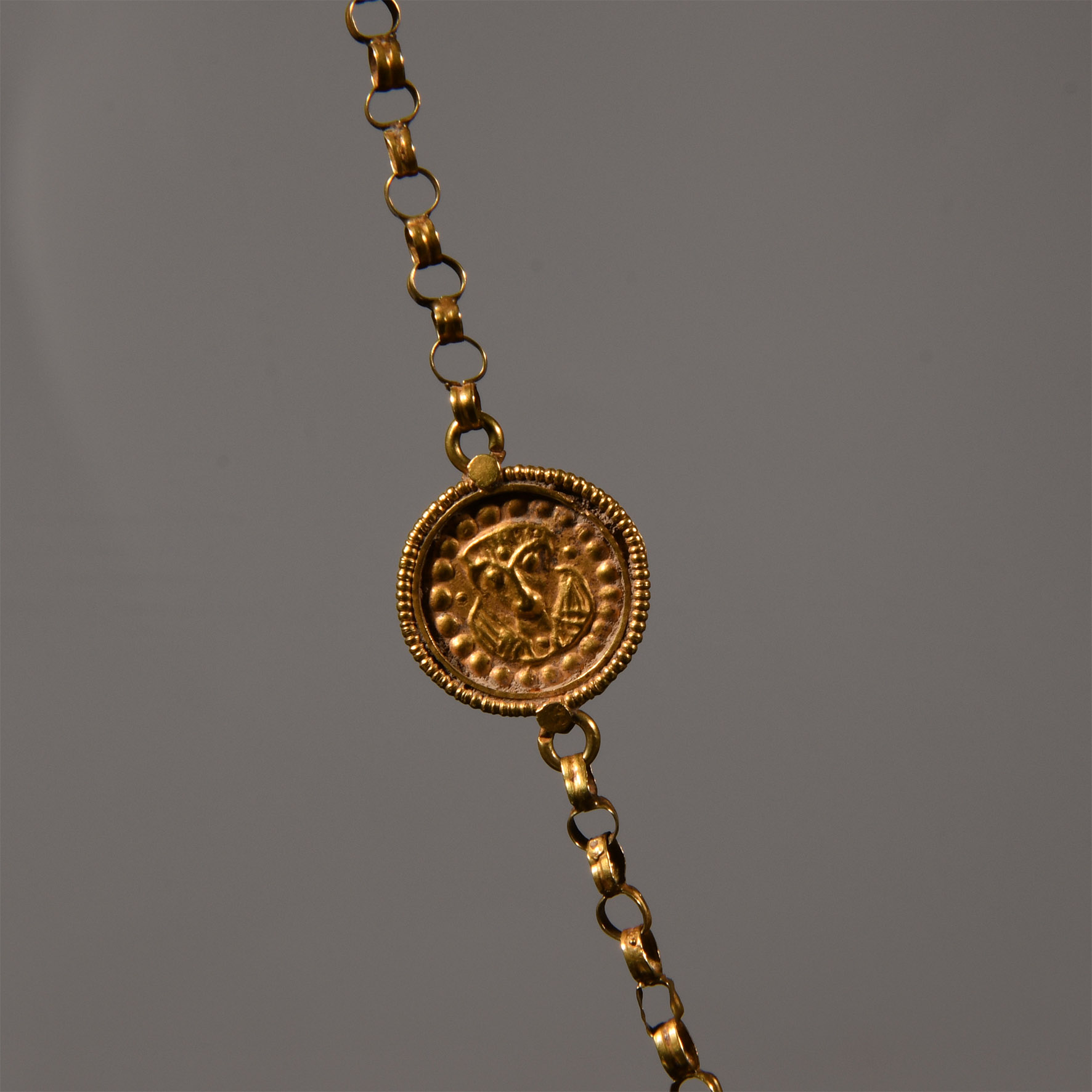
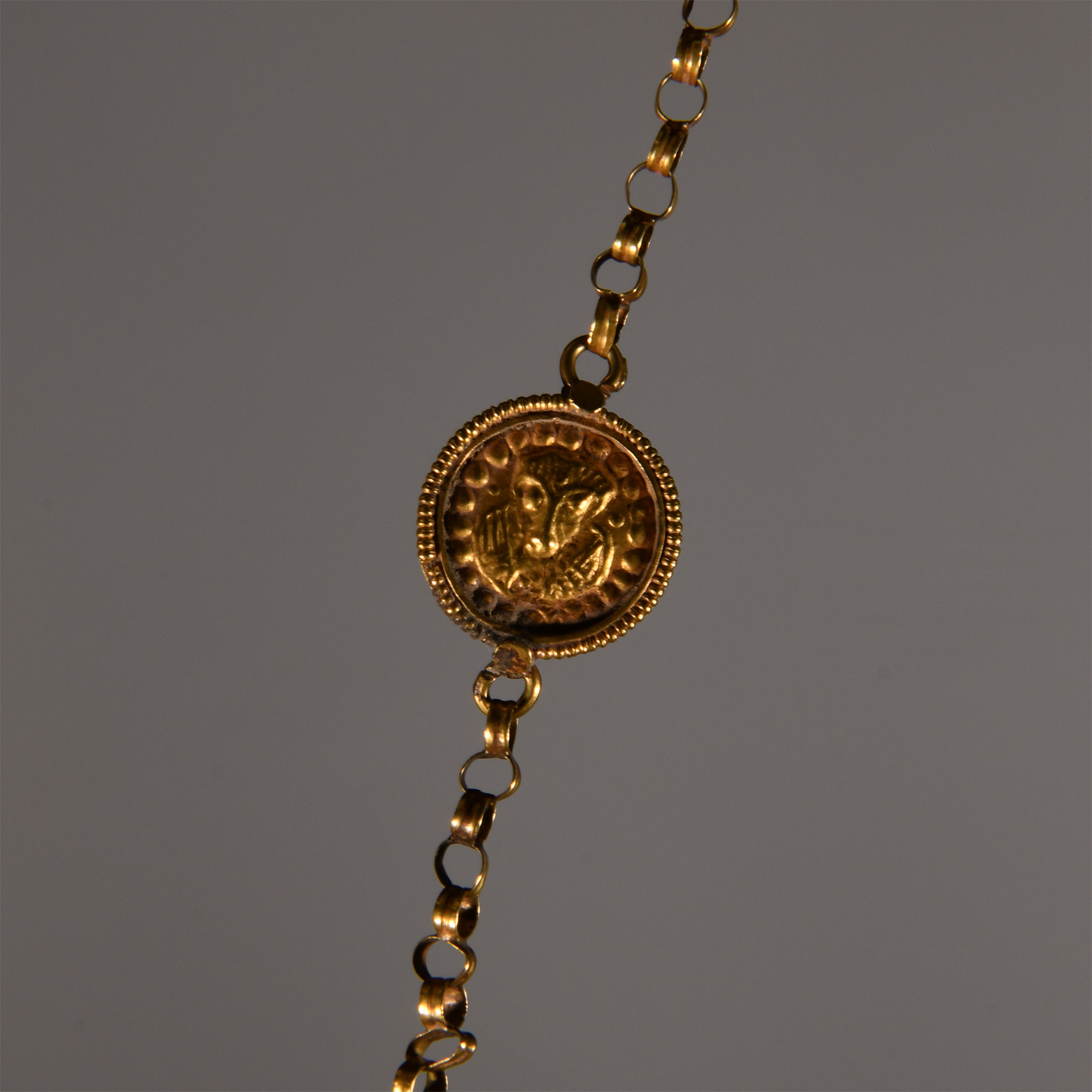
The chain composed of gussetted sheet-gold links interspersed with filigree-framed medallions embossed with facing busts; the chain attached to the penannular earring hoops by openwork filigree pendants with pearl drops, two further pearl drops to the hoops.
ProvenanceAcquired from Fred Leighton, New York, ca.1982.
Important North West London collection.
Accompanied by an academic report by Dr Raffaele D’Amato.
This lot has been checked against the Interpol Database of stolen works of art and is accompanied by search certificate number no.11047-184615.
See Niederle, L., Příspěvky k vývoji byzantských šperků ze IV. - X. Století (Contributions to the development of Byzantine jewellery from the IV. - 10th century,), Praha, 1930; Baldini Lippolis, I., L’oreficeria nell’Impero di Costantinopoli fra il IV e il VII secolo (Goldsmithing in the Empire of Constantinople between the 4th and 7th centuries), Bari, 1999, figs.1 (treasure of Pantalica); p.132, no.4 (treasure of Reggio Emilia).
FootnotesThe characters within the medallions, derived from the imagines clipeatae and possibly representing unbearded dignitaries (eunuchs?) clad in their court cloak, are typical of the 7th century. This suggests the possibility that the chain belonged to an aristocratic woman.
CONDITIONTimeLine Auctions follows a vetting process to ensure the authenticity and legality of all items, reinforcing our commitment to integrity and responsible trading. Each antiquity, antique, and coin lot undergoes thorough examination by a vetting committee of at least ten external specialists, professional trade association members, scientists, and archaeologists: Our Vetting Process
AUCTIONS:
TimeLine is a leading auction house specialising in antiquities, ancient art, collectables, natural history, coins, medals, and books. Our auctions offer museums, collectors, historians, and enthusiasts the opportunity to acquire unique and historically significant pieces.
LOT 0186
Byzantine Gold Hair Ornament with Earrings and Original Chain
Estimate £7,000 - 9,000€8,120 - 10,440 (for guidance only)$9,450 - 12,150 (for guidance only)
-
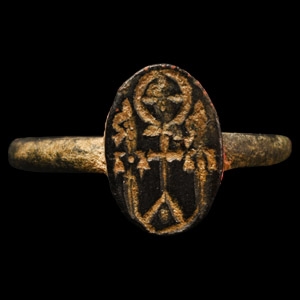
Byzantine Bronze Ring with Cross
6th century A.D.Sold for (Inc. bp): £169
Facetted hoop supporting an ellipsoid bezel with forked cross (crucifixus dolorosus )supporting a cross-in-roudel motif, cross potent to each flank. 4.20 grams, 24.91 mm overall, 20.22 mm internal diameter (approximate size British U, USA 10, Europe 22.52, Japan 21)
Collected from 1969-1999. From the collection of the late Mr S.M., London, UK. -
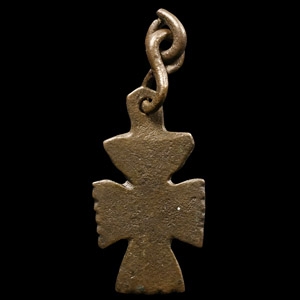
Byzantine Bronze Cross Pendant
9th-12th century A.D.Sold for (Inc. bp): £52
With remains of notch detailing to the outer edges of the arms, two links of the suspension chain. 2.58 grams, 38 mm
Ex DRG Coins and Antiquities, Essex, UK. Ex private Merseyside, UK, collection. -
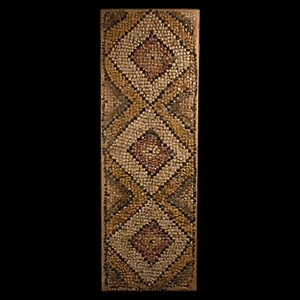
Byzantine Geometric Floor Mosaic
Circa 6th century A.D.Sold for (Inc. bp): £2,600
Comprising a triple geometric rhomboidal figure, where three rhombuses are drawn one inside the other and distinguished by different shades of yellow, white and light red, the latter figure marked in the centre by a white space; the three figures are vertically arranged in a perfect geometric axis on a light background. 36.3 kg, 114.5 cm including frame
Acquired 1970s-1996. Property of a North American collector. London collection, 2016. This lot has been checked against the Interpol Database of stolen works of art and is accompanied by search certificate number no.11823-207411.
The tendency to use abstract and geometric motifs characterises the mosaic art of the Levant under the domination of Byzantium. Close ties can be identified between these rhomboidal figures and those of some of the famous Lebanese mosaics of Beit el Dine, or the mosaics of Tiberias and Hammat, which represent the last expression of Roman art in that area before the Islamic conquest.
