Loading, please wait...

Use mousewheel to zoom in and out, click to enlarge

Details

LOT 0779

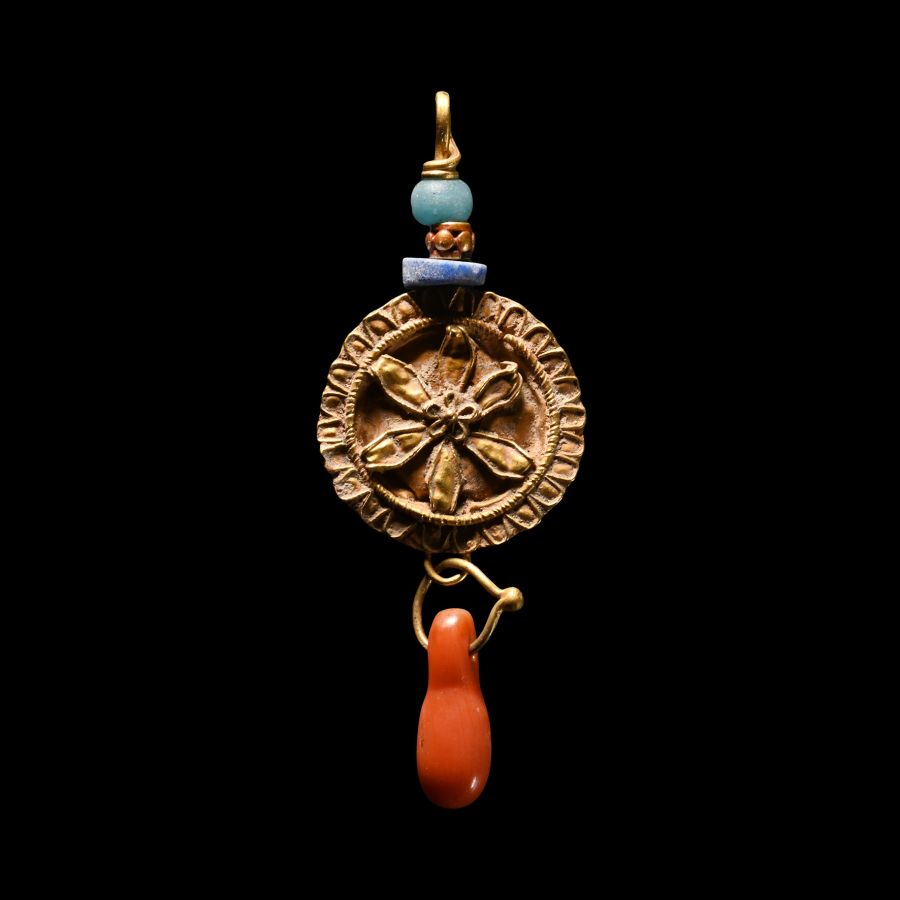
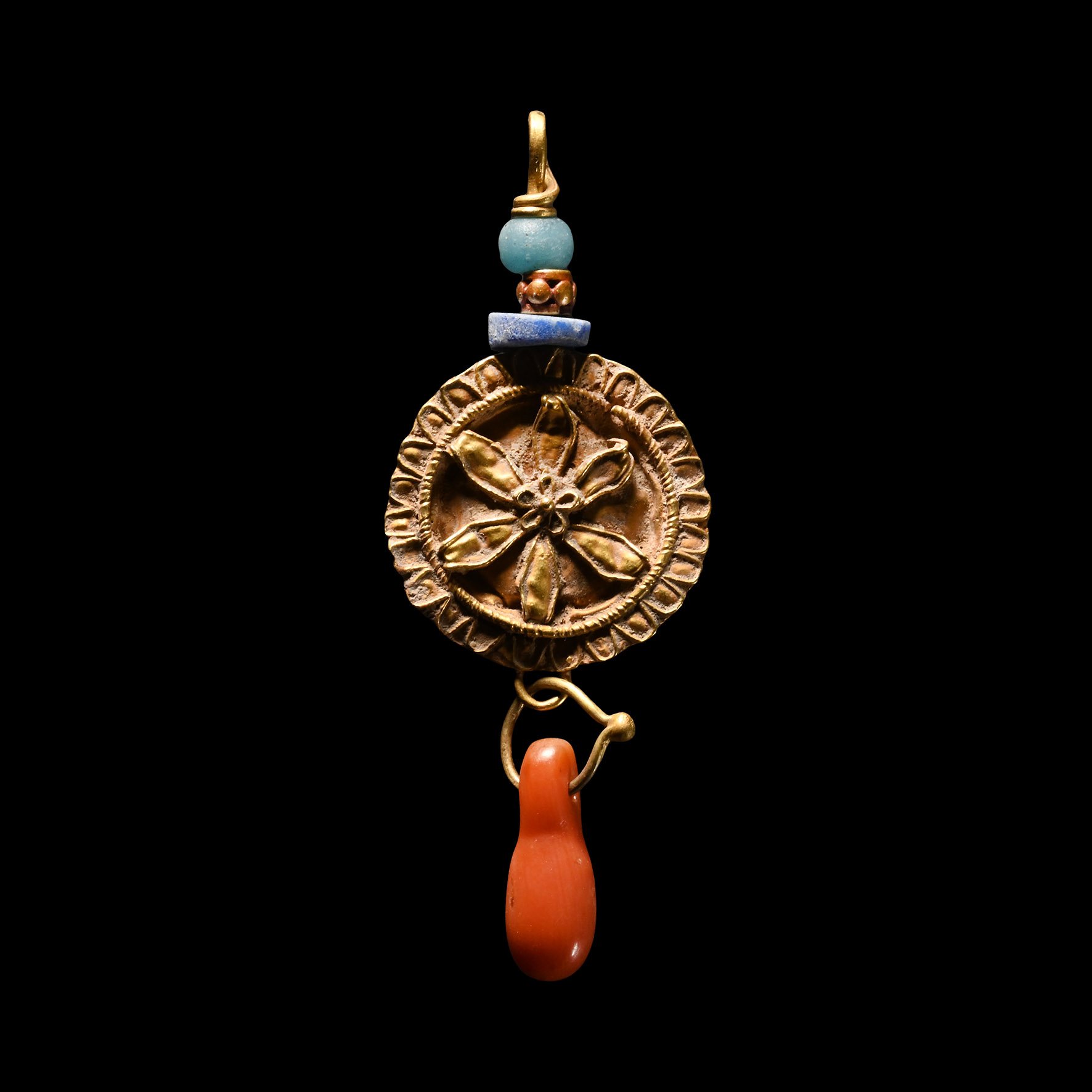
Byzantine Gold Floral Pendant with Bead Drop

6TH-10TH CENTURY A.D.

2 1/8 in. (3.1 grams, 53 mm).

Comprising a discoid plaque with filigree rosette to the rim, applied foil leaves and central filigree rosette; wire loop below with carnelian dangle; suspension loop with lapis lazuli, glass and gold-granule collars.

Provenance

UK private collection formed before 2000.
Ex North London, UK, gallery.

CONDITION

VETTING:

TimeLine Auctions follows a vetting process to ensure the authenticity and legality of all items, reinforcing our commitment to integrity and responsible trading. Each antiquity, antique, and coin lot undergoes thorough examination by a vetting committee of at least ten external specialists, professional trade association members, scientists, and archaeologists: Our Vetting Process


AUCTIONS:

TimeLine is a leading auction house specialising in antiquities, ancient art, collectables, natural history, coins, medals, and books. Our auctions offer museums, collectors, historians, and enthusiasts the opportunity to acquire unique and historically significant pieces.

LOT 0779

Byzantine Gold Floral Pendant with Bead Drop

Sold for (Inc. bp): £364

Print page

RELATED LOTS

  • Byzantine Gold Earring
    Byzantine Gold Earring
    Circa 8th-12th century A.D.

    Sold for (Inc. bp): £403

    Substantial D-section hoop with applied ropework borders, loops for fastening clasp, six radiating garnet cabochons in claw settings with interstitial granules, ribbed loop to the apex. 2.71 grams, 17 mm


    Ex European collection formed in the 1990s. Acquired from a North London gallery. Property of an Essex gentleman.

    Lot Details

  • Byzantine Iron Tweezers Group
    Byzantine Iron Tweezers Group
    Circa 10th-15th century A.D.

    Sold for (Inc. bp): £65

    Comprising: one with long arms, loop terminal with two further loops to the sides; another with long arms and loop terminal, the side loop with another pair of smaller tweezers. 48 grams total, 14.5-15 cm


    Acquired in the 1980s-1990s. Property of a Nottinghamshire gentleman.

    Lot Details

  • Byzantine Cosmatesque Mosaic Panel with Crosiers
    Byzantine Cosmatesque Mosaic Panel with Crosiers
    12th-13th century A.D.

    Sold for (Inc. bp): £5,720

    Recalling workmanship similar to that found in the floor of the Sistine Chapel and other important Roman churches; comprising a central panel with design of alternating green and speckled porphyry lozenges, with interstitial green and porphyry squares flanked by green or blue rhombuses on each edge; the square central panel flanked by two green and porphyry roundels composed of panels with inset squares and triangles, with white dentilled edges over a green background; each roundel enclosed within a mosaic crosier, one filled with yellow rhombuses with dentilled edges composed of white, green and porphyry triangles; the other comprising two parallel rows of squares and rhombuses in porphyry, green and black stones. 41 kg, 80 x 36 cm

    Rare, very good condition.

    French gallery, Paris, 1990s. From a family collection. Accompanied by an academic report by Dr Raffaele D'Amato. This lot has been checked against the Interpol Database of stolen works of art and is accompanied by search certificate number no. 11921-209564.

    A similar pattern to the current panel can be seen on the cosmatesques of the Grottaferrata Abbey, near Rome, variously dated between the 1160 and 1282 A.D., which can be a good chronological indicator for our mosaic for style and composition. The Cosmatesque style was a characteristic type of ornamentation of Eastern Roman origin (opus alexandrinum) in the technique of opus sectile (elements already cut with the final shape: circles, squares, triangles and lozenges; small geometric elements which, expertly fitted together, manage to create the effect of a magnificent embroidered carpet) used by marble-makers of the 12th and 13th centuries A.D. The practice of inlaying glass and stone tesserae into white marble panels in this way, although reaching its zenith under the directorship of the Cosmati, had already been established in the Eastern Roman Empire for at least five centuries, and by the 12th century many marble pavements and panels of Opus Alexandrinum had been used to decorate prestigious churches and religious foundations, both across Italy and further afield, often by reusing old Roman monuments.

    Lot Details

Stay up-to-date with the latest from TimeLine Auctions by joining our mailing list